How to Grow Your Email List With Pinterest: 7 Proven Tactics
If you have been searching for how to grow your email list with Pinterest, you are in the right place. Most people either rely entirely on SEO, which takes months to deliver results, or they pour energy into social media platforms that bury their content within 48 hours. Pinterest sits in a different category entirely. It works more like a search engine than a social platform, and it can drive a steady stream of qualified visitors to your opt-in pages every day, without you paying a cent in advertising.
This guide walks you through exactly how to use Pinterest to build your email list from scratch, or to seriously accelerate the growth of one you have already started. You will find practical, actionable steps rather than vague advice about “showing up with value.”
Why Pinterest Is One of the Most Underrated List-Building Platforms
Before getting into tactics, it helps to understand why Pinterest is so well-suited to email list growth. Most social platforms show your content primarily to people who already follow you. Pinterest works differently. It surfaces your pins to people who are actively searching for answers to specific questions.
That is a key distinction. Someone who finds your pin after searching “how to start affiliate marketing with no money” is already in the mindset of wanting help. They are far more likely to hand over their email address for a useful free resource than someone who stumbled across a random Instagram post.
Pinterest also has remarkable staying power. According to Hootsuite’s complete Pinterest marketing guide, pins can keep generating traffic months or even years after being published. A single pin that resonates with your audience can keep delivering email subscribers long after you created it.
Compare that to a tweet or an Instagram reel that dies within 48 hours. There is no comparison.
There is also a key point about how Pinterest users behave. Pinterest has over 500 million monthly active users. A large share of those users are in active planning or buying mode.
They are not mindlessly scrolling. They are looking for ideas, solutions and resources. That is exactly the kind of visitor you want on your opt-in page.
Step 1: Get the Foundation Right Before You Pin Anything
Many people jump straight into Pinterest without having the right infrastructure in place first. Before you create a single pin, you need 3 things sorted.
A focused opt-in landing page. This is a page built around a single offer. No navigation menu, no distractions and no competing calls to action.
Just a clear headline, a brief explanation of what your visitor will get and a sign-up form. Keep it simple and keep it focused.
A lead magnet your audience actually wants. A lead magnet is the free resource you offer in exchange for an email address. According to Mailchimp’s guide to lead magnets, the best ones solve a single, specific problem rather than trying to cover everything.
A checklist, a short guide, a swipe file, a template or a mini email course all work well. The more targeted and actionable your lead magnet is, the better your sign-up rate will be.
An email platform is connected and ready. You cannot collect emails without somewhere to store them. Tools like GetResponse, ConvertKit or Systeme.io all connect easily with opt-in forms.
If the budget is tight, Systeme.io has a genuinely useful free plan. It covers email marketing, landing pages and basic automation all in one place.
Get these 3 elements working together before you invest time in creating pins. Driving Pinterest traffic to a weak or unfocused opt-in page is a waste of effort.
Step 2: Switch to a Pinterest Business Account
If you are currently using a personal Pinterest account, convert it to a business account now. It is completely free and takes about 2 minutes. A business account gives you access to Pinterest Analytics, which shows which pins are generating the most clicks and saves. Without that data, you are working blindly.
A business account also lets you claim your website. This matters because claimed websites get better reach in the Pinterest algorithm. When Pinterest sees that your pins link to a verified website, it treats your content as more trustworthy and shows it to more people.
To convert your account, log into Pinterest, click your profile image in the top right corner and select “Convert to business.” Then claim your website by adding a small verification tag to your WordPress site. Your hosting provider or the official Pinterest Business resources page can walk you through the exact steps if needed.
Once your account is set up, spend 10 minutes on your profile. Use a clear, professional image and write a short bio that explains who you help and what problem you solve. Include your website URL.
Your profile is often the first thing a new visitor sees. Treat it like a brief introduction to your business.
Step 3: Create Boards That Attract the Right People
Your Pinterest boards are not just organisational folders. They send direct signals to the Pinterest algorithm about what your account is focused on. So it pays to be intentional about how you name and structure them.
Choose board names that reflect what your target audience is actively searching for. If your niche is online business, side hustles and affiliate marketing, strong board names might include topics like “Affiliate Marketing for Beginners,” “Online Business Ideas,” “Make Money From Home”, or “Email Marketing Tips.”
Write a keyword-rich description for each board. These descriptions help Pinterest understand your content and match it to relevant searches. Aim for 2 to 3 natural sentences that describe the theme of the board. Include the kinds of phrases your audience would actually type into a search bar.
Start with 5 to 8 tightly focused boards rather than spreading yourself across 20 loosely connected ones. A focused, well-organised account outperforms a scattered one every time. You can expand your board range later as your content library grows.
Step 4: Design Pins That Stop the Scroll
Pinterest is a visual platform. The quality of your pin design has a direct impact on how many clicks you receive. The good news is that you do not need design experience or expensive software to create effective pins. Canva has dozens of free Pinterest templates that you can customise in a few minutes.
Here are the design principles that matter most for list-building pins.
Use a vertical format. The optimal pin size is 1000 x 1500 pixels. Vertical pins take up more real estate in the feed, which means more visibility. Square and horizontal pins get crowded out by vertical content.
Include a text overlay. Many Pinterest users scroll quickly without reading captions. A clear, benefit-focused headline directly on the image tells them immediately why they should click. Something like “Free Checklist: Start Your Affiliate Blog in 7 Days” communicates value at a glance.
Keep the design clean. Cluttered, busy pins underperform. A strong image, a bold headline and your website URL in small text at the bottom is usually all you need. Resist the urge to cram in too much information.
Stay visually consistent. Branded pins that use the same colours and fonts across multiple designs become recognisable as people scroll past them repeatedly. Pick 2 or 3 brand colours and use them consistently.
Create at least 3 different pin designs for each piece of content or lead magnet you are promoting. Different designs resonate with different people, and Pinterest rewards visual variety. Multiple designs for the same content also give you more data on which style drives the most clicks.
Step 5: Write Pin Descriptions That Work as Search Copy
Your pin description is not a throwaway caption. It is a piece of text that Pinterest uses directly to understand what your pin is about and decide which users to show it to. Treat each description as short SEO copy.
Lead with the most important information. Pinterest truncates long descriptions in the feed, so put the value you are offering in the first sentence. Include your primary keyword naturally in the opening line.
Here is a simple example of an effective description for a pin promoting a free beginner’s guide to affiliate marketing:
“Want to earn your first $1,000 online without creating your own product? Download this free beginner’s guide to affiliate marketing and get a step-by-step breakdown of exactly what to do first. Perfect for complete beginners working from home.”
This description uses a curiosity-driven hook, includes a relevant keyword and clearly states who the content is for. That last point matters because Pinterest uses audience behaviour signals to recommend your content to similar users.
Keep descriptions between 100 and 200 words. Include 3 to 5 relevant keywords woven in naturally. Avoid stuffing keywords awkwardly, as this looks spammy and can actively reduce your reach.
Creating a consistent flow of pin descriptions and blog posts is far easier with the help of an AI writing tool. Rytr is one of the most affordable options on the market, making it a practical choice for beginners who want to produce quality content without spending a fortune.
Step 6: Pin Directly to Your Opt-In Page
This is one of the most important points in this entire article. Most people use Pinterest to drive traffic to blog posts, which is a perfectly valid strategy. But if growing your email list is the priority, you also need pins that link directly to your opt-in landing page.
When someone clicks a pin and lands on a page with a single, clear offer, you remove all the friction between the click and the sign-up. They do not need to hunt for your opt-in form buried at the bottom of a long article. It is right in front of them the moment they arrive.
Create 3 to 5 different pin designs for each lead magnet you offer. These pins should lead directly to the dedicated landing page for that specific freebie. The image and description should focus entirely on the lead magnet itself, describing what it is, who it is for and what problem it solves.
For example, if your lead magnet is a free PDF called “The Beginner’s Checklist to Making Your First $1,000 in Affiliate Marketing,” your pin image should feature that checklist visually. The description should explain what is inside and who will benefit from downloading it. The link goes directly to your opt-in page. No detours.
Consistency is the single most important factor that separates Pinterest accounts that grow from those that go nowhere. The Pinterest algorithm rewards regular activity. An account that pins 5 to 10 times per day steadily and consistently outperforms one that pins 50 times in a single week and then disappears for a fortnight.
You have 2 practical options for maintaining consistency.
Manual pinning in batches. Set aside 20 to 30 minutes a few times per week to schedule your pins. Pinterest has a built-in scheduling tool that is free to use.
You can queue pins to go out at set times throughout the day. This means you do one session of scheduling rather than logging in multiple times each day.
Using a third-party scheduler like Tailwind. Tailwind is a Pinterest-approved scheduling tool. It lets you plan weeks of content in a single session. Its smart scheduling feature suggests the best posting times based on when your audience is most active.
The basic paid plan starts at around $19.99 per month. There is a free trial if you want to test it first.
Whichever method you use, aim for 5 to 10 pins per day to start. A “fresh pin” does not always mean brand-new content. Different pin designs pointing to the same blog post or landing page count as fresh pins, as long as the images differ. This lets you get more value out of every piece of content you create.
What to Pin: A Sustainable Content Mix for List Growth
Not every pin needs to link directly to an opt-in page. A healthy Pinterest strategy blends different types of content to build trust, drive traffic and capture leads over time.
Around 80% valuable content. These are pins that link to helpful blog posts, tutorials or guides related to your niche. They build your credibility and attract the right audience to your account. Readers who find your content genuinely helpful are far more likely to sign up for your email list when they come across your opt-in offer.
Around 20% direct lead magnet pins. These pins do the direct work of converting traffic into subscribers. They link straight to your opt-in landing pages and focus entirely on the value of your free resource.
This balance keeps your account from looking like a series of advertisements while still driving meaningful list growth. Pinterest users come to the platform looking for inspiration and solutions. Give them that consistently, and they will be receptive to your opt-in when they see it.
Also consider creating seasonally relevant content. Certain topics see a predictable spike in search volume at specific times of year. A pin about “new year online business goals” gets far more traction in December and January than at any other time. Planning seasonal content 4 to 6 weeks in advance lets you capture that search traffic at its peak.
How to Track Results and Improve Over Time
Growing an email list without tracking your results means you cannot tell what is working and what is wasting your time. Fortunately, the tools you need are all free.
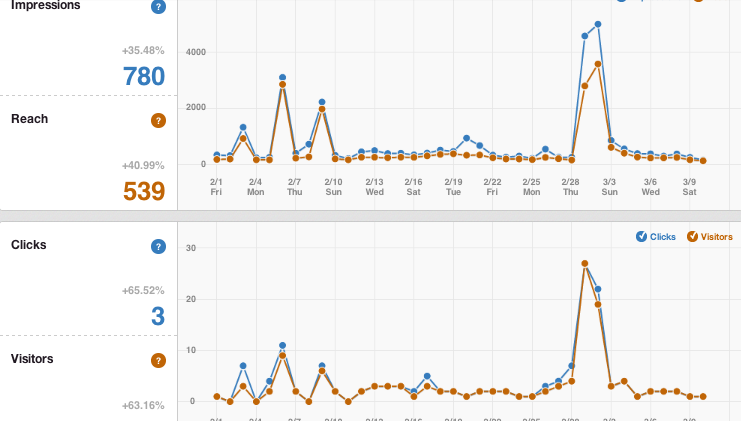
Pinterest Analytics is the starting point. Log in to your business account and click “Analytics” in the top navigation. You can see which pins are generating the most impressions, saves and link clicks. Focus on the “Link Clicks” metric, as this shows you how many people actually visited your website from each pin.
Go a step further by adding UTM parameters to your pin URLs. A UTM tag is a small piece of text you add to the end of a URL. It tells Google Analytics exactly where a visitor came from.
With this in place, Google Analytics can show you how many email sign-ups are coming from Pinterest each month. That makes it easy to judge whether your Pinterest work is turning into real list growth.
Review your Pinterest Analytics weekly. Look for patterns in which pin styles, topics and headlines drive the most clicks. Create more pins in the style of your top performers and drop the formats that fall flat. This approach improves your results without requiring more time or money.
Even with a solid strategy in place, a few consistent errors can hold people back.
Sending all traffic to the homepage. Your homepage is not designed for email capture. It has too many options and too many competing messages. Always send traffic from lead magnet pins to a dedicated, focused opt-in page.
Creating pins with no clear call to action. Every pin should give the viewer a reason to click. Phrases like “Download the free guide,” “Grab your free checklist” and “Get the free starter kit” are simple and effective. Do not assume people will click without being prompted.
Giving up during the slow period. Pinterest’s growth is not instant. Most accounts start to see real traction after 3 to 6 months of steady effort.
The pins you create today may deliver their peak traffic 6 to 12 months from now. Longevity is one of Pinterest’s biggest strengths. Your content compounds in value rather than vanishing after 48 hours.
Neglecting the profile. A half-finished profile with no bio and no claimed website signals low credibility. Spend 20 minutes getting your profile properly set up before you create any pins. First impressions count, even on Pinterest.
A Realistic Weekly Routine That Fits Around a Day Job
If you are building this business alongside full-time work, you do not have unlimited hours to spend on Pinterest. The good news is that you do not need them. Here is a lean weekly routine that takes roughly 2 hours and delivers consistent results over time.
Once a week (30 minutes): Design 3 to 5 new pins using Canva. Include fresh designs for your current lead magnets and any new blog posts you have published. Aim for visual variety across the batch.
Daily (10 to 15 minutes): Schedule 5 to 7 pins using Pinterest’s built-in scheduler or Tailwind. Mix direct lead magnet pins with content pins pointing to helpful blog posts. Spread them across different times of day rather than publishing everything at once.
Once a week (20 minutes): Review Pinterest Analytics. Identify which pins are getting the most link clicks and note the common themes in your best-performing content. Plan your next batch of pins around those themes.
That totals roughly 2 hours per week. Spread across 6 to 12 months, that level of consistent effort builds into something genuinely valuable. The Pinterest accounts that grow are not the ones that worked hardest in month one. They are the ones that showed up in month nine.
Build the Funnel, Then Let It Work
Knowing how to grow your email list with Pinterest comes down to one clear principle: get the right infrastructure in place, create pins that connect directly with your audience’s problems and show up consistently over a long enough period of time for the platform to reward your effort.
None of this requires a big budget, advanced technical skills or previous experience. What it requires is a realistic plan, the right tools and the patience to let the compound effect do its work. Pinterest pins you create this month may still be delivering email subscribers 18 months from now. That is a genuinely rare quality in the world of online marketing.
Everything is explained in plain, honest language with no exaggerated income claims and no unnecessary complexity.
Affiliate Disclosure: This page may contain affiliate links. If you click through and make a purchase, I may earn a commission at no extra cost to you. I only recommend tools and resources I genuinely believe offer real value.
How To Create an Online Course With Teachable: Your Step-by-Step Guide
There is no shortage of platforms promising to turn your knowledge into income. Most of them either overwhelm you with complexity or charge fees that eat into your earnings before you have found a rhythm.
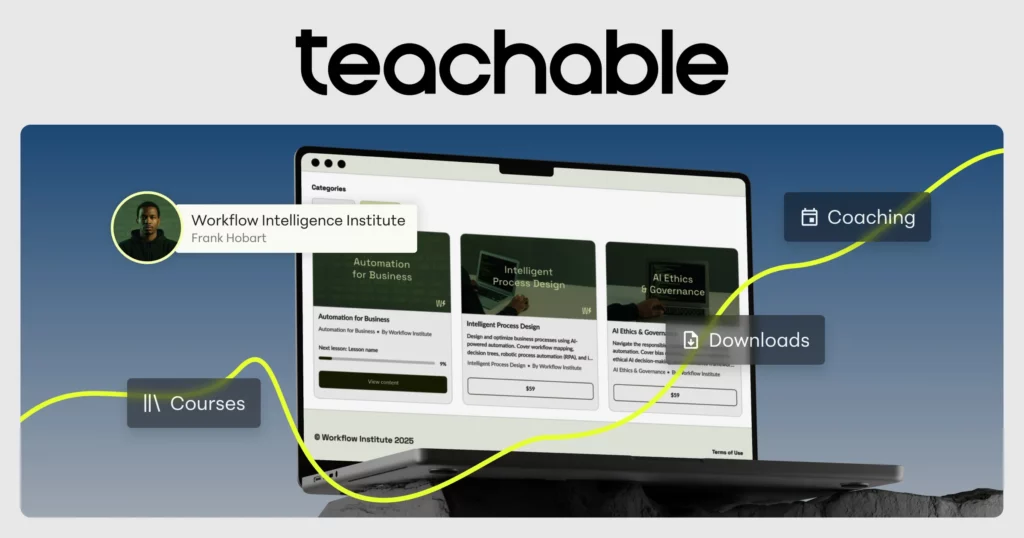
Teachable sits in a different category. It is clean, approachable and built for people who want to teach rather than manage a software stack. If the tech has been putting you off, knowing how to create an online course with Teachable will remove that barrier. It is simpler than most people expect.
What Makes Teachable Different From the Competition
Indeed, Teachable has been helping creators sell their expertise since 2014. In that time, it has processed more than $2 billion in course revenue for solo creators. Indeed, that is not an accident. The platform is genuinely well designed for the specific job of turning knowledge into a product that sells.
In fact, building your own solution is far more complex. So, a self-hosted WordPress course requires a hosting plan, an LMS plugin, a payment gateway and manual tax setup. You also build your own sales pages from scratch.
Teachable bundles all of that into one subscription covering hosting, payments, checkout pages, course certificates and student control.
However, compared to market sites like Udemy, Teachable gives you something more important: control. Specifically, on Udemy, the platform sets your prices, runs its own promotions and owns the bond with your students. On Teachable, you set the price, you own the student data, and you show directly to your audience. Indeed, that ownership compounds in value as your business grows.
Furthermore, the platform also handles US sales tax on its own and remits VAT on behalf of global sellers. For solo creators juggling teaching, marketing and content creation, removing the tax admin headache is genuinely real.
So, before diving into the build process, it is worth knowing what you are signing up for financially. Teachable updated its pricing structure in 2026, and the plans are now named Starter, Builder, Growth and Advanced.
The Starter plan is priced at $39 per month, billed monthly or $29 per month on an annual subscription. It covers one published product and up to 100 students.
However, it charges a 7.5% transaction fee on every sale. So if your course costs $200 and you make 10 sales, Teachable takes $150 before payment fees apply. In fact, that adds up quickly.
The Builder plan at $89 per month removes the transaction fee entirely. It also adds more product slots, affiliate marketing tools and enhanced customization. Indeed, for anyone planning to sell at any real volume, the Builder plan is where the numbers start working in your favour. A single $200 sale per day would pay for the Builder plan in under five days.
The Growth plan at $189 per month removes student caps and adds more advanced reporting. The Advanced plan at $399 per month is aimed at larger teams and built education businesses.
Furthermore, all paid plans include a 7-day free trial. In fact, that is enough time to build your first course, set up your school and check whether the platform fits your needs.
For an honest look at Teachable’s real costs and where fees appear, this review from Learning Revolution covers the platform from a working creator’s view.
Step 1: Define the Outcome Your Course Delivers
Unfortunately, the most common reason courses fail to sell is not the platform, the price or the production quality. It is the absence of a clear, specific outcome that the student will achieve.
Indeed, vague course topics attract vague interest. “Introduction to Social Media” is harder to sell than “Get Your First 1,000 Instagram Followers Without Running Ads.” The second version names the exact student, the outcome and the milestone. Buyers can judge at a glance whether it solves their problem. Potential buyers can right away assess whether it solves their problem.
So, before you open Teachable, write one sentence that describes your course using this structure: “This course helps [specific person] achieve [specific outcome] even if [common objection].” For example: “This course helps freelance designers win their first five clients even if they have no portfolio yet.”
Indeed, that sentence will drive every other decision you make. Your sales page headline is a version of it. The curriculum is the path that delivers the outcome. Pricing should reflect the monetary value of achieving that result.
Also, validate your topic before you invest production time. So, post about it on social media and observe how people respond. Email five to ten people in your target audience and ask directly whether they would pay to solve the problem you are describing. Pre-selling a course before it is finished is entirely valid and tells you right away whether the idea has commercial traction.
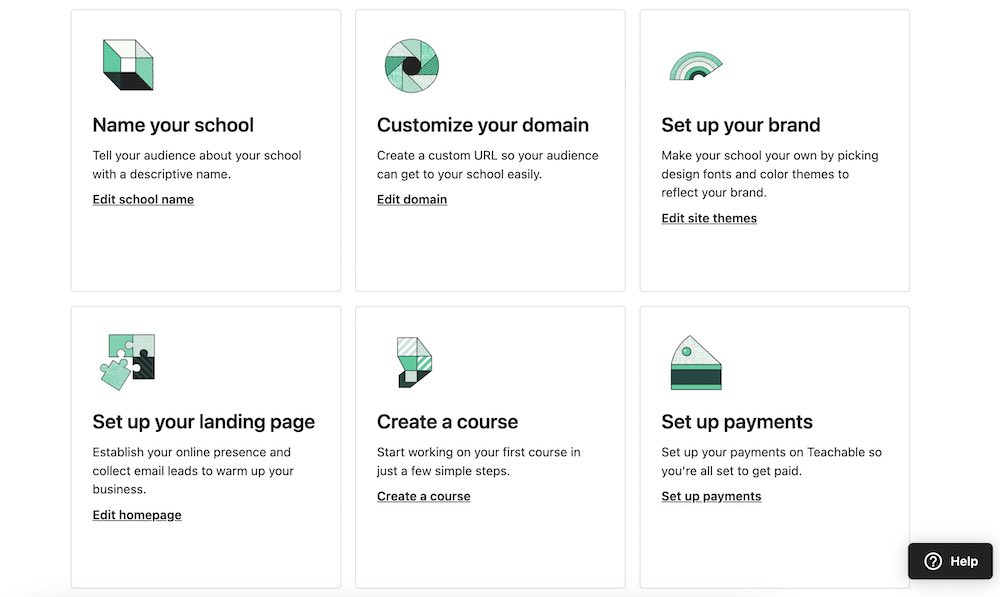
So, once you have clarity on your course topic, creating your Teachable account takes about five minutes. So, go to teachable.com, select your plan or start the free trial and complete the registration.
After signing up, you are taken to your school dashboard. In fact, your Teachable school is your branded home base on the platform. In fact, it is where all of your courses, products and student interactions live under one roof.
So, take time to set up your school’s branding before you create any courses. Upload your logo, choose your colour palette and add your school name. Consistency between your school’s visual identity and your social media presence builds trust with would-be students who find you through search or referral.
If you have a custom domain such as courses.yourbrand.com, connect it to your Teachable school in the settings. This removes the teachable.com branding from your school URL and makes the whole experience feel like a cohesive product. Indeed, custom domains are available from the Starter plan onwards.
Step 3: Create Your Course Structure
In Teachable, click on Courses in the left-hand menu and then click New Course. You will be prompted to name your course and choose how you want to build its structure.
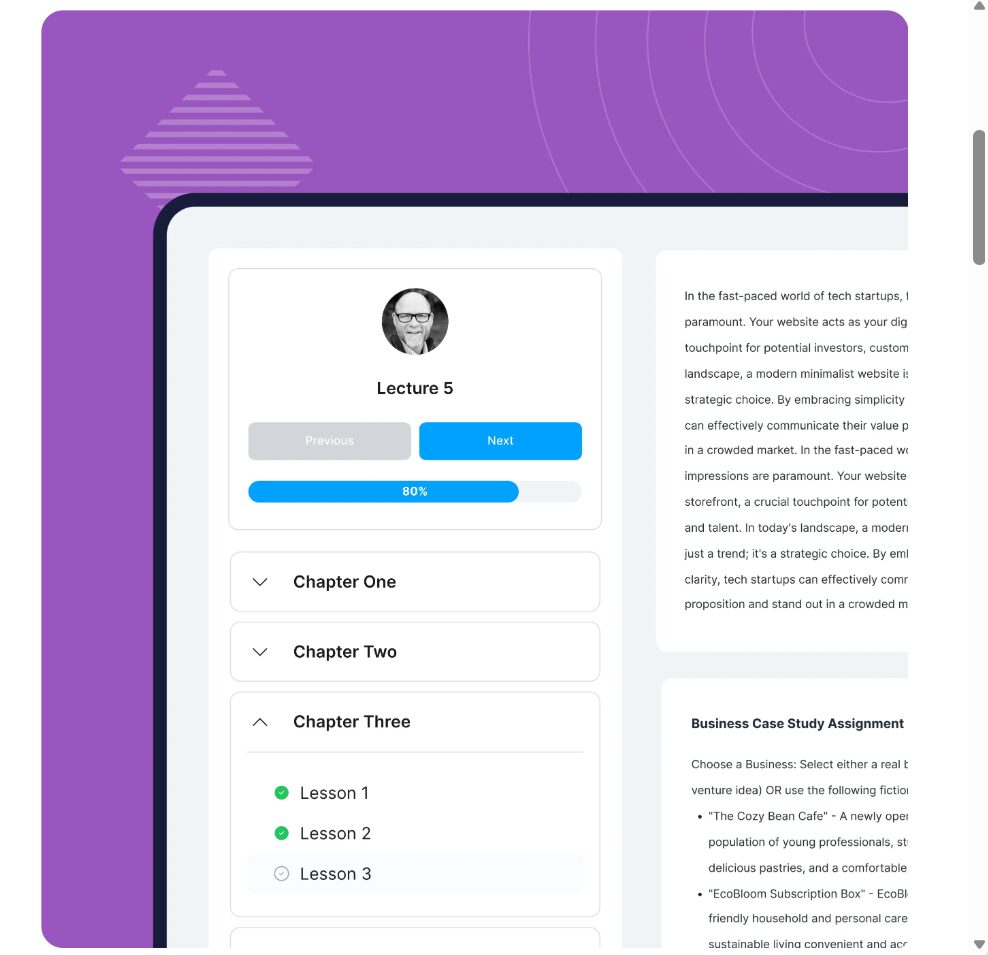
Notably, Teachable now offers an AI Curriculum Builder as a starting option. You enter a description of your course, and the tool earns a suggested outline of sections and lectures. This is genuinely useful for getting a skeleton on screen quickly. However, treat the output as a draft that you refine rather than a finished structure you publish directly.
In Teachable, the core building blocks are sections and lectures. A section is a module or chapter, a grouping of related content. A lecture is an single lesson inside that section. Think of sections as the stages of your student’s journey and lectures as the single steps within each stage.
So, build your full structure before you start adding any content. Write all your section names and lecture titles first. This gives you a map of the entire course. It also reveals gaps where content is missing and repetition where ideas overlap without reason.
In fact, each lecture title should describe exactly what the student will be able to do or know after completing it. “How to Write a Cold Email That Gets Replies” is stronger than “Cold Emails.” It tells the student exactly what they will achieve. A general topic title does not.
Step 4: Add Your Course Content
So, with your structure mapped out, go through each lecture and add your content. Teachable supports video, audio, text, PDFs, quizzes and downloadable files within a single lecture. You can mix formats freely depending on what the lesson requires.
Video is the dominant format in online courses because students learn effectively from watching and listening. You do not need pro recording gear to start. A smartphone on a tripod, a ring light for around $25 and a quiet room are all you need. That setup produces entirely acceptable results for a first course. So, record in short, focused segments of five to fifteen minutes rather than long, unedited sessions.
Host your videos directly in Teachable. Furthermore, paid plans include unlimited video storage. So you do not need a separate hosting subscription unless you have specific analytics requirements.
Text lessons work well for reference material, written walkthroughs and content that students will want to revisit without rewatching a video. Use them for frameworks, checklists and step-by-step written instructions.
Downloadable resources add tangible value to your course. A worksheet per module, a ready-to-use template or a curated resource guide all improve the learning experience. Indeed, none of these require real production time.
Quizzes reinforce learning and help students identify gaps in their knowledge before moving on. Specifically, Teachable’s built-in quiz builder supports multiple choice, true or false and written answer formats. In fact, adding a short quiz at the end of each section takes minimal effort but really improves completion rates.
For practical help planning content that keeps students engaged, Teachable’s own blog guide covers the process clearly.
Step 5: Set Your Pricing Strategy
Pricing is one of the decisions that new course creators regularly get wrong. Unfortunately, the instinct to set a low price to attract more students is understandable but usually counterproductive.
A course priced at $19 signals low value in the buyer’s mind. It also means you need 50 sales to generate $950 in revenue. A course priced at $197 means five sales achieve the same figure. Fewer sales at a higher price point require a smaller audience and far less marketing effort.
So, the price is based on the outcome you deliver rather than the number of video hours you include. A two-hour course that helps a freelancer land their first $3,000 client is worth far more than $97. A 20-hour course covering general marketing theory may struggle to justify $200. The outcome is what your student is paying for.
In Teachable’s pricing settings, you can offer a one-time payment, a payment plan split across multiple months or a subscription for recurring access. Payment plans are especially effective at higher price points because they reduce the perceived upfront commitment. A $497 course split into three payments of $179 will outsell the single-pay option with most audiences.
Furthermore, you can also create coupon codes for launch promotions, affiliate partners and special offers. Launch discounts of 20% to 30% for a limited time window create urgency and reward early movers.
Indeed, your Teachable sales page is where curious visitors decide whether to become paying students. It deserves more attention than any other part of your course setup. Unfortunately, it is also the area where most new creators invest the least effort.
Teachable includes a drag-and-drop page builder for creating sales pages without any coding. The structure that converts best is not complicated but each element must do a specific job.
Your headline shows the core outcome. It should be specific, benefit-focused and address the student’s situation directly. “The Email Marketing Course” is not a headline. “Write Emails That People Actually Open and Act On” is a headline that makes a potential student lean forward.
Below the headline, describe the problem your ideal student is experiencing right now. Use their language rather than industry jargon. This section should make the reader feel genuinely understood. If they recognise their own situation in your description, they are already halfway to buying.
List the specific things students will be able to do by the end of the course. Use outcome statements rather than feature lists. “You will be able to write a complete 5-email welcome sequence in under 2 hours” outperforms “Module 4 covers welcome sequences.”
Include your curriculum so that would-be students can see the full scope of what they are getting. Indeed, transparency here builds confidence rather than reducing it. Also, add reviews wherever you have them. If you are launching without any reviews yet, offer a free or discounted beta cohort in exchange for honest written feedback.
Step 7: Configure Your Checkout and Payment Settings
In practice, Teachable connects with Stripe and PayPal for payment processing. Standard processing fees of 2.9% plus 30 cents per transaction apply regardless of your plan. These fees are charged by the payment processors themselves and are not unique to Teachable.
So, in your checkout settings, keep the process as simple as possible. In fact, every added field you ask students to complete before payment is a chance for them to reconsider. Name, email and card details are sufficient.
Consider enabling the order bump feature, which lets you offer a related low-priced product at checkout with a single click. A companion workbook, a 30-day email coaching programme or a resource bundle all work well as order bumps priced between $17 and $37. In fact, many creators find that 15% to 25% of buyers add the order bump, which really increases the average order value.
Also, set up your post-purchase thank-you page and auto welcome email so that new students receive a warm, clear onboarding experience right away after buying. The first few minutes after purchase set the emotional tone for the entire student bond. A student who feels welcomed and confident about their next steps is greatly more likely to complete your course and leave a positive review.
Step 8: Preview and Test the Full Student Experience
So, before you publish, go through your entire course from the student’s perspective. Create a free enrolment for yourself using a different email address and work through every lecture.
So, check that every video plays correctly. Also, confirm that downloadable files are the right documents and that they open without error. Also, complete each quiz and verify that the scoring works as intended. Test the checkout process using a real payment method to confirm that the transaction completes and that the auto confirmation email arrives.
Also, access your course on a mobile device. In practice, Teachable’s mobile experience is generally solid, but single elements like embedded PDFs can behave differently on a phone than on a desktop. In fact, catching these issues before your first paying student encounters them saves real credibility.
So, when everything works as it should, click Publish. Your course is now live.
Step 9: Launch to an Audience
Publishing your course is not the same as launching it. Many first-time creators make the expensive mistake of clicking Publish and then waiting for students to appear organically. In fact, without active promotion, nothing will happen.
In fact, a launch is a deliberate, time-limited promo event designed to drive a concentrated burst of enrolments. It typically runs for five to seven days. Urgency comes from a time-limited discount, a closing date or a launch bonus that disappears after a set point.
If you have an email list, a launch sequence of three to five emails is the most reliable structure. Your opening email introduces the course and the specific problem it solves. A follow-up email shares a deeper look at the outcome and perhaps a student result or beta tester feedback. A final email reminds subscribers that the window is closing and reinforces the core outcome.
If you have a social media following, post regularly throughout the launch window. Share behind-the-scenes content from the course creation process. Answer questions publicly so your audience can see them. Show early student experiences where possible.
For those building from zero audience, SEO-driven blog content and Pinterest are the most reliable long-term strategies. Blog posts that answer the questions your ideal students are already searching for bring in organic traffic that converts over time. Pinterest pins linking to your sales page can drive regular visitors for months after posting.
The range is wide and depends on your niche, your audience size and the consistency of your marketing. However, some useful reference points are worth knowing.
A course priced at $197 with a list of 500 subscribers at a 2% close rate earns $1,970 from a single launch. Grow that list to 2,000 subscribers, and the same conversion rate produces nearly $8,000. Add a second course and a regular content strategy and the compounding becomes real.
The creators who build to $5,000 or $10,000 per month share common traits. They have multiple products, a growing email list and an email sequence that converts new subscribers on its own. Indeed, that level of income requires real work to build. However, it is a realistic target for a focused creator working regularly over 12 to 18 months.
Indeed, the idea that a course earns truly passive income with minimal effort is misleading. The passive element comes later. In fact, it arrives after sustained active work to build an audience, refine the course and set up a marketing system.
Common Mistakes to Avoid
Unfortunately, most new course creators run into the same handful of issues. Knowing about them in advance saves real time and lost revenue.
Building Before Validating
Unfortunately, the most expensive mistake in the online course space is spending weeks creating content for a topic nobody will pay for. So, validate your idea first. Ask real people in your target audience whether they would pay for the solution you are proposing. If the response is lukewarm, the course will be too.
Setting the Price Too Low
A $17 course is not just leaving money on the table. It also attracts students with lower commitment. Indeed, those students are less likely to complete the course.
They are also less likely to earn the reviews and referrals that grow your business. So, price your course at a level that reflects the value of the outcome it delivers.
Ignoring Student Communication After Purchase
Indeed, the student bond does not end at the point of sale. A simple post-purchase email sequence makes a real difference. Check in with students at key milestones, offer encouragement where completion rates drop and invite feedback after they finish. This approach can transform your review volume and repeat purchase rate.
Waiting Until the Course Is Perfect
Perfectionism is the most common reason a course never gets published. A 70% complete course that is live and producing feedback is worth infinitely more than a 100% perfect course sitting on your hard drive. Publish, learn from real students and improve.
Ready to Build Something Real?
Knowing how to create an online course with Teachable is a genuine starting point for building income online. However, the broader strategy around audience building, content marketing and monetisation matters just as much as the platform itself.
Indeed, Teachable genuinely removes almost every technical obstacle between your knowledge and your first paying student. The platform handles hosting, payments, tax compliance, course certificates and student control. So you can direct your energy toward creating useful content, growing an audience and marketing regularly.
Knowing how to create an online course with Teachable is the technical base. What you build on that base is entirely up to you. In fact, the most successful course creators are not necessarily the most expert or the most polished. Instead, they are the ones who publish early, listen to their students, improve based on real feedback and show up regularly.
Start with one course on the topic you know best. Price it based on the value it delivers. Build a sales page that speaks directly to your ideal student.
Launch it to whatever audience you have, even if that audience feels small. The first launch teaches you more than any amount of planning. Every subsequent launch builds on what the previous one revealed.
For a full walkthrough of Teachable from an experienced creator, Wit and Wire’s Teachable tutorial is one of the best free resources out there.
Affiliate Disclosure: This post contains affiliate links. I may earn a commission if you sign up through my links, at no added cost to you. I only recommend tools and platforms I genuinely believe offer value to my readers.
How To Create an Online Store on WordPress (Even Without Tech Skills)
Building an online shop used to mean hiring a developer and spending thousands of dollars before you made a single sale. Indeed, that is no longer the case. Today, anyone with a few hours and a basic grasp of clicking around a dashboard can figure out how to create an online store on WordPress, get products listed and start accepting payments, all without writing a line of code. So, this guide walks you through every step, from choosing your hosting through to welcoming your first customer.
Why WordPress Is the Right Choice for Your Online Store
There are plenty of platforms competing for your attention. Shopify, BigCommerce and Squarespace all make the process of building a store look appealing. Unfortunately, they all share one significant disadvantage. You are paying them a monthly fee indefinitely and, in many cases, a percentage of every sale you make.
However, WordPress works differently. The software itself is free. Your online store sits on your own server.
You own the platform, the content and the customer data. Nobody takes a cut of your sales beyond the standard payment processing fee.
Specifically, WooCommerce is the free plugin that adds shop functionality to WordPress and powers roughly 23% of all e-commerce websites globally. It is used by independent creators, small businesses and large retailers alike. Furthermore, it scales with you. A store you build today on WooCommerce can handle ten orders a month or ten thousand.
Furthermore, WordPress gives you access to thousands of themes and plugins. Whatever you need your store to do, there is almost certainly a way to make it happen. Custom checkout flows, subscription products, digital downloads and membership areas are all achievable without touching any code.
Before installing anything, there are three things to sort out.
A Domain Name
Your domain name is your store’s address on the internet. It should be short, memorable and relevant to what you sell. Avoid numbers and hyphens wherever possible since they create confusion when people try to recall or share your address.
Specifically, domain names typically cost around $12 to $15 per year. Many hosting providers include a free domain for the first year when you purchase a hosting plan.
Web Hosting
Hosting is the server space where your website lives. For a new store, shared hosting is the most affordable starting point. Plans typically cost between $3 and $10 per month. Providers like SiteGround, Bluehost and Hostinger all offer plans specifically optimised for WordPress and WooCommerce.
Specifically, look for hosting that includes an SSL certificate. SSL encrypts the data customers send through your checkout, including card details. Browsers display a padlock icon on SSL-secured sites. Indeed, shoppers notice its absence, and many will leave without buying if it is missing.
A Self-Hosted WordPress Installation
You need WordPress.org, not WordPress.com. The hosted version at WordPress.com restricts the plugins you can install. Without that freedom, you cannot add WooCommerce or most other e-commerce tools. Specifically, self-hosted WordPress requires your own hosting account, which is exactly what you have already sorted in the step above.
Most hosting providers include a one-click WordPress installer in their dashboard. In fact, the setup takes about five minutes.
Step 1: Install WooCommerce
Once your WordPress site is live, the next step is to install WooCommerce. In your WordPress dashboard, go to Plugins and then click Add New. Search for WooCommerce in the search bar.
The plugin will appear at the top of the results. Click Install Now and then Activate.
After activation, WooCommerce launches a setup wizard automatically. So, do not skip this. The wizard walks you through the most important initial settings and creates several key pages for you, including your shop page, cart page and checkout page. Indeed, these are essential and recreating them manually would take far longer.
So, work through the wizard carefully. You will be asked for your store’s location, the currency you want to use and the types of products you plan to sell. Your answers help WooCommerce configure the right settings from the outset.
Step 2: Choose a Theme for Your Store
Your theme controls how your store looks. Fortunately, you do not need to spend money on a theme to launch a professional-looking store.
The free Astra and Kadence themes are both lightweight, fast-loading and highly compatible with WooCommerce. They offer clean layouts that work well for product pages, category pages and the checkout process. Both have starter templates that let you import a ready-made store design in a few clicks.
If you already use a page builder like Divi on your existing WordPress site, it works well with WooCommerce too. In practice, the important thing is to choose a theme that loads quickly. Page speed affects both your search ranking and your conversion rate. A slow store loses sales.
Importantly, whichever theme you choose, test it on a mobile device before you add your first product. In fact, over 60% of online shopping now happens on mobile. In fact, if your store is difficult to use on a phone, you will lose a large proportion of your potential customers before they even reach your product pages.
So, with WooCommerce active and your theme in place, it is time to add products. In your WordPress dashboard, go to Products and then click Add New.
Every product needs four things to function well.
A clear title. Your product title should describe what the item is in plain language. It should also include the keywords that people are likely to search for when looking for that product. Indeed, this matters for both the usability of your store and its visibility in search engines.
A compelling description. The main description sits below the title. Use it to explain what the product does, who it is for and why it is worth buying. Write for the reader, not for search engines. In fact, a genuine, helpful description converts better than one stuffed with keywords.
High-quality images. Product images are one of the most powerful conversion tools available to you. Use clear, well-lit photos that show the product accurately. Add multiple images where possible to show the item from different angles or in use. Specifically, WooCommerce supports a main product image and a gallery.
Pricing and inventory settings. Scroll down to the Product Data section. Set your regular price. If you want to run a sale, set a sale price with the dates it applies. Under the Inventory tab, add a SKU if you use one and enable stock management if you want WooCommerce to track your inventory automatically.
For digital products like ebooks, templates or software, tick the Virtual and Downloadable options in the Product Data panel. This removes the shipping options from the checkout for those products and allows customers to download their purchase immediately after payment.
Step 4: Configure Your Payment Settings
Before you can take any money, you need to connect a payment gateway. WooCommerce supports a wide range of options, including Stripe, PayPal and its own WooPayments service.
Specifically, Stripe is generally the best experience for customers since payment stays on your site throughout the transaction. The shopper never leaves to log in to a separate account. Standard Stripe fees are 2.9% plus 30 cents per transaction.
PayPal is worth enabling as an alternative since many shoppers prefer it and already have their card details saved. In fact, having both Stripe and PayPal available typically increases conversion rates compared to offering only one option.
To set up your payment gateways, go to WooCommerce, then Settings, then the Payments tab. Toggle on the gateways you want to use and click the Set Up button next to each one. Follow the prompts to connect your accounts.
Step 5: Set Up Shipping
Indeed, if you are selling physical products, shipping configuration is essential. WooCommerce lets you create shipping zones, which are geographic regions, and then assign different rates and methods to each zone.
In your WooCommerce settings, go to the Shipping tab. Create your first zone by clicking Add Shipping Zone. Name it, select the regions it covers and then add a shipping method. The three basic options are flat rate, free shipping and local pickup.
So, flat rate shipping is the simplest to start with. Set a rate that covers your average shipping cost without overcharging customers on small orders. Many store owners find a rate between $4.99 and $8.99 works well for domestic orders, depending on their product weight and carrier.
Free shipping is a powerful conversion tool. Offering free shipping on orders above a certain threshold, such as $50, encourages customers to add more to their basket. However, if you offer this, factor the shipping cost into your product pricing or minimum order value.
For digital products, no shipping configuration is needed.
Unfortunately, taxes are one of the areas new store owners often overlook until it becomes a problem. WooCommerce has built-in tax settings that you should configure before you make your first sale.
Go to WooCommerce, then Settings, then the General tab, and make sure Enable Taxes is ticked. Then navigate to the Tax tab. Here you can set your tax rates based on where your business is registered and where your customers are located.
US-based sellers generally need to charge sales tax in states where they have a tax nexus, typically the state where the business is registered. Tax rules vary significantly by state. So, for a new store, the simplest approach is to start with the basics and consult a tax professional as your sales grow.
Furthermore, WooCommerce also integrates with automated tax tools like TaxJar and Avalara for sellers with more complex requirements.
Step 7: Customise Your Store Pages
WooCommerce automatically creates a Shop page, a Cart page, a Checkout page and a My Account page during setup. These pages are functional out of the box, but they benefit from some attention.
Specifically, your Shop page is where all your products are listed. So, check that it displays correctly with your theme. Make sure product images are showing at the right size. Ensure the layout is clean and easy to browse on both desktop and mobile.
Indeed, your Checkout page is the most critical page on your entire store. Every unnecessary element on this page is a potential distraction that could cost you a sale. So, keep it clean. Remove anything that does not directly support the customer completing their purchase.
Furthermore, your My Account page allows returning customers to view their order history and manage their account details. Make sure the login and registration process is straightforward. Indeed, a frustrating account setup experience causes customers to abandon their cart.
Step 8: Install Essential Plugins
Indeed, WooCommerce handles the core e-commerce functionality, but several additional plugins are worth adding to a new store.
A caching plugin. Indeed, page speed matters enormously for e-commerce. A caching plugin like WP Rocket or the free W3 Total Cache plugin can significantly improve your store’s loading time. Faster pages lead to better search rankings and higher conversion rates.
A security plugin. Your store handles financial transactions and customer data. A security plugin like Wordfence adds a firewall, malware scanning and login protection. Indeed, these are sensible precautions for any site that processes payments.
A backup plugin. UpdraftPlus is the most widely used backup plugin for WordPress. Specifically, schedule automatic daily backups that store copies of your site offsite, such as in Google Drive or Dropbox. If something goes wrong, a recent backup can save your business.
An SEO plugin. Yoast SEO or Rank Math helps you optimise your product pages and category pages for search engines. Indeed, both plugins guide you through the key on-page factors for each page and product you publish.
Step 9: Set Up Your Essential Store Pages
Furthermore, beyond the pages WooCommerce creates automatically, your store needs a few more pages to build customer trust and comply with legal requirements.
An About page. Indeed, people buy from people they trust. A genuine About page that explains who you are, why you started the store and what makes your products worth buying builds the kind of trust that converts visitors into customers.
A Contact page. Customers need to be able to reach you. A visible contact page reduces purchase anxiety. It signals that you are a real business with real accountability.
A Returns and Refund Policy page. In fact, this is both a legal requirement in most US states and a powerful conversion tool. In fact, customers are more likely to complete a purchase if they know the returns process is clear and fair.
A Privacy Policy page. If your store collects any customer data, including email addresses or payment details, you are legally required to have a Privacy Policy. WordPress includes a privacy policy generator under Settings and then Privacy.
So, do not announce your store until you have tested the entire purchase process from a customer’s perspective.
So, create a test product priced at $0.01 or use WooCommerce’s built-in test mode for payment gateways. Add the product to your cart, proceed to checkout and complete the purchase using a real payment method. Then log in to your WooCommerce dashboard and check that the order appeared correctly.
During your test, pay attention to the following. Does the checkout page load cleanly on mobile? Is the confirmation email being sent?
Does the product download work if you are selling digital items? Are the shipping options appearing correctly for different locations?
So, fix anything that does not work before your store goes live. First impressions matter. Indeed, a poor purchase experience on day one creates refund requests and negative word of mouth that is hard to recover from.
How to Drive Traffic to Your New WordPress Store
However, getting your store live is just the beginning. Without traffic, even the best-designed store earns nothing. Fortunately, there are several reliable ways to attract your first customers.
Search Engine Optimisation
Indeed, SEO is the most sustainable long-term traffic source for a WordPress store. Optimise each product page with a clear title tag, a well-written meta description and a product description that answers the questions customers are likely to have.
Unfortunately, category pages are often overlooked but can rank well for broader search terms. Write a short introductory paragraph for each category page that explains what is in that section. This gives search engines context and helps customers navigate.
For a practical guide on how to use WooCommerce from installation through to first sale, WPBeginner’s complete WooCommerce tutorial is one of the most thorough free resources available.
Content Marketing
A blog alongside your store creates content that attracts the kind of people who are interested in your products. Indeed, writing useful, informative posts about topics related to what you sell brings in organic traffic and establishes your expertise.
For example, a store selling kitchen equipment could publish recipes, cooking guides and product comparisons. In fact, each piece of content is a potential entry point for a new customer. Over time, that content compounds and drives consistent traffic without paid advertising.
Pinterest
Specifically, Pinterest is a visual search engine with a strong buyer intent. Users come to Pinterest actively looking for products and ideas. Pins linking to your product pages or to blog content related to your products can drive meaningful traffic for months after they are posted.
Email Marketing
So, start building an email list from your first sale. Offer a discount code or a useful free resource in exchange for an email sign-up. A well-maintained email list allows you to promote new products, run sales and bring customers back to your store without depending on any external platform.
Indeed, one of the biggest misconceptions about WordPress stores is that they are completely free. However, WooCommerce itself is free, but there are unavoidable costs to running a real store.
Shared hosting costs around $36 to $120 per year, depending on the provider and plan. A domain name costs around $12 to $15 per year. A premium theme, if you choose one, costs between $50 and $100 as a one-off payment or on an annual licence. A basic plugin stack adds perhaps $50 to $100 per year.
In total, a functional WordPress store with WooCommerce can run for $100 to $250 per year. Compare that to Shopify’s basic plan at $39 per month, which adds up to $468 per year before any app or transaction fees. Indeed, the cost advantage of WordPress becomes very clear very quickly.
For a comprehensive breakdown of what a WooCommerce setup requires, Kinsta’s WooCommerce tutorial covers the full process in detail.
Common Mistakes to Avoid
Unfortunately, most new store owners run into the same handful of issues. Knowing about them in advance saves real time and money.
Choosing a Slow Theme
A heavily stylised theme with animations, sliders and complex layouts might look impressive in a demo. In fact, it can cripple your page speed. Stick with a lightweight, well-coded theme that has been optimised for WooCommerce. Indeed, your conversion rate will thank you.
Skipping the Mobile Test
As mentioned earlier, most online shopping now happens on mobile devices. In fact, a store that looks fine on a desktop but is difficult to navigate on a phone is losing sales constantly. Test every page on your phone before and after launch.
Ignoring Product Photography
Poor product images are one of the most common reasons customers do not buy. In practice, you do not need a professional photographer, but you do need clear, well-lit photos. In fact, a simple lightbox kit and a smartphone with a decent camera are enough to produce images that sell.
Not Setting Up an SSL Certificate
Indeed, an SSL certificate is non-negotiable for any store that takes payments. Most hosting providers include one free of charge. Make sure it is active and that your site loads on https rather than http before you accept any orders.
Launching Without a Returns Policy
Customers are significantly more likely to buy from a store that has a clear, fair returns policy. In fact, publishing your policy prominently reduces purchase anxiety and almost always increases sales.
Ready to Start Building Your Online Business?
Setting up an online store is a big and exciting step. However, knowing how to create an online store on WordPress is only one part of building a successful online business. The marketing strategy, the content and the audience you build around your store matter just as much.
The barrier to selling online has never been lower. You can have a fully functional, professionally designed store live within a single afternoon using free software on affordable hosting.
The tools are available. The knowledge is accessible. All that remains is to act on it.
Knowing how to create an online store on WordPress puts you in control of your business in a way that hosted platforms simply do not allow. You own the platform, the products and the relationship with every customer you serve. Indeed, that ownership compounds over time in ways that renting space on someone else’s platform never can.
Start with the basics. Get your domain, your hosting and WooCommerce in place. Add your first products and set up your payments.
Test everything. Then focus on driving traffic and building an audience. Indeed, every part of this process is learnable, and none of it requires a technical background.
Affiliate Disclosure: This post contains affiliate links. I may earn a commission if you sign up through my links, at no additional cost to you. I only recommend tools and platforms I genuinely believe offer value to my readers.
How To Create an Online Course With WordPress (Without the Tech Headache)
Indeed, if you have knowledge worth sharing and you want to turn it into income, creating an online course is one of the most powerful ways to do it. However, platforms like Teachable and Kajabi make it look easy, but they take a cut of every sale and charge you monthly whether your course earns anything or not. Fortunately, knowing how to create an online course with WordPress gives you a better option. You own your platform, you keep every dollar you earn, and you build on an infrastructure that can grow with you for years.
Why WordPress Is a Smart Choice for Online Course Creators
In fact, the debate between hosted platforms and WordPress is mostly settled for anyone who has built more than one course.
For example, hosted platforms like Teachable and Kajabi charge between $29 and $199 per month. On top of that, some charge transaction fees of up to 7.5% on every sale. Indeed, over time, those fees add up significantly. Once your course generates $2,000 per month, you could be paying $150 or more in fees alone just for the privilege of using someone else’s platform.
WordPress takes a different approach. The software itself is free. You pay for hosting, typically between $3 and $10 per month on a shared plan.
You buy a learning management system (LMS) plugin for your specific needs. After that, there are no monthly platform fees and no transaction fees on your sales. So, every dollar your students pay goes through your payment processor at the standard 2.9% plus 30 cents and straight into your account.
The other major advantage is ownership. Your course content lives on your own server. Student data belongs to you.
The site looks exactly how you want it to look. If you decide to change payment processors, update your branding or add entirely new products, you can do all of that without asking anyone’s permission.
Furthermore, WordPress powers over 43% of all websites on the internet. The ecosystem of themes, plugins and integrations is unmatched. In fact, whatever you need your course platform to do, there is almost certainly a way to make it happen with WordPress.
Before you install any plugins or start building lessons, there are a few things to get in order.
A Self-Hosted WordPress Site
First, you need a self-hosted WordPress site. Specifically, this means WordPress.org, not WordPress.com. The free hosted version at WordPress.com restricts what plugins you can install. Indeed, without that freedom, you cannot add an LMS plugin.
Specifically, self-hosted WordPress requires a hosting account and a domain name. Shared hosting plans suitable for a course site start at around $3 to $5 per month. A domain name costs around $12 to $15 per year. In fact, these are genuinely small costs when weighed against what you would pay for a hosted course platform over the same period.
Your Course Content Planned Out
So, it is worth having your course structure clear before you start building anything. Know your module and lesson structure. Decide whether you will use video, written content or a mix of both. Also, think about whether you want quizzes, assignments or certificates.
Indeed, having this planned before you open your plugin makes the building process much faster. You are not making structural decisions and technical decisions at the same time.
A Payment Method for Students
You need a way to take payment before you launch. Stripe and PayPal are both standard options. Most LMS plugins integrate with one or both.
In practice, Stripe is generally the better experience for students, since they never leave your site to pay. PayPal requires students to have or create an account, which adds friction.
Choosing the Right LMS Plugin for WordPress
In short, the LMS plugin is the engine of your course site. It handles your course structure, student enrolments, progress tracking, quizzes and payments. Choosing the right one makes a meaningful difference to both your experience as a course creator and your students’ experience as learners.
Specifically, there are three plugins worth your attention.
LearnDash
Indeed, LearnDash is the most established LMS plugin for WordPress. It has been around since 2013 and is used by universities, Fortune 500 companies and independent creators. The drag-and-drop course builder makes it straightforward to set up lessons, topics and quizzes without touching any code.
Importantly, LearnDash charges no transaction fees on your course sales. It supports one-time payments, subscriptions and membership models. You can drip content to students on a schedule, award certificates and set up prerequisite lessons that must be completed before students can progress.
Specifically, pricing starts at $199 per year for a single site. That covers unlimited courses, unlimited students and all core features. For those who prefer a managed setup, LearnDash Cloud starts at $24 per month and includes WordPress hosting bundled in.
Overall, for most solo course creators, LearnDash is the most reliable and feature-complete option. It is the plugin I would recommend if you are serious about building a long-term course business on WordPress.
Tutor LMS
Notably, Tutor LMS is a newer option that has gained significant traction since its launch in 2019. Its course builder has been praised as the most visually intuitive of the major LMS plugins. You can see your entire course structure on screen as you build it.
Indeed, the free version is genuinely useful. It includes unlimited course creation, a quiz builder with multiple question types, a student dashboard and basic monetisation through its native checkout system. The Pro version adds certificates, drip content, assignments and advanced analytics.
So, Tutor LMS is a strong choice if you are launching your first course and want to test the market before committing to a paid plugin. In fact, many creators have earned their first sales using the free version alone.
LifterLMS
LifterLMS is the most modular of the three. The core plugin is free. You then add the specific features you need as paid add-ons, each priced at around $99 per year.
In practice, this works well if you have a simple setup. However, if your requirements grow, the add-on costs can eventually exceed what LearnDash charges for its full feature set.
Furthermore, LifterLMS integrates particularly well with Divi and Beaver Builder if you are already using one of those page builders. For those building on the Divi theme, this is a notable advantage.
For a detailed comparison of these options alongside others in the market, Kinsta’s guide to the best WordPress LMS plugins provides a thorough overview with hands-on assessments of each platform.
Step-by-Step: How To Create an Online Course With WordPress
Once you have your hosting, domain and plugin sorted, the actual process of building your course follows a clear sequence.
Step 1: Install and Activate Your LMS Plugin
Specifically, in your WordPress dashboard, go to Plugins and then Add New. Search for your chosen LMS plugin. If you are using Tutor LMS, it is free to install directly. LearnDash and LifterLMS require you to download the plugin file after purchasing and upload it manually.
Specifically, once activated, each plugin runs a setup wizard to guide you through the initial configuration. So, work through this carefully. Set your currency, connect your payment processor and configure your basic settings before you create a single lesson.
Step 2: Create Your Course Structure
In LearnDash, go to LearnDash LMS and then Courses. Click Add New to create your first course. Give it a title and a clear description that explains what students will learn and who the course is designed for.
Specifically, inside the course builder, you organise your content into sections, lessons and topics. Think of sections as modules or chapters. Lessons sit inside sections. Topics sit inside lessons and break content into smaller, focused units.
Specifically, build your full structure first. Add all your sections and lesson titles before you start filling them with content. Indeed, this gives you a clear map of your course and makes it easier to see where the content is flowing well and where gaps exist.
Step 3: Add Your Course Content
So, with your structure in place, open each lesson and add your content. WordPress gives you a block editor to work with. You can add text, images, embedded videos, downloadable files and more within each lesson.
Specifically, for video content, host your videos on Vimeo or YouTube rather than uploading them directly to WordPress. Indeed, large video files slow your site significantly. For example, an embedded Vimeo or unlisted YouTube video loads quickly and keeps your storage costs low.
So, keep each lesson focused on a single idea or skill. In fact, short, focused lessons have better completion rates than long ones that try to cover too much. A lesson of 5 to 10 minutes of video or 500 to 800 words of text hits the right length for most students.
Step 4: Set Up Quizzes and Assessments
In fact, quizzes do two important things. They help students check their own understanding, and they keep them engaged with your material. Both LMS and Tutor LMS include quiz builders that support multiple question types, including multiple choice, true or false, fill in the blank and short answer.
Specifically, in LearnDash, quizzes can be added at the topic level, the lesson level or as a final assessment at the end of a section. You can set a passing score, limit the number of attempts and display feedback after each question. So, use these settings to create a learning experience that challenges students rather than just processing them through content.
Step 5: Configure Your Pricing and Payment
This is where most people spend too little time. Importantly, your pricing settings determine how students access and pay for your course.
Specifically, in LearnDash, go to the Settings tab of your course and set the Access Mode to Closed. This means students need to purchase access before they can view any content. Then set your price and connect your payment method.
So, think carefully about your pricing model. For example, a one-time payment works well for courses with a defined start and end. A recurring subscription works better for courses that you update regularly or that are part of a larger membership offering. Both options are available in most major LMS plugins.
Also, consider whether you want to offer a free introductory module. Letting potential students access the first section at no cost is a strong way to demonstrate value before asking for payment.
Step 6: Design Your Course Sales Page
Indeed, your course sales page is where you convert visitors into paying students. This is not just a box to tick. It is one of the most important pieces of content on your entire site.
Specifically, your sales page needs to clearly explain what the course covers, who it is for, what students will be able to do after completing it and why your teaching approach is the right one for them. Include a clear price and a strong call to action.
Most LMS plugins create a basic course overview page automatically. You can edit this with your page builder. Add your own branding, testimonials if you have them, a course curriculum preview and a prominent enrolment button.
Step 7: Test Everything Before You Launch
So, before you tell anyone your course exists, go through the entire student experience yourself. Create a test account, enrol in your own course and progress through every lesson. Check that videos play, that quizzes work correctly and that the payment process runs smoothly from start to finish.
Also, look for any gaps in your content. Note any lessons that feel too long or any sections where the flow feels uneven. Fix these before your first real student encounters them.
Also, test on a mobile device. Many of your students will access your course on a phone or tablet. If your course does not look good on mobile, you will have a problem with completion rates.
Setting Up Your Course Website Design
The LMS plugin handles your course functionality. Your WordPress theme handles how everything looks.
In fact, you do not need a premium theme to launch a good course site. The free Astra and Kadence themes both work extremely well with all major LMS plugins. They are lightweight, load quickly and offer enough customisation to look professional without requiring a designer.
So, if you are using Divi already, stay with Divi. It integrates well with LifterLMS and works adequately with LearnDash. If you are starting fresh, Astra or Kadence will give you a cleaner foundation.
In short, keep your design simple. Your students are there to learn from your course, not to admire your website. A clean layout with clear navigation, fast loading times and readable fonts serves your learners better than a complex design that slows everything down.
Building the course is only half the job. Getting paying students into it is the other half.
So, start with your existing audience, however small it may be. If you have an email list, tell them first. For those with a blog, write content that naturally leads to your course topic. Anyone building from scratch with no audience should lean on content marketing through SEO. It is the most reliable long-term strategy for attracting the right students.
Write blog posts that answer the questions your ideal students are already searching for. Include your course as a natural recommendation within that content. Over time, those posts build organic traffic and that traffic converts into course enrolments.
Furthermore, Pinterest is also worth considering for course marketing. It is a visual search engine with users who are actively looking for learning resources. Pins that link to your course sales page or to related blog content can drive meaningful traffic over a long period.
Indeed, email marketing is the most reliable channel once you have an audience. In fact, even a small list of 200 to 300 engaged subscribers can generate strong course launch sales if the relationship has been built properly. So, offer a free resource related to your course topic to build that list from day one.
For a comprehensive guide to building an audience and monetising your WordPress site alongside your courses, WPBeginner’s guide to making money with WordPress covers a wide range of strategies that complement the course model well.
How Much Can You Earn From a WordPress Course?
The range is wide and depends on your niche, your marketing and the quality of your course. However, the numbers can be very encouraging.
A course priced at $97 with 30 students in its first month generates $2,910 in revenue. A course priced at $197 with 20 students generates $3,940.
In fact, these are realistic targets for a focused course in a niche with genuine demand. They are not guaranteed, and results require good marketing, a strong course and a growing audience.
Indeed, the advantage of WordPress over hosted platforms becomes clear over time. If you were paying $99 per month on Teachable and a 5% transaction fee on those same sales, you would lose a significant portion of your income to the platform. In contrast, with WordPress, your LMS plugin costs $199 per yea,r and your payment processor takes its standard rate. That is it.
Common Mistakes to Avoid
Most first-time course creators make a handful of predictable errors. Indeed, knowing them in advance saves real time and money.
Waiting Until the Course Is Perfect
Unfortunately, the most common mistake is spending months polishing content before launching to a single student. Perfectionism delays income and delays real feedback.
Launch a minimum viable version of your course. Enrol your first students at a lower price in exchange for honest feedback. Use their responses to improve the content. This approach generates income faster and produces a better course.
Ignoring the Sales Page
The sales page is often the last thing creators focus on, yet it’s the first thing potential students see. In fact, a weak sales page kills conversion rates regardless of how good the course itself is. Spend real time on it. Make it clear, specific and persuasive.
Choosing the Wrong Plugin for Your Needs
Indeed, installing the most expensive or most feature-rich plugin is not always the right move. If you are building your first course, a free plugin like Tutor LMS may be all you need. So, start lean. Add functionality as your course business grows, and the revenue justifies the investment.
Not Collecting Emails
Indeed, your course platform could disappear tomorrow. Your email list cannot be taken from you. Build an email list alongside your course from the very first student. In fact, it is the single most valuable asset in your online business.
Ready to Start Building Your Online Business?
Learning how to create an online course with WordPress is a valuable skill. However, it is just one path to building income online. If you are earlier in your journey and want a clear roadmap for building an online business from scratch, including how courses fit into a broader affiliate marketing strategy, I have put together a starting point for you.
WordPress gives course creators something that hosted platforms simply do not: ownership. In short, you own your platform, your content, your student relationships and every dollar your course generates. Indeed, the upfront learning curve is real, but it is shorter than most people expect, and the long-term financial advantage is significant.
The steps are clear. Get your hosting and domain set up. Choose an LMS plugin that fits your needs.
Build your course structure and content. Configure your pricing. Design a sales page that converts. Test everything and then market consistently.
For a broader look at how the e-learning market is growing and why building your own course platform makes more sense than ever, WPBeginner’s breakdown of online course statistics and trends provides useful context on the size of the opportunity.
Knowing how to create an online course with WordPress puts you in control of that opportunity. In fact, every course you build is an asset that can generate income for years. Start lean, improve based on real feedback and build from there.
How To Start Affiliate Marketing on Pinterest- A Beginner’s Blueprint
If you have been looking for a way to earn affiliate income without a big audience or a huge budget, Pinterest is one of the best platforms to start with. In fact, it is free to use. It rewards good content over follower count.
Its pins can also drive traffic for months after you post them. In short, knowing how to start affiliate marketing on Pinterest is a genuinely useful skill. This guide walks you through every step, from setting up your account to creating pins that convert.
Why Pinterest Works So Well for Affiliate Marketing
Most social media platforms are built around real-time feeds. A post on Instagram or X is relevant for a few hours at best. Pinterest works differently.
Indeed, Pinterest is a visual search engine. People come to it looking for ideas, solutions and products. They search for things like “best budget home office setup” or “gifts for people who love cooking.” They arrive already in a buying mindset. Indeed, that intent is exactly what makes Pinterest so valuable for affiliate marketers.
According to Pinterest’s own research, over 85% of weekly users have made a purchase based on a pin they discovered. Indeed, that figure is remarkable. It means the audience is actively looking for things to buy, not just scrolling passively.
Furthermore, pins also have a much longer lifespan than posts on other platforms. The average pin continues to drive traffic for 6 to 12 months after it is published. For example, a post you created in January can still be sending clicks to your affiliate links in September. In fact, that compounding effect is one of the strongest arguments for building an affiliate strategy around Pinterest.
Furthermore, compared to Instagram or TikTok, Pinterest remains relatively uncrowded for affiliate marketers. The competition is lower. The traffic is targeted. In fact, users there also spend more per purchase than on most other platforms.
Step 1: Set Up a Pinterest Business Account
The first step in learning how to start affiliate marketing on Pinterest is getting the right type of account.
However, a personal account will not do. You need a Pinterest business account. This gives you access to analytics, Rich Pins and the proper settings for disclosing affiliate content. You can also run ads if you choose to.
Setting up a business account is free. Go to pinterest.com/business and either create a new account or convert your existing personal account. In fact, the conversion takes about two minutes.
Once your account is active, spend time optimising your profile. Specifically, your username and display name should reflect your niche, not just your personal name. For example, “Home Office Ideas and Productivity Tips” is far more searchable than just your first and last name.
Write a short, keyword-rich bio. Tell visitors exactly what they will find when they follow you. Include relevant terms that your target audience would actually search for.
Add your website URL if you have one. Even a simple blog or landing page strengthens your credibility significantly.
Indeed, Pinterest has certain niches that perform exceptionally well for affiliate marketing. Understanding which categories attract high buying intent helps you focus your effort where it counts.
The strongest niches on Pinterest in 2026 include home decor, fashion, beauty and skincare, food and healthy eating and fitness and wellness.
Personal finance, online business, parenting and travel planning are also strong. These niches attract users who are close to making a purchase.
Specifically, these niches work because Pinterest users in these categories are actively looking for specific products. Someone searching for “minimalist bedroom ideas on a budget” is already thinking about buying. Your job is to show them the right product through your affiliate link.
So, pick one niche to start with. Do not try to cover everything at once. Indeed, a focused account builds authority faster.
It also attracts a more engaged audience. Engaged audiences convert into commissions far more reliably than broad ones.
Once you have chosen your niche, create 5 to 10 boards that cover different aspects of that topic. Give each board a descriptive title and write a short description with relevant keywords. This helps Pinterest understand what your content is about and shows it to the right people.
Step 3: Join Affiliate Programmes
You cannot earn commissions without an affiliate program. Fortunately, most major programmes are free to join and straightforward to get started with.
Amazon Associates
Amazon Associates is the most commonly used programme for Pinterest affiliate marketers. It covers almost every product category imaginable, which means you can find relevant products for any niche. Specifically, commission rates range from 1% to 10% depending on the category.
The 24-hour cookie window is short. This means the user needs to buy within 24 hours of clicking your link for you to earn a commission. However, the sheer volume of products and the high conversion rates on Amazon make up for this limitation in many niches.
In practice, Amazon Associates works best when you send traffic to a blog post. Linking directly to a product listing is less effective. In fact, this is both safer from a programme compliance standpoint and tends to convert better.
ShareASale and Impact
ShareASale and Impact are affiliate networks that each host thousands of individual programmes. You join the network once and then apply to individual merchants within it. Commission rates vary widely but are often higher than Amazon, particularly in fashion, home decor and software niches.
In fact, these networks are worth exploring once you have a clear niche. Many niche-specific programmes with generous commissions exist within them that you simply would not find by searching independently.
SaaS and Software Programmes
If your niche is online business or productivity, software affiliate programs often pay recurring commissions. You earn a percentage every month for as long as the customer stays subscribed. Indeed, one referral can earn you money for a year or more.
For example, Systeme.io offers commissions of up to 60% recurring. Other tools in the marketing and business space offer 20% to 40% recurring. For content about online business tools, these programmes can generate significantly more per referral than physical product commissions.
Choosing the Right Programme for Your Niche
Ultimately, the best programme is the one that aligns naturally with your content. So, do not force products into your pins just because the commission is high. Ultimately, your audience needs to trust your recommendations.
Once your account is set up and your affiliate programmes are active, it is time to start creating content.
Board Setup
So, before creating any pins, build out your boards. Each board should represent a clear subtopic within your niche. If your niche is home organisation, you might have boards for kitchen organisation, bedroom storage, home office setups and small space living.
Give each board a keyword-rich title. Add a description that explains what the board covers. In fact, this helps Pinterest index your content and surface it in the right searches.
Pin Design
Pinterest is a visual platform. Your pins need to look good to stop someone mid-scroll. Fortunately, you do not need to be a designer. Free tools like Canva make it straightforward to create professional-looking pins without any design experience.
The standard Pinterest pin size is 1,000 by 1,500 pixels, which is a 2:3 ratio. In fact, this vertical format takes up more screen space in the feed and gets more visibility than square or horizontal images.
Use bright, clear images. Add a bold text overlay that communicates the value immediately. A headline like “10 Amazon Finds That Made My Home Office Better” tells the viewer exactly what they will get. Keep fonts clean and easy to read on a small screen, since most Pinterest users browse on mobile.
Use a consistent colour palette across your pins. Over time, this makes your content recognisable when it appears in someone’s feed or search results.
Pin Descriptions
Indeed, your pin description is where keyword research matters most. Pinterest uses the words in your title and description to decide who to show your pin to.
Write descriptions in natural, conversational language. Include your target keyword early in the description. Add a clear call to action. Something like “Click to see the full list” works well.
Avoid stuffing your description with keywords. Write for a human reader first. In fact, a description that reads naturally will keep people on your pin longer, which sends a positive signal to Pinterest’s algorithm.
Step 5: Add Affiliate Links Correctly
Importantly, Pinterest allows direct affiliate links in pins. This is one of the platform’s genuine advantages. You do not need a blog to start earning, though having one improves your results significantly.
To add an affiliate link to a pin, create your pin as normal. When you get to the destination link field, paste your affiliate tracking URL. When a user clicks the pin, they go directly to the product or page you are promoting.
There are a few important rules to follow here.
First, always disclose that a pin contains an affiliate link. Add a note in your description, such as “This pin contains affiliate links. I may earn a small commission if you buy through my links.”
The FTC and Pinterest both require this disclosure. Indeed, transparency builds trust. It does not hurt your conversions.
Second, do not use link shorteners or redirect services that hide the destination URL. Pinterest’s policy requires that affiliate links resolve to the actual destination. Specifically, cloaked links risk having your account flagged.
Third, check your affiliate programme’s rules about direct linking on Pinterest. Some programmes, including Amazon Associates, prefer that you send traffic to a blog post rather than directly to a product listing. Others allow direct links without any restrictions. So, read the terms of your specific programme before you start posting.
Step 6: Build a Blog as Your Bridge
While you can start affiliate marketing on Pinterest without a website, having a blog dramatically improves your results. It is the single biggest difference between affiliates who earn sporadically and those who build consistent income.
So, here is why a blog matters. A pin that links to a helpful blog post converts better than a direct product link.
The blog post gives you space to explain the product and compare alternatives. That trust matters before the reader clicks through to buy.
A blog also allows you to capture email addresses. Pinterest users often save pins to browse later. If their affiliate cookie expires before they buy, you lose the commission.
An email list means you can follow up. You can continue the relationship beyond that single pin click.
Furthermore, having a website makes it easier to get approved for affiliate programmes. Many programmes, including Amazon Associates, ask for a website URL during the application process. A simple blog with even 5 to 10 posts gives your application far more credibility than no web presence at all.
Starting a self-hosted blog does not need to be expensive. A shared hosting plan costs around $3 to $5 per month. A domain name costs around $12 per year. For under $75 per year, you have a professional, fully-owned website that acts as the hub for all of your Pinterest traffic.
In practice, consistency is the most important factor in Pinterest affiliate marketing. The platform rewards accounts that post regularly and penalises those that go dormant.
Aim to post between 10 and 20 fresh pins per week. Not every pin needs to contain an affiliate link.
Follow an 80/20 approach. Roughly 80% of your content should be genuinely helpful. The remaining 20% can include direct affiliate promotions.
Indeed, this ratio matters because it keeps your account looking valuable rather than spammy. Pinterest’s algorithm is more likely to show content from accounts that consistently provide genuine value to users.
Create multiple pin designs for each affiliate post or product. Different images attract different people. For example, three or four pin variations linking to the same destination give your content more chances to appear in searches and earn clicks.
Use a scheduling tool to stay consistent without burning out. Tailwind is the most widely used tool for Pinterest scheduling. It lets you queue pins in advance and publish them at optimal times.
In fact, you can batch your pin creation once or twice a week. After that, the tool keeps you active on the platform without daily logins.
Step 8: Optimise for Pinterest SEO
So, Pinterest SEO is how you get your pins in front of people who are actively searching for what you are recommending. It differs from Google SEO, but the core idea is the same. Match your content to the words your audience uses when they search.
So, start by using Pinterest’s search bar to research keywords. Type your niche topic into the search bar and look at the suggestions that appear. These are the actual terms that real Pinterest users are searching for. Build your pin titles, descriptions and board names around these phrases.
Specifically, focus on long-tail keywords. A search term like “small apartment storage ideas for renters” is far more specific than “storage ideas.” In fact, those searches attract people who know exactly what they want. They tend to convert much better than broad traffic.
Specifically, include your primary keyword in your pin title, your pin description and the alt text of your image if possible. Importantly, do this naturally. The description should read like something a helpful friend wrote, not like a keyword list.
Furthermore, Pinterest also factors in engagement when deciding which pins to show. Pins that get saves, clicks and close-ups early in their life tend to get pushed to more people. This is why creating genuinely useful and visually appealing content matters so much. In fact, it drives the early engagement that builds momentum.
Step 9: Track Your Results and Improve
Indeed, knowing what is working is just as important as creating content. Pinterest’s business analytics dashboard shows you exactly which pins are driving the most impressions, saves and outbound clicks.
Look at your top-performing pins regularly. Note what they have in common. Is it a particular format? A specific type of product?
Replicate what works and create more of it.
Also, track which pins are generating affiliate clicks and commissions in your affiliate programme’s dashboard. High impressions on Pinterest do not always mean high conversions. So, focus your energy on the content that actually drives income, not just traffic.
Also, test different pin designs for the same product. Sometimes a simple change in the headline or image colour dramatically changes how a pin performs. Indeed, small experiments lead to big improvements in your overall results.
The honest answer is that most Pinterest affiliate marketers see their first commissions within 30 to 90 days. That assumes you post consistently and focus on the right content.
In practice, the first month is usually about building your foundations. You are setting up boards, joining programmes, learning what resonates and developing your pin style. So, do not expect significant income at this stage.
Typically, by months 2 and 3, consistent posting with well-targeted content should start turning clicks into occasional sales. Think of this as proof that the system works, not as a meaningful income stream yet.
Indeed, from months 3 to 6, the compounding effect of older pins still driving traffic starts to add up. Accounts with 200 to 300 pins across focused boards often start generating $100 to $300 per month at this stage.
Furthermore, beyond 6 months, the range becomes much wider. It depends on your niche, your programmes and how much you have invested in building a blog alongside your Pinterest strategy. Some creators reach $1,000 per month within a year. Others build to much more over a longer period.
Ultimately, the key is patience combined with consistent effort. Indeed, Pinterest is not a fast income source. It is a slow-build, compounding one. In fact, that makes it far more sustainable than most paid traffic strategies.
Common Mistakes to Avoid
Unfortunately, most beginners make a handful of predictable mistakes when starting out. Indeed, knowing them in advance saves you a lot of wasted effort.
Posting Without a Strategy
Pinning randomly without a clear niche or keyword focus produces very few results. Every pin you create should connect to a specific audience and a specific search term. Random content attracts a random audience. Random audiences do not convert.
Ignoring Disclosure Requirements
Indeed, failing to disclose affiliate links is not just an ethical issue. It is a legal requirement under FTC guidelines and a violation of Pinterest’s own terms of service. Always be transparent. In fact, your audience will respect it, and your account will stay safe.
Giving Up Too Early
Unfortunately, most people quit Pinterest affiliate marketing before the compounding effect kicks in. They post for four or six weeks, see modest results and move on. Typically, the people who succeed treat the first three months as a foundation-building phase rather than an income phase.
Linking Directly Without Checking the Rules
Not every affiliate programme allows direct linking from Pinterest. Some, like Amazon Associates, strongly prefer that you link through a blog post. So, always check the specific terms of your programme before you start posting affiliate links.
Ready to Start Building Your Online Business?
Indeed, Pinterest affiliate marketing works best when it is part of a broader strategy. In fact, combining Pinterest with a simple blog and an email list creates a system where each part supports the others.
Pinterest is one of the most beginner-friendly platforms available for affiliate marketers in 2026. It is free to use. Its audience arrives in a buying mindset.
The content you create today can still earn commissions a year from now. That combination of low cost and long lifespan is hard to match anywhere else.
In short, the steps are straightforward. Set up a business account, choose a focused niche and join the right affiliate programmes. Create well-designed pins with keyword-rich descriptions and post consistently over time. Add a blog and an email list to that foundation, and you have a genuine long-term income machine.
Ultimately, knowing how to start affiliate marketing on Pinterest is the easy part. In practice, the real work is showing up consistently, learning from your analytics and improving your content week after week. Indeed, do that for six months to a year, and the results will speak for themselves.
Affiliate Disclosure: This post contains affiliate links. I may earn a commission if you sign up through my links, at no additional cost to you. I only recommend tools and platforms I genuinely believe offer value to my readers.
Can You Make Money With a Free Website? Yes, But Here’s the Truth
Can you make money with a free website? In short, yes. The longer answer is that your platform choice will either support your income goals or quietly work against them.
Free websites come with real limits. Some of those limits matter a great deal. Others are manageable. This article walks you through exactly what is possible, what holds you back and how to get the best outcome.
What Does “Free Website” Actually Mean?
Before we get into the money side of things, it is worth being clear about what we are talking about.
A free website typically means one of two things. First, it could be a hosted platform like WordPress.com, Wix or Blogger that gives you a site at no cost in exchange for a branded subdomain and some limitations on what you can do. Second, it could be a writing platform like Medium or Substack that publishes your content within their ecosystem.
Indeed, both paths can generate income. However, they are very different in how they work and how much control you have over your earning potential.
For most people reading this, a free hosted platform such as WordPress.com or Blogger is what comes to mind. So, that is the main focus here.
However, here is the thing. Making money with a free website is genuinely possible. Many people have done it. However, free platforms come with trade-offs that most beginners do not fully understand until they hit them head-on.
In fact, the biggest issues are these. Most free plans give you a subdomain rather than a custom domain. Instead of yoursite.com, you get yoursite.wordpress.com or yoursite.wix.com.
Notably, that subdomain signals to visitors that you are just starting out. It can reduce trust and make it harder to build authority in a niche.
Furthermore, many free plans restrict or completely block certain monetisation methods. WordPress.com’s free plan, for example, does not allow third-party ads. Wix’s free plan puts Wix-branded ads on your site that you cannot remove. These are not small issues if earning money is the goal.
The SEO picture is also more complicated on free platforms. You have less control over technical SEO. Your site sits on someone else’s domain. Google tends to give less authority to subdomains than to self-hosted sites with custom domains.
However, none of this means you cannot earn. It means you need to understand the rules of the platform you are using.
Free Platforms Compared: What You Can and Cannot Do
Let us look at the main options and what each one allows when it comes to earning money.
WordPress.com
WordPress.com is the hosted version of WordPress. It is free to start, but the free plan is fairly restrictive.
Specifically, on the free plan, you cannot install custom plugins. You also cannot run third-party ads from networks like Google AdSense. You get a WordPress.com subdomain. WordPress.com does have its own ad-sharing programme called WordAds, but this is only available on paid plans.
However, you can still use affiliate links on the free plan. This is significant. Affiliate marketing does not require running ads. It simply requires linking to products with your tracking code. That means income is possible from day one, even on the free tier.
If you upgrade to even the cheapest paid plan, the options expand. A custom domain costs around $4 to $7 per month, depending on which plan you choose. In fact, that small investment makes a meaningful difference to how your site is perceived and how it ranks.
Blogger
Blogger is Google’s free blogging platform. It has been around since 1999 and remains one of the few truly free platforms that allows you to connectto Google AdSense. That makes it genuinely useful for ad-based income.
You get a blogspot.com subdomain on the free plan. You can, however, connect a custom domain for the cost of the domain itself, which is typically around $10 to $15 per year. Furthermore, Blogger does not charge hosting fees. So, a fully custom-domain Blogger site costs under $15 per year to run.
The trade-offs are limited design flexibility and fewer built-in tools compared to WordPress. Overall, for a beginner who wants to test ad revenue with minimal investment, Blogger is a solid starting point.
Wix
Wix is a popular drag-and-drop builder with a generous free plan. Unfortunately, the free plan puts Wix branding and ads on your site. You also get a wix.com subdomain.
The key limitation for money-making is that many of Wix’s monetisation features require a paid plan. You can add affiliate links on the free plan. However, e-commerce, removing ads and a custom domain all require an upgrade. Paid plans start at around $17 per month.
Medium
Medium is a different kind of free platform. It has its own built-in audience and a Partner Programme that pays writers based on reading time from paying Medium members. If your content resonates, you can earn from Medium directly without needing to build a separate audience from scratch.
However, the limitation is that you do not own your audience. You are publishing within someone else’s ecosystem. Medium can change its algorithm, its payment rates or its terms at any time. In fact, many writers use Medium as a supplement to their main site rather than as the primary platform.
Now, let us look at what actually works when it comes to turning a free website into an income source.
Affiliate Marketing
Affiliate marketing is the most practical way to earn from a free website. You join an affiliate programme, get a unique link and include that link naturally in your content. When someone clicks your link and buys, you earn a commission.
Indeed, the beauty of affiliate marketing is that it does not require you to create your own products. It does not require a lot of traffic to start generating some income. Also, it does not depend on ad network approvals. Furthermore, it works on almost every free platform since you are simply placing a link in your content.
Specifically, commission rates vary widely. Amazon Associates pays between 1% and 10%, depending on the product category. Software and SaaS affiliate programmes often pay between 20% and 60%. Furthermore, some pay recurring commissions every month for the life of the customer’s subscription.
For a complete breakdown of how the affiliate model works and how to approach it strategically, Backlinko’s guide to affiliate marketing covers the core concepts clearly and in depth.
Display Advertising
Display ads are the passive option. You add a script to your site, and ads appear automatically. Each time a visitor clicks an ad, you earn money.
Specifically, Google AdSense is the most accessible network for beginners. The earning rates are low, typically between $1 and $3 per 1,000 pageviews on most niches. However, it is passive and scales with traffic. As your site grows, the income grows with it without requiring much additional effort.
Premium ad networks like Mediavine and Raptive pay significantly more, typically between $15 and $30 per 1,000 pageviews. However, both require a traffic threshold to join.
Mediavine requires 50,000 sessions per month. Raptive requires 100,000 monthly pageviews. These are not starting-point options. They are targets to work toward.
However, the important caveat here is that on most free platforms, you cannot run your own ads. Blogger is the main exception through its AdSense integration. On WordPress.com, ad income only becomes available once you move to a paid plan.
Sponsored Content
As your site grows, brands may pay you to write content that features their products or services. Rates vary enormously based on your niche, traffic and audience quality. Some bloggers charge $500 per sponsored post. Others with established audiences in high-value niches charge $2,000 to $5,000.
However, this income stream takes time to develop. It requires an audience that brands find valuable. However, it is one of the higher-earning methods once you get there.
You can pursue sponsored content on a free platform. Furthermore, having a professional-looking site with a custom domain makes you far more credible when approaching brands.
Digital Products
Selling ebooks, guides, templates, or courses is another strong income source. Indeed, the margin is excellent since there is no cost of goods. You create the product once and sell it indefinitely.
On free platforms, selling digital products directly is limited. You would typically need to use a third-party platform like Gumroad or Payhip to host and sell the product. You link from your site to the product page. In practice, this works reasonably well and means you are not entirely blocked by the platform’s limitations.
The Real Problem With Free Websites for Long-Term Income
However, here is the honest challenge. Free platforms are great for getting started. They lower the barrier to entry to almost zero. That is genuinely valuable.
However, the limitations start to matter as soon as you take earning money seriously.
You cannot customise your site the way you can on a self-hosted platform. You have less control over SEO. Your site sits on someone else’s domain.
The platform can change its rules at any time. In the worst case, it could shut down your account or even the entire service.
Everything you build on a free platform exists at someone else’s discretion. In fact, that is a meaningful risk when you are trying to build a real income.
Typically, the most common path is this. Start on a free platform to learn the basics and test your niche. Then move to a self-hosted platform once you have a clearer sense of what you are building and what your audience responds to.
For example, self-hosted WordPress with a shared hosting plan costs as little as $3 to $5 per month. Add a domain name for around $12 per year. For under $75 per year, you have a professional, fully-owned website with complete control over how you monetise it.
That is not a huge investment. However, for many people just starting out, even that small cost feels like a risk. Free platforms give those people a place to begin.
If you are committed to starting free, here is how to give yourself the best possible chance of earning.
Choose the Right Platform for Your Goal
If ad revenue is your main goal, use Blogger. It is the most accessible free platform for Google AdSense integration.
If affiliate marketing is your focus, WordPress.com or Blogger both work well. You can add affiliate links to either. WordPress.com has a cleaner editing interface and more themes.
If you want to test writing and get paid based on reads, Medium’s Partner Programme is worth exploring. It will not replace a full affiliate marketing business. However, it can generate some early income while you build your main site.
Focus on a Specific Niche
In fact, a niche site outperforms a general site almost every time. When your content is tightly focused on a specific topic, you attract an audience that is more likely to act on your recommendations.
Typically, the most profitable niches for affiliate marketing and ad revenue tend to be personal finance, online business, health and fitness, technology and home improvement. These are not the only options. Ultimately, the best niche is one where you have genuine knowledge and interest alongside reasonable commercial potential.
Build Content Around Search Intent
Ultimately, the content that earns the most is content that people are actively searching for. So, before writing any post, research your target keyword. Understand what the person searching for that term actually wants. Then write something that answers their question better than what is already ranking.
In fact, this matters even more on a free platform where your domain authority is lower. For example, long-tail keywords with less competition give you a realistic chance of ranking. Over time, those rankings build traffic, and that income follows.
For a detailed look at how to build a content strategy that drives consistent organic traffic, Shopify’s guide to making money blogging is one of the most thorough and practical resources available.
Add Affiliate Links Strategically
In short, do not add affiliate links to every post or every paragraph. Add them where they are genuinely relevant and helpful to the reader. In fact, a recommendation that fits naturally within useful content converts far better than a link that feels forced.
Specifically, the most effective formats for affiliate content are product reviews, comparison articles and best-of lists. These formats attract readers who are already close to making a buying decision. So, that intent makes them far more likely to click and convert.
Build an Email List From Day One
Indeed, this is the piece most beginners miss. Your email list is the one asset you fully own, regardless of which platform you build on. If your site gets penalised or a platform changes its rules, your list stays with you.
For example, use a free email marketing tool such as Mailchimp or the free tier of a similar service to start collecting emails from day one. Specifically, offer something valuable in exchange for a sign-up. A free checklist, a short guide or a useful resource all work well.
Furthermore, your list lets you promote new content, share affiliate recommendations and maintain a direct line to your audience that does not depend on Google or any platform algorithm.
A Realistic Income Timeline for a Free Website
It is worth being honest about the timeline here. Most free websites do not generate meaningful income in the first 1 to 3 months.
The content needs time to rank. Your audience needs time to grow. Trust also takes time to build.
For example, between months 3 and 6, you might start to see your first affiliate clicks and perhaps your first small commissions. Think $10 to $50 per month in a good month at this stage.
Indeed, between months 6 and 12, consistent effort starts to compound. Sites in good niches with well-researched content and consistent publishing schedules can reach $200 to $500 per month.
Beyond 12 months, the range becomes much wider. Some sites plateau at a few hundred dollars per month. Others grow into full-time incomes. Typically, the difference is the quality and volume of content, the niche and whether the creator has built an email list alongside the site.
According to WPBeginner’s research on online business and monetisation, there are more than 30 proven ways to make money from a website, ranging from display ads and affiliate marketing to selling services and creating digital products. Indeed, the platform you start on does not limit the eventual ceiling. It only affects how quickly you can access each option.
When to Upgrade From a Free Website
Here are the clearest signals that it is time to move to a paid, self-hosted platform.
For instance, you are consistently publishing content and seeing early traffic, but you feel limited by what you can customise or test. You want to run ads, but your free platform does not allow the ad network you need. A custom domain makes your site look more professional and builds more trust. You are starting to earn small amounts, and the income could fund the modest cost of hosting.
Indeed, that last point is worth sitting with. Once a free website is generating even $20 to $30 per month, it is effectively paying for its own upgrade. At that point, moving to a self-hosted setup makes complete commercial sense.
Ready to Start Building Something Real?
Whether you begin with a free website or go straight to a self-hosted setup, the fundamentals are the same. Choose a niche, build an audience, create helpful content and recommend products that solve real problems.
Common Questions About Making Money With a Free Website
Can you really make money from a free website without upgrading?
Yes, but your options are narrower. Affiliate marketing is the most practical method since it only requires that you add links to your content. Ad revenue is harder because most free platforms restrict which ad networks you can use. Display ads from Google AdSense are only available on Blogger among the main free platforms.
How much traffic do you need to make money?
It depends on the monetisation method. Affiliate marketing can produce income with relatively low traffic if the content is focused on high-intent keywords. A site with 500 monthly visitors in the right niche can earn meaningful commissions if the content is well-matched to buyer intent.
Display ads require much more traffic to generate meaningful income. Under 10,000 monthly pageviews, ad revenue from most networks will be modest at best.
Is it better to start free or pay from the beginning?
Starting free makes sense if you are still figuring out your niche, testing different content approaches or have a very limited budget. Notably, it removes the financial pressure and lets you focus on learning.
However, if you are serious about building an income from the start, a self-hosted setup with a custom domain gives you more control, more credibility and more monetisation options from day one. The annual cost is low enough that most people can justify it.
What is the biggest mistake people make on free websites?
Choosing a platform that blocks the income method they actually want to use. Many beginners sign up for a free platform without checking whether it allows affiliate links, ads or the specific tools they need. So, checking the monetisation rules of any platform before you invest time in building on it is always the right first step.
Final Thoughts
So, can you make money with a free website? Absolutely. The tools available to beginners in 2026 are genuinely impressive. You can start building an online income without spending a penny on hosting or a domain. That accessibility is real and valuable.
In fact, the honest truth is that free websites are a starting point rather than an end destination. In practice, the limitations on design, SEO and monetisation mean you will eventually outgrow the free tier if you are serious about building a real income. Furthermore, the good news is that the upgrade is affordable. Furthermore, by the time you need it, your site should be generating enough to cover the cost.
Start where you can. Indeed, learn as you go. Build your content and grow your audience.
In short, that is the real answer to can you make money with a free website. Yes, you can. Furthermore, with the right approach, it can be the beginning of something much bigger.
Affiliate Disclosure: This post contains affiliate links. I may earn a commission if you sign up through my links, at no additional cost to you. I only recommend tools and platforms I genuinely believe offer value to my readers.
Can You Make Money With a Free Blog? Here’s the Honest Truth
It is one of the most common questions anyone new to online business asks. Can you make money with a free blog? The short answer is yes, you can.
However, the more useful answer is that it depends enormously on which free platform you choose, how you plan to earn and how seriously you intend to grow. Free blogs have real limitations that most guides gloss over. This article covers them honestly and shows you a clear path forward.
Why People Start With Free Blogs
Starting a blog without spending any money is genuinely appealing. You have no financial risk. Testing ideas costs nothing. Learning the basics of writing, SEO and audience building all happen before you invest a single dollar.
Indeed, for many people, that is exactly the right approach. Most successful bloggers started on a free platform before moving to something more powerful. The experience of writing consistently and finding your voice is worth more than the platform itself in the early stages.
So in practice, the question is not whether a free blog is good or bad. It is whether a free blog can actually earn money and how much you can realistically expect before the limitations become a barrier.
The Main Free Blogging Platforms
So, before we look at money-making potential, it helps to understand what the main free options actually offer.
WordPress.com
WordPress.com is the hosted version of WordPress. It is free to sign up and easy to use. You get a subdomain like yourblog.wordpress.com and a selection of basic themes. Importantly, the platform handles hosting, security and backups automatically.
However, the free plan has real restrictions. WordPress displays its own ads on your blog, and you do not earn any revenue from them. You cannot use a custom domain without upgrading.
SEO customisation is also limited on the free tier. Monetisation through affiliate links is possible in theory, but a subdomain signals a lack of commitment to both readers and Google. Paid plans start at around $4 per month and unlock a custom domain.
Blogger
Blogger is Google’s free blogging service. It has been around since 1999 and integrates directly with Google AdSense. That means you can place display ads on your blog and earn revenue from traffic even on the free plan.
However, the platform is basic, and the design options are limited. You blog on a blogspot.com subdomain unless you connect a custom domain. Support is minimal. However, for a complete beginner who wants to start earning from ads without spending anything, Blogger is one of the most accessible free options available.
Medium
Medium is a writing-focused platform with over 100 million readers. Indeed, it has a built-in audience, which makes it attractive to writers who want their work seen quickly. The Medium Partner Programme pays writers based on how much time paying Medium members spend reading their content.
However, Medium has real limitations as a business tool. You cannot add your own display ads. Affiliate links are technically allowed but must be disclosed clearly.
SEO control is limited. Writing on Medium’s domain means you do not build your own site authority. Also, you need at least 100 followers before you can join the Partner Programme.
Substack
Substack combines blogging with email newsletters. It is free until you start monetising through paid subscriptions, at which point Substack takes a 10% cut. It is excellent for writers who want to build a direct subscriber relationship.
Unfortunately, the platform is not built for SEO in the traditional sense. Discovery mainly happens through Substack’s own network or social media sharing. Design options are minimal. However, for building a paid audience around a strong written voice, Substack is one of the most effective free tools available right now.
Can You Actually Make Money With a Free Blog?
Here are the main ways it happens.
Display Advertising
Indeed, display advertising is the simplest form of blog income. You place ads on your blog and earn money based on impressions and clicks. Google AdSense is the most accessible starting point. It is free to join and works well with Blogger.
The earnings per thousand visitors (RPM) vary widely by niche. Finance and business blogs can earn $15 to $30 per thousand visitors. Lifestyle topics often earn $5 to $10.
So, you need meaningful traffic before display ads become significant. However, it is passive income once the ads are in place.
The Medium Partner Programme
If you write well and your content resonates with readers, Medium can pay directly for your work. In fact, writers on the platform report earning anything from a few dollars to several hundred dollars per month. A small number of highly productive writers earn considerably more.
However, the key limitation is that the income is unpredictable and largely dependent on the platform’s algorithm. You are not building your own audience asset. If Medium changes its payment model or loses readers, your income changes with it.
Sponsored Posts and Brand Deals
Once your blog has an audience, brands may pay you to write about their products or services. This works on free platforms as well as paid ones. The blog’s niche and audience size matter more than the platform itself for this income stream.
Sponsored post rates vary from $50 per post for new blogs with modest traffic to several thousand dollars per post for established blogs with loyal audiences. However, this income stream typically does not develop until you have been publishing consistently for at least 6 to 12 months.
Affiliate Marketing
Indeed, affiliate marketing is the most accessible income stream for new bloggers on any platform. You write helpful content and include links to products or services. When a reader clicks through and buys, you earn a commission. Furthermore, most affiliate programmes are free to join.
You can do this on almost any free platform, including WordPress.com and Blogger. The income potential is real. According to a 2026 blogging income survey cited by Shopify, blogs between one and three years old earn an average of $205 per month. That is not life-changing, but it is genuinely achievable for a blogger who publishes consistently and targets the right keywords.
Furthermore, by years five to ten, the average jumps to around $2,621 per month. In fact, blogs over ten years old average $5,624 per month. The income grows with the content library and the trust you build.
The Real Limitations of Free Blogs for Making Money
Here is where things get honest. Free blogs can earn money. However, they carry specific limitations that will hold you back as you grow.
You Do Not Own Your Content
This is the most important limitation. When you blog on a free platform, the platform owns the infrastructure. It can change its rules, suspend your account or shut down entirely.
Your content sits on their servers. In some cases, they can remove your blog with very little notice.
Indeed, this is not a theoretical risk. Blogger has shut down blogs without warning. WordPress.com has suspended accounts that violated its terms. Building your income on someone else’s platform is a genuine risk that grows as your income grows.
Subdomain vs Custom Domain
A free blog typically lives on a subdomain. Yourblog.wordpress.com or yourblog.blogspot.com. Importantly, this matters for two reasons.
First, it signals to readers that the blog is not an established business. That matters when you are recommending products or asking people to trust your advice. Also, Google tends to rank individual sites with custom domains more reliably than subdomains. SEO is harder on a free subdomain, which means less organic traffic over time.
Limited Monetisation Options
Unfortunately, most free platforms restrict what you can do commercially. WordPress.com’s free plan runs its own ads without paying you. Medium does not allow display advertising. The affiliate marketing options are present but limited by traffic restrictions and platform rules.
Also, many of the best ad networks, such as Mediavine and Raptive, require a self-hosted site with a custom domain before you can join. Those networks typically pay three to five times more than Google AdSense. In practice, a free blog permanently locks you out of it.
SEO Restrictions
Search engine optimisation is the main long-term driver of blog traffic. Free platforms offer limited control over technical SEO. Installing plugins like Yoast SEO is not an option.
Customising site speed, structured data or schema markup is also restricted. Over time, these limitations put a free blog at a disadvantage against self-hosted blogs in the same niche.
Despite the limitations, there are situations where starting free is entirely the right choice.
If you are testing a new niche, a free blog lets you validate the idea without financial commitment. If you are a complete beginner learning to write and publish consistently, the platform itself matters less than the habit you are building. If your goal is to write for Medium’s audience rather than build a standalone site, the free model is the correct one.
However, the key is to know the limitations upfront. Use the free platform for what it is good at. Do not expect it to replace a proper self-hosted setup when you are ready to grow.
When to Move to a Self-Hosted Blog
In fact, most bloggers who build a meaningful income eventually move to a self-hosted WordPress.org setup. The move typically makes sense when you are publishing consistently, have a clear niche and are ready to invest in growth.
Self-hosted WordPress gives you full ownership of your content. You can install any plugin, use any ad network and customise everything about your site. Hosting costs as little as $2 to $5 per month through providers like Bluehost or Hostinger. A custom domain typically costs around $10 to $15 per year.
That investment removes the biggest limitations of a free blog. You gain full SEO control. Premium ad networks like Mediavine become accessible.
Building a proper email list is also straightforward. The asset is entirely yours.
Indeed, the blogging industry as a whole is projected to surpass $107.5 billion by 2026. There is real money in this space. However, the bloggers earning significant income are almost universally running self-hosted sites with custom domains and full control over their content and monetisation.
For a detailed breakdown of how bloggers actually make money in 2026, Shopify’s guide to making money blogging is an excellent resource that covers multiple income streams with real data.
The Fastest Way to Make Money From a Blog
Regardless of whether you start free or paid, the income strategy that works fastest for most new bloggers is affiliate marketing. Here is why.
You do not need a large audience to start. A small, targeted audience that trusts your advice is worth more than a large, disengaged one. There are no products to create and no customer service to manage. Write helpful content, include your affiliate links and earn a commission when readers buy.
Importantly, the key is choosing the right niche. Profitable niches include personal finance, health and fitness, online business, technology and home improvement. These areas have audiences that buy products and services online. The affiliate programmes available in them pay well.
Also, you need to choose your keywords carefully. Targeting low-competition keywords with genuine search volume gives a new blog a realistic chance of ranking in Google. Jaaxy and similar keyword research tools help identify these opportunities quickly.
Indeed, consistency matters more than almost anything else. Publishing one or two solid articles per week, every week, for twelve months builds a content library that can generate income around the clock. Most people quit before the compound effect kicks in. Staying is, in many ways, the entire strategy.
A Practical Starting Point
If you are reading this and wondering where to actually begin, the answer is straightforward. Start by learning the fundamentals of affiliate marketing and blogging strategy before you worry about which platform to use or whether to go free or paid.
It covers the tools I use, the platforms I recommend and how to get started without wasting money on things you do not need yet.
How to Build Traffic to a Free Blog
Getting traffic to a free blog is harder than to a self-hosted site, but it is not impossible. The key is understanding which traffic sources are available to you on a free platform.
Indeed, organic search is the most valuable long-term source. For this to work, you need to target keywords that real people type into Google. Ideally, you want keywords with reasonable monthly search volume and low competition. On a free blog, your SEO is limited, so focusing on genuinely niche, low-competition topics gives you the best chance.
Furthermore, social media is a strong option for free blog traffic. Pinterest in particular works well for blogs in niches like food, personal finance, home decor and lifestyle. In fact, a single well-designed pin can drive traffic to a blog post for months. Importantly, Pinterest traffic does not require a custom domain at all.
Also, cross-posting is always worth considering. Writing on Medium and linking back to your main blog, or sharing content across Substack and a separate site, can build traffic from multiple directions at once. In fact, this is a legitimate and effective strategy for free bloggers.
What Most Free Blog Guides Do Not Tell You
Unfortunately, most content about free blogging is optimistic to the point of being misleading. Here is what those guides often leave out.
Your email list is your most valuable asset, not your blog. Indeed, a blog drives traffic. An email list gives you a direct line to readers that no platform can take away.
Free blogs often make it harder to build an email list because they offer limited integration with email marketing tools. Indeed, building your list from day one is essential.
Also, most search engines struggle to give strong rankings to subdomain blogs. That does not mean free blogs never rank. However, the ceiling on organic traffic is noticeably lower than for a custom domain site. If search traffic is your primary plan, the limits of a free blog become apparent within the first twelve months.
Finally, the time you invest in content on a free platform is not wasted if you migrate later. You can move posts from WordPress.com or Blogger to a self-hosted site. However, some of the backlinks and SEO value built up under the old URL may not transfer cleanly. So, planning your migration carefully minimises that loss.
Free Blog vs Self-Hosted Blog: A Quick Comparison
So, it helps to see the key differences laid out clearly.
A free blog costs nothing to start. Setup takes minutes. However, it lives on someone else’s domain, restricts monetisation and limits SEO. You do not fully own the content or the platform.
A self-hosted blog costs around $3 to $5 per month for hosting and roughly $10 to $15 per year for a domain. Admittedly, setup takes a little longer. However, you own everything.
SEO is fully customisable. All monetisation methods are available. The platform cannot remove your content.
Indeed, for anyone planning to earn money seriously from blogging, the self-hosted option is clearly better in the long run. In fact, the cost difference is small. The capability difference is enormous.
That said, starting free is not wrong at all. It is a valid first step for learning, validating ideas and building the writing habit. Importantly, the key is to know when to upgrade and not to stay on a free platform once you are ready to grow.
Common Questions About Free Blogs and Money
How Long Does It Take to Make Money From a Free Blog?
Most bloggers see their first affiliate commissions or ad earnings within two to four months of publishing consistently. Building income that replaces a part-time wage typically takes twelve to eighteen months. A full-time income takes longer still. The timeline depends on your niche, your keyword targeting and how consistently you publish.
Which Free Blogging Platform Pays the Most?
Blogger, combined with Google AdSense, is the most direct way to earn money on a free platform because it allows display advertising without any paid subscription. Medium’s Partner Programme also pays directly for well-read content. WordPress.com on the free plan does not pay you for the ads displayed on your site.
Can You Use Affiliate Links on a Free Blog?
Yes, in most cases. WordPress.com allows affiliate links. Blogger allows them. Medium allows them with proper disclosure. The income depends on your traffic rather than the platform itself.
Is It Worth Starting a Blog in 2026?
Yes. Blogging is more competitive than it was five years ago. However, the earning potential is also higher. According to multiple industry surveys, experienced bloggers with established sites earn over $53,000 per year on average. The blogs that succeed are those with a clear niche, consistent publishing and a genuine focus on helping their readers.
For a deeper look at the data behind blogging income, Backlinko’s guide to how to write a blog post is a useful resource for understanding what makes blog content rank and convert.
Final Thoughts
So, can you make money with a free blog? Yes, you genuinely can. Blogger lets you run AdSense ads from day one.
Medium pays through its Partner Programme. Any free platform that allows affiliate links gives you access to the most accessible income stream in blogging.
However, the honest truth is that free blogs have real ceilings. They limit your SEO options, restrict your monetisation tools and put your content on someone else’s infrastructure. In fact, the bloggers who build the most significant income are almost always running self-hosted sites with custom domains.
Start free if the budget is tight or if you are not yet sure about your niche. Use that time to write consistently, learn about your audience and test your ideas.
Then, when you are ready to treat your blog as a real business, move to a self-hosted setup. That is the path that most successful bloggers take. It is the one I am following with this site.
Affiliate Disclosure: This post contains affiliate links. I may earn a commission if you sign up through my links, at no additional cost to you. I only recommend tools and platforms I genuinely believe offer value to my readers.
Is It Possible To Make Money With Binary Options? The Honest Truth
If you have been searching online for ways to earn money from home, you have probably come across binary options at some point. The ads are hard to miss. Bold claims, fast money and simple yes-or-no trades that anyone can supposedly do in minutes. So, is it possible to make money with binary options? The short answer is yes, technically speaking. The longer answer involves FBI fraud warnings, bans in multiple countries, and a payout structure designed to work against you. This article gives you the full picture.
What Are Binary Options and How Do They Work?
A binary option is a type of financial contract. You bet on whether the price of an asset will be above or below a set level at a specific time. If you are right, you receive a fixed payout. If you are wrong, you lose everything you put in.
Indeed, that is where the name comes from. The outcome is binary. In short, it is either one thing or the other. There is no middle ground.
For example, suppose you believe the price of gold will be above $1,850 at 3 p.m. today. You buy a binary option for $50. If gold is above $1,850 at that time, you might receive $90.
That is a $40 profit. If gold is below $1,850, you lose your entire $50.
Indeed, the trades are fast. Most last between a few minutes and a few hours. That speed is part of the appeal. It is also part of the danger.
The Maths Behind Binary Options: Why the Odds Are Stacked Against You
Here is something most binary options platforms do not advertise clearly. The payout structure is designed so the platform always has an edge.
Imagine a trade with a 50-50 chance of winning. A fair coin flip. If you win, you receive a 75% return on your stake. If you lose, you lose 100% of your stake.
On paper, that sounds acceptable. In practice, however, the expected return on each trade is negative.
Let us run the numbers. You place 10 trades at $100 each. You win 5 and lose 5. Your five wins return $75 profit each, giving you $375.
So, your five losses cost you $500. In other words, you are down $125 with a perfect 50-50 record.
So, that is the core problem with binary options. In fact, you need to win more than 55% of your trades just to break even when payouts sit at 75%. Most retail traders never achieve that win rate consistently.
In fact, studies suggest that between 75% and 90% of retail traders lose money with binary options. Indeed, that is not a scare tactic. It is the honest mathematical reality of how the product is structured.
Are Binary Options Legal in the United States?
This is where things get complicated. Binary options are not outright illegal in the US. However, they are heavily restricted.
In the US, however, binary options can only be legally traded on exchanges regulated by the Commodity Futures Trading Commission (CFTC). These are called Designated Contract Markets. For years, Nadex (the North American Derivatives Exchange) was the main CFTC-regulated platform for retail binary options trading in the US.
However, in December 2025, Nadex announced it was transitioning to Crypto.com and would no longer accept new clients. That left even fewer legal options for US retail traders.
However, the CME Group does offer some binary-style event contracts. There are also prediction market platforms such as Kalshi. However, these are niche products aimed at sophisticated traders. They are a very long way from the simple, accessible binary options trading that is widely advertised online.
However, the real issue is this. Most binary options platforms that target US residents are offshore operations not registered with the CFTC. In fact, these platforms are operating illegally when they accept US clients. Yet they are everywhere online, running aggressive ad campaigns and promising easy returns.
In fact, the fraud problem around binary options is not a minor issue. It is a global crisis that has been ongoing for years and continues today.
The FBI, the SEC and the CFTC have all issued formal warnings about binary options fraud. The complaints fall into several clear patterns.
Platforms refuse to pay out winnings. Traders are told they need to make more trades, pay more fees or provide more documents before any withdrawal is processed. The withdrawal requests are then denied anyway.
Unfortunately, software manipulation is common. Some platforms extend the time on a winning trade until it becomes a loss. Others alter the price feed so that trades expire just outside the money.
These are not allegations. They are documented findings from regulatory investigations.
Furthermore, identity theft is another issue. Specifically, some platforms collect copies of passports, driving licences and credit card numbers as part of the account opening process. This data is then used fraudulently.
In fact, the FBI notes that fraudulent binary options operators advertise heavily on social media and target people with promises of easy money and low risk. In fact, they use boiler room tactics, high-pressure phone calls and fake testimonials to recruit victims.
Is It Possible To Make Money With Binary Options on a Regulated Platform?
So, let us now look at the question from a different angle. If you strip away the scam platforms and focus only on CFTC-regulated exchanges, is it still possible to make money with binary options?
Technically, yes. Some traders do generate consistent returns through regulated exchanges. However, it requires a high level of discipline, a strong grasp of market analysis and a strict risk management strategy. It is not passive income. It is active, demanding work.
Specifically, on a legitimate regulated exchange, you are not betting against the house. You are trading against other market participants. That removes the conflict of interest that exists with offshore platforms. It makes the environment fairer.
In practice, the fundamental maths remain challenging. For example, transaction fees add up on every trade. Also, the win rate needed to profit consistently is higher than most people expect. Indeed, short-term price movements are unpredictable even for experienced traders.
The honest assessment is this. Yes, money can be made. However, for the majority of retail traders, the reality is consistent losses rather than consistent gains.
The regulated market is honest. It is just genuinely hard to beat.
Given how many fraudulent platforms are operating, it is worth knowing what to look for before you engage with any binary options site.
Guaranteed Returns
Indeed, no legitimate investment or trading platform can guarantee a profit. Financial markets are uncertain by nature. Any platform that promises you a specific return or claims trading is “safe” is lying. Walk away immediately.
Pressure to Deposit More
For example, scam platforms often allow small withdrawals at first. This builds trust. Once you deposit a larger amount, problems begin. Withdrawal requests are blocked. Account managers pressure you to keep trading and add more funds.
No Verifiable Regulation
So, before depositing any money, check whether the platform is registered with the CFTC. You can search the National Futures Association’s BASIC database to verify any derivatives firm operating in the US. If the platform is not in that database, do not use it.
Offshore Address With a US-Sounding Name
Many scam platforms are based in countries with weak financial regulation. They use names that sound American or British to appear legitimate. They may even claim a New York or London office address. Always verify independently.
Bonuses That Lock Your Funds
Also, some platforms offer deposit bonuses. However, the terms attached to these bonuses typically require you to trade a very high multiple of your deposit before any withdrawal is allowed. This makes it nearly impossible to take your money out.
What the Regulators Actually Say
It is worth being direct about where the major regulators stand on binary options.
In fact, the CFTC warns that the vast majority of online binary options platforms are illegal when they accept US clients without CFTC registration. In fact, they maintain a RED List of unregistered firms. Notably, it runs to hundreds of names.
Furthermore, the SEC has taken enforcement action against numerous companies for selling binary options to US investors without proper registration. Fines have been issued. In some cases, criminal charges have been filed.
However, the UK’s Financial Conduct Authority (FCA) went further. It banned the sale of binary options to retail consumers entirely in 2019. As of 2026, any firm offering binary options in the UK is almost certainly unauthorised and operating as a scam.
Furthermore, the European Securities and Markets Authority (ESMA) has also restricted binary options across EU member states. Overall, the trend globally is clear. Regulators are shutting this product down for retail traders.
Is There a Safer Way to Make Money Online?
If you arrived here hoping to find a quick and easy way to earn money from home, I want to be straight with you. Binary options are not that path. For most people, they are a path to losing money.
Fortunately, there are legitimate, proven ways to build an online income. However, they take longer. They require consistent effort. However, they also do not carry the risk of losing everything on a single trade.
Affiliate marketing is one of the most reliable models available to beginners. You create content around a topic you understand. Products you recommend help your readers solve real problems.
When someone buys through your link, you earn a commission. There is no gambling, no counterparty risk and no one manipulating the outcome against you.
In fact, it is the model I am building this entire site around. It is slow to start. However, it compounds over time, and it is entirely within your control.
What Happens When Things Go Wrong With Binary Options
Most people who try binary options do not start by losing big. They often start with a small win.
That first win feels significant. It suggests the method works. In practice, however, it is usually just the normal variance of a 50-50 bet.
Many fraudulent platforms deliberately let new traders win at first. In practice, this builds confidence and encourages larger deposits.
The problems typically arrive when you try to withdraw. Many traders report that platforms suddenly invent new requirements. For example, you might be told your account needs more verification.
Or you owe a tax clearance payment. Or you need a higher trading volume before any withdrawal is approved.
Notably, none of these hurdles were disclosed when you opened the account. Unfortunately, by the time you realise what is happening, your money is gone.
This pattern is so well-established that the CFTC and FBI both document it as a standard fraud playbook. The platform appears professional. The website looks genuine.
Support staff are trained to sound helpful and authoritative. The fraud only becomes clear once you try to take your money out.
Why Binary Options Are Not a Business Model
There is a key difference between trading and building a business. Trading, including binary options, is a zero-sum game. For every person who wins, another person loses.
There is no net creation of value. You are competing against other traders and, on rigged platforms, against the house itself.
Building an online business is different. You create something of value. You publish content that helps people.
Importantly, the income you earn is tied to the value you provide. In fact, it compounds over time as your audience and content grow.
Furthermore, binary options produce no lasting asset. If you stop trading, your income stops. There is nothing left behind.
A blog post you wrote two years ago can still earn commissions today. A binary trade from two years ago is just a memory of money won or lost.
For anyone serious about building financial independence, the difference matters enormously.
Lessons From People Who Lost Money With Binary Options
It is useful to understand what the typical experience of a binary options trader actually looks like.
Many people report a similar pattern. They see an ad promising simple, fast returns. An account is opened with a small amount, perhaps $200 or $300.
A dedicated account manager is assigned who calls frequently and gives trading “advice”. Early trades go well. The account manager encourages more deposits.
At some point, the account manager pushes hard for a much larger deposit. Perhaps $5,000 or $10,000. They promise a specific return if this amount is invested in a particular trade.
The trader deposits the money. The trade loses. The account manager is never heard from again.
Indeed, this is not an edge case. This is the standard experience that regulators and law enforcement document in case after case. The FBI describes these operations as boiler rooms. They are organised, professional fraud operations.
The people running them understand human psychology very well. They know that small early wins create trust. Social pressure from a friendly account manager is highly effective. The promise of recovering a loss is powerful enough to push people into depositing even more.
Indeed, understanding this playbook is the best protection against it.
A Practical Comparison: Binary Options vs Building an Online Business
It is worth putting these two paths side by side so the differences are clear.
Binary options involve immediate financial risk on every single trade. You can lose your entire stake in minutes. There is no compounding effect on your skills or your capital.
The platforms are largely unregulated. Fraud is widespread. The mathematical edge is against you from the start.
Building an online business through content and affiliate marketing involves a different kind of investment. You invest time and consistent effort rather than cash at risk. The early months produce little to no income.
However, the content you create builds up over time. Importantly, articles you write today can generate income for years. Furthermore, your skills improve with each piece of content you produce.
Also, the income from an affiliate marketing business is not tied to a single trade or a single moment. It grows gradually, then accelerates. And crucially, you own what you build. The platform you create is yours.
Indeed, that is the model I am following with this site. I am building it in real time and documenting every step. So, if you want to follow the same path rather than risk your savings on a product that is designed to work against you, the starting point is straightforward.
Common Questions About Binary Options
Can You Make a Living Trading Binary Options?
Some professional traders do. However, they are the exception. They work with regulated platforms, use strict risk management and treat it as a full-time profession. For most people exploring binary options as a side income, the reality is that the losses outpace the wins over time.
What Is the Best Binary Options Platform for US Traders?
As of 2026, the legal landscape has changed significantly. Nadex, long the main CFTC-regulated platform for US retail binary traders, announced its transition to Crypto.com in December 2025 and stopped taking new clients. CME Group still offers some binary-style event contracts. Prediction markets such as Kalshi also offer yes-or-no style trading on events, though these differ from traditional binary options.
Any offshore platform that claims to accept US residents outside of these regulated options is almost certainly operating illegally.
How Much Money Do You Need to Start?
On a regulated platform, you could start with a relatively small amount. The practical minimum on most regulated exchanges was around $250. On offshore platforms, some allow deposits as low as $10. However, the lower the barrier to entry, the more likely the platform is to target inexperienced traders with a fraudulent product.
Why Are Binary Options Banned in So Many Countries?
The ban in the UK, across most of the EU and in Australia reflects a clear regulatory judgement. The product is structured in a way that consistently produces losses for retail traders. It also attracts massive fraud. Regulators concluded that the risk to consumers outweighs any potential benefit.
The Honest Bottom Line
So, is it possible to make money with binary options? Technically, yes. Practically, for most people, no. The maths are challenging, the fraud risk is extreme, and the regulatory environment is closing in on most of the platforms that operate in this space.
In practice, if you are based in the US, your legal options are limited and shrinking. If you are considering an offshore platform, you are taking on serious financial and legal risk. The outcome for most people who go down that road is money lost and no recourse to recover it.
The most honest advice I can give is this. Spend your time and energy on something that grows rather than gambles. Build an asset. Create content.
Develop an audience. Earn commissions on products that genuinely help people. In the end, that is a harder road than clicking yes or no on a binary trade. However, it is a road that actually leads somewhere worth going.
Please note: This article is for informational purposes only and does not constitute financial advice. Forex trading carries a high level of risk and may not be suitable for all investors. Always do your own research and consult a qualified financial adviser before making any trading or investment decisions.
Is It Possible to Make Money With Forex? The Honest Truth
Walk into any corner of the internet that talks about earning money online, and you will find forex. It is everywhere. Social media is full of people showing charts, profits and a lifestyle that looks almost too good to be true. So, the question is a fair one: is it possible to make money with forex? The short answer is yes. Indeed, real traders earn real income from the currency markets every single day.
However, the longer answer is that the reality of how that income is built looks nothing like the Instagram posts suggest. This article gives you a grounded and honest look at what forex is, who makes money from it and what it genuinely takes.
What Is Forex Trading?
Forex stands for foreign exchange. It is the global market where currencies are bought and sold against each other. When you exchange dollars for euros before a holiday, you are participating in the forex market at the most basic level. Professional traders do the same thing, but with the goal of making money from the difference in exchange rates over time.
The forex market is the largest financial market in the world. According to the Bank for International Settlements, average daily turnover reached around $9.6 trillion in 2025. Indeed, that scale is important. It means the market is highly liquid, which makes it easy to enter and exit trades at almost any time of day.
Currencies are always traded in pairs. You might trade the euro against the US dollar (EUR/USD) or the British pound against the Japanese yen (GBP/JPY).
When you buy a currency pair, you are betting that the first currency will rise against the second. Similarly, when you sell, you are betting the opposite. In short, your profit or loss depends on how far the exchange rate moves in your direction.
For a thorough overview of how forex works and the key terms every beginner needs, Investopedia’s complete guide to forex trading is one of the most reliable starting points available.
Here is where it gets important. The forex market attracts a huge number of new traders every year, drawn in by stories of fast profits and financial freedom. The statistics on how many of them actually succeed are not encouraging.
Unfortunately, research regularly shows that between 70% and 90% of retail forex traders lose money over time. Some broker disclosures, required by regulators, put the figure of retail traders losing money at around 75% to 80%. Only a small fraction of individual traders develop the consistency needed to earn a living from the market.
However, that is not a reason to write off forex entirely. It is a reason to understand why so many people fail before you decide whether this is something you want to pursue.
In fact, the most common reason beginners lose money has nothing to do with bad luck. It has to do with one or more of these: trading without a strategy, using too much leverage, letting emotions drive decisions or skipping risk management. Fortunately, these are all learnable skills. However, they take real time and real discipline to develop.
The Leverage Problem
Leverage is what makes forex so attractive to beginners. It is also what makes it so dangerous to them. With leverage, a broker lets you control a position far larger than the money in your account. For example, with 50:1 leverage, a $1,000 account lets you control a $50,000 position.
Of course, when a trade goes your way, leverage multiplies your gains. When it goes against you, it multiplies your losses just as fast. In fact, a 2% move the wrong way on a 50:1 leveraged position wipes out your entire account.
This is how beginners blow up their accounts in days or even hours. In fact, the problem is rarely bad chart reading. It is simply using more leverage than their skill level can support.
Who Actually Makes Money With Forex?
The traders who make consistent money from forex share several traits that have nothing to do with finding a magic strategy or a secret indicator.
Professional and Institutional Traders
Institutional traders, those working for banks, hedge funds and large financial firms, are the most consistent earners in the forex market. They have access to better data, larger capital bases and teams of analysts.
Also, they trade with strict rules around risk. According to research, experienced institutional traders typically target annual returns of between 15% and 30%. Instead, that reflects the disciplined and realistic approach of those who do it for a living.
Disciplined Retail Traders
The roughly 20% to 30% of retail traders who make money regularly are not necessarily smarter than the rest. They are more patient and more disciplined.
They treat forex as a business, not a casino. Instead, a clear trading plan guides every decision. No single trade ever risks more than 1% to 2% of their account.
Also, these traders spend a significant amount of time learning before they risk real money. In fact, most successful retail traders spent at least six months on a demo account before putting real capital into the market.
Traders Who Treat It as a Long Game
The traders who build real income from forex are playing a long game. They are not trying to double their account in a week. They aim for small, consistent gains that compound over months and years.
In practice, a realistic monthly return for a skilled retail trader is 2% to 5%. On a $20,000 account, that is $400 to $1,000 per month. On a $100,000 account, the same rate produces $2,000 to $5,000 per month.
The challenge, of course, is getting to an account size that makes those percentages meaningful.
Is It Possible to Make Money With Forex as a Beginner?
Yes, it is possible. It is also much harder than most people expect. The learning curve in forex is steep. Most beginners underestimate how much they do not know about market structure, price action, economic data and trading psychology.
Fortunately, the barrier to entry is low. Most brokers let you open a demo account for free. You can practise with virtual money for as long as you need before risking a penny.
Simply put, starting on a demo account is not optional for a beginner. It is the only sensible approach.
Once you move to a live account, however, the recommendation from experienced traders is to start small. Risking real money changes everything about how you trade. Emotions enter the picture in ways that do not show up in demo trading. Starting with $500 to $1,000 lets you experience real trading without heavy losses while you are still learning.
A skilled trader starting with $5,000 might target 15% to 25% annual returns. That works out to $750 to $1,250 in the first year.
Of course, those numbers may seem small, but the goal at the start is not high income. The goal is consistent execution of a sound strategy. Income follows from there.
Trading forex for profit is a skill set, not a lottery ticket. The traders who earn regularly have developed specific abilities over time.
Fundamental Analysis
Fundamental analysis means understanding the economic events that drive currency movements. Interest rate decisions by central banks like the Federal Reserve are among the most powerful drivers of exchange rates. When the Fed raises interest rates, the dollar tends to strengthen. When it cuts rates, the dollar often weakens.
Other key factors also include inflation data, employment figures, trade balances and GDP growth. Indeed, you do not need to be an economist to trade forex. You do need to understand how major economic releases affect the currency pairs you are trading.
Risk Management
Indeed, this is the single most important skill in forex. It does not matter how good your trading strategy is if you are not managing risk properly. The rule used by most professional traders is simple: never risk more than 1% to 2% of your account on a single trade.
At first, that can feel like too little. However, it is what protects you from the one bad trade that wipes out weeks of gains.
Stop-loss orders are essential. They close your trade automatically if the price moves against you beyond a set point. Indeed, using stop losses regularly is what separates lasting traders from those who blow up their accounts.
Trading Psychology
Unfortunately, this is where most beginners struggle the most. In short, fear and greed drive poor decisions. Fear causes you to close a winning trade too early because you are worried about giving back your gains. Greed causes you to hold a losing trade too long because you are convinced it will turn around.
Successful traders follow a plan, and they do not deviate from it based on how they feel in the moment. Indeed, building this kind of discipline takes time and repeated experience. It is a skill like any other, and it improves with practice.
Technical Analysis
Technical analysis means reading charts to spot patterns and potential price movements. This includes support and resistance levels, trend lines, candlestick patterns and key indicators such as moving averages and the RSI. Of course, these tools do not predict the future with certainty. They give you a framework for making high-probability decisions based on what has happened in the past.
Indeed, learning technical analysis takes time. Most beginner traders jump into it with enthusiasm and then get overwhelmed by the number of indicators available. The best approach is to start with a small number of tools, learn them well and build from there.
The Most Common Forex Trading Strategies
In practice, there is no single right way to trade forex. Different strategies suit different people depending on personality, schedule and risk tolerance.
Swing Trading
Swing trading means holding positions for several days or even weeks, aiming to capture larger price moves. In particular, this approach suits people who cannot sit in front of a screen all day. It requires patience and the ability to hold a position through short-term fluctuations. For beginners, swing trading tends to be a more manageable starting point than faster strategies.
Day Trading
Similarly, day traders open and close all their positions within the same day. They never hold a position overnight, which removes the risk of news events affecting the price while they sleep. Day trading requires more time and focus than swing trading. It works best for people who can dedicate a few hours each day to watching the market.
Scalping
Scalping involves making many short-term trades throughout the day, often holding a position for just seconds or minutes. The goal is to capture many small gains.
Indeed, this style is fast and intense. It requires quick decisions and a high degree of skill. Most experienced traders advise beginners to avoid scalping until solid foundations are in place.
Position Trading
Position trading means holding trades for weeks or months. This approach is based mainly on fundamental analysis and suits people with a long-term view. It requires patience and the ability to tolerate periods of unrealised loss while waiting for a big price move to play out.
How Much Money Do You Need to Start Trading Forex?
Of course, many brokers allow you to open an account with as little as $50 or $100. That does not mean you should. A very small account makes it almost impossible to apply proper risk management without taking positions so small they are meaningless.
Most traders recommend a starting live account of at least $500, with $1,000 to $2,000 being a more comfortable starting point. This gives you enough room to apply the 1% to 2% risk rule per trade and still have position sizes that are meaningful.
However, the harsh truth is this: a $500 account will not change your life, no matter how good your strategy. What a small account does do is give you real trading experience while limiting the potential damage during the inevitable learning curve.
Common Mistakes That Cost Beginners Money
Understanding what not to do is just as useful as knowing what to do.
Overleveraging
This is the single fastest way to lose money in forex. New traders see leverage as free capital and use it at maximum levels. Even experienced traders treat leverage with extreme caution. A sensible rule of thumb is to never use more than 10:1 leverage as a beginner, even if your broker offers 50:1 or higher.
Trading Without a Plan
In short, a plan sets out exactly when you enter a trade, when you take a profit and when you cut a loss. Trading without a plan means making decisions based on gut feeling, which in practice means making decisions based on fear or greed. Neither of those leads to consistent results.
Chasing Losses
When a trade goes badly, the emotional response is often to make a bigger trade to win back what you lost. This is known as revenge trading, and it is one of the most destructive habits in forex. A single session of revenge trading can undo weeks of careful progress. The professional response to a loss is to step away, review what happened and return with a clear head.
Ignoring the Economic Calendar
Indeed, major economic events move currency prices in ways that no chart pattern can predict. If you are in a trade when the US jobs report lands, and you did not know it was due, the market can move hundreds of pips against you in seconds. Always check the economic calendar before opening a position.
Expecting Fast Returns
The belief that forex produces fast, easy returns is what draws most people in. It is also what wipes most of them out. The forex market does not care about your income goals.
Indeed, it rewards patience, discipline and realistic expectations. Anyone who tells you that you can reliably make 10% per week is lying to you or selling you something.
Is Forex Better Than Other Ways to Make Money Online?
This is a question worth asking honestly. Forex is a legitimate way to make money, but it is also one of the most demanding. Indeed, it requires real time to learn, the emotional discipline of a pro and enough capital to manage risk properly.
By contrast, there are other ways to build income online that have a gentler learning curve, lower risk and steadier returns in the early stages. Affiliate marketing, for example, allows you to earn commissions by recommending products and services. You are not competing against algorithms and institutions. You are writing helpful content that earns passive income over time.
Of course, that is not to say forex is wrong for everyone. Of course, some people are genuinely drawn to the market and have the temperament for it. If that sounds like you, go in with eyes open. Start on a demo account and commit to learning before you risk real money.
Ready to Explore Online Income?
So, if you want a beginner-friendly way to start building income online, there are paths with less risk and a clearer roadmap than forex.
Indeed, the data on retail forex trading is sobering. Research from various sources puts the percentage of retail traders who lose money regularly at between 70% and 90%. A large study by an Indian financial regulator found that only 7.2% of individual derivatives traders made a profit over a full financial year.
However, these numbers are not designed to frighten you away from forex. They are there to help you understand what you are getting into.
Indeed, the traders who beat those odds share common traits. They were patient enough to learn before risking money. Furthermore, they treated risk management as non-negotiable and stuck to a plan through losing streaks.
If you have read this far and you want to give forex a proper try, here is a practical starting point.
Start with education. First, before you open any account, spend at least a month learning the basics. Understand currency pairs, pips, spreads, leverage and margin. Get comfortable reading charts and learn at least one simple technical analysis method.
Also, open a demo account. Most brokers offer free demo accounts with virtual money. Use it. Trade on the demo account for at least three to six months and aim for consistent results before risking real capital. If you cannot make money regularly on a demo account, you will not make it on a live one.
Start small on a live account. Once you are ready for a live account, start with an amount you could afford to lose entirely without it affecting your daily life. Treat it as tuition, not investment capital.
In fact, focus on risk management above everything else. Set a maximum risk per trade of 1% to 2% of your account. Always use stop-loss orders. Never add to a losing trade in the hope it will recover.
Also, keep records of every trade. Write down why you entered, what happened and what you learned. In fact, this trading journal is one of the most powerful tools a new trader can use. Indeed, it shows you your own patterns over time, including the mistakes you keep repeating.
So, is it possible to make money with forex? Yes. Real traders earn real, consistent income from the currency markets. Indeed, the evidence is clear that it can be done. The evidence is equally clear that it takes far more time, discipline and capital than most people expect when they start out.
Forex is not a shortcut to wealth. It is a professional skill that takes months or years to develop properly. The traders who make it work are not luckier than those who fail. They are more patient, more disciplined and more honest with themselves about what it takes.
So, if you approach forex with realistic expectations and a respect for risk management, you give yourself a genuine chance. If you approach it looking for fast money, you will almost certainly join the majority who lose. The choice, as with most things worth pursuing, comes down to attitude and effort.
Please note: This article is for informational purposes only and does not constitute financial advice. Forex trading carries a high level of risk and may not be suitable for all investors. Always do your own research and consult a qualified financial adviser before making any trading or investment decisions.
Is It Possible to Make Money With ClickBank in 2026?
If you have spent any time researching ways to earn money online, you have almost certainly come across ClickBank. It is one of the most talked-about platforms in the space and has been around since 1998. The question that brings most people here is a simple one: is it possible to make money with ClickBank?
The honest answer is yes. Indeed, real people earn real income through this platform every single month.
However, how that income is built looks nothing like the overnight success stories on social media. This article gives you a grounded, honest look at how the platform works. It covers what you need to do to build income from it.
What Is ClickBank and How Does It Work?
ClickBank is a global affiliate market that connects product creators with affiliate marketers. In short, the platform focuses mainly on digital products. Think online courses, ebooks, software, membership sites and health supplements.
Product creators list their offers on the ClickBank market. Affiliate marketers browse those offers, pick a product and make a tracking link called a HopLink.
When someone clicks your HopLink and buys, ClickBank records the sale and credits your account with a commission. The whole process is automated. You do not handle the product, manage customer service or process payments.
Simply, ClickBank handles all of that. Simply, your job is to drive the right people to the right offer at the right time.
According to ClickBank, the platform has paid out over $7.1 billion in commissions since launching. Indeed, it serves over 100,000 active affiliates worldwide and has not missed a single payment. Overall, those numbers give you a sense of the scale and legitimacy of the platform.
Why ClickBank Is Different From Other Affiliate Networks
Most people who are new to affiliate marketing start with Amazon Associates. Amazon commissions are typically 1% to 10%, depending on the product category. ClickBank operates in a completely different commission range.
Notably, digital products on ClickBank typically pay commissions of between 50% and 75% of the sale price. Indeed, some vendors offer even higher rates.
Others offer recurring commissions on recurring offers. That means you earn a cut every month for as long as the customer stays signed up. That recurring income structure is where the real chance lies.
To put those numbers into practical terms, consider a digital course priced at $97 that pays a 60% commission. So, each sale earns you $58.20. Sell 10 in a month, and that is $582 from a single product.
Also, sell 5,0 and you are approaching $2,910. Add a couple of recurring products with monthly recurring commissions and the numbers start to compound meaningfully over time.
In the end, that kind of earning chance is why so many people explore ClickBank in the first place. The commission structure is truly generous compared to most other affiliate networks.
Is It Possible to Make Money With ClickBank Without Experience?
This is one of the most common questions beginners ask. The honest answer is yes. However, “without experience” does not mean “without effort”. The two are very different things.
ClickBank itself is free to join as an affiliate. You do not pay to get started. There is no product of your own required.
There is no business registration needed and no track record required. Indeed, the barrier to entry is very low.
However, what you do need is a clear grasp of how to drive targeted traffic to an offer. You also need to learn the basics of content marketing, SEO or paid advertising.
Fortunately, none of these skills are out of reach for a complete beginner. None of them are instant, though. In fact, most successful ClickBank affiliates spend several months building before they see steady income.
Unfortunately, the people who fail are nearly always the ones who expect results in week two or three. They sign up, make a few HopLinks, post them on social media and wonder why nothing happens. That approach does not work. What does work is building a real traffic source with a real audience.
The Most Effective Ways to Promote ClickBank Products
There is no single traffic source that works for everyone. The best approach depends on your skills, your budget and how much time you can commit. However, some methods are regularly more effective than others.
Content Marketing and SEO
Building a blog or website around a specific niche is one of the most reliable long-term strategies for making ClickBank commissions. You choose a niche that has a proven demand on the platform. You then create helpful, informative content that targets the keywords your audience is searching for. Within that content, you include your HopLinks in a natural and relevant way.
The main advantage of this approach is that it creates compounding results over time. An article you publish today can earn commissions for months or even years after you write it.
However, the main disadvantage is that it takes time. SEO is a long game. In practice, expect to wait 3 to 6 months before organic search starts earning you real income.
Also, ClickBank notes that this traffic source has a low barrier to entry. It can also make passive income over time for those who stick with it. That assessment is accurate, provided you commit to regular effort.
Email Marketing
Many experienced ClickBank affiliates consider email marketing to be the single most powerful traffic source available. When someone joins your list, you have direct access to them. You are not dependent on any algorithm or social platform.
In short, the model is simple. You offer something free in exchange for an email address. A guide, a checklist or a short video course all work well.
Once someone joins your list, you build trust through helpful emails. Eventually, you introduce them to ClickBank offers that match their needs.
So, a well-managed email list converts far better than cold traffic from paid ads or social media. The reason is trust. People buy from those they trust. Even a few hundred engaged subscribers can earn solid monthly commissions if the trust is built properly.
YouTube
Indeed, YouTube is a highly effective platform for ClickBank affiliates. It is the second-largest search engine in the world. Also, you can include your affiliate links directly in the video description. Review videos, tutorial content and comparison videos all work well for driving ClickBank commissions.
Also, YouTube content has real staying power. A video you create today can rank in both YouTube and Google for years. It keeps making commissions long after the initial effort. YouTube is a real chance to build income, whether you appear on camera or just record your screen.
Paid Advertising
Many advanced ClickBank affiliates use paid traffic sources such as Facebook Ads, Google Ads and native advertising platforms. The advantage of paid traffic is speed. You can start making clicks and closing sales within hours of launching a campaign.
However, paid advertising comes with real risk for beginners. If you do not understand your numbers, you can spend hundreds of dollars without making a single sale. So, paid advertising is generally not the best starting point for someone new to the field. It works best as a scaling tool once you already have a proven offer and a clear grasp of your numbers.
How to Choose the Right Products to Promote on ClickBank
Indeed, selecting the right products to promote is one of the most important decisions you will make as a ClickBank affiliate. Also, the platform hosts thousands of products, and the quality varies enormously. Indeed, choosing the wrong product can mean weeks of effort with nothing to show for it.
Understanding Gravity Score
Every product in the ClickBank market has a Gravity score. This number shows how many unique affiliates sold that product in the past 12 weeks. In short, a high Gravity score means the product is selling, and affiliates are earning from it.
Products with a Gravity score above 100 are popular but crowded. A large number of affiliates are already promoting them. Products with a score between 20 and 100 tend to be a good starting point for beginners. They indicate consistent sales results without the extreme competition that comes with the top-ranked products.
Commission Rate and Average Earnings Per Sale
Look for products offering at least 50% commission. Most strong ClickBank products pay 60% to 75%.
Also check the “Initial $/Conversion” figure. This shows your average payout per sale. A higher figure means more money in your account each time.
Refund Rates
Notably, high refund rates are a red flag. They suggest the product fails to meet expectations. Or the vendor may be making claims that do not hold up.
ClickBank gives customers 60 days to request a refund. Products with high refund rates eat into your commissions and can hurt your standing.
Niche Alignment
Only promote products that are directly relevant to your audience and your content. If your blog covers personal finance, promoting a weight loss supplement will not convert well. Your audience came to you for a specific reason. Offer them products that directly serve that reason, and your sales rates will reflect that alignment.
How Much Can You Realistically Earn With ClickBank?
Honesty matters here because the internet is full of inflated income claims about ClickBank. The reality is that earnings vary enormously. It depends on your traffic volume, your niche, your methods and the products you promote.
Beginners who commit to content or list building typically see their first commissions in months 2 to 5. Indeed, in the early months, that income is often modest. Think $50 to $200 in a good month.
By months 6 to 12, consistent affiliates tend to earn $300 to $800 per month or more. Also, those who build an email list alongside their blog tend to grow faster. So, they can drive traffic to new offers without relying on organic search alone.
The ceiling, for affiliates who commit long-term, is very high. Top ClickBank affiliates earn six figures per year.
However, those results are the product of years of consistent effort and years of hard work. They are not the starting point. The destination takes real time to reach.
Research from Backlinko shows affiliate marketing makes an average 12-to-1 return on ad spend. Indeed, it has become one of the most real revenue channels in digital marketing. For a full picture of where the industry stands, Backlinko’s affiliate marketing statistics is an excellent data resource.
The Honest Challenges of Making Money With ClickBank
It would not be a fair review without talking about the obstacles. ClickBank is a legitimate platform with a real earning chance. It is also an environment where beginners frequently struggle for specific, avoidable reasons.
Product Quality Is Inconsistent
Not every product on the ClickBank market is worth promoting. Some are truly good. Others are mediocre or worse.
Always review the sales page of a product before you promote it. Ask yourself whether you would feel comfortable recommending it to a friend. If the answer is no, do not promote it regardless of the commission rate.
Competition Can Be Fierce
The most popular niches on ClickBank, such as health and make-money-online, are heavily crowded. A new affiliate in these spaces will compete with marketers who have built big audiences over the years.
However, this does not make success impossible. It does mean you need to bring something specific to the table. For example, a unique angle, a distinct voice or a more targeted niche all work well.
Traffic Is the Biggest Bottleneck
In the end, every strategy for making money with ClickBank ultimately comes down to driving the right traffic to the right offer. Without traffic, nothing else matters. Building a genuine traffic source takes time, regular effort and skill. It is the part of the process that most beginners underestimate and where most give up before the results arrive.
Avoiding Low-Quality Offers
Some products on ClickBank use exaggerated claims in their sales materials. Promoting poor products may bring short-term commissions. Over time, though, it damages your credibility.
Protecting your name as an affiliate is a long-term asset. Do not trade it for a quick payout.
If you have read this far and feel ready to take action, here is a practical starting point.
Step 1: Create Your Free ClickBank Account
Go to ClickBank.com and sign up for a free affiliate account. The process is straightforward and takes less than 10 minutes. You will need to provide your name, email address, country and tax data.
Step 2: Browse the Marketplace and Choose a Niche
Once your account is active, therefore, browse the ClickBank market. Rather than choosing random products, start by selecting a niche. Health and wellness, personal development, online business and relationships are all consistent performers. Within your chosen niche, identify 2 to 3 products with strong Gravity scores and solid commission rates.
Step 3: Build a Traffic Source
This is the most important step. Choose one primary traffic source and commit to it.
If you enjoy writing, build a blog around your niche. For those comfortable on camera, a YouTube channel works extremely well. Prefer building an audience on social media? Focus on growing an email list first.
Do not try to do everything at once. One channel mastered is worth far more than five channels managed poorly.
Step 4: Create Genuinely Helpful Content
Simply, your content is what earns trust and drives traffic. Write articles, create videos or send emails that truly help your audience. Address their specific problems and questions. Recommend ClickBank products as part of that helpful context rather than simply posting affiliate links and hoping for clicks.
Step 5: Track Your Results and Optimise
ClickBank provides detailed analytics for every product you promote. In short, pay attention to your click-through rates, sales rates and earnings per click. This data tells you which content is working, which products are converting and where to focus your future effort.
Why ClickBank Works Well Alongside a Content-Based Online Business
If you are already building a content-based online business around affiliate marketing, ClickBank slots into that model extremely well. The high commission rates work well alongside helpful content that ranks in search and builds trust.
For example, a blog covering online business or health has a natural audience for those ClickBank products. You are not forcing an affiliate relationship. Instead, you are recommending directly relevant solutions to an audience that came specifically for guidance.
Also, SEO content, an email list and well-chosen ClickBank offers create a system that earns on autopilot. It runs around the clock once it is in place. It is not fast to build. However, once it is in place, it works around the clock.
Ready to Start Building Your Online Business?
If you are serious about building a real affiliate income, start by getting a clear foundation in place. That means choosing the right platform, learning to drive traffic and knowing which products to promote.
Common Questions About Making Money With ClickBank
Is ClickBank Free to Join?
Yes. Signing up as an affiliate on ClickBank is completely free. You do not pay any fees to browse the market or make HopLinks. ClickBank takes a small fee from the vendor side of each sale. This is already built into the commission rates you see as an affiliate.
How Does ClickBank Pay Its Affiliates?
ClickBank pays affiliates weekly. Payment methods include direct deposit, cheque, wire transfer and Payoneer.
The default threshold is $100. Your earnings must reach $100 before a payment goes out. You can adjust this in your account settings.
How Long Does It Take to Make Money With ClickBank?
There is no universal answer to this because it depends entirely on how you approach it. Affiliates with an existing blog or email list can sometimes earn their first commission within days. Beginners building from scratch should expect their first sales to arrive between months 2 and 4. Consistent income typically begins to develop between months 4 and 9 for those who work at it steadily.
Do You Need a Website to Use ClickBank?
You do not strictly need a website to promote ClickBank products. Some affiliates use social media, YouTube or email lists as their primary traffic source.
However, having a website gives you far more control. A blog is especially effective. In short, a blog post can rank for years and keep sending traffic to your links long after you write it.
So, is it possible to make money with ClickBank? Absolutely. The platform is legitimate, the commission rates are truly good, and the earning chance is real. Over $7.1 billion in commissions paid to affiliates over 27 years is not a number that lies.
However, what ClickBank is not is a shortcut. It is not a system you sign up for on Monday and profit from by Friday. In short, it rewards people who build real traffic sources, choose quality products and create value for their audience.
In the end, the most successful affiliates never found a secret hack. They just showed up and did the work. They chose a niche, committed to one traffic strategy and showed up regularly.
An audience was built, and they stayed long enough to let the results compound. That is the honest picture of what it takes. Indeed, it is achievable for anyone who brings the right expectations and willingness to work.