The Best AI Content Writing Tools in 2026 That Actually Help You Earn Online
If you have been spending hours staring at a blank screen, this guide is for you. Other content creators seem to produce polished articles, emails and sales copy in a fraction of the time it takes most people. The reason is that it is one of the best AI content writing tools on the market today. Indeed, these tools have genuinely changed what is possible for solo entrepreneurs, bloggers, affiliate marketers and side hustlers. You no longer need a team of writers to produce consistent, high-quality content. This guide breaks down the tools that are worth your time and money in 2026. It also covers what each tool does best and how to pick the right one for where you are right now in your online business journey.
Why AI Writing Tools Have Become Essential in 2026
Content is the engine that powers almost every online business model. Whether you are building a blog, running an affiliate marketing website or growing an email list, your ability to produce useful written content consistently will shape how quickly your income grows. The problem is that writing well takes a long time. Research, planning, drafting and editing a single article can take four to six hours for most people. That is especially true for those building a side hustle alongside a full-time job.
That is precisely where AI writing tools come in. They do not replace your thinking or your voice. However, they reduce the friction of getting ideas into a published format. A tool that generates a first draft, suggests headlines or creates email sequences in minutes gives you back hours every single week. Over the course of a year, that time saving compounds into a meaningful competitive advantage.
According to HubSpot’s research on AI tools for bloggers, AI writing tools help content creators cut down on research time, overcome writer’s block and maintain a more consistent publishing schedule. Consequently, all of these factors contribute directly to more traffic and more revenue.
Not every AI writing tool is built for the same purpose. Before you sign up for the first one you come across, it helps to know what actually matters when evaluating these tools.
Output Quality
The most important factor is whether the content produced is genuinely usable. Some tools generate generic, repetitive output. With these tools, you end up spending more time editing than you would starting from scratch. In contrast, the best tools produce readable, well-structured drafts that you can refine and publish with a reasonable amount of effort.
Ease of Use
A tool with a steep learning curve defeats the purpose of saving time. Therefore, look for clean interfaces, clear workflows and logical templates. If you can get a usable first draft within your first ten minutes on a platform, that is a good sign.
Tone and Voice Customisation
Your audience reads your content because of your perspective. A good AI writing tool gives you control over tone and style. The output should feel like an extension of your own writing. It should not read like a generic chatbot response.
Pricing and Value
Some AI writing tools charge a premium for features that most beginners will not use for months. For anyone building an online business from a standing start, value for money matters. Therefore, look for tools that give you strong core functionality at an affordable price. In contrast, an enterprise-grade platform with a price tag that outstrips your current revenue is a bad place to start.
SEO and Long-Form Capabilities
If you are building a content-driven business, your articles need to rank in search engines. The best AI content writing tools either include SEO features natively or integrate cleanly with the SEO tools you already use. Consequently, this is a factor worth checking before you commit to any platform long-term.
The Best AI Content Writing Tools Reviewed
1. Rytr
Rytr is one of the most practical and genuinely affordable AI writing tools available in 2026. It serves over 8 million users worldwide. Indeed, the platform consistently earns praise for its balance between ease of use and output quality. Where many tools overwhelm beginners with complex dashboards, Rytr gets you writing within minutes of signing up.
The tool offers more than 40 use cases. These include blog outlines, full articles, email sequences, product descriptions, social media captions and ad copy. You can also set the tone for each piece from options like conversational, professional, enthusiastic or inspirational. Additionally, the platform supports more than 30 languages.
Rytr’s free plan allows you to generate up to 10,000 characters of content per month. That is enough to draft several short articles or a handful of email sequences at no cost. Moving up, the Saver plan at $9 per month increases that to 100,000 characters. At $29 per month, the Unlimited plan removes all character restrictions entirely.
Why Rytr Stands Out for Budget-Conscious Creators
The core experience is clean and fast. You provide a brief description of what you want, select a tone and a use case, and the tool produces structured content within seconds. You then edit and refine the output in the same interface. There is no complex setup and no steep learning curve. As a result, for anyone building an online business with limited time and a tight budget, Rytr is hard to beat.
It gives you an honest assessment of why it is the most accessible entry point into AI-assisted content creation.
Best for: Bloggers, affiliate marketers and email marketers who want strong results without a premium price tag.
Pricing: Free plan available. Paid plans from $9 per month.
2. Writesonic
Writesonic is a feature-rich AI writing platform built primarily for content marketers and bloggers. It is designed for those who need SEO-friendly output at volume. The platform includes a long-form article generator, a landing page builder, an AI chatbot called Chatsonic and a built-in product description generator.
The article writing workflow is one of its strongest features. You enter a keyword or topic, and the tool generates a title, an outline and then a full draft article. You can then edit everything within the platform. For bloggers publishing multiple times per week, this workflow can meaningfully speed up production.
Writesonic also integrates with Surfer SEO. This allows you to optimise articles for specific keywords while you write. As a result, that integration is valuable for anyone serious about building organic search traffic. However, the output benefits from a human review before publishing.
Pricing was restructured in 2025. Plans now start at around $20 per month for individual users. The exact cost depends on the word count and features you need. As a result, it is no longer the budget-friendly option it once was. That makes it better suited to creators who are already generating income and want to scale their output.
Best for: Content marketers and bloggers who need SEO-integrated long-form content production at scale.
Pricing: Paid plans from approximately $20 per month.
3. Copy.ai
Copy.ai began as a short-form copywriting tool and has since expanded into a broader content platform. It remains one of the best tools for marketing copy specifically. Think email subject lines, ad headlines, product descriptions, social media posts and landing page hooks.
The interface is clean and intuitive. You choose a template, fill in a few details about your product or audience, and the tool generates multiple copy variations. This works particularly well when you need to test different angles for an offer. It is also useful when you need the right opening line for an email campaign.
Copy.ai offers a free plan with limited monthly credits. Paid plans start at around $49 per month for the Pro plan. This includes unlimited credits and access to the full template library. There is also a Team plan for those working with collaborators.
For affiliate marketers and email list builders, Copy.ai is genuinely useful for producing marketing copy that converts. It is less suited to long-form SEO articles than Writesonic or Rytr. However, it excels at the kind of short, punchy copy that drives clicks and sales. In short, it fills a very specific but important gap in your content toolkit.
Best for: Email marketers, ad copywriters and affiliate marketers who need high-converting short-form copy.
Pricing: Free plan available. Paid plans from $49 per month.
4. Jasper
Jasper is the premium option in the AI writing tool market. It is built for marketing teams, agencies and established content creators. Jasper’s Brand Voice feature allows you to upload your existing content. The tool then learns your style and replicates it across everything it generates. As a result, the AI-assisted content genuinely sounds like you rather than a generic chatbot.
Jasper includes a long-form editor, a campaign builder and over 50 writing templates. It also integrates with popular SEO tools. Indeed, the output quality is consistently high, and the tool handles complex instructions well. However, Jasper is not designed for beginners or for those on a tight budget.
Pricing starts at $49 per month per seat for the Creator plan. The Pro plan sits at $69 per month. A custom Business plan is also available for larger teams. For someone just starting out, this pricing level is difficult to justify before you are earning consistently. However, for established creators who need a polished AI writing workflow, Jasper is one of the best available.
Best for: Established content teams, agencies and professional marketers with a budget to match.
Pricing: Paid plans from $49 per month.
5. ChatGPT
No guide to the best AI content writing tools would be complete without an honest mention of ChatGPT. As the most widely used AI tool in the world, its versatility makes it useful at virtually every stage of the content creation process. Specifically, you can use it to brainstorm article ideas, generate outlines and write first drafts. It also handles email sequences, product descriptions and content editing with ease.
The free version of ChatGPT (GPT-4o) is highly capable. It is more than sufficient for most content creation tasks. ChatGPT Plus at $20 per month unlocks additional features. These include faster response times, access to newer models and the ability to create custom GPT setups for specific workflows. Notably, that custom GPT functionality is particularly useful for bloggers who produce content across multiple niches.
The main limitation is that ChatGPT lacks the structured writing templates and SEO integrations that purpose-built tools include. You also have to be deliberate about the instructions you provide to get consistently well-structured output. Nevertheless, for someone who wants a flexible, affordable starting point, ChatGPT remains one of the most powerful options available.
Best for: Beginners and creators who want a flexible all-purpose AI assistant for content tasks.
Pricing: Free plan available. ChatGPT Plus at $20 per month.
6. Grammarly
Grammarly sits in a slightly different category from the tools above. It is not primarily a content generator. Instead, it functions as an AI-powered writing assistant that improves the content you have already written. Specifically, it checks grammar and spelling, suggests clearer phrasing and flags tone inconsistencies. It also analyses the overall readability of your writing.
For content creators who want polished and professional articles, Grammarly is invaluable. The free version covers basic grammar and spelling. Grammarly Premium at $12 per month adds advanced suggestions around clarity, engagement and delivery style.
Grammarly integrates directly with WordPress, Google Docs and Gmail. Consequently, it is easy to use without changing your existing workflow. For any creator who is self-editing their own content, it acts as a reliable second pair of eyes before you hit publish.
Best for: All content creators who want to polish and improve their writing before publishing.
Pricing: Free plan available. Premium is $12 per month.
How to Choose the Right Tool for Your Stage of Business
With so many options available, the choice can feel overwhelming. However, it becomes straightforward when you match the tool to where you actually are in your business right now.
If You Are Just Starting Out
Start with a tool that is either free or very affordable. You do not need enterprise features at this stage. Your goal is to produce consistent content quickly and build your audience. Specifically, Rytr at $9 per month is the most practical choice here. Its free plan gives you enough functionality to test the platform properly. The paid plan then gives you the capacity to publish at a meaningful volume without putting financial pressure on a business that is still in its early stages.
ChatGPT’s free version is also a solid companion for idea generation and outlining. Similarly, Grammarly’s free plan covers the basics of grammar checking. You can run an effective content operation with this combination for under $15 per month.
If You Are Building Momentum
Once your content is getting traction and you are generating some income, it makes sense to invest in tools with stronger SEO integration. At this stage, Writesonic or Rytr’s Unlimited plan gives you the volume needed to publish three or more articles per week while maintaining quality.
Copy.ai becomes more relevant at this stage too. It is particularly useful if you are running email campaigns or creating ad copy to promote your content. Together, an AI article writer and a dedicated copywriting tool cover most of what a growing online business needs. Indeed, this combination covers both long-form content and persuasive marketing copy in one affordable setup.
If You Are Scaling
At the scaling stage, Jasper makes sense. Its Brand Voice feature ensures consistency across high volumes of content. Furthermore, its campaign builder helps you plan and produce content across multiple channels from one platform. At this point, the higher price tag is justified by the time and quality gains it provides.
Common Mistakes to Avoid With AI Writing Tools
Understanding what these tools cannot do is just as important as knowing what they can do well.
Publishing Without Editing
AI-generated content requires human review before publishing. Every AI writing tool makes factual errors occasionally. Similarly, some produce awkward sentences or generic phrasing that does not reflect your voice. A ten-minute editing pass before you publish can make the difference between content that builds trust and content that damages it.
Over-Relying on Templates
Templates are a useful starting point. However, they can make your content feel formulaic if you lean on them too heavily. Use templates to get started and then customise the output to reflect your own perspective and your audience’s specific needs.
Ignoring Prompt Quality
The quality of what an AI tool produces is directly tied to the quality of what you ask it to do. Vague prompts produce vague output. Therefore, provide detailed instructions including your target audience, the tone you want and the key points to cover. Doing this one thing will dramatically improve your results.
As the Backlinko guide to content writing points out, the strongest content comes from writers who combine a deep understanding of their audience with a clear structure and a consistent voice. AI tools are most powerful when they support that process rather than replace it.
Choosing the Most Expensive Tool First
There is a tendency to assume that a higher price means better output. In practice, for most content creation tasks at the beginner and intermediate level, affordable tools like Rytr produce perfectly usable content. Start with the most affordable option that meets your core needs and upgrade only when you have a clear reason to.
One of the most common concerns about AI-generated content is whether Google penalises it in search rankings. The short answer is no. Google does not penalise content for being written with AI assistance. What it does penalise is low-quality, unhelpful content, regardless of how it was produced.
The practical implication is simple. Use an AI writing tool to generate a first draft. Then edit it to ensure it is accurate, genuinely helpful and reflective of your expertise. Publish that polished version, and it will rank just as well as manually written content. The key is to add your own perspective, check all facts and ensure the article serves the reader’s needs.
For best practices around AI-assisted content and SEO, the Backlinko guide to AI copywriting covers how to use these tools effectively as part of a compliant and search-friendly content strategy. Additionally, it addresses the most common misconceptions that trip up new creators.
Building an Income With AI Writing Tools
One of the most practical applications of AI writing tools for solo entrepreneurs is using them to build a content-based affiliate income. In essence, the model is straightforward. You create helpful, SEO-optimised articles around topics your audience is searching for. Next, you recommend tools and products that genuinely serve them. In return, you earn a commission each time a reader signs up through your link.
The challenge with this model has traditionally been time. An affiliate site needs a substantial library of quality articles before organic search traffic builds to a level that generates consistent income. That timeline can stretch to six months or more if you are writing every article from scratch alongside a full-time job.
Fortunately, AI writing tools change that equation. With a tool like Rytr at $9 per month, you can produce the first draft of a full article in under ten minutes. After editing and polishing, that article is ready to publish. If you can produce three articles per week using this workflow, you will have a library of 150 articles within a year. That volume, with consistent quality and smart keyword targeting, is more than enough to generate meaningful monthly affiliate income.
Frequently Asked Questions About AI Content Writing Tools
Are AI writing tools worth the cost?
Yes, for most content creators, the time saving alone justifies the cost. Even the most expensive dedicated tools on this list cost less than $70 per month. If a tool saves you three hours of writing time each week, the return on investment is clear.
Will AI writing tools make my content sound generic?
Only if you use them poorly. When you edit the output, add your perspective and refine the tone to match your voice. AI-generated content can be just as distinctive as anything you would write manually. The tool produces raw material. Your editorial judgement shapes the final product.
Which AI writing tool is best for beginners?
Rytr is the most accessible starting point for beginners. Its free plan gives you enough functionality to evaluate the platform properly. Additionally, the paid plans are among the most affordable in the market. Furthermore, the interface is clean and easy to navigate without any prior experience with AI writing tools.
Can I use AI writing tools for affiliate marketing content?
Absolutely. AI tools are particularly well-suited to affiliate marketing content. So much of it follows clear patterns: reviews, comparisons, how-to guides and round-up articles. These are exactly the formats that AI writing tools handle well with the right prompts.
Do I need to disclose that I used AI to write my content?
There is no universal legal requirement to disclose AI assistance in most jurisdictions. However, if you are writing for a platform that has specific guidelines, it is worth checking their policies. For most affiliate marketing and blogging use cases, disclosure is not required. However, transparency with your audience is always a good practice.
Final Thoughts
The best AI content writing tools do not write your content for you. What they do is remove the blank-page paralysis and speed up the drafting process. They give you more time to focus on the parts of content creation that genuinely require your judgement: the ideas, the perspective and the editorial decisions that make your content worth reading. Used well, these tools can transform what a single creator is able to produce in a week. They can also significantly shorten the timeline to a meaningful online income.
If you are looking for the most affordable entry point that still delivers strong results, Rytr stands out clearly from the rest of the field.
Kajabi vs Systeme.io: Which All-in-One Platform Is Actually Worth Your Money in 2026?
If you have been going back and forth on the Kajabi vs Systeme.io debate, you are in good company. Both platforms promise to give you all the tools you need to build and grow an online business. However, picking the wrong one can cost you hundreds of dollars a month. It can also set your business back by months. So this article cuts through the noise and gives you a straight, side-by-side look at both platforms. By the end, you will have a clear answer based on what your business actually needs right now.
Here is what we will cover: pricing, features, ease of use, customer support and a final verdict. We will also answer the most common questions people ask before making a decision between these two platforms.
What Is Systeme.io?
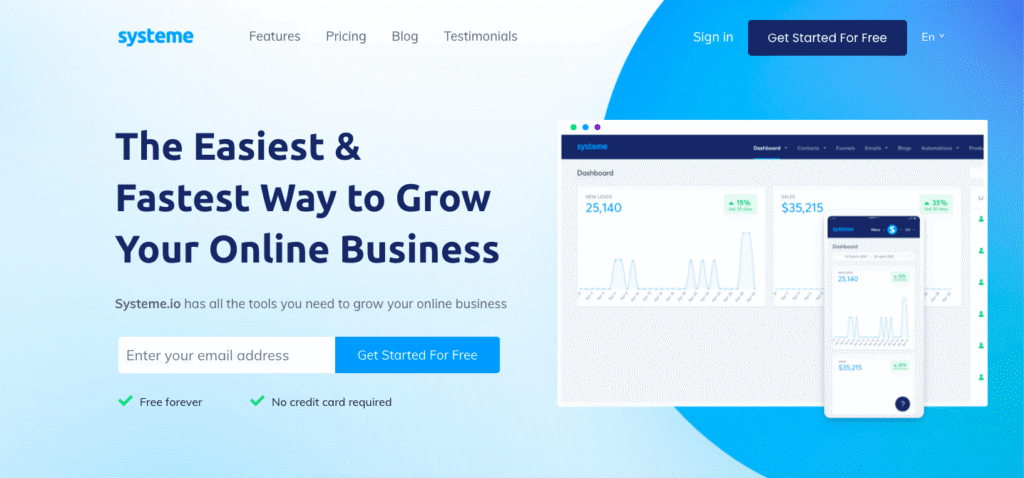
Systeme.io launched publicly in 2018. French entrepreneur Aurélien Amacker built it with a clear goal: to help solo entrepreneurs run their entire online business from one affordable platform. Notably, the feature list mirrors much of what Kajabi offers. Users get funnel building, email marketing, course creation, membership management, affiliate programme tools and a built-in blog.
However, the critical difference sits firmly in the pricing model. Systeme.io offers a genuinely functional free plan. Furthermore, paid plans start at just $27 per month. That gap is not a minor detail. For a new entrepreneur with no reliable income yet, this cost difference is enormous. It can determine whether a business survives its first six months or burns through savings before the first sale arrives.
Today, the platform serves over 300,000 users worldwide. Growth has been steady, particularly among beginners, affiliate marketers and budget-conscious entrepreneurs. Indeed, many users choose it to avoid paying enterprise-level prices. They want a complete tool set without paying for features they may not need for months.
Kajabi launched in 2010. Since then, it has positioned itself as the premium all-in-one platform for knowledge entrepreneurs. Its core audience includes coaches, course creators, consultants and podcast hosts. The platform brings together course hosting, email marketing, landing pages, sales funnels, community tools and analytics in one dashboard.
In essence, Kajabi is built for people who are serious about monetising their expertise. It is also designed for those willing to invest in a polished, professional platform. As a result, the experience it offers both creators and students is premium by design. Naturally, the pricing reflects that positioning.
Following a major update in early 2026, Kajabi moved to a three-tier structure. Prices now start at $179 per month for the Basic plan on monthly billing. The Growth plan sits at $249 per month. The Pro plan sits at $499 per month. In contrast, annual billing reduces those figures to $143, $199 and $399 per month, respectively. No free plan is available at any level.
Kajabi vs Systeme.io: Pricing Compared
Pricing is where the two platforms diverge most dramatically. Indeed, this is where the comparison truly begins.
Kajabi Pricing
Kajabi currently offers three main plans. The Basic plan at $179 per month gives you 5 products, 2,500 contacts and 1 website. The Growth plan at $249 per month expands that to 50 products and 25,000 contacts. Advanced automations and affiliate programme tools are also included at this tier. The Pro plan at $499 per month then unlocks unlimited products, up to 100,000 contacts and 3 websites.
Additionally, Kajabi charges transaction fees if you use a third-party payment provider. The Basic plan carries a 2 per cent fee per transaction. That drops to 1 per cent on the Growth plan. On the Pro plan, it falls to 0.5 per cent. For creators with solid monthly revenue, these fees add up quickly.
Systeme.io’s free plan is genuinely usable. In other words, it is not a stripped-back teaser designed to push you towards an upgrade within days. The free tier includes up to 2,000 contacts, 3 sales funnels, 1 blog, 1 membership site and unlimited email broadcasts. Access to the affiliate programme is also included at no cost.
Moving up, the Startup plan at $27 per month expands your limits to 5,000 contacts and 10 sales funnels. At $47 per month, the Webinar plan grows that further to 10,000 contacts and 50 funnels. For businesses that need no limits at all, the Unlimited plan at $97 per month removes all restrictions.
Importantly, no transaction fees apply to any Systeme.io plan. Every dollar your course or funnel generates stays with you.
The Pricing Verdict
Put simply, this is not a close comparison. Kajabi’s entry-level plan costs more per month than Systeme.io’s Unlimited plan. A beginner on the Systeme.io free plan gets access to more tools than many paid alternatives charge for. Moreover, scaling to a fully unlimited platform costs just $97 per month. In contrast, the same feature set through Kajabi would cost $179 per month at a minimum. For anyone building a business from scratch, that difference is significant. It is the difference between building sustainably and burning through savings before your first sale arrives.
Pricing matters enormously, but it only tells part of the story. So here is how both platforms compare across the features that matter most.
Sales Funnels
Both platforms include a drag-and-drop funnel builder. Kajabi’s builder is clean and polished with professional templates. Systeme.io’s funnel builder is slightly simpler in appearance. Nevertheless, it covers all the essentials: opt-in pages, sales pages, order bumps, upsells and thank-you pages. For a beginner or intermediate marketer, Systeme.io handles every core requirement. Kajabi has a marginal edge on visual polish, but not one that justifies the price difference for most users.
Email Marketing
Both platforms offer built-in email marketing with automation. Kajabi’s email system is robust with a polished editor, detailed segmentation and advanced automation logic on the Growth plan. In contrast, Systeme.io allows unlimited email broadcasts on every plan, including the free tier. Its automation covers the core triggers: opt-in actions, purchases and course enrolments.
Advanced conditional logic and multi-branch workflows are where Kajabi pulls ahead. However, for the majority of solo entrepreneurs and small business owners, Systeme.io’s email tools are more than adequate for daily use.
Online Courses and Membership Sites
Course creation is where Kajabi built its reputation. The course builder is polished and visually refined. Features like cohort courses, video transcription and translation are available on higher plans. Furthermore, students access all their content through a unified mobile app. As a result, the student experience on Kajabi is genuinely premium.
Systeme.io’s course builder is functional and straightforward. You can create structured courses with video modules, drip-released content and progress tracking. The experience is less visually polished. Nevertheless, it is entirely adequate for most course creators who are starting out. Similarly, membership sites work cleanly with tiered access levels and automated enrolment on purchase.
Full-time course creators with an established audience will find Kajabi’s course tools superior. On the other hand, anyone building a first course will find that Systeme.io delivers everything they genuinely need at a fraction of the cost.
For a broader view of how different platforms compare in this space, the Thinkific guide to the best online course platforms is worth reading. It offers a useful and independent overview of the wider market.
Affiliate Programme Management
Both platforms include built-in affiliate management tools. Specifically, Systeme.io includes this feature on every plan, including the free tier. Kajabi, however, restricts affiliate programme access to the Growth plan at $249 per month. That is a significant cost barrier for anyone who wants to run an affiliate programme from day one.
Affiliate marketing is one of the most effective ways to scale income online. The Backlinko guide to affiliate marketing is one of the best free resources available. It gives you a thorough understanding of how the model works in practice.
Automation
Kajabi’s advanced automation on the Growth plan is a genuine strength. Conditional logic, branching workflows and detailed triggers give experienced marketers real flexibility. As a result, building complex follow-up sequences becomes far more manageable.
Systeme.io’s automation handles the core use cases reliably. Triggering emails on opt-in, tagging buyers on purchase and enrolling students automatically all work as expected. However, the depth of conditional logic is more limited than Kajabi’s. For a solo entrepreneur building a first automated sales system, Systeme.io still covers the vast majority of what is needed.
Design and Page Templates
The visual quality of your sales pages affects how visitors perceive your brand. Kajabi’s templates are polished and professionally designed. Consequently, launching premium-looking pages requires very little design effort on your part. Systeme.io’s template library is more functional than decorative. Pages look clean and convert well, but do not carry the same visual weight as Kajabi’s offerings. For most beginners, this distinction matters far less than the tools themselves.
Blogging and Organic Traffic
Systeme.io includes a built-in blog on every plan. It is not a replacement for a WordPress installation. However, it gives you a functional SEO content platform at no additional cost. Kajabi offers blog functionality, too, but it is generally not considered a core strength. Both tools are adequate for entrepreneurs who want to build organic traffic alongside their sales funnels.
Native Integrations
Kajabi integrates natively with Stripe and PayPal. It also connects to a wide range of third-party tools directly. Systeme.io similarly supports Stripe and PayPal. Additionally, it uses Zapier to connect with external applications where direct integrations are not available. Both cover the essentials for most small business operations without requiring a complex technical setup.
Both platforms are designed to be accessible to non-technical users. Kajabi has a clean and well-structured interface. As a result, most users can get their first course or funnel live within a few hours of signing up.
Systeme.io is equally approachable. The interface is more utilitarian in appearance. However, it is logically organised and easy to navigate. In fact, most users are able to build and publish their first funnel within their very first session on the platform.
Neither tool has a steep learning curve for beginners. Kajabi tends to feel more intuitive for users who prioritise polished design. However, Systeme.io’s simplicity is a genuine advantage for users who want to get something live quickly. It removes the need to explore options they may not use for months.
Kajabi vs Systeme.io: Customer Support
Kajabi offers 24/7 customer support on the Growth and Pro plans. Basic plan users also have access to help. Additionally, Kajabi University provides extensive training resources. These cover platform features, marketing strategy and digital product creation.
Systeme.io provides email-based support and has an active user community. However, support response times have been noted as variable by some users. Live chat support is not always available on lower-tier plans. That said, the platform’s simplicity means most users encounter fewer support issues during day-to-day use.
Overall, Kajabi has the stronger support offering. That advantage is particularly notable for users on higher-tier plans who need reliable assistance at short notice. For beginner users, however, it is rarely a deciding factor.
Who Should Choose Kajabi?
Kajabi is built for established creators with an existing audience and consistent revenue. If you sell high-ticket courses, coaching programmes or premium memberships, the polished student experience directly affects perceived value and conversion rates. Your budget also needs to comfortably accommodate $249 per month before you seriously consider this platform. In addition, advanced automation, cohort course features and a branded mobile app are genuine strengths for creators who need them at scale.
In short, Kajabi rewards creators who are already earning and want a premium platform to match the premium products they sell. Starting Kajabi before your revenue supports its cost is a financial risk that most new entrepreneurs simply do not need to take.
Who Should Choose Systeme.io?
The Budget-Friendly Starting Point
Building your first online business without committing to high monthly costs? Systeme.io is the clear fit. It lets you validate your concept before spending anything significant. Affiliate marketers, coaches and content creators who need funnels, email marketing and course tools will find it covers everything they need. Moreover, they can access all of this without paying four to five times the price for a more polished interface.
Room to Grow at Every Stage
Running an online business alongside a full-time job requires a fast platform to set up and affordable to run. Systeme.io delivers on both fronts. Rather than paying for features you will not use for months, you grow into the platform gradually. Starting free is a real option with genuine functionality. Upgrading to $27 per month then gives you serious capability at a very low cost. At $97 per month, the Unlimited plan gives you everything an established business needs at less than the price of Kajabi’s Basic plan.
The Hidden Advantage
Furthermore, Systeme.io’s simplicity is a genuine business advantage that goes beyond cost. Every hour you spend wrestling with an overly complex platform is time you are not creating content or building your audience. Consequently, a tool you can use confidently from day one is more valuable than one packed with features you have not yet learned to use.
For most beginners, the honest answer is no. Kajabi’s entry-level plan at $179 per month is a big financial commitment before you have generated any income. In contrast, Systeme.io provides comparable core functionality for free or $27 per month. That makes it a far more practical starting point for new entrepreneurs.
Can Systeme.io replace Kajabi?
For the vast majority of solo entrepreneurs and small business owners, yes. Systeme.io covers funnels, email marketing, course hosting, membership sites and affiliate management. However, the main areas where Kajabi has a genuine advantage are visual polish, advanced automation logic and the premium student experience it delivers. If those specific features are central to your business, Kajabi justifies its cost. For most users, Systeme.io handles everything that matters at a fraction of the price.
Does Systeme.io have a free plan?
Yes. Systeme.io’s free plan includes up to 2,000 contacts, 3 sales funnels, unlimited email broadcasts, 1 membership site, 1 blog and access to the affiliate programme. Importantly, there is no time limit on the free plan. You can, therefore, build and run a genuine small business on it without spending a single dollar.
Does Kajabi charge transaction fees?
Yes. Processing payments through a third-party provider rather than Kajabi Payments triggers transaction fees. Those fees are 2 per cent on the Basic plan, 1 per cent on Growth and 0.5 per cent on Pro. In comparison, Systeme.io charges no transaction fees on any plan.
Which platform is better for affiliate marketing?
Systeme.io is clearly the stronger choice for affiliate marketers. Built-in affiliate management tools are available on every plan, including the free tier. Kajabi, in contrast, restricts affiliate programme tools to the Growth plan at $249 per month. For anyone building a business around affiliate income, Systeme.io removes the friction that Kajabi builds in from the start.
The Honest Verdict
The Kajabi vs Systeme.io comparison does not have a single universal answer. However, it does have an honest answer based on where you are in your business journey right now.
When Kajabi Makes Sense
Kajabi is a serious and well-built platform. Its course experience, automation depth and student-facing polish are genuinely superior to what Systeme.io offers. As a result, established creators with a real audience and consistent revenue will find those advantages worth paying for. If your business already generates high monthly income and you need premium tools to match your premium products, Kajabi is a logical choice.
Why Systeme.io Wins for Most People
For most people reading this comparison, however, Systeme.io wins clearly. The pricing difference is not marginal. Starting at zero cost and scaling to $97 per month for unlimited access is a very different proposition. It is fundamentally different from paying $179 per month before generating a single dollar. Therefore, the smart move is to start on Systeme.io and validate your business model first. Build your audience and generate income. When your revenue comfortably supports a premium platform, the upgrade makes sense. At that point, you genuinely need what Kajabi offers. The decision then becomes a logical one rather than a financial gamble.
The Mindset Shift That Changes Everything
There is also a psychological benefit to starting on Systeme.io. When you are not under pressure to justify a high monthly fee, you make better decisions. You experiment more freely. You iterate faster. Consequently, you focus on building value for your audience rather than recouping your tool costs. That mindset shift matters far more than most new entrepreneurs realise. In short, start where the risk is low and the opportunity is real. Then upgrade when the data tells you to.
Systeme.io Pros and Cons: The Honest Verdict Every Entrepreneur Needs to Read
If you have been researching systeme.io pros and cons, you already know there is no shortage of opinions on this platform. Some people swear by it as the best thing to happen to small online businesses in years. Others call it too basic for serious marketers. The truth sits somewhere between those two positions. Landing on the right answer for your situation means understanding what the platform was designed to do. You also need to know whether that matches where you are in your business journey right now.
This article is not a promotional puff piece, and it is not a hit job either. It is an honest, structured look at everything systeme.io offers. It covers where it excels, where it falls short and who is most likely to get real value from it. By the end, you will have everything you need to decide.
What Is Systeme.io and Why Does It Matter?
The Core Idea Behind the Platform
Systeme.io is an all-in-one online business platform. French entrepreneur Aurélien Amacker built it and launched it publicly in 2018. The concept was simple from the start. Stop forcing small business owners to pay for five or six separate tools just to run a basic digital operation.
Instead of paying separately for a funnel builder, an email platform, a course hosting service, a membership tool and an affiliate system, you get one dashboard. Systeme.io bundles all of those tools together. The cost is a fraction of what you would pay for them separately.
That idea is not unique. Platforms like ClickFunnels, Kajabi and Kartra make similar claims. What separates systeme.io from those competitors is its pricing model.
ClickFunnels starts at $147 per month. Kajabi starts at $149 per month. Systeme.io offers a free-forever plan and paid plans from $27 per month. For bootstrapped entrepreneurs with tight budgets, that gap is enormous.
The platform now serves over 300,000 users worldwide. It grows steadily, particularly among beginner entrepreneurs, course creators, coaches and affiliate marketers.
The platform attracts a specific type of user. It works best for people building their first serious online income stream. Solo entrepreneurs who want simplicity over complexity also tend to love it.
Digital product creators, coaches and affiliate marketers are common users too. These are people who want to build landing pages, grow an email list and promote offers without juggling multiple tools.
If you are a large agency managing complex client campaigns, systeme.io is probably not built for you. But for its target audience, it delivers strong value.
Systeme.io Pricing: What You Actually Pay
Before looking at the systeme.io pros and cons in detail, it helps to understand the pricing. The cost of each plan determines what you can and cannot do.
Free Plan
The free plan is genuinely useful. It is not the kind of bare-bones offering that forces you to upgrade within a week. You get up to 2,000 contacts, 3 sales funnels, 1 blog, 1 membership site and unlimited email broadcasts. You also get 1 automation rule, 1 custom domain, unlimited students and access to the affiliate programme.
For a new entrepreneur building their first funnel and testing their first offer, this is more than enough.
Startup Plan: $27 per Month
The Startup plan expands your limits significantly. You get 5,000 contacts, 10 sales funnels, 5 blogs, 5 membership sites and 10 automation rules. Three custom domains are also included. Free migration support from the systeme.io team is available too. The annual billing option reduces the monthly cost even further.
Webinar Plan: $47 per Month
This plan suits businesses using webinars for lead generation or sales. Limits grow to 10,000 contacts, 50 funnels, unlimited blogs, unlimited courses and 10 evergreen webinars. Automation rules jump to 100, giving you much more flexibility.
Unlimited Plan: $97 per Month
The Unlimited plan removes all contact, funnel, course and automation limits. It also includes 1-to-1 kickstart coaching sessions with the systeme.io team. This is the best fit for serious entrepreneurs who want expert support alongside full platform access.
For context, building an equivalent stack with separate tools would cost $300 to $500 per month. The systeme.io pricing case is genuinely strong.
The Pros: Where Systeme.io Genuinely Delivers
1. The Free Plan Is Exceptional for Beginners
Most platforms offer a free tier that gives you just enough to understand the product before nudging you to upgrade. Systeme.io’s free plan gives you enough to actually run a small business.
You can build funnels and send unlimited emails to up to 2,000 subscribers. You can host a course and manage an affiliate programme too. All of that is free. This is the standout advantage for anyone starting with zero budget and big ambitions.
2. Everything Works Together Seamlessly
The biggest frustration with multiple separate tools is the integration problem. You connect your email platform to your funnel builder. Your funnel builder struggles to communicate with your course platform. Your course platform fails to tag buyers in your email system.
Every time something breaks in an integration, you lose data and waste hours troubleshooting. Systeme.io removes this problem entirely.
Everything lives in the same system. Someone who opts in to your funnel gets added to your email list right away. A buyer gets tagged and enrolled in your course automatically. A student who completes a module can trigger a new email sequence without any manual input from you.
Nothing is bolted together from the outside. It was all built as one unit from the start. That seamless connection is one of the most genuinely valuable things the platform offers.
3. The Pricing Is Dramatically Lower Than Competitors
This point cannot be overstated. The $27 per month Startup plan includes funnel building, email marketing and course hosting. Membership management and affiliate programme tools are also included. The same features on competitor platforms would cost four to six times more.
For a new business with no reliable income yet, that price difference matters. It is the difference between building sustainably and burning through savings before your first sale.
4. The Funnel Builder Is Beginner-Friendly and Functional
Building a sales funnel for the first time can feel daunting. Systeme.io’s drag-and-drop builder uses clean templates that work straight out of the box. Adding order bumps, upsells, and thank-you pages requires no technical knowledge at all.
If you have used ClickFunnels before, the interface will feel familiar. Brand new users typically publish their first funnel within their first session. It helps to understand how a sales funnel works before you start building. The HubSpot guide to sales funnels gives a clear and practical foundation for beginners.
5. Email Marketing Is Built In and Genuinely Capable
New systeme.io users are often surprised by how capable the email marketing system is. Every plan lets you send unlimited broadcasts to your list. You can build automated sequences triggered by user behaviour. Subscribers can be grouped with tags. Visual automation workflows react to purchases, sign-ups and course completions.
This is a serious set of capabilities for a platform that is not positioned as a dedicated email tool. Deliverability is generally solid, meaning your emails land in inboxes rather than spam folders.
Email marketing remains one of the highest-return channels available. Backlinko’s comprehensive email marketing guide shows that well-structured email automation consistently outperforms most other digital channels. Having this built into your business platform rather than paying for it separately is a real advantage.
Coaches, consultants and content creators benefit greatly from this feature. Building and selling a course inside the same platform as your funnels and email is enormously convenient. Systeme.io lets you create structured courses with video modules, drip-release content and student progress tracking.
You can set up paid membership sites with tiered access levels too. Automated onboarding sequences trigger as soon as a student enrols. The course builder is not as polished as Teachable or Thinkific. But it covers everything a new course creator actually needs. The full experience from sale to student onboarding runs automatically without any manual work from you.
7. Built-In Affiliate Programme Management
Most platforms charge extra for affiliate programme tools or require a separate product entirely. Systeme.io includes a fully functional affiliate management system on every plan, including the free tier.
You can recruit affiliates, assign unique tracking links, set custom commission rates and monitor performance from your main dashboard. For entrepreneurs who want to grow sales through affiliate partnerships rather than paid advertising, this feature alone saves significant money.
8. Blogging Platform Included
Systeme.io includes a built-in blogging tool. You can publish SEO-focused content directly within the platform. It is not as powerful as a dedicated WordPress installation. But it is more than adequate for entrepreneurs who want to generate organic traffic to support their funnels.
For a bootstrapped business building an early content library, having a blog inside the same system as your funnels and email is a genuine convenience.
The Cons: Where Systeme.io Falls Short
No platform is perfect. Honest systeme.io pros and cons analysis means addressing the limitations directly.
1. Customisation Is Limited Compared to Dedicated Tools
Systeme.io’s funnel builder and page editor prioritise ease of use over design freedom. If you need pixel-perfect customisation, complex visual layouts or heavily branded designs that go beyond the available templates, you will find the editor restricting.
Dedicated page builders like Leadpages or ClickFunnels offer more granular design control. Systeme.io makes a deliberate trade-off here: simplicity over flexibility. Most beginners will find this the right call. Experienced marketers with specific design needs may find it frustrating.
2. Native Integrations Are Limited
Systeme.io does not connect natively with as many third-party tools as more established platforms. It works with Stripe and PayPal for payments. It connects to other apps through Zapier. But if you rely on specific CRM tools or niche marketing software, you may need workarounds rather than direct connections. Your tech stack gets more complex as your business grows. That is when this limitation becomes most noticeable.
3. The A/B Testing Functionality Is Basic
A/B testing means running two versions of a page or email at the same time to see which performs better. It is a core optimisation tool for serious marketers. Systeme.io’s A/B testing is present but limited compared to dedicated funnel platforms. If split testing is central to your strategy and you need granular control over results and reporting, systeme.io may fall short.
4. Customer Support Response Times Vary
Several verified user reviews on Capterra flag inconsistent support response times. Email-based support is available. An active user community also exists. But live chat support is not always available on lower-tier plans.
The Capterra review page for systeme.io pulls together hundreds of verified reviews. It gives a useful picture of where the platform does well and where friction occurs. For a solo entrepreneur facing a time-sensitive issue, slow support responses can be a real problem.
5. The Email Editor Has Limitations
The email automation system is capable and well-structured. The email editor itself is a different story. Design customisation options for individual emails are more limited than dedicated platforms like Mailchimp or ActiveCampaign.
If visually rich, heavily branded email newsletters are important to your business, the systeme.io editor may feel constrictive.
6. The Free Plan Has Contact and Funnel Limits
The 2,000 contacts and 3-funnel limits on the free plan are generous as a starting point. They become restrictive as your business grows. Moving to the $27 Startup plan is logical and affordable. But some users find the limit arrives sooner than expected, particularly after a successful lead generation push.
7. Advanced Automation Can Feel Simplistic
The automation builder handles the basics well. Triggering emails on opt-in, tagging buyers and enrolling students all work reliably. But dedicated platforms like ActiveCampaign offer conditional logic, multi-branch workflows and behavioural scoring that systeme.io simply does not match. Entrepreneurs who need complex automation sequences based on detailed behavioural data may eventually outgrow the platform.
Systeme.io vs. The Competition: A Direct Comparison
Systeme.io vs. ClickFunnels
ClickFunnels is the most well-known sales funnel platform on the market. It offers more advanced customisation, stronger A/B testing and a larger community of users and resources. But it starts at $147 per month. That is over five times the cost of systeme.io’s Startup plan. The learning curve is also considerably steeper. For a beginner who needs a functional, affordable funnel builder with email and course tools included, systeme.io wins on value and accessibility.
Systeme.io vs. Kajabi
Kajabi is the premium choice for established course creators and coaches. Its design quality, student experience features and community tools are superior to systeme.io. But Kajabi starts at $149 per month and has no free plan. Paying that monthly fee before generating any income is a significant risk. Systeme.io lets you build, launch and sell your first course entirely for free. That removes a lot of the financial risk from the early stages.
Systeme.io vs. Kartra
Kartra is a powerful all-in-one platform with strong video hosting, advanced analytics and a more sophisticated CRM. But it starts at $119 per month and has a reputation for being overwhelming to learn. Systeme.io is simpler, faster to set up and dramatically cheaper. For most new entrepreneurs, the extra power Kartra offers is unnecessary and comes at a cost that is hard to justify.
Who Should Use Systeme.io?
Based on a balanced look at the systeme.io pros and cons, the platform suits these groups well.
Beginner entrepreneurs who need a full business platform without paying premium prices before earning their first dollar. The free plan alone is enough to launch a real business and test whether a concept works before spending anything.
Affiliate marketers who want to build landing pages, capture subscribers and run automated follow-up sequences to promote products. Systeme.io provides everything needed for this model in one affordable package.
Course creators and coaches who want to sell digital knowledge, host course content and manage their email list without juggling multiple expensive platforms.
Side hustlers and bootstrapped business builders who are building online income alongside a full-time job. They need a platform that is simple to learn, quick to set up and affordable to run before generating consistent revenue.
Who Should Look Elsewhere?
Advanced marketers who need deep customisation, complex automation, sophisticated A/B testing and extensive integrations will likely hit systeme.io’s ceiling. Dedicated tools like ClickFunnels or ActiveCampaign will serve them better.
Large e-commerce operations with significant product inventories and complex order management needs will find systeme.io’s e-commerce capabilities too limited for their scale.
Design-focused brands that place high importance on visually distinctive and heavily customised pages may find the template-based editor too restrictive for their standards.
How to Get the Most Out of Systeme.io
A few practical habits will significantly improve your results if you decide systeme.io is right for you.
Start on the free plan and build your first funnel before thinking about upgrading. Validate your offer and generate your first subscribers on the free tier. This tells you whether your business model works before you commit to any fees.
Use the built-in affiliate programme early rather than waiting until you feel established. Recruiting even a handful of active affiliates can accelerate your growth without any additional advertising spend.
Set up proper email automation sequences from day one. Build a welcome sequence, a nurture sequence and a post-purchase onboarding series early on. Each new subscriber then moves through the process automatically, without any further effort from you.
One final tip: do not try to use every feature at once when you first sign up. Pick one goal for your first two weeks, whether that is building a landing page, setting up a lead magnet or launching a simple course. Get that one thing working properly before moving to the next. That focused approach is the fastest route from free plan user to paying customer and then to profitable business owner.
The Final Verdict on Systeme.io Pros and Cons
Taking all of the systeme.io pros and cons into account, the platform earns a strong recommendation for its target audience and a clear caveat for everyone else.
Systeme.io is not the most powerful platform available. Customisation options are more limited than some rivals. Deep native integrations and sophisticated automation are not its strengths either. But no other platform at this price point comes close to matching its breadth of features. It is the most accessible and the most affordable all-in-one option for anyone building an online business from scratch.
The free plan alone makes it worth signing up just to explore what is possible. Starting at $27 per month, the Startup plan is a strong contender against platforms charging five times as much. At $97 per month, the Unlimited plan is a compelling full-business solution for established entrepreneurs who want everything under one roof without the overhead costs that come with competitor pricing.
Are you a beginner entrepreneur, an affiliate marketer, a coach or a course creator? The systeme.io pros and cons balance decisively in its favour. Start free, build fast and upgrade only when your results make it clear that it is time to do so.
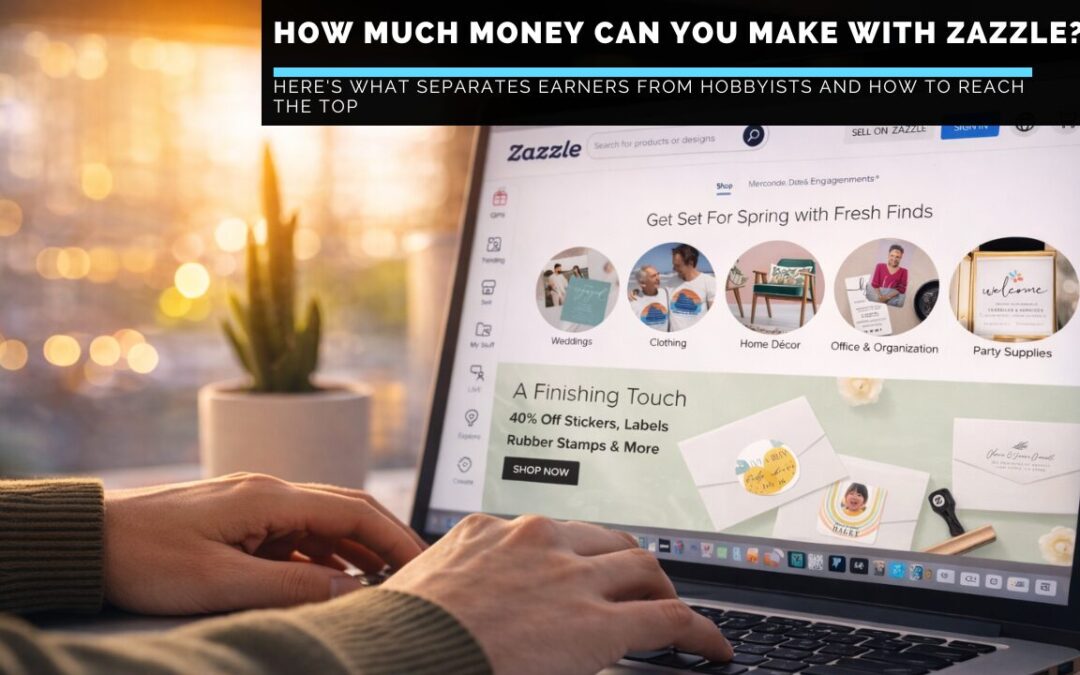
How Much Money Can You Make With Zazzle? The Real Numbers Revealed
How much money can you make with Zazzle? It is one of the more interesting questions in the print-on-demand space because the honest answer spans an enormous range. Some Zazzle sellers earn a few dollars a month and walk away disappointed. Others have built genuine five-figure annual incomes from the platform without holding any inventory, managing any logistics or spending a penny on advertising. The difference between those two outcomes is not luck. It is strategy, consistency and a clear understanding of how the platform actually rewards its sellers.
This article covers everything you need to know about Zazzle income. It explains how the platform works, what the real earning figures look like at different levels of engagement, what the most successful sellers do differently and whether Zazzle is genuinely worth your time in 2026.
What Is Zazzle and How Does It Work?
The Print-on-Demand Model
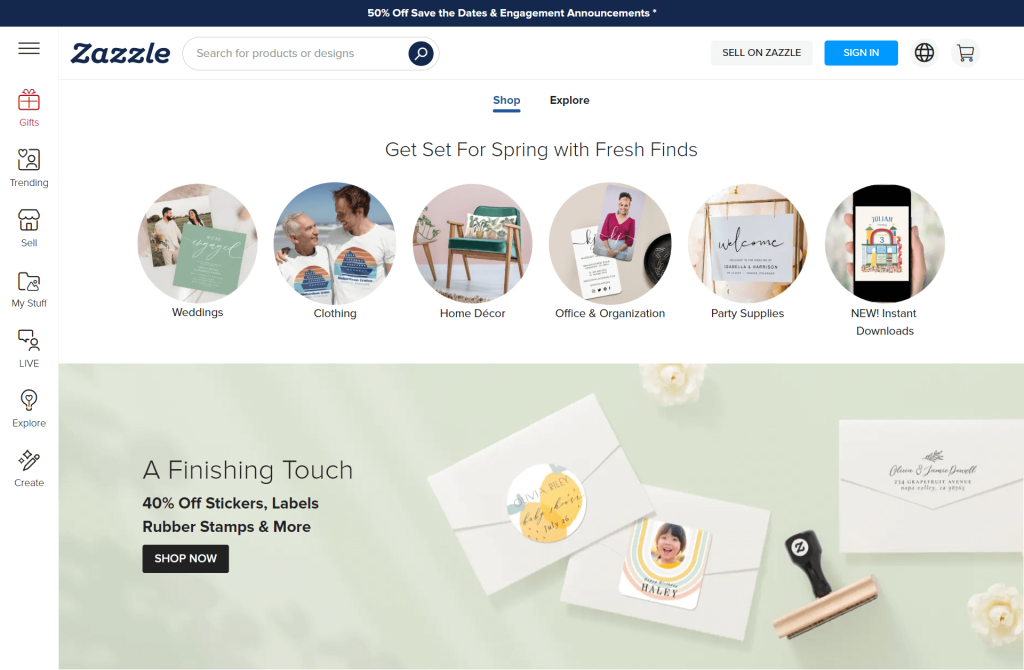
Zazzle is a print-on-demand marketplace that has been operating since 2005. The concept is straightforward. Designers upload artwork and apply it to products from Zazzle’s catalogue. That catalogue includes t-shirts, mugs, phone cases, greeting cards, posters, tote bags, notebooks, wedding stationery and hundreds of other items. When a customer purchases a product, Zazzle prints it, ships it and handles all customer service. The designer earns a royalty on the sale.
The appeal is obvious. You create a design once, upload it, and it can generate income repeatedly without any further effort on your part. There is no upfront cost, no inventory risk and no fulfilment work. Your only job is to create designs that people want to buy.
Zazzle gives sellers full control over their royalty rate. You set the percentage markup above the platform’s base product price yourself. The minimum royalty is 5%, and the maximum is 99%. Most experienced sellers set their royalties between 10% and 20% to stay competitive on price while earning a meaningful amount per sale.
To put this in concrete terms: a mug with a base price of $8.95 at a 15% royalty earns you $1.34 per sale. A poster with a base price of $14.95 at the same royalty rate earns $2.24. Wedding stationery sets and premium items have higher base prices and therefore generate higher royalty amounts at the same percentage rate.
Zazzle also has a volume bonus system. Sellers who generate more than $100 in sales in a given month earn a bonus royalty payment on top of their standard rate. This bonus increases with higher sales volumes, which rewards sellers who build large, productive shops.
The Zazzle Associate Programme
Beyond selling your own designs, Zazzle offers an associate programme that pays a commission for referring customers to any product on the platform, including products made by other designers. The associate commission rate is 15% of the referred sale value. This opens up a second income stream for anyone willing to promote Zazzle products through a blog, social media or an email list.
How Much Money Can You Make With Zazzle? The Real Figures
Beginners: The First Three to Six Months
New Zazzle sellers almost always earn very little in their first few months. A shop with fewer than 50 designs and no external promotion typically generates between $0 and $30 per month. This is not a reflection of the platform’s potential. It is a reflection of how long it takes to build enough product volume for the Zazzle search algorithm to surface your work regularly to shoppers.
The Zazzle marketplace is large. It hosts hundreds of millions of products. Standing out in that environment takes time and volume. Sellers who upload 10 designs and check back a month later, hoping for significant income, are almost always going to be disappointed. The platform rewards persistence.
Intermediate Sellers: Six Months to Two Years
Sellers who commit to a consistent upload schedule and reach 200 to 500 products typically begin to see meaningful monthly income between six and eighteen months after opening their shop. Income in this range commonly sits between $100 and $500 per month, with the exact figure depending heavily on niche selection, design quality and how well the products match Zazzle’s most active buyer categories.
Niches that consistently perform well on Zazzle include personalised gifts, wedding stationery, pet-related products, professions and hobbies, seasonal items and funny or sentimental greeting cards. Sellers who focus on one or two of these niches and build deep product libraries within them tend to outperform those who spread their designs thinly across many unrelated categories.
Established Sellers: Two Years and Beyond
Sellers who have been active for two years or more with shops containing 1,000 or more products can earn $1,000 to $5,000 per month. A smaller group of Zazzle’s most established sellers, those with very large shops in strong niches and significant external traffic sources, report earnings of $5,000 to $10,000 per month or more.
These figures are not typical. They represent the upper end of the distribution and require sustained effort over a long period. However, they do demonstrate that Zazzle can be a serious income source rather than just a hobby platform, provided you treat it like a business from the start.
The Role of Seasonal Income
Zazzle income is not evenly distributed across the year. The platform’s biggest earning periods align with major gifting seasons. The Christmas period from October through December generates dramatically higher sales than the rest of the year for most sellers. Valentine’s Day, Mother’s Day, Father’s Day and graduation season are also significant peaks.
Sellers who build their shops around seasonal and gifting products and prepare new designs well ahead of each peak season consistently earn more than those whose shops are not aligned with the platform’s natural buying patterns. Planning your upload schedule around seasonal demand is one of the clearest practical advantages experienced Zazzle sellers have over beginners.
What Determines How Much You Earn on Zazzle?
Design Quality and Marketability
Design quality matters, but marketability matters more. A technically perfect design that nobody is searching for will sell nothing. A simpler design that directly addresses a specific buyer’s needs, such as a t-shirt for nurses who love coffee or a personalised mug for dog owners with a specific breed, can sell consistently for years.
Successful Zazzle designers think like buyers rather than artists. They ask what a specific type of person would want to give or receive as a gift and then create something that precisely answers that question. Niche specificity almost always outperforms broad appeal on the Zazzle marketplace.
The number of active products in your shop is one of the strongest predictors of Zazzle income. More products mean more entry points into the Zazzle search results. They mean more opportunities for a shopper browsing a specific niche to find something you made. They also mean that the platform’s algorithm has more data about your shop’s relevance and quality, which tends to improve visibility over time.
Sellers who reach 500 products faster by uploading consistently tend to reach meaningful income thresholds faster. Uploading three to five new designs per week is a sustainable pace for most part-time sellers and produces a shop of 500 products within two to three years of opening.
Titles, Tags and Descriptions
Zazzle is a search-driven marketplace. Shoppers type in what they are looking for, and the platform returns products it considers most relevant. Your product’s title, tags and description determine whether your products appear in those results.
Effective Zazzle SEO means writing titles that include the specific words buyers use rather than creative or artistic descriptions. A product titled “Funny Golden Retriever Mug for Dog Mums” will outperform one titled “Golden Sunshine Canine Joy Cup” every time in search results. Use the words buyers would type. Think about the occasion, the recipient, the emotion and the specific subject matter and include all of those in your title and tags.
External Traffic
The sellers who reach the highest income levels on Zazzle rarely rely on the platform’s internal search alone. They drive traffic from external sources. Pinterest is the most commonly cited external channel for Zazzle sellers, largely because Zazzle’s products are highly visual and Pinterest’s image-driven format is a natural fit.
A Zazzle seller with a well-maintained Pinterest account, posting consistently and linking pins directly to product pages, can generate a significant flow of external buyers in addition to the organic Zazzle search traffic their shop attracts. Some sellers also use a blog, YouTube channel or Instagram account to build an audience around their niche and funnel readers towards their Zazzle shop.
Zazzle vs. Other Print-on-Demand Platforms
Zazzle vs. Redbubble
Redbubble is Zazzle’s most direct competitor. Both platforms allow designers to upload artwork and earn royalties from print-on-demand sales. Redbubble’s product range skews more towards apparel and art prints. Zazzle’s range is broader and includes more gifting and stationery products that often have higher average order values.
Zazzle gives sellers more control over their royalty rate. Redbubble sets a base margin, and sellers can adjust above it, but the structure is slightly less flexible. Zazzle also tends to attract buyers who are specifically looking for personalised or customisable products, which often means higher conversion rates for the right product types.
Most serious print-on-demand sellers maintain shops on both platforms rather than choosing between them. There is no cost to doing so, and the two audiences are different enough that the same designs can perform differently on each platform.
Zazzle vs. Etsy
Etsy is a different type of marketplace, and the comparison is less direct. Etsy sellers typically offer either handmade goods or digital downloads rather than print-on-demand products, though print-on-demand is permitted on Etsy when used correctly. Etsy charges listing fees and transaction fees that Zazzle does not, which affects the economics of running a shop on that platform.
Zazzle’s advantage over Etsy for print-on-demand is that Zazzle handles all the fulfilment automatically with no action required from the seller. On Etsy, using a print-on-demand integration, there are additional layers of setup and management involved. For pure passive income potential, Zazzle is simpler.
Zazzle vs. Merch by Amazon
Merch by Amazon pays lower royalty rates than Zazzle for comparable products but benefits from Amazon’s enormous built-in audience. Getting accepted onto Merch by Amazon requires an application and approval process, unlike Zazzle, which is open to anyone. For designers who are accepted, Merch by Amazon can generate significant income, but the lower royalty rate means you need higher sales volumes to match Zazzle’s earnings at a comparable product count.
The single most impactful decision you can make when starting on Zazzle is to choose a tight, specific niche and build deep within it. A shop with 300 products all serving the same specific audience, such as teachers, nurses or cat owners, will almost always outperform a shop with 300 products spread across dozens of unrelated subjects.
A focused niche helps in several ways. It trains the Zazzle algorithm to understand what your shop is about. It builds topical authority within the marketplace’s internal search. It also makes it much easier to cross-sell between products because buyers browsing one of your items are likely to be interested in others.
Lean Into Personalisation
Zazzle’s most powerful feature is the ability to offer customisable products. Buyers can add names, dates, photos and custom text to many product types. This customisation capability sets Zazzle apart from most other print-on-demand platforms, and it is one of the main reasons buyers specifically seek out Zazzle rather than a generic marketplace.
Designing products with personalisation in mind, leaving clear space for names or custom text, and explicitly noting the customisation options in your product titles and descriptions helps convert browsers into buyers. Personalised gifts consistently command higher prices and sell at higher volumes during peak gifting seasons.
Set Your Royalty Rate Strategically
Many new sellers set their royalty rate too high in the belief that a higher rate means more income per sale. In reality, a 30% royalty that pushes your product’s price significantly above the average for similar items may result in fewer sales than a 15% royalty at a more competitive price point. More sales at a slightly lower margin often produce higher total income than fewer sales at a higher margin.
Research what similar products in your niche sell for on Zazzle before setting your rate. Aim for a price that is competitive without being so low that you are earning almost nothing per sale. For most product types, a royalty of 10% to 18% represents a reasonable balance between competitiveness and earnings per sale.
Build an External Promotion Strategy
Relying entirely on Zazzle’s internal search puts your income entirely at the mercy of the platform’s algorithm. Adding an external traffic source, even a modest one, gives you a second growth lever that you control.
Pinterest is the most effective external platform for Zazzle sellers. Create a Pinterest business account, pin your products regularly with keyword-rich descriptions and link each pin directly to the relevant product page in your Zazzle shop. Consistency matters more than volume. Pinning five items per day every day will outperform pinning fifty items once a week.
A niche blog is a slower but more powerful long-term traffic source. A blog covering gift ideas for nurses, for example, can attract highly targeted search traffic from buyers who are already in a purchasing mindset and direct them naturally towards the nursing-themed products in your Zazzle shop.
Use the Zazzle Associate Programme as a Second Income Stream
While your own shop is building momentum, the Zazzle Associate Programme lets you earn commissions by promoting other designers’ products. If you run a blog, social media account or email list, sharing links to Zazzle products that are relevant to your audience earns you 15% of any resulting sales. This requires no design work at all and can generate income alongside your own shop earnings from day one.
Zazzle is a genuine, legitimate platform that has been paying designers since 2005. The business model is sound. The product quality is generally well-regarded by buyers. The platform’s focus on personalisation gives it a differentiated position in the print-on-demand market that pure commodity platforms cannot easily replicate.
For a designer with a clear niche focus, a willingness to upload consistently and a basic understanding of marketplace SEO, Zazzle offers a real path to passive income that grows over time. The compounding nature of a growing product library means that the income potential genuinely increases with time rather than staying flat.
The Case Against
Zazzle income builds slowly. The first six months require consistent effort with minimal financial reward. Designers who need immediate income will find this frustrating. The marketplace is also large and competitive, which means that generic, broadly appealing designs increasingly struggle to stand out. Success on Zazzle in 2026 requires more strategic thinking than it did in 2015, when the marketplace was smaller and less crowded.
Zazzle is also not the highest-income opportunity in the print-on-demand space for every type of designer. If apparel is your primary focus, platforms with stronger t-shirt audiences may serve you better. If your designs are art-focused, Redbubble’s audience may be a stronger match.
The Honest Verdict
Zazzle is worth the time investment for patient, niche-focused designers who are willing to treat it like a business rather than a passive income shortcut. It is not a get-rich-quick platform. It rewards the same qualities that make any content or product business succeed: consistency, strategic thinking and a genuine focus on what buyers want rather than what designers want to make.
The Printful guide to print-on-demand business models gives a useful overview of how the print-on-demand model works across different platforms and is worth reading before you decide where to focus your design efforts.
Beyond Zazzle: Building a More Diversified Online Income
Why Zazzle Works Best as Part of a Bigger Strategy
Zazzle income, even at its highest levels, comes with the same platform dependency risk that affects any third-party marketplace income. The platform can change its royalty structure, its search algorithm or its fee model at any time. Sellers who have built their entire income on Zazzle have experienced significant disruptions when the platform has made major changes in the past.
The most resilient online income strategy uses Zazzle as one income stream within a broader portfolio. A niche blog that reviews gifts for a specific audience, drives traffic to an affiliated Zazzle shop and also promotes relevant software tools through affiliate marketing creates multiple income streams that reinforce each other without any single one being a single point of failure.
The Affiliate Marketing Combination
Affiliate marketing is the natural complement to a Zazzle income strategy for content creators. The same niche focus that makes a Zazzle shop successful also makes a niche blog or social media account a strong base for promoting affiliate products. A blog for dog owners that drives traffic to a Zazzle shop full of dog-themed gifts can simultaneously earn affiliate income by recommending dog food subscriptions, training courses, veterinary insurance and pet care tools.
The Shopify guide to building passive income through affiliate marketing is one of the clearest explanations available of how to combine content creation with affiliate income in a way that compounds over time. It covers the mechanics of selecting programmes, creating content that converts and building an audience that generates consistent commissions.
Starting a Niche Blog Alongside Your Zazzle Shop
A niche blog requires more setup than a Zazzle shop, but it offers something that Zazzle cannot: an owned audience, full monetisation control and traffic that you have built independently rather than borrowed from a marketplace.
A new blog takes three to six months to begin attracting meaningful organic search traffic. By month twelve, a consistently published blog in a focused niche can generate real traffic and affiliate income alongside the Zazzle royalties from the shop it promotes. By month eighteen, the combined income from both can reach a level that makes a material difference to a household budget.
There are no inflated promises and no courses to buy. Just a practical framework for building online income that grows rather than stays flat.
The Final Word
How much money can you make with Zazzle? With a small beginner shop and no strategy, the realistic answer is $10 to $30 per month. With a focused niche, 500 or more products, strong SEO and a consistent Pinterest presence, $500 to $2,000 per month is achievable within two years of serious effort. The upper tier of established Zazzle sellers earns $5,000 per month or more, though reaching that level requires a combination of large product volume, strong niche authority and significant external traffic.
The platform is legitimate, the income is real, and the passive nature of royalty income means your shop can generate sales while you sleep, travel or work on other things. How much money can you make with Zazzle? This ultimately comes down to how seriously you treat it, how well you understand your buyers and how consistently you add new products over a sustained period. Treat it like a business rather than a hobby, and the financial upside is genuinely worth the effort.
How to Make Money With ClickFunnels- 7 Proven Strategies That Actually Work
If you have been researching online business tools for any length of time, you have almost certainly come across ClickFunnels. It is one of the most talked-about platforms in the online marketing space and for good reason. But the conversations around it tend to split fairly sharply between enthusiastic testimonials from people who have built significant income using it and sceptical commentary from people who wonder whether the hype around it reflects reality for the average person. This article is for people who want a grounded, honest answer to the question of how to make money with ClickFunnels, without the breathless sales energy that often surrounds the topic.
ClickFunnels is a sales funnel building platform that allows individuals and businesses to create structured sequences of pages designed to guide a visitor towards a specific action, whether that is making a purchase, joining an email list, booking a call or signing up for a programme. What sets it apart from a standard website builder is its focus on conversion rather than information. Every element of a ClickFunnels funnel is designed to move the visitor one step closer to the desired outcome.
There are multiple distinct ways to generate income using ClickFunnels, ranging from selling your own products and services to earning affiliate commissions by recommending the platform itself. This article covers all of the main approaches in practical detail, with realistic income expectations and clear first steps for each one.
Understanding ClickFunnels Before You Start
What ClickFunnels Actually Does
ClickFunnels allows you to build sales funnels without needing to write a single line of code. A typical funnel might include a landing page that captures a visitor’s attention and collects their email address, followed by a sales page presenting an offer, followed by an order form and a thank-you page. More sophisticated funnels include upsell and downsell pages, membership access pages and automated email follow-up sequences.
The platform integrates with major email marketing services, payment processors and third-party tools, which means it can sit at the centre of a complete online business infrastructure without requiring any technical expertise to manage.
ClickFunnels is not a cheap tool. The standard plan starts at $97 per month, and the more feature-rich plans are priced higher. This cost structure means it works best for people who are serious about building a business around it rather than casual experimenters who want to dip a toe in. Before committing to the platform, it is worth understanding clearly which income strategy you are pursuing and whether the projected returns justify the monthly investment.
That said, ClickFunnels does offer a free trial period, which gives you the opportunity to build and test your first funnel before incurring ongoing costs. For anyone evaluating the platform seriously, using that trial window to validate your initial funnel concept before committing to a paid plan is the sensible approach.
Strategy 1: Selling Your Own Digital Products
Why Digital Products and ClickFunnels Are a Natural Fit
If you have a digital product to sell, whether that is an ebook, an online course, a template pack, a software tool or a membership community, ClickFunnels provides the infrastructure to sell it at the highest possible conversion rate. The platform’s funnel structure is specifically designed to present offers in the sequence that maximises the probability of a purchase, which is something a standard website or e-commerce store typically does not do as effectively.
A simple digital product funnel might work as follows. A visitor arrives on a landing page offering a free lead magnet in exchange for their email address. Once they opt in, they are immediately presented with a low-cost front-end offer, perhaps a $27 ebook or a $47 mini course. If they purchase, they are taken to an upsell page presenting a higher-value product at $97 or more. Each step in the sequence is designed to increase the average transaction value from each visitor.
The Income Potential
The income from selling digital products through ClickFunnels depends entirely on what you are selling, the size of the audience you can drive to your funnel and how well each page converts. A well-structured digital product funnel with a lead magnet, a front-end offer and one upsell can realistically generate $3 to $10 in revenue per visitor, depending on conversion rates and product pricing.
A funnel receiving 500 visitors per month with a $5 average revenue per visitor generates $2,500 per month. Scaling traffic to 2,000 visitors per month with the same funnel economics produces $10,000 per month. These figures illustrate why successful funnel builders focus so heavily on traffic quality and funnel conversion rather than on either factor in isolation.
Strategy 2: Selling a Service Business Through Funnels
Using ClickFunnels to Book Clients
Selling services through ClickFunnels follows a slightly different model from product sales, but the underlying principle is the same. You use a funnel to guide a potential client from initial interest to a booked discovery call or a direct purchase of your service package.
Coaches, consultants, agency owners, freelancers and professionals of every type use ClickFunnels to generate leads and convert them into paying clients. A typical service funnel might include a free value offer such as a guide, a checklist or a short video training, followed by a landing page capturing the lead’s contact details, followed by an automated email sequence that builds trust and invites the prospect to book a consultation call.
Why Funnels Outperform Standard Websites for Service Businesses
A standard website gives visitors too many choices. They can click on any menu item, read any page and leave whenever they want without taking any specific action. A funnel removes that friction by presenting one clear step at a time and making it easy for the interested visitor to take the next action.
Service businesses that switch from a standard website to a ClickFunnels-based lead generation funnel frequently report significant improvements in the number of discovery calls booked and the percentage of those calls that convert into paying clients. The funnel does not create interest where none exists, but it does dramatically reduce the leakage that occurs when interested prospects land on a website with no clear path to action.
Strategy 3: Selling Physical Products With Order Bumps and Upsells
The Physical Product Funnel Model
ClickFunnels was initially popularised in the physical product space through what its founder, Russell Brunson, called the free-plus-shipping model. In this model, you offer a physical product for free and charge only for shipping. The product cost is covered by the shipping charge, and the profit comes from the upsells presented after the initial offer is accepted.
While this specific model has become more competitive since its heyday, the underlying principle of using ClickFunnels to add order bumps and upsells to physical product sales remains highly effective. An order bump is an additional offer presented on the order form page itself, typically a complementary product or an extended version of the main offer. Research from ClickFunnels consistently shows that well-positioned order bumps can increase average order value by 15% to 40% with no additional traffic cost.
Who This Works Best For
Selling physical products through ClickFunnels works best for sellers who already have a supply chain established and who are looking for a higher-converting alternative to a standard e-commerce store for their core product. It is particularly effective for consumable products, health and wellness items and lifestyle accessories where repeat purchase behaviour and supplementary product recommendations are natural and expected.
Strategy 4: Running Online Courses and Membership Sites
ClickFunnels as a Course Delivery Platform
ClickFunnels includes built-in functionality for creating and delivering online courses and membership sites. This makes it possible to manage the entire customer journey, from initial marketing and sales through to content delivery and ongoing membership management, within a single platform.
For course creators, this integration removes the need to stitch together a separate landing page builder, a payment processor and a course hosting platform. Everything lives under one roof, and the funnel-based sales approach that ClickFunnels is built around is ideally suited to selling information products at the conversion rates the platform is known for.
Structuring a Profitable Course Funnel
A successful course funnel typically begins with a free content offer that demonstrates your expertise and attracts the right kind of prospect. This might be a free webinar, a free challenge or a free mini course that delivers genuine value while naturally positioning your paid programme as the logical next step.
The sales funnel following the free offer handles the transition from interested prospect to paying student, including the presentation of the course offer, testimonials, a clear articulation of the transformation the course provides and a low-friction order process. Course creators who master this sequence on ClickFunnels often find that their course generates significantly more revenue per launch than it did through a conventional website-based sales process.
Online course income through ClickFunnels varies enormously. A well-structured course in a commercial niche selling at $197 to $997, with a funnel converting at 2% to 4% of traffic, can generate $5,000 to $30,000 or more per launch, depending on the size of the audience being driven to the funnel.
Strategy 5: Agency Model – Building Funnels for Other Businesses
The Opportunity in Funnel Building Services
One of the most direct ways to generate income from ClickFunnels without needing to sell your own product or build your own audience is to build funnels for other businesses. As the platform has become more widely adopted, the demand for competent funnel builders who can produce professional, high-converting results has grown consistently.
Many small and medium-sized businesses understand that they need better online sales infrastructure but lack the time, technical confidence or strategic knowledge to build effective funnels themselves. A skilled ClickFunnels specialist who can step in, understand the client’s offer and audience and build a funnel that demonstrably improves their conversion rates is providing a service with clear, measurable business value.
What Funnel Building Services Pay
Entry-level funnel builders working with their first clients typically charge $500 to $1,500 per funnel. Experienced funnel builders with a portfolio of successful projects and documented results charge $3,000 to $10,000 or more for complete funnel builds. Specialists who manage ongoing split testing, optimisation and funnel maintenance for clients add monthly retainer fees of $500 to $2,000 on top of the initial build fee.
A funnel builder completing three projects per month at an average of $2,000 per project earns $6,000 per month from funnel building alone. The income potential scales with the quality of your work and the strength of your ability to demonstrate measurable returns for clients.
Getting Started as a Funnel Builder
The most effective way to begin is to build several funnel examples using your own ClickFunnels account, even if they are for hypothetical businesses or as spec projects for friends who have existing businesses. These samples form the foundation of your portfolio and give potential clients the evidence they need to take a chance on a newer service provider.
Once you have three to five examples of completed funnels that demonstrate your ability to build clean, professional, well-structured pages, you can begin pitching to local businesses, reaching out to coaches and consultants in online communities and listing your services on freelance platforms.
Strategy 6: The ClickFunnels Affiliate Programme
How the Affiliate Programme Works
ClickFunnels operates one of the most generous affiliate programmes in the software industry. Affiliates earn a 40% recurring commission on every subscription they refer. This means that if someone you refer signs up to a $97 per month plan and remains a subscriber, you earn approximately $38.80 every month for as long as that person stays subscribed.
The recurring nature of the commission is what makes the ClickFunnels affiliate programme particularly attractive as a long-term income model. A single active referral generates a predictable monthly income. Build up 50 active referrals, and the monthly passive income from that base is approximately $1,940 before any new referrals are added.
The programme also includes two-tier commissions, meaning you earn a percentage of the commissions generated by affiliates you refer to the programme. This creates an additional layer of earning potential for affiliates who attract other marketers into the ClickFunnels ecosystem.
How to Promote ClickFunnels Effectively as an Affiliate
The most successful ClickFunnels affiliates typically take one of two main approaches. The first is to build a content presence, through a blog, a YouTube channel or social media, that targets people who are evaluating ClickFunnels or looking for solutions to problems that ClickFunnels addresses. Reviews, tutorials and comparison articles drive high-intent traffic from people who are already close to a buying decision.
The second approach is to create a lead magnet or a free training that appeals to entrepreneurs, marketers or business owners and embed ClickFunnels recommendations naturally within the value delivered. People who receive genuine help from you are far more likely to act on your recommendations than people who encounter a straight promotional pitch.
Strategy 7: Local Business Consulting and Done-For-You Funnels
The Local Opportunity That Most Online Marketers Ignore
While much of the conversation around ClickFunnels focuses on online businesses with global reach, a significant and often underserved opportunity exists in the local business market. Restaurants, dental practices, estate agents, fitness studios, law firms and trade businesses all need better online lead generation, and very few of them have the knowledge or time to build effective funnels on their own.
A consultant who approaches local businesses with a clear value proposition backed by examples of what a well-built funnel can do for their specific type of business has a genuine competitive advantage. Local business owners are not typically comparing you to a pool of global competitors. If you are the only person in their network who understands funnel strategy and can demonstrate it clearly, the client acquisition process is considerably more straightforward than competing on platforms like Upwork.
Pricing for Local Business Funnels
Local business funnels are typically simpler than complex online course or product funnels, which means the build time is lower. This makes them accessible as entry-level funnel-building projects. A straightforward lead generation funnel for a local service business, including a landing page, a thank-you page and a basic email follow-up sequence, can be priced at $800 to $2,500 depending on the market and the business size.
Monthly management and optimisation services can be added at $300 to $800 per month, creating a recurring revenue model that grows as your client base expands. Fifteen local business clients paying $400 per month for ongoing funnel management generate $6,000 per month in recurring income, which is a genuinely meaningful and sustainable business built entirely around ClickFunnels expertise.
The Traffic Question: Why Your Funnel Alone Is Not Enough
One of the most important things to understand about making money with ClickFunnels is that the platform itself does not generate traffic. A beautifully built funnel with no visitors produces no income. The income potential of any ClickFunnels strategy is entirely dependent on your ability to drive qualified traffic to your funnel pages.
Paid Traffic
Paid traffic through Facebook Ads, Google Ads and TikTok Ads is the fastest way to drive visitors to a funnel. It is also the most expensive and the most technically demanding for beginners. Running paid traffic profitably requires understanding your numbers, particularly your cost per lead, your cost per acquisition and your average order value, and being willing to test and iterate until the economics become positive.
Beginners with limited budgets should be cautious about jumping straight into paid traffic. The learning curve is real, and it is entirely possible to spend several hundred dollars testing ads before a funnel is reliably profitable.
Organic Traffic
Organic traffic through SEO-optimised blog content, YouTube videos and social media is slower to build but produces visitors with no ongoing cost per click. A blog article that ranks on the first page of Google for a relevant search term can send consistent, targeted traffic to a ClickFunnels landing page for months or years without any additional investment.
This is why the most financially resilient ClickFunnels businesses combine an organic content strategy with selective use of paid traffic rather than depending entirely on either one. The organic traffic provides a reliable baseline. The paid traffic allows for rapid scaling when a funnel has been proven to convert.
Email List Traffic
Building an email list through your funnel opt-in pages and then driving that list back to new offers is one of the highest-return traffic strategies available. An email list of engaged subscribers who have already shown interest in your niche can be driven to a new product launch or a time-sensitive offer with no additional traffic cost. This is why experienced ClickFunnels users prioritise list building from the very beginning of their funnel activity.
Common Mistakes That Prevent ClickFunnels From Paying Off
Overcomplicating the First Funnel
Many beginners try to build a sophisticated multi-step funnel with multiple upsells, complex automation and advanced segmentation before they have validated that their core offer converts at all. A simple two-page funnel that collects email addresses and presents a single offer will tell you more about the viability of your concept in less time and at a lower cost than a complex funnel built over weeks.
Start simple. Validate the concept. Add complexity only once the basic version is working.
Ignoring the Numbers
ClickFunnels provides detailed analytics on every page in your funnel. The percentage of visitors who move from one page to the next, the opt-in rate on your landing page and the conversion rate on your sales page are the numbers that determine whether your funnel is profitable. Ignoring these metrics and continuing to send traffic to a poorly converting funnel is one of the most common and most expensive mistakes in the space.
Review your funnel analytics at least weekly. Identify the page with the biggest drop-off rate. Run a split test on that page with one specific change at a time. Repeat this process consistently, and your funnel’s performance will improve steadily over time.
Buying Traffic Before Proving Conversion
Spending money on paid advertising before your funnel converts organically is a fast way to lose your budget without learning anything useful. Before investing in ads, drive a small amount of free traffic to your funnel through your email list, social media posts or content. If the funnel converts at a reasonable rate on that free traffic, it is ready for paid promotion. If it does not, you have identified a conversion problem to fix before investing in traffic.
Putting It All Together: Which Strategy Is Right for You?
The right ClickFunnels income strategy depends on your existing skills, your available time and how much upfront capital you are willing to invest.
If you have an existing product, service or knowledge base, building a funnel around it is the most direct path to income. If you have no product but strong technical skills, funnel building as a service is an accessible starting point with a clear income ceiling at the professional level. If you have an audience or can build one through content, the affiliate programme offers a compelling recurring income model that compounds over time.
In many cases, the most financially robust approach is to combine two or three of these strategies as your knowledge of the platform deepens. A ClickFunnels affiliate who also builds a funnel around their own digital product and occasionally takes on funnel-building clients for other businesses has diversified their income across three streams that all reinforce each other.
It covers everything from the builder interface to the affiliate programme in the kind of practical detail that helps you make an informed decision rather than relying on the platform’s own marketing materials.
The ClickFunnels official training library is also worth exploring as a free resource for understanding the funnel-building principles that underpin all of the income strategies covered in this article.
For a broader perspective on how sales funnels fit within a complete online business model, the HubSpot guide to sales funnels provides one of the clearest and most accessible explanations of funnel strategy available online.
The Final Word
How to make money with ClickFunnels is not a question with a single simple answer. The platform is a tool, and like any tool, its value depends entirely on how purposefully and intelligently it is used. The people generating $5,000, $10,000 or $50,000 per month through ClickFunnels are not doing so because the platform produces income automatically. They are doing so because they have chosen a clear income strategy, understand the traffic and conversion mechanics that determine whether a funnel is profitable, and are committed to testing and improving their approach over time.
Whether you choose to sell your own products, build funnels for clients, earn affiliate commissions or create a membership community, the path to making money with ClickFunnels runs through the same place every effective online income strategy does: a genuine understanding of your audience, an offer that solves a real problem and the discipline to keep improving until the numbers work in your favour.
How Much Money Can You Make With Textbroker? The Honest Income Guide for Writers
How much money can you make with Textbroker? This question attracts a surprisingly wide range of answers online. Some writers describe it as a reliable way to generate consistent part-time income with no experience required. Others dismiss it as one of the lowest-paying writing platforms in existence and a waste of anyone’s time. Both perspectives contain a grain of truth, and neither one tells the complete story.
Textbroker is one of the longest-running content writing platforms on the internet, having connected writers with content-buying clients since 2007. Millions of articles have been ordered and fulfilled through the platform, and tens of thousands of writers have used it at various points in their careers. For some, it has been a stepping stone that helped them build the confidence, speed and portfolio they needed to move into higher-paying work. For others, it became a ceiling they could not break through because the platform’s rate structure simply does not reward improvement the way a direct client relationship does.
This article gives you the full picture. It covers exactly how Textbroker pays its writers, what the realistic income looks like at every star rating level, what you can do to earn as much as the platform allows and why most serious writers eventually look beyond it for the bulk of their income.
How Textbroker Works: The Basics
Before discussing income figures, it is worth understanding how Textbroker operates because its structure directly shapes what is financially possible for the writers who use it.
The Star Rating System
Textbroker assigns every writer a star rating between two and five stars based on an assessment of a sample article submitted during the registration process. This initial rating determines the base rate you are paid for open order work, and it can be revised upwards or downwards over time based on the quality scores assigned to your submitted articles by Textbroker’s editorial team.
The star rating system is the central feature of Textbroker’s income model, and understanding it is essential before you can meaningfully answer the question of how much money you can make with Textbroker.
Open Orders vs Direct Orders vs Team Orders
Textbroker offers writers three distinct ways to find work on the platform.
Open orders are articles placed in a public pool where any writer at the qualifying star level or above can claim and complete them. These are the most accessible type of work, particularly for new writers, but they also tend to pay at the standard base rates without any premium.
Direct orders are placed by clients who specifically request a named writer. These orders typically come to writers who have impressed a client with their open order work. Direct orders are significant for income because clients using this feature often pay above the standard rate, and because the client relationship that produces them can become a reliable source of ongoing work.
Team orders are placed by clients who create a curated group of writers they trust. Being invited into a client’s team provides access to a dedicated stream of work, often at rates above the open order standard. Building a presence within teams is one of the most effective strategies for maximising earnings within the Textbroker system.
How Payments Are Processed
Textbroker pays writers via PayPal. Payments can be requested once your account balance reaches $10 and are typically processed within one to two business days. The low payment threshold makes it accessible for writers who want to see regular cash flow rather than waiting for a large monthly payout.
The Pay Rates: What Each Star Level Actually Earns
This is the section that most people searching for information about Textbroker income need most urgently, so here are the numbers as clearly as possible.
Textbroker pays writers based on a per-word rate that corresponds to their star rating. These rates are applied to every article completed through the open order pool unless a client arranges a different rate through a direct or team order.
Two-Star Writers
Two-star writers receive $0.007 per word, which works out to $0.70 for a 100-word article or $7.00 for a 1,000-word article. This is the entry level for writers whose initial sample was assessed as needing significant improvement. The two-star rate is genuinely very low, and most writers should treat it as a temporary starting point rather than a sustainable income level. The priority at two stars is improving your writing quality to trigger a rating review rather than maximising article output.
Three-Star Writers
Three stars is where most new writers who pass their initial assessment begin. The rate at this level is $0.01 per word, which translates to $1.00 for a 100-word article and $10.00 for a 1,000-word article.
This is still a low rate by any meaningful comparison with the broader freelance writing market. A writer producing five 1,000-word articles per day at the three-star rate earns $50 per day before tax, which over a five-day working week produces $250 per week or approximately $1,000 per month. For part-time output of two articles per day, the monthly figure drops to around $400.
Three-star work is best understood as a learning and confidence-building tool rather than a primary income source. The volume you can produce and the feedback you receive on quality both contribute to becoming a faster and more accurate writer, which has value beyond the immediate per-article payment.
Four-Star Writers
Four stars is the level at which Textbroker begins to become a more meaningful income source, at least in the context of what the platform offers. The rate for four stars is $0.014 per word, which produces $1.40 per 100 words and $14.00 per 1,000-word article.
This is still well below the rates available through direct client work or higher-end freelance platforms. However, the increase from three to four stars represents a 40% pay rise per word, which has a real impact on monthly earnings if you maintain the same output volume.
A four-star writer producing five 1,000-word articles per day earns $70 per day, approximately $350 per week and around $1,400 per month at full-time output. Part-time writers producing two articles per day earn roughly $560 per month.
Four-star writers also gain access to a broader range of open orders and are more likely to receive direct order invitations from clients who have appreciated their work, which is where the income picture begins to improve more meaningfully.
Five-Star Writers
Five-star status on Textbroker is the highest level and comes with the platform’s best per-word rate of $0.05. This translates to $5.00 per 100 words and $50.00 for a 1,000-word article.
At full-time output of five articles per day, a five-star writer earns $250 per day, $1,250 per week and approximately $5,000 per month. This is a genuinely significant income level and represents the ceiling of what the standard open order rate structure allows.
However, reaching five-star status on Textbroker is neither quick nor common. The platform’s editorial team rates each submitted article, and the path from four stars to five stars can take months or years of consistently high-quality output. A significant proportion of writers who use the platform never reach the five-star level at all.
The Direct Order and Team Order Premium
The base rates described above apply to the open order pool. Direct orders and team orders frequently pay more than these standard rates because clients using these features are willing to pay a premium for writers they trust.
How Direct Orders Change the Income Picture
When a client places a direct order, they can set their own rate above the platform minimum. Clients who have found a writer whose style, accuracy and subject knowledge consistently meet their needs often pay $0.02 to $0.04 per word for three-star writers and $0.05 to $0.08 per word or more for four and five-star writers through direct arrangements.
A four-star writer receiving direct orders at $0.05 per word earns $50 per 1,000-word article rather than the standard $14. The difference is dramatic. A writer producing five such articles per day earns $250 daily, which is equivalent to the open order rate for a five-star writer.
This is why building relationships with direct clients within Textbroker is one of the most impactful things a writer can do to maximise their earnings on the platform. The star rating system sets the floor of your income. The direct client relationships set the ceiling.
Team Orders and Consistent Work Flow
Clients who create teams on Textbroker are typically businesses with ongoing, high-volume content needs. Being part of a regular client’s team provides three significant advantages. It gives you a reliable stream of orders rather than competing with other writers for whatever is available in the open pool. It often comes with above-standard rates. And it gives you the kind of consistent subject-matter practice that helps you write faster and more accurately over time, which directly improves your effective hourly rate.
Getting into a client’s team usually requires making a strong impression on their open or direct orders first. Delivering work that exceeds their stated requirements, turning around revisions quickly and maintaining a professional tone in any writer notes you submit all contribute to being noticed and invited.
Calculating Your Realistic Hourly Rate
One of the most important ways to evaluate any writing platform is to calculate your effective hourly rate rather than focusing only on per-word or per-article figures. The hourly rate takes your actual speed into account and gives you a much more honest picture of what your time is worth.
The Speed Factor
An average writer of moderate experience produces roughly 500 to 800 words of completed, polished content per hour for straightforward topics. For more technical or research-intensive content, that figure may drop to 300 to 500 words per hour. For writers who are very fluent in a subject they know well, it can rise to 1,000 words or above.
Using these figures, here is what the effective hourly rate looks like at each Textbroker level.
At two stars with an output of 600 words per hour, the effective hourly rate is $4.20. This is below the US federal minimum wage and well below the minimum wage in most individual states.
At three stars with an output of 600 words per hour, the effective hourly rate is $6.00. This is marginally above the federal minimum wage but below the minimum in the majority of US states.
At four stars with an output of 600 words per hour, the effective hourly rate is $8.40. This begins to approach a reasonable side-hustle rate for someone using the platform to supplement another income source.
At five stars with an output of 600 words per hour, the effective hourly rate is $30.00. This is a meaningful professional rate and is genuinely competitive with entry-level direct client work in the general content writing market.
Why Writing Speed Matters More Than Star Rating at Lower Levels
A writer who can produce 1,000 words of clean, publishable content per hour at three stars earns an effective rate of $10.00 per hour. A slower writer producing only 400 words per hour at four stars earns $5.60 per hour. The faster writer, despite being at a lower star level, earns nearly twice as much for their time.
This insight changes how you should approach the early stages of using Textbroker. Investing time in improving your writing speed, developing familiarity with the types of topics most commonly ordered and building a reliable process for research and structure pays direct dividends in hourly earnings regardless of your star rating.
Monthly Income Scenarios: What Is Realistic in Practice
The Occasional User
A writer using Textbroker casually for an hour or two per day, producing two to three articles at three-star rates, earns approximately $150 to $250 per month. This is genuinely useful as a very small supplementary income or as a low-stakes way to practice writing consistently. It is not a significant contribution to household finances.
The Regular Part-Time Writer
A writer spending three to four hours per day on Textbroker, producing four to six articles at four-star rates, earns approximately $700 to $1,000 per month. With some direct orders at above-standard rates, this can rise to $1,200 to $1,500 per month. This represents meaningful supplementary income for someone building their writing career alongside other commitments.
The Full-Time Textbroker Writer
A writer treating Textbroker as a full-time income source, working seven to eight hours per day and achieving a mix of four and five-star open orders alongside direct orders from regular clients, can realistically earn $2,500 to $4,500 per month. At the very top end, with consistent five-star open orders and premium direct client arrangements, $5,000 to $6,000 per month is possible but requires exceptional output and quality maintenance over a sustained period.
The Honest Limitations of Textbroker as an Income Source
The income figures above reflect what is possible within Textbroker’s system. They do not reflect what is achievable using the same writing skills in a different context. That comparison is important for anyone trying to make a sensible decision about how much time to invest in the platform.
The Rate Gap Is Significant
A four-star Textbroker writer earning $0.014 per word through open orders is earning significantly less than the same writer would earn working for direct clients at market rates. Intermediate-level content writers in the open market typically charge $0.08 to $0.20 per word for standard blog content. The gap between Textbroker’s four-star rate and the lower end of direct market rates is roughly tenfold.
This does not mean Textbroker has no value. It means that its value is concentrated in the early stages of a writing career, when the platform’s accessible entry point, consistent work supply and structured quality feedback serve purposes that direct market rates cannot.
No Long-Term Client Ownership
On Textbroker, the clients belong to the platform rather than to the writer. If Textbroker were to change its fee structure, alter its algorithm or shut down tomorrow, a writer’s entire income base disappears. There is no transferable client list, no direct contact information and no ongoing relationship outside the platform’s infrastructure.
This platform dependency is a real risk for any writer who allows Textbroker to become their primary or sole income source. Building direct client relationships outside the platform simultaneously is the most sensible way to mitigate this risk.
The Star Rating Can Work Against You
Textbroker’s editorial team re-evaluates writer ratings based on submitted articles. A writer whose quality dips due to rushing, fatigue or unfamiliar subject matter can be downgraded without warning, immediately reducing their per-word rate and their access to the order pool. This creates a vulnerability that does not exist with direct client relationships, where your rate is negotiated independently of any third-party assessment system.
Move Up the Star Rating System as Quickly as Possible
The difference in earnings between three and four stars is 40%. The difference between four and five stars is more than 250%. Getting your rating upgraded as quickly as possible is the single highest-leverage action available to a Textbroker writer.
To move your rating upwards, submit a formal rating review request after a period of consistently strong work. Before requesting the review, read Textbroker’s writer guidelines in full. Common reasons for lower ratings include passive voice overuse, inconsistent tone, factual errors and failure to follow client briefs precisely. Addressing these issues deliberately in the weeks before requesting a review maximises your chance of an upgrade.
Specialise in High-Value Topic Areas
Not all topics in Textbroker’s open order pool pay equally well beyond the base rate. Orders in specialist areas like finance, legal services, technology, healthcare and B2B marketing tend to attract four and five-star requirements and occasionally come with above-standard client rates. Developing genuine knowledge in one or two of these areas makes you faster, more accurate and more attractive to direct-order clients in those niches.
Prioritise Direct Order Development
Every time you complete an open order, you are making a case to that client for or against a direct order relationship. Treat every article as an opportunity to demonstrate quality that exceeds the brief. Add a brief, professional writer note that shows you understand the client’s audience and tone. Over time, a proportion of these clients will place direct orders at better rates.
Track Your Effective Hourly Rate and Optimise for It
Keep a simple log of the time spent on each article and the payment received. Calculate your effective hourly rate weekly. Look for patterns in which topic areas, article lengths and order types produce your best rate. Prioritise those and spend less time on formats that produce low effective rates regardless of their star-level rate.
Using Textbroker as a Launchpad Rather Than a Destination
The most sensible way to think about Textbroker is as a launchpad rather than a destination. It provides something genuinely valuable that the open freelance market does not: accessible, immediate work with no client acquisition barrier. For a new writer, that means immediate practice volume and the beginning of a portfolio.
But the writers who build sustainable, meaningful writing incomes are the ones who use Textbroker to develop their skills and then apply those skills in markets that pay significantly more for them. This might mean building a direct client base through outreach and a professional website. It might mean joining higher-paying freelance platforms like Upwork or working with content agencies that pay mid-market rates. It might mean building a personal blog that generates affiliate income alongside client work.
The ProBlogger job board is one of the most reputable listings for professional writing work at rates significantly above the Textbroker standard and is worth monitoring from early in your writing career.
Beyond Textbroker: Building Income That Compounds
There is a version of a writing career that treats platforms like Textbroker as one early component of a larger income system rather than the whole of it. A writer who spends their first three to six months on Textbroker building speed, quality and a sample portfolio, then transitions the bulk of their time to direct client pitching and content-based affiliate income, will typically out-earn a Textbroker-only strategy by a significant margin within twelve to eighteen months.
The key transition is building income streams that grow over time rather than ones that stay flat regardless of how hard you work. A blog in a commercial niche, even one that produces modest traffic in its first year, generates affiliate income that accumulates rather than requiring fresh effort for every dollar earned. A direct client relationship, once established, produces ongoing work at rates that improve as trust builds. These are the income structures that reward the skills you build on Textbroker with returns proportional to their actual value.
It covers the tools, models and affiliate strategies that work best for writers looking to build something more resilient than a single platform income, with realistic timelines and no inflated promises.
The Final Answer
So how much money can you make with Textbroker? At two stars, the effective rate is below minimum wage, and the experience is best treated purely as a practice ground. At three stars, a part-time writer can earn $300 to $500 per month with consistent effort. At four stars with a mix of open and direct orders, $1,000 to $2,500 per month is realistic for regular part-time work. At five stars with premium direct client arrangements and high daily output, $4,000 to $6,000 per month represents the upper end of what the platform’s best users report.
How much money can you make with Textbroker? That depends almost entirely on how quickly you move up the star rating system, how successfully you build direct client relationships within it and how strategically you use it as a stepping stone to writing opportunities that pay closer to the true market value of good content. The platform has a real and useful role in a writing career. It is rarely the right place to end up.
How Much Money Can You Make With Fiverr? The Real Income Figures for 2026
How much money can you make with Fiverr? This is one of those questions that gets very different answers depending on who you ask. Ask the people trying to sell you a Fiverr success course, and the answer involves five-figure months and financial freedom within weeks. Ask the frustrated beginner who set up three gigs and received no orders in the first month, and the answer is considerably less optimistic. The truth, as it usually does, sits somewhere between those two versions, and it depends almost entirely on factors you can control.
Fiverr has over four million active sellers and processes billions of dollars in transactions every year. Some of those sellers are earning a few hundred dollars on the side. Others have built full-time businesses on the platform and earn in excess of $10,000 per month without ever leaving their home. Both outcomes are real. What separates them is not luck. It is positioning, gig strategy, niche selection and an understanding of how the platform actually works.
This article breaks down the genuine income potential on Fiverr across different categories, seller levels and service types. It covers what beginners realistically earn, what the top performers are doing differently and the specific steps that move a Fiverr profile from invisible to consistently booked.
How Fiverr Works: The Foundation Before the Numbers
Understanding how Fiverr structures its marketplace is essential before discussing income because the platform’s mechanics directly shape what is possible at each stage of a seller’s journey.
Fiverr operates on a gig-based system. Sellers create service listings called gigs, each one describing a specific deliverable, its price and its delivery timeframe. Buyers browse those listings and place orders without needing to contact the seller first in many cases. This creates a fundamentally different dynamic from platforms like Upwork, where winning work depends heavily on proposal quality and direct pitching.
On Fiverr, your gig listing does the selling for you. The quality of your gig title, description, pricing structure, portfolio images and reviews determines how often you appear in search results and how frequently buyers choose you over a competing seller. This means your initial setup work has an outsized impact on your long-term income.
Fiverr’s Commission Structure
Fiverr takes a 20% commission on all transactions. This applies regardless of your seller level or the size of the order. If a buyer pays $100 for your gig, you receive $80. If a buyer pays $500, you receive $400. This commission rate is higher than some competing platforms, and it is important to factor it into your pricing from the beginning rather than treating your listed price as your actual earnings.
Seller Levels and What They Mean for Income
Fiverr organises its sellers into four tiers: New Seller, Level One, Level Two and Top Rated Seller. Progression through these levels is based on a combination of completed orders, earnings thresholds, positive review rates and account standing.
The level system matters significantly for income because higher-level sellers rank better in Fiverr’s search algorithm, receive more buyer trust through visible badges and are eligible for Fiverr’s Pro programme, which unlocks access to a curated premium marketplace where significantly higher rates are standard. The progression from New Seller to Top Rated Seller typically takes one to three years of consistent activity, but the income difference between levels is substantial.
What New Sellers Actually Earn: The Honest Picture
The first six months on Fiverr are almost always the hardest. New sellers have no reviews, no level badge and no ranking history. The algorithm does not promote unproven profiles, and buyers understandably prefer sellers with established track records.
Typical First-Month Income
Most new sellers earn between $0 and $100 in their first month. A significant proportion earn nothing at all during the first few weeks while their gigs are being indexed and their profiles begin to gain any visibility. This is normal, and it does not reflect the quality of the service being offered. It reflects the reality of building visibility in a competitive marketplace from scratch.
The exception to this pattern is sellers who are entering a niche with very low competition, who have exceptional portfolio images from day one or who drive external traffic to their Fiverr profile through social media or a blog rather than relying solely on Fiverr’s internal search traffic.
Income After 3 to 6 Months
Sellers who have focused on strong gig optimisation, accepted initial orders at competitive prices to build reviews and responded quickly to buyer messages typically begin seeing more consistent order flow between months 3 and 6. At this stage, a realistic monthly income for a part-time Fiverr seller in a moderately competitive category is $200 to $800 per month.
This assumes three to five completed orders per week at average order values of $30 to $60. After Fiverr’s 20% commission, a seller completing four $50 orders per week earns approximately $640 per month. This is meaningful as supplementary income but not yet a full-time replacement for most earners.
The Review Threshold That Changes Everything
The single most impactful milestone on Fiverr is reaching ten to twenty positive reviews. Before this point, buyers are taking a chance on an unproven seller. After this point, the social proof signals begin to do meaningful work in converting profile visitors into buyers. Many Fiverr sellers describe a noticeable step-change in order frequency once they pass the twenty-review mark. Reaching that milestone quickly and strategically is one of the most important early goals on the platform.
Income by Seller Level: What Each Tier Can Realistically Earn
New Seller
Monthly income range: $0 to $500
The priority at this stage is not income maximisation. It is a review accumulation. Accept orders even at rates below your eventual target to build the social proof that unlocks future growth. Keep response times low. Deliver ahead of schedule wherever possible. Every five-star review at this stage is worth more than the money from any individual order.
Level One Seller
Monthly income range: $500 to $2,000
Level One status requires completing ten orders, maintaining a 4.7-star rating and keeping the account in good standing over a 60-day evaluation period. At this level, sellers begin to see more consistent organic discovery through Fiverr’s search. Order values also typically increase as buyers have more confidence in the profile.
A Level One seller completing eight to twelve orders per month at an average order value of $75 to $100 can realistically earn $1,200 to $2,000 per month after Fiverr’s commission. This begins to represent meaningful income for a part-time operation.
Level Two Seller
Monthly income range: $2,000 to $6,000
Level Two requires completing 50 orders over 120 days, maintaining a 4.7-star rating and meeting additional account standing requirements. At this level, sellers have established enough credibility to charge higher rates and attract more sophisticated buyers with larger budgets.
Level Two sellers in high-demand categories regularly earn $3,000 to $5,000 per month. Some in premium niches like web development, video production or brand design earn considerably more. The combination of higher order values, repeat buyers and better search ranking makes Level Two a genuinely transformative milestone for most sellers.
Top Rated Seller status is awarded manually by Fiverr’s team based on sustained excellence across a range of performance metrics. Sellers at this level represent the top tier of the marketplace and typically have well-established client relationships, high average order values and a profile that converts at a significantly higher rate than lower-level sellers.
Top Rated Sellers in competitive professional categories frequently earn between $8,000 and $15,000 per month. The highest earners in categories like software development, motion graphics, commercial voiceover and brand identity design report monthly earnings above $20,000. These are not outliers invented to make the platform seem more appealing. They are documented cases from sellers who have invested years in building their Fiverr presence strategically.
Income by Category: Where the Highest Earners Are
The category you choose to sell in has a very significant impact on your income ceiling. Not all Fiverr categories offer the same earning potential, and understanding the market before you create your gigs saves a great deal of wasted effort.
Programming and Tech
The highest average earnings on Fiverr are consistently found in the programming and technology category. Web development, mobile app development, WordPress customisation, API integrations and automation scripts all command premium rates because the skills involved take time to develop and the demand from businesses is strong.
Entry-level developers on Fiverr charge $50 to $150 per project. Experienced developers with strong portfolios and Level Two or Top Rated status regularly charge $500 to $3,000 per project. A developer completing four to six mid-range projects per month can earn $4,000 to $10,000 after commission.
Graphic Design and Branding
Logo design, brand identity packages, social media graphics, packaging design and illustration are all strong earners on Fiverr. The category is competitive at the entry level, but sellers who develop a distinctive visual style and build strong portfolios can reach Level Two and above relatively quickly.
Graphic designers typically start at $25 to $50 per logo and progress to $150 to $500 per logo at higher levels. Complete brand identity packages, including logo, colour palette, typography and brand guidelines, regularly sell for $500 to $2,000 from established sellers. A designer completing six to eight brand projects per month at mid-to-high rates can earn $3,000 to $6,000 monthly.
Video and Animation
Video editing, explainer videos, whiteboard animations, motion graphics and YouTube intros are among the most consistently in-demand services on the platform. Businesses need video content in larger volumes than ever, and many lack the internal skills to produce it.
Entry-level video editors charge $25 to $75 per video. Experienced animators producing high-quality explainer videos charge $300 to $1,500 per video. A video professional completing eight to twelve projects per month at intermediate rates can earn $2,500 to $6,000 after commission.
Writing and Translation
Freelance writing on Fiverr encompasses blog posts, website copy, product descriptions, press releases, creative writing and proofreading. Translation services for common language pairs are also in consistent demand.
Content writers on Fiverr typically earn less per word than they would through direct client work, which reflects the platform’s competitive dynamics. Rates for 1,000-word blog posts range from $30 to $150, depending on the seller’s level and specialisation. Writers in specific niches like legal, medical or technical content can charge more. A writer completing ten articles per month at $80 each earns approximately $640 after commission, which reinforces why Fiverr is better used as a portfolio and review builder for writers than as a permanent income ceiling.
Digital Marketing
SEO services, social media management, paid advertising management, email marketing and online reputation management are all growing categories on Fiverr. Businesses of all sizes need digital marketing support, and many prefer to hire through Fiverr for specific deliverables rather than taking on full-time staff.
Digital marketing professionals on Fiverr charge $50 to $500 for individual deliverables and $500 to $3,000 per month for ongoing management packages. Sellers who offer clearly defined monthly retainer gigs tend to earn more consistently than those selling one-off deliverables because the recurring income reduces volatility.
Voiceover
Professional voiceover for commercials, explainer videos, audiobooks, eLearning modules and podcast intros is a niche with surprisingly strong earning potential on Fiverr. The barrier to entry is a decent microphone and a quiet recording environment. The ceiling is high for sellers with broadcast-quality audio and a distinctive voice.
Voiceover artists on Fiverr charge $25 to $100 for short commercial reads at the entry level and $200 to $1,500 for longer projects like audiobook chapters or corporate training modules. Top-rated voiceover sellers report monthly earnings of $5,000 to $10,000.
The Fiverr Pro Marketplace: A Higher-Earning Tier
Fiverr Pro is a curated section of the marketplace where vetted professional sellers offer premium services to buyers with larger budgets. Getting accepted into Fiverr Pro requires an application process and approval from Fiverr’s team based on your professional credentials, portfolio quality and industry experience.
The income premium for Pro sellers is significant. Pro gigs start at $100 and frequently extend to $5,000 or more for complex deliverables. Buyers in the Pro marketplace are typically businesses and agencies with real budgets rather than individual buyers looking for the cheapest possible option.
For sellers who have the professional background to qualify, Fiverr Pro represents the highest-income tier on the platform. The Fiverr Pro seller programme page provides full details on the application process and the eligibility requirements for different categories.
What Separates High Earners From Low Earners on Fiverr
Understanding the income ranges is useful, but understanding why there is such a large gap between the top and bottom of the market is more useful still. The differences are consistent and learnable.
Gig Presentation Quality
The sellers earning the most on Fiverr almost universally have exceptional gig presentations. Their thumbnails are professional and visually distinctive. Their gig descriptions are clear, benefit-focused and free of grammatical errors. Their pricing packages are logically structured with clear value at each tier. Their portfolios demonstrate exactly the quality of work a buyer can expect.
The sellers earning the least typically have generic thumbnails, vague descriptions that focus on their skills rather than the buyer’s outcomes and portfolios that either do not exist or do not showcase their best work. This gap in presentation quality is entirely fixable, and it is one of the highest-leverage investments a Fiverr seller can make.
Response Time and Communication
Fiverr’s algorithm actively rewards fast response times. Sellers who respond to buyer messages within one hour rank higher than those who take twelve hours or more. Beyond the algorithm, buyers on Fiverr frequently make purchase decisions based on the quality of the pre-purchase conversation. A seller who responds quickly, asks clarifying questions and demonstrates genuine understanding of the buyer’s need converts at a significantly higher rate than one who sends template responses.
Upselling Through Packages and Extras
Fiverr allows sellers to offer three service tiers per gig (basic, standard and premium) as well as individual add-ons that buyers can purchase on top of any tier. Sellers who structure their packages strategically and offer genuinely useful extras significantly increase their average order value without needing more buyers.
A logo designer whose basic gig is priced at $50 but whose premium package, including brand guidelines, multiple formats and commercial rights, is priced at $350 will earn far more per order than one who offers a flat $50 service with no tiers. The upsell architecture is one of the most underused income levers on the platform.
Repeat Business and Long-Term Client Relationships
The most consistent high earners on Fiverr do not depend entirely on new buyers to sustain their income. They have built a base of repeat buyers who return regularly for ongoing work. A web developer who builds a client’s website through Fiverr and then manages that client’s monthly maintenance and updates has a recurring revenue relationship that compounds over time.
Building repeat business on Fiverr requires delivering exceptional work consistently, communicating proactively and occasionally offering returning buyers a loyalty discount on new projects. The platform’s repeat buyer metrics are also factored into seller ranking, which means prioritising client satisfaction pays dividends beyond the immediate transaction.
To make the income picture concrete, here are three realistic monthly scenarios based on different levels of commitment and experience.
The Part-Time Side Hustler (10 Hours Per Week)
A seller investing ten hours per week, completing four to six orders per month at an average order value of $75, earns approximately $240 to $360 after Fiverr’s commission. At Level One, with slightly higher order values of $100 to $150, the same time investment produces $320 to $480 per month.
This is genuinely useful supplementary income. It is not a business replacement. For most people at this stage, the goal is building reviews and refining the gig strategy rather than maximising immediate income.
The Consistent Part-Time Seller (20 Hours Per Week)
A Level Two seller investing 20 hours per week, completing ten to fifteen orders per month at an average of $150 to $200 per order, earns $1,200 to $2,400 per month after commission. In higher-paying categories like web development or video production, the same order frequency at higher price points produces $2,500 to $4,000 per month.
This is the range where Fiverr begins to represent a meaningful contribution to household income and where the platform’s value as a client acquisition channel becomes clear.
The Full-Time Fiverr Seller (40+ Hours Per Week)
A Top Rated or Fiverr Pro seller working full-time on the platform, completing fifteen to twenty-five orders per month at average order values of $300 to $600 in a premium category, earns $3,600 to $12,000 per month after commission. The sellers at the top end of this range have typically been building their Fiverr presence for two to four years and have a strong base of repeat buyers alongside new order flow.
The Limitations of Fiverr as a Long-Term Business Model
Fiverr is a powerful income tool, but it has real limitations that every serious seller should understand.
Platform Dependency
Your entire income on Fiverr is dependent on Fiverr’s continued operation, its algorithm decisions and its commission structure. The platform can change its fee structure, alter the search algorithm in ways that affect your visibility or suspend your account for a policy violation. Building your entire income on a single platform you do not own is a concentration risk.
The most resilient Fiverr sellers treat the platform as one income channel rather than their only one. They use their Fiverr reviews and portfolio to build credibility, then leverage that credibility to attract direct clients outside the platform, where commission is not taken, and client relationships are fully theirs.
The Race to the Bottom in Competitive Categories
In the most crowded categories on Fiverr, particularly basic writing, social media graphics and data entry, there is significant downward pressure on prices driven by sellers from lower cost-of-living countries willing to work for rates that are unsustainable for sellers based in the US or UK. Competing in these categories on price alone is a losing strategy.
The answer is not to avoid Fiverr but to move into specialist territory where the quality of your work matters more than the cheapness of your price. This is why niche expertise and strong positioning matter so much more than simply being present on the platform.
The 20% Commission Is Significant
At scale, Fiverr’s 20% commission represents a substantial portion of your earnings. A seller generating $10,000 in gross orders is paying $2,000 per month to the platform. This is worth accepting while you are building your profile and review base. It becomes increasingly worth questioning as your business matures and your direct client pipeline grows.
The Upwork and Fiverr comparison guide on NerdWallet provides a useful breakdown of how the two major freelance platforms compare on fees, earning potential, and the types of work best suited to each.
How to Maximise Your Fiverr Income: Practical Steps
Start With Gig Research, Not Gig Creation
Before creating any gigs, spend a week researching what is already selling well on the platform in your category. Search for the service you want to offer and study the top-ranking gigs carefully. What do their thumbnails look like? How are their packages structured? What words appear in their titles? What do their top reviews say? Use this intelligence to inform your own gig creation rather than guessing.
Price Strategically, Not Emotionally
New sellers often underprice dramatically in an attempt to attract early orders. A gig priced at $5 signals low quality as much as low cost in many categories. A more effective strategy is to price at the lower end of the mid-range for your category, which is competitive enough to attract buyers but not so low that it raises quality questions. Raise prices steadily as reviews accumulate.
Treat Every Early Order as a Marketing Investment
Your first ten to twenty orders are not primarily income opportunities. They are review-building opportunities. Deliver exceptional work. Communicate clearly throughout. Offer a small revision if the buyer seems uncertain. The review that comes from a buyer who received more than they expected is worth significantly more than the $40 you earned from the order itself.
Diversify Income Alongside Your Fiverr Growth
The most financially stable approach to Fiverr is to build it as one component of a broader income strategy rather than as your only revenue source. A freelancer who earns from Fiverr, builds a personal blog with affiliate income and takes direct client work outside the platform has three income streams that reinforce each other. The Fiverr reviews validate the freelancer’s quality. The blog drives traffic and generates passive income. The direct clients provide higher-margin work without platform fees.
For practical guidance on how to build a broader online income strategy that complements your Fiverr work, the Shopify guide to making money online covers the most effective models in a clear and actionable format.
Getting Started the Right Way
If you are considering setting up on Fiverr for the first time, the single most important piece of advice is to invest your first efforts in the quality of your gig setup rather than the speed of your launch. A well-crafted gig that ranks and converts is worth infinitely more than five hastily created ones that attract no orders.
Spend time on your gig thumbnail. It is the first thing a buyer sees, and a professional-looking image significantly increases your click-through rate. Write your gig description from the buyer’s perspective, focusing on the outcome they will receive rather than the tasks you will perform. Structure your packages with a clear value progression. Upload portfolio samples that represent your best work, not your most recent work.
It covers everything from choosing the right platform for your skills to building income streams that do not depend entirely on any single marketplace.
The Final Verdict
How much money can you make with Fiverr? As a new seller in your first few months, expect $200 to $800 per month as a realistic part-time outcome. As a Level Two seller with a strong niche and a growing review base, $2,000 to $5,000 per month is achievable. As a Top Rated or Pro seller who has invested years in building an exceptional profile in a high-value category, $8,000 to $20,000 per month and beyond is documented and real.
The platform works. The income is genuine. But it requires the same strategic thinking, consistent effort and willingness to invest before the returns arrive that any other legitimate business model demands. How much money can you make with Fiverr ultimately depends less on the platform and more on the quality of the decisions you make in how you position yourself within it.
How Much Money Can You Make With Freelance Writing? The Real Numbers Revealed
How much money can you make with freelance writing is one of those questions that attracts two very different types of answers. The first type involves screenshots of enormous monthly paydays shared by people trying to sell you a course. The second type involves someone telling you that writing online barely pays anything and that you should not bother. Neither version is accurate, and neither is particularly useful to someone trying to make a genuine decision about whether freelance writing is worth pursuing.
The honest answer sits somewhere in the middle, and it varies enormously depending on your niche, your positioning, how you approach rate negotiations and how long you have been building your portfolio. This article breaks down the real income figures across every experience level, explains what separates writers earning $20 per hour from those earning $200 per hour and gives you a clear picture of what is realistic at every stage of a freelance writing career.
The Wide Range: Why There Is No Single Answer
Before getting into specific figures, it helps to understand why freelance writing income varies so dramatically from one person to the next.
Experience Is Only Part of the Story
It would be easy to assume that the writers earning the most money are simply the most experienced ones. In some cases, that is true. But experience without strategic positioning and deliberate rate management does not automatically translate into high income. There are writers with ten years of experience still charging rates that a sharp beginner with six months of focused effort would outgrow within their first year.
The factors that genuinely determine how much money you can make with freelance writing are more nuanced than simple years-in-the-industry. They include your niche, the type of writing you do, who your clients are, how you package your services, how confidently you negotiate and whether you position yourself as a specialist or a generalist.
The Spectrum Is Genuinely Enormous
At the lower end of the market, content mill writers and microtask platform workers earn between $0.01 and $0.03 per word, which translates to roughly $10 to $30 for a 1,000-word article. At the upper end, senior B2B copywriters, SaaS content strategists and specialist financial or legal writers regularly earn $0.50 to $2.00 per word or charge project rates that put individual articles at $1,000 to $5,000 or more.
The difference between these two ends of the market is not primarily writing talent. It is positioning, niche expertise and an understanding of where the value in content actually sits.
Income by Experience Level: What the Data Shows
Beginner Freelance Writers (0 to 12 Months)
Writers in their first year typically earn between $15,000 and $30,000 per year if they are working consistently, which works out to roughly $1,250 to $2,500 per month. Hourly equivalent rates at this stage usually sit between $15 and $30, depending on the type of writing and the platform used to find clients.
This assumes active client-seeking and consistent output rather than occasional freelancing on the side. Part-time beginners building a client base alongside a day job might earn $300 to $800 per month in their first six months, rising as their portfolio and reputation develop.
The most common income killers at the beginner stage are undercharging to win work, accepting any client rather than the right ones and spreading too thin across too many different types of writing rather than beginning to develop a specialism.
Intermediate Freelance Writers (1 to 3 Years)
By year two or three, a writer who has been actively developing their skills, building their portfolio and raising their rates can reasonably expect to earn between $40,000 and $70,000 per year. This range reflects writers who have moved beyond general content work and begun to position themselves in higher-value areas.
Writers at this stage who are working with direct clients rather than platforms typically charge between $0.10 and $0.25 per word for standard blog content, $0.15 to $0.35 per word for specialist industry content and fixed project rates for longer-form work like white papers, case studies and email sequences.
Experienced Freelance Writers (3+ Years)
Writers with three or more years of experience in a commercial niche, a strong portfolio and an established client base can earn between $70,000 and $120,000 per year and sometimes considerably more. The $100,000 per year freelance writer is not a myth. It is a realistic ceiling for someone who has done the strategic work to get there.
At this level, writers are typically not competing on platforms like Fiverr or Upwork. They have direct relationships with clients, receive referrals from previous clients and in many cases turn away more work than they accept.
The single biggest lever you can pull to increase your freelance writing income is choosing the right niche. Not all writing niches pay equally, and the difference between the lowest-paying and highest-paying areas is not subtle.
Personal Finance and Investing
Personal finance is consistently one of the highest-paying niches in freelance writing. The combination of high advertiser spending, significant regulatory requirements around accuracy and the financial consequences of poor information means that publications and financial brands pay premium rates for writers who can make complex topics clear and compelling.
Rates in this niche typically start at $0.15 to $0.25 per word for intermediate writers and reach $0.50 to $1.00 per word for experienced specialists. A well-positioned personal finance writer producing four to six articles per month for direct clients can easily generate $5,000 to $10,000 per month.
B2B Technology and SaaS
Business-to-business technology writing is another extremely high-paying area. SaaS companies, technology publications and enterprise software brands spend heavily on content marketing because the customer lifetime value of their products is high. A single blog post that helps convert one enterprise customer can generate far more value than the article itself costs to produce.
B2B technology writers with a track record in areas like cybersecurity, cloud infrastructure, data analytics or developer tools regularly charge $500 to $2,000 per article. White papers and long-form technical guides can command $3,000 to $8,000 per piece from enterprise clients.
Health and Medical Writing
Health writing divides into two distinct tiers. Consumer health writing for general publications pays reasonable but not exceptional rates, typically $0.10 to $0.25 per word. Medical and clinical writing for healthcare organisations, pharmaceutical companies and peer-reviewed publications is a different market entirely and pays accordingly.
Medical writers with relevant qualifications or deep industry knowledge can earn $80 to $150 per hour or project rates that reflect the specialised nature of the work. Regulatory medical writing, which includes clinical trial reports and regulatory submissions, is among the highest-paid writing work available.
Legal Writing
Legal content for law firm websites, legal publications and compliance-focused businesses pays well because accuracy is non-negotiable and the consequences of getting things wrong are serious. Writers who have a legal background or have invested in deep legal research skills can charge $0.20 to $0.50 per word or more.
Legal writing is not accessible to everyone without some background knowledge, but for those who have it, it represents a high-value niche with relatively low competition from generalist writers.
Marketing, Copywriting and Email
Copywriting, which is writing designed primarily to persuade rather than inform, sits in a separate income bracket from content writing. A conversion copywriter who writes landing pages, sales emails and ad copy is selling the measurable impact their words have on revenue rather than simply selling words per se.
Experienced conversion copywriters commonly charge $2,000 to $5,000 for a single sales page and $1,000 to $3,000 for an email sequence. The top tier of direct-response copywriters earn far more than this on a per-project basis. The income potential in copywriting is higher than in almost any other form of writing, but the skill development curve is also steeper.
General Blogging and Lifestyle Content
General lifestyle, travel and personal interest blogging is the lowest-paying area of the market. Publications and websites in this space typically pay $0.05 to $0.10 per word for standard articles and, in some cases, considerably less. Revenue shares and exposure-based payments are common and are almost always a bad deal for the writer.
This does not mean general blogging is without value as a starting point. It can help you build a portfolio and develop your craft. But it should not be treated as a long-term income strategy because the economics simply do not support meaningful hourly rates.
Income by Writing Type: Rates for Specific Deliverables
Understanding the market rates for specific types of content helps you benchmark your current pricing and identify where the most significant income improvements are available to you.
Blog Posts and Articles
Standard blog content for businesses and publications: $150 to $500 per 1,000-word article at the intermediate level, rising to $500 to $1,500 for specialist content in high-value niches. The per-word rate most commonly used for this type of work ranges from $0.10 to $0.30, depending on expertise and client type.
White Papers and Research Reports
White papers are longer-form, research-heavy documents typically produced for B2B companies to demonstrate expertise or educate potential customers. They are among the most well-paid types of content writing available. Standard rates for a 2,500 to 5,000-word white paper range from $1,500 to $6,000, depending on the complexity of the topic and the writer’s experience in the field.
Case Studies
Case studies document a client’s success story in a structured, persuasive format. They typically run between 500 and 1,500 words and require interviewing skills as well as writing ability. Rates range from $500 to $2,000 per case study, depending on the scope, the client’s industry and the writer’s specialism.
Email Sequences
Email copywriting is priced by sequence rather than by individual email. A welcome sequence of five to seven emails is commonly priced at $750 to $2,500. Sales email sequences for product launches can command $2,000 to $6,000 or more from established copywriters with a track record in conversion-focused work.
Website Copy
Writing the core pages of a business website, including the homepage, about page, services pages and contact page, is typically priced as a package. Entry-level web copywriters charge $500 to $1,500 for a full website package. Experienced conversion copywriters with a specialisation in website copy charge $3,000 to $10,000 or more for the same scope of work.
Ghostwriting
Ghostwriting, which means writing content that will be published under another person’s name, commands a premium over standard content rates. The premium reflects the additional skill required to capture someone else’s voice accurately, as well as the confidentiality of the arrangement. Ghostwritten articles typically add 20% to 50% on top of the writer’s standard rates.
Platform vs Direct Client: How Your Client Source Affects Your Income
Where you find your clients has a very significant impact on how much money you can make with freelance writing. This is one of the most important and least discussed aspects of freelance writing income.
Writing Platforms and Content Mills
Content mills and writing platforms that aggregate work from multiple clients and distribute it to writers are the entry point for many beginners. Services in this category include Textbroker, iWriter and Constant Content. The rates are low, often $0.01 to $0.05 per word, but the work is consistent and requires no client acquisition effort.
These platforms are useful for building writing speed and getting your first samples, but they should be treated as temporary scaffolding rather than a permanent income strategy. The rates do not increase meaningfully over time, and the work is commoditised by design.
Freelance Marketplaces
Upwork and Fiverr occupy a middle ground between content mills and direct clients. Rates on these platforms vary more widely than on content mills. A beginner on Upwork might earn $15 to $25 per hour initially. An experienced specialist with strong reviews can earn $75 to $150 per hour on the same platform. The quality of clients also varies significantly, and finding the right ones takes time and effort.
The key advantage of these platforms for beginners is the built-in client pool. The disadvantage is the platform fees, the competitive race-to-the-bottom dynamic for less established profiles and the difficulty of building a sustainable business when your client relationships are mediated by a third party.
Direct Clients
Working directly with businesses and publications, without the involvement of any platform, represents the highest-income tier of freelance writing. Direct clients pay more because they are not subsidising a platform’s fees and because they are buying from someone they have specifically chosen rather than from a pool of competing writers.
Building direct client relationships takes longer to set up than creating a profile on a platform. It requires networking, a professional website with writing samples, the ability to pitch effectively and a willingness to have rate negotiation conversations directly. But the income ceiling is substantially higher, and the client relationships tend to be more stable and more rewarding.
How to Move From Low Rates to High Rates: A Practical Framework
Understanding why some writers earn far more than others is only useful if you can translate it into practical action. Here is a clear framework for moving up the income ladder.
Step 1: Stop Competing on Price
The lowest-paid writers in the market are competing primarily on price. They take whatever clients will pay without questioning whether those rates reflect the actual value of their work. Breaking out of this cycle requires a fundamental shift in how you think about what you are selling.
You are not selling words. You are selling outcomes. A well-written article that ranks on the first page of Google and brings thousands of qualified visitors to a client’s website is worth far more than the hours it took to write. When you understand the business impact of good content, you can begin to price accordingly.
Step 2: Choose and Commit to a Niche
Writers who try to serve every client in every industry consistently earn less than writers who have committed to a specific area of expertise. Specialisation allows you to charge more because you bring knowledge that a generalist cannot offer. It also makes it easier for the right clients to find because your positioning is clear.
Choose a niche based on three factors: where there is genuine commercial demand, where you have existing knowledge or experience and where you find the subject matter interesting enough to write about consistently for years.
Step 3: Build a Portfolio That Attracts the Clients You Want
Your portfolio should reflect the work you want to be hired to do, not the work you have done in the past. If you want to write for SaaS companies but your portfolio is full of lifestyle blog posts, you need to create new samples that demonstrate your ability in the target niche before you start pitching.
Spec work, which means creating sample content that was not commissioned by a client, is a legitimate and effective way to build a niche-specific portfolio quickly. Write a white paper for a fictional company. Write a case study for a product you know well. These samples do the same job as commissioned work in demonstrating your capability.
Step 4: Raise Your Rates Regularly and Deliberately
Many freelance writers set their initial rates and then leave them unchanged for years. This is one of the most common and most costly mistakes in the industry. Your rates should increase every six to twelve months as your portfolio, expertise and client list develop.
The most effective way to raise rates is to introduce the new rate for all new clients while honouring your existing rates with current clients for a defined transition period. This avoids awkward conversations while still moving your income in the right direction.
Step 5: Develop Income Beyond Per-Word Rates
The writers who reach the highest income levels are typically not earning purely from per-word or per-hour rates. They have developed additional revenue streams that leverage their writing skills without requiring proportionally more time.
A freelance writer who also publishes their own blog, earns affiliate commissions through their content, sells a course on writing for a specific industry or offers content strategy consultancy alongside their writing work is building income that compounds rather than simply trading hours for money.
The Role of Your Own Blog in Building Freelance Income
One aspect of freelance writing income that is often overlooked is the role a personal blog can play in both generating direct income and attracting higher-paying clients.
A blog that demonstrates your expertise in your chosen niche serves multiple purposes simultaneously. It acts as a live portfolio that shows potential clients the quality and depth of your writing. It generates organic search traffic that puts your work in front of people who are actively looking for a writer with your background. And if you choose to monetise it through affiliate programmes relevant to your niche, it can generate passive income that supplements your client work.
Writers who blog consistently in their niche report two consistent benefits over time. First, they begin to attract inbound client enquiries rather than having to pitch constantly. Second, the depth of knowledge they develop through regular writing makes them more valuable and therefore more expensive to hire. Your blog is not a distraction from freelance writing. It is one of the most strategic investments you can make in your freelance career.
The ProBlogger guide to freelance writing rates is one of the most comprehensive and regularly updated resources on pricing strategy for content writers and is well worth bookmarking as a reference point as your rates evolve.
Realistic Monthly Income Targets at Different Stages
To make this concrete, here is a breakdown of realistic monthly income targets based on the stage of a freelance writing career.
Starting Out (Months 1 to 6)
A realistic income target for the first six months, assuming part-time effort alongside other commitments, is $500 to $1,500 per month. This typically comes from a mix of platform-based work and a small number of direct clients acquired through pitching and networking. It is enough to prove the model works. It is not enough to live in most US cities.
Building Momentum (Months 7 to 18)
Between months seven and eighteen, a writer who has begun to specialise and is actively developing direct client relationships can expect to earn $2,000 to $5,000 per month. This is the phase where the strategic decisions made earlier start to show up in the income figures. Writers who chose a commercial niche and began moving away from platforms will be at the higher end of this range.
Established and Growing (Year 2 and Beyond)
A well-established freelance writer with a clear niche, a strong portfolio of direct clients and a regular programme of rate increases can earn $6,000 to $12,000 per month or more by year two. Writers who add copywriting skills, content strategy or their own monetised blog to their income mix often push considerably beyond this range.
For a broader perspective on how freelance writing fits into the wider landscape of online income opportunities, the Hostinger guide to making money online provides a useful comparison across multiple models and is particularly helpful for writers who are considering how to layer additional income streams alongside their client work.
Common Questions Answered Honestly
Can You Make a Full-Time Living From Freelance Writing?
Yes, absolutely. Thousands of writers earn full-time incomes from freelance work alone. The key requirements are a commercial niche, a professional approach to client acquisition and a commitment to raising rates as your experience grows. Writing well is necessary but not sufficient. The business skills matter just as much.
How Long Does It Take to Earn a Full-Time Income?
For most writers starting from scratch, reaching a genuine full-time equivalent income of $3,500 to $5,000 per month requires 12 to 24 months of consistent effort. The timeline shortens significantly if you already have relevant industry expertise that translates into a high-value niche.
Is Freelance Writing Becoming Harder Because of AI?
This is the most commonly asked question in the industry right now, and it deserves an honest answer. AI tools have made it easier to produce large volumes of low-quality generic content. This has reduced demand and rates at the commodity end of the market, which is the content mill and low-rate platform work that pays least well anyway.
At the same time, demand for writers who can bring genuine expertise, original research, authentic voice and strategic thinking to their content has not diminished. Clients who understand the difference between AI-generated slop and genuinely valuable content are still paying premium rates for the real thing. The writers who are struggling with AI competition are mostly the ones who were already competing primarily on price. The ones who built themselves around expertise and quality are largely unaffected.
Do You Need Qualifications to Be a Freelance Writer?
No formal qualifications are required. Clients care about your ability to produce the content they need, not the credentials listed on your CV. A strong portfolio of relevant samples will always matter more than a journalism degree in the freelance market. That said, relevant professional background in a specialist area, whether that is finance, law, medicine or technology, does translate into a competitive advantage when positioning yourself in high-paying niches.
Your Path Forward
If you want to start building a freelance writing income or to significantly increase what you are already earning, the most important move is getting clear on your positioning before you pitch another client or apply for another job.
Who are you writing for? What industry or topic area can you claim genuine expertise in? What types of content create the most value for the businesses you want to work with? Answering these questions clearly will do more for your income than any amount of additional writing practice.
It covers the tools, platforms and approaches that work best for people building sustainable income streams around their writing, with honest guidance and no inflated promises.
The Final Word
So, how much money can you make with freelance writing? At the entry level, you can expect $500 to $1,500 per month in your first year of part-time effort. With a specialist niche, direct clients and a consistent approach to raising your rates, $5,000 to $10,000 per month within two to three years is genuinely achievable. At the top of the market, copywriters and specialist content strategists routinely earn six figures annually from their writing alone.
The spread is wide because the choices that determine where on that spectrum you land are entirely within your control. The niche you choose, the clients you target, the rates you charge and the systems you build around your writing all compound over time in exactly the same way that any other business does. How much money can you make with freelance writing ultimately depends on how seriously you treat it as a business rather than as a side activity, and how long you are willing to invest in building the foundation before expecting the returns.
What’s the Best Way to Make Money Online Quickly? 7 Methods Ranked by Speed
What’s the best way to make money online quickly? It is probably the most searched question in the online income space right now. Whether you have an unexpected bill to pay, a gap in your income to fill or simply want to prove that earning online is actually possible, the desire to see results fast is completely reasonable.
The problem is the advice surrounding this question. Type it into Google, and you will find survey sites promising pennies per hour, vague claims about dropshipping millions and influencer courses that cost more than you are likely to earn. Very little of it is honest. Almost none of it tells you what realistic timelines look like.
This article is different. It covers seven methods that genuinely produce online income, ranked by how quickly a beginner can expect results. Each one includes honest income figures, clear first steps and a straightforward assessment of the limitations. Some of these methods put money in your account within days. Others take longer but build into something far more sustainable. Understanding where each one sits on that spectrum is the most valuable thing you can take from this article.
Why Speed and Sustainability Usually Pull in Opposite Directions
Before getting into the methods, one principle is worth understanding clearly. It shapes every decision you will make in this space.
The Faster the Income, the Lower the Ceiling
Almost without exception, the methods that produce results fastest also produce the smallest returns. Survey sites pay within days but rarely generate more than $50 to $100 per month. Microtask platforms are accessible immediately, but the hourly rate falls well below minimum wage in most cases.
Methods with the highest long-term earning potential, such as affiliate marketing, blogging and digital products, require months of work before they generate meaningful income. That is not a flaw. It is the nature of building an asset rather than swapping time for a single payment.
What This Means for You
If you need money this week, your right choice looks very different from the right choice if you can wait 3 to 6 months. The smartest approach for most people is a combination. Use a faster method for short-term cash flow while building a longer-term income stream in the background. Both tracks are covered in this article.
Method 1: Freelancing – Income Within Days if You Have a Skill
Why It Beats Every Other Method on Speed
Freelancing is the fastest legitimate route to online income for anyone with a marketable skill. There is no audience to build, no product to create and no waiting for Google to index your content. If you can do something useful, you can find someone willing to pay for it within days.
The range of skills that translate into freelance income is broader than most people realise. Writing, editing, graphic design, web development, video editing, bookkeeping, virtual assistance, social media management, data analysis, translation and basic SEO all have consistent global demand. If you have used any of these skills professionally, you already have what you need to start.
What You Can Realistically Earn
Entry-level writing or data entry generates roughly $15 to $25 per hour in the early stages. As reviews and your portfolio grow, that figure rises considerably. Experienced copywriters and web developers regularly earn $75 to $150 per hour once they have a solid track record. Virtual assistants with specialist skills in email marketing or project management typically earn $30 to $60 per hour from the outset.
Where to Start Today
Upwork, Fiverr and PeoplePerHour are the three most practical starting points. Upwork works best for longer project-based work, where a well-written proposal helps you stand out. Fiverr suits creative and digital services sold at a fixed price. PeoplePerHour sits between the two with a strong European and US client base.
Your first few projects will pay less than you want. That is normal for any new profile without reviews. Accept it as a short-term investment in your reputation. Once you have five or six solid reviews and a small portfolio, you have the foundation to raise your rates.
The Honest Limitation
Your income is tied directly to your time. Stop working, and the money stops too. That is why the most successful freelancers eventually use their earnings to fund a longer-term project, such as a blog or a digital product, that generates income without requiring constant active effort. Freelancing is an excellent starting point. For most people, it is not the final destination.
Method 2: Selling a Service on Social Media – Results Within the First Week
The Speed Advantage Most Beginners Miss
Most people think of social media as a place to build an audience over months before earning anything. That is one approach. For someone who needs income quickly, though, social media offers a direct route to clients that bypasses the need for a polished website, a large following or any significant setup time.
If you have a skill worth offering, whether that is writing, design, video editing, coaching or anything else with clear value, you can post about it on LinkedIn, in Facebook groups or on relevant Reddit communities today. You do not need thousands of followers. You need to reach the right people and make a clear, compelling offer.
How to Make It Work
Specificity is everything. A post that says “I am a freelance writer” attracts very little attention. A post that says “I write conversion-focused email sequences for SaaS companies and I have availability for 2 new clients this month” speaks directly to a specific group with a specific problem. The clearer your offer is, the faster it converts attention into paid work.
LinkedIn works particularly well for professional services. Facebook groups aimed at small business owners are another strong channel. Local business communities are consistently underused by people who assume all online income has to come from a global marketplace.
What to Expect
With consistent, targeted outreach, you can realistically land your first paid client within three to seven days. Income from this approach scales with your effort and the quality of your positioning, not with any platform algorithm.
Method 3: Website and App Testing – Paid Within a Week, No Skills Needed
An Overlooked Quick-Win Option
Website and app testing is one of the most underused methods for fast online income. Companies pay real people to test their products before launch. They want to catch usability problems that internal teams have stopped noticing. All you need is a device, an internet connection and the ability to talk through what you are doing as you navigate a site or app.
Platforms like UserTesting, TryMyUI and Respondent connect testers with companies and pay per completed session. A single 15 to 20 minute test pays between $10 and $60, depending on the platform and the complexity of the task. Respondent specialises in longer research studies and regularly pays $50 to $200 per session for participants who fit the right profile.
What the Income Actually Looks Like
Most active testers complete between 5 and 10 tests per month across two or three platforms. That generates between $200 and $600 per month. This is not a replacement income. It is a solid supplementary income that requires minimal time and can be started today.
Payments are also genuinely fast. Most platforms process payment within one to two weeks of a completed session. For anyone who needs money in a hurry, this is one of the most reliable ways to earn it without needing to sell anything, build an audience or wait for search traffic.
Method 4: Print-on-Demand – Passive Income After the Initial Work
How the Model Works
Print-on-demand lets you run a product business without holding any stock. You create designs using a free tool like Canva and upload them to platforms like Redbubble, Merch by Amazon or Printful. When a customer orders a product with your design on it, whether that is a t-shirt, mug, phone case or poster, the platform prints and ships it. You earn a royalty on every sale with no further effort required.
The appeal for anyone looking to earn quickly is the setup speed. You can upload your first designs and have them available for purchase within a single day. Income is not instant in the way that freelancing is, but once a design is live, it can generate sales for years.
The Honest Timeline
Early income from print-on-demand depends heavily on your catalogue size. Creators with fewer than 20 designs typically earn very little. Those who build a focused catalogue of 100 or more designs in specific niches report earning between $500 and $3,000 per month from passive sales. Getting to 100 designs takes most people two to four months of consistent effort.
The best-performing niches are not the broadest ones. Specific hobbies, occupations and slogans aimed at identifiable communities consistently outperform generic motivational designs. Find a passionate, underserved community, and you have a strong foundation for a print-on-demand catalogue.
Method 5: Affiliate Marketing – Not Quick, but the Best Long-Term Foundation
Why It Still Belongs on This List
Affiliate marketing does not qualify as quick income in the same way that freelancing or testing does. Building the content and audience required for consistent commissions takes six to eighteen months of genuine work. Even so, it belongs here because it is the method most beginners eventually wish they had started earlier.
The model itself is simple. You build a content platform, typically a blog or a niche website, and you recommend products and services using unique tracking links. When a visitor clicks your link and buys, you earn a commission. You never handle stock, customer service or payments.
Why SaaS Commissions Change the Maths
What makes affiliate marketing particularly powerful in 2026 is the commission structure in the software space. SaaS companies often pay recurring commissions of 30% to 60%. That means a single referred customer keeps generating monthly income for as long as they stay subscribed. Refer 50 customers to a $97 per month product at 40% commission, and you earn roughly $1,940 every month from that one programme, passively.
The Compounding Reality
The Hostinger guide to affiliate marketing for beginners provides a useful overview of how income builds over time in this model. The key finding is that affiliate marketers with more than three years of experience earn approximately nine times more than new entrants. That gap reflects the compounding nature of content-based income. Articles written today keep generating traffic and commissions for years.
Starting affiliate marketing now, even alongside a faster method, is one of the smartest moves a beginner can make.
Method 6: Selling Digital Products – Higher Margin Than Any Commission
Why the Economics Are So Compelling
Selling your own digital products is the most financially efficient online income model once you have a platform to promote them through. The economics are straightforward. A digital product, whether it is an ebook, a template, a spreadsheet system or a short online course, costs nothing to copy. You create it once and sell it as many times as you like with no additional production cost.
Compare this to affiliate marketing. Recommend a $97 product at 40% commission, and you receive $38.80. Sell your own $97 product, and you keep the full amount minus a small processing fee. The margin difference is obvious. It grows considerably as your sales volume increases.
You Do Not Need a Large Audience First
Many beginners assume they need thousands of followers before a digital product is worth creating. That is not the case. A small, targeted audience of people with a specific problem is all you need to validate and sell a product. A list of 200 engaged email subscribers in the right niche can generate more sales than 10,000 broadly interested social media followers.
The fastest path to your first sale is simple. Identify a specific problem your target audience is actively trying to solve. Create a practical resource that genuinely helps them solve it. Make it available through Gumroad or Payhip, both of which handle payment processing and file delivery with minimal technical setup.
What Actually Sells
Practical formats consistently outperform general information products. Step-by-step guides, templates, resource toolkits and short skill-specific courses all convert well. The clearer you can be about the specific outcome a buyer gets from your product, the more effectively it will sell.
Method 7: Blogging – The Slowest Start, the Strongest Long-Term Asset
Why Starting Now Matters Even Though Income Is Slow
A well-built blog is one of the most valuable digital assets you can own. Income takes longer to build here than with any other method. Most new blogs earn very little in the first six months. Even so, a growing content library, rising domain authority and an expanding email list create an asset that compounds in value over time rather than one that needs constant reinvestment.
Blogging appears on this list for one specific reason. The sooner you start, the sooner the compounding begins. Every month spent deliberating is a month of potential growth you cannot recover.
How Blogs Actually Generate Income
Blogging earns through several channels at once. Affiliate marketing is typically the largest contributor. Display advertising through networks like Mediavine or Raptive adds passive income once monthly sessions cross 50,000. Sponsored content from brands can command $500 to several thousand dollars per post at meaningful traffic levels. Digital products deliver the highest income per visitor of any monetisation channel.
Older blog posts drive between 61% and 80% of the total organic traffic for established blogs. Content published today keeps generating traffic and commissions for years. That is the compounding effect in practice.
Niche Selection Shapes Your Income Ceiling
Data from the 2025 Blogging Income Survey found that personal finance and online business blogs generate four to five times more income at equivalent traffic levels compared to lifestyle or travel content. Choosing a niche with strong commercial intent, active affiliate programmes, and a well-defined audience matters more than almost any other decision you will make.
Two categories of advice deserve a straight, honest verdict before you spend any time or money on them.
Survey Sites and Microtask Platforms
Swagbucks, Survey Junkie and similar platforms are the most frequently recommended quick wins for beginners. They are also the most misleading. Both pay out. Both are accessible immediately. The problem is the rate. Most active users earn between $1 and $3 per hour when you factor in the time spent on surveys that disqualify you halfway through.
This is not a path to meaningful income. It generates pocket money from spare minutes. Treating it as a genuine income strategy means accepting a tiny fraction of what you would earn from the same time spent on any other method in this article.
High-Ticket Guru Courses With Specific Income Promises
Spend any time researching online income, and you will encounter courses promising specific earnings within specific timeframes. Many are sold by people whose primary income comes from selling the course itself rather than from practising the method it teaches. Some contain useful material. A great many do not.
The safest rule is simple. If the only proof that a method works is the seller’s own income from teaching it, proceed with real scepticism.
How to Choose the Right Method for Your Situation
If You Need Money Within the Next Two Weeks
Freelancing is your most direct path. Set up a profile on Upwork or Fiverr today. Gather samples of previous work, or create two or three demonstration pieces in your area of expertise. Apply for lower-paying projects first to build your review history. Raise your rates once you have established a track record.
No clearly marketable skill yet? Website testing is your best alternative. Sign up for UserTesting and Respondent today. Both can have you earning within the first week with no special knowledge required.
If You Can Invest 3 to 6 Months
Affiliate marketing through a niche content site is the most scalable and sustainable model available to beginners with a longer runway. Start your blog or content platform now, alongside whichever faster method covers your immediate income needs. The two tracks are entirely compatible. Building a long-term asset in parallel with a faster income method is the most sensible approach available.
If You Have Specific Knowledge Worth Sharing
Creating and selling a digital product is your highest-margin option. The work is front-loaded. The return per sale is far higher than any commission-based model, and the income scales without requiring additional time from you.
Regardless of which method you start with, the most financially resilient online earners share one clear characteristic. They never rely on a single income stream indefinitely.
The typical progression looks like this. A fast method generates early cash flow. A slower, more scalable model gets built alongside it. Additional income streams get layered on top as each one becomes established. A freelancer who also runs an affiliate blog and sells a digital product is far less exposed to any single disruption than someone depending entirely on one client or one platform.
Diversification is not something to achieve immediately. It is something to build towards over your first two to three years.
What’s the best way to make money online quickly? If you need results within days, freelancing and website testing are your most direct options. If you have a few weeks and some creative energy, print-on-demand can begin generating passive sales with relatively little upfront effort. If you can absorb a six to eighteen month build while using a faster method to bridge the gap, affiliate marketing and blogging offer the strongest long-term foundation available to a beginner today.
What the best answer is not, regardless of how it is packaged, is any method that promises fast, passive income with minimal effort. Those promises exist to take your money or your time, not to help you build genuine financial independence. The people earning consistent, meaningful income online in 2026 got there the same way as in any other decade: they chose a real method, treated it as a real business and stayed consistent long enough to see what it was worth.
That commitment is the one thing no article, no course and no algorithm can supply. Bring it, and what’s the best way to make money online quickly becomes a far more answerable question than the internet currently makes it appear.
What Is the Best Way to Make Money Online for a Beginner? 7 Honest Answers for 2026
If you have been asking yourself what is the best way to make money online for a beginner, you are not alone. It is one of the most searched questions on the internet right now and for good reason. More people than ever are looking for ways to earn income outside of a traditional job, whether that means building a side hustle alongside full-time work, replacing a lost income, or simply creating a financial buffer that offers more breathing room each month.
The problem is not a shortage of answers. The problem is a shortage of honest ones. Search for this topic, and you will be buried under articles promising passive income in days, five-figure months with no experience and business models that somehow require nothing from you except a few clicks. Almost none of it reflects reality for the average person starting from zero.
This article does things differently. It covers seven methods that are genuinely working for beginners in 2026, complete with realistic income expectations, honest timelines and clear first steps you can take without needing a big budget, a technical background or any prior experience. Some of these methods produce income relatively quickly. Others take months to build but pay far more over the long term. Understanding the difference is the most important thing you can learn before choosing where to start.
Why Most Beginner Advice Gets This Wrong
Before getting into the methods themselves, it is worth spending a moment on why so much of the advice in this space is misleading.
The Speed Problem
Most articles on making money online are written to attract clicks, not to genuinely help beginners. Headlines that promise fast, easy money get more clicks than honest ones. The result is a culture of wildly unrealistic expectations that sets most beginners up for disappointment within the first few weeks.
The truth is that virtually every legitimate online income method requires consistent effort over a meaningful period of time before it produces reliable results. That is not a reason to avoid it. It is simply the reality of how sustainable income works. Understanding this from the start saves you from quitting at the exact moment when results are about to appear.
The One-Size-Fits-All Problem
There is no single best way to make money online for a beginner that applies equally to everyone. The right starting point depends on several factors: how much time you have available each week, whether you need income quickly or can invest in something that pays off over a longer period, what skills you already have and how much upfront money, if any, you are willing to put in.
What follows is organised with all of those factors in mind, so you can match the right method to your actual circumstances rather than chasing whatever is being hyped most heavily at this particular moment.
Method 1: Freelancing – The Fastest Route for People With Existing Skills
Why It Works for Beginners
Freelancing is almost always the most immediate path to online income for someone who already has a marketable skill. It requires no audience, no website, no product and no upfront investment. If you can do something that another person or business needs done, you can begin earning within days or weeks of setting up a profile on the right platform.
The range of skills that translate into freelance work is broader than most people realise. Writing, editing, proofreading, graphic design, web development, video editing, bookkeeping, virtual assistance, social media management, translation, data analysis, customer service and basic SEO are all areas with consistent demand. If you have been doing any of these things professionally, you already have the foundation you need.
What You Can Realistically Earn
Entry-level freelancing for writing or data entry typically generates between $15 and $25 per hour in the early stages. As your portfolio and your reviews build, that figure rises significantly. Experienced copywriters, web developers and UX designers regularly earn between $75 and $150 per hour once they have established a track record. Virtual assistants with specialist skills in areas like email marketing or project management commonly earn $30 to $60 per hour.
Where to Start
The three most commonly used platforms for new freelancers are Upwork, Fiverr and PeoplePerHour. Upwork works particularly well for longer professional projects where a detailed proposal helps you stand out. Fiverr suits service packages sold at a fixed price. PeoplePerHour sits somewhere between the two and has a strong presence among UK and European clients.
Your first few projects will pay less than you want. Accept that. The goal in the early weeks is to build reviews and a portfolio rather than to maximise hourly earnings. Once you have five or six strong reviews and a body of work to show, you have the foundation for raising your rates.
The Core Limitation
The fundamental challenge with freelancing is that your income is directly tied to your time. When you are not working, you are not earning. This is why many successful freelancers eventually use their freelance income to fund a longer-term project like a blog or a digital product that generates revenue without requiring constant active effort. Freelancing is an excellent starting point. It is not usually a destination.
Method 2: Affiliate Marketing – The Best Long-Term Foundation for Most Beginners
Why Affiliate Marketing Stands Out
When people ask what is the best way to make money online for a beginner with a focus on long-term income potential, affiliate marketing consistently comes out as the strongest answer. The model is simple. You build an online presence, usually a blog, a niche website or a content-based social media channel, and you recommend products and services to your audience. When someone clicks your recommendation link and makes a purchase, you earn a commission. You never hold stock, handle returns or manage customer service.
What makes affiliate marketing particularly powerful in 2026 is the commission structure available in the software and digital tools space. SaaS companies frequently offer recurring commissions of between 30% and 60%, which means that a single customer you refer keeps generating monthly income for as long as they remain a subscriber. Refer enough customers, and the cumulative effect becomes genuinely significant.
What the Income Timeline Looks Like
It is important to be direct about timing here. Affiliate marketing through a content website is not a quick-win strategy. Building the traffic and audience trust required to produce consistent commissions typically takes six to eighteen months of regular content creation and SEO work. During those early months, income will be minimal.
The bloggers and content creators who succeed with this model are the ones who treat it as a real business from day one. They choose a specific niche with genuine commercial demand, learn the basics of keyword research and publish helpful, well-researched content consistently over a long enough period to build domain authority.
Why the Compounding Effect Makes It Worth It
A recent survey found that affiliate marketers with more than three years of experience earn approximately nine times more than those who are new to the industry. This reflects the compounding nature of content marketing. Articles you write today keep generating traffic and commissions months or years from now without requiring any additional effort. A library of 50 quality articles in a well-chosen niche can produce passive income indefinitely.
The Shopify beginner’s guide to affiliate marketing covers the mechanics of the model in practical detail and is one of the most useful free resources available for anyone considering this path.
Method 3: Blogging – Building a Content Asset With Multiple Income Streams
The Case for Starting a Blog
A blog is one of the most versatile digital assets a beginner can build. Unlike a social media following that lives on a platform you do not control, a blog on your own domain belongs to you completely. No algorithm update can delete your content. No platform change can cut off your audience. It is yours.
Blogging generates income through several overlapping channels simultaneously. Affiliate marketing, as described above, is typically the largest contributor. Display advertising through networks like Mediavine or Raptive adds passive income once monthly traffic crosses 50,000 sessions. Sponsored content from brands that want to reach your audience can command $500 to several thousand dollars per post at meaningful traffic levels. Digital products such as ebooks, templates and online courses represent the highest income per visitor of any monetisation method.
What Differentiates Successful Blogs From Abandoned Ones
The blogs that earn meaningful income are not necessarily written by better writers. They are written by more consistent publishers. A blogger who publishes two well-researched articles every week for two years, targeting specific keywords with clear search intent, will almost always outperform someone more talented who publishes irregularly.
Research from Databox found that 32% of bloggers took four to six months just to reach their first 1,000 monthly visitors. That is not failure. That is the normal growth curve for a new site being built correctly. The blogs that fail almost always fail because the writer quits before the compounding effect has time to kick in.
Niche Selection Changes Everything
The niche you choose has a bigger impact on your income potential than almost any other decision you will make as a blogger. Data from the 2025 Blogging Income Survey found that personal finance and online business blogs generate four to five times more income at equivalent traffic levels compared to lifestyle or travel blogs. Choosing a niche with strong commercial intent and active affiliate programmes gives your content a far higher ceiling than a broadly popular but commercially weak topic.
Method 4: Selling Digital Products – The Highest-Margin Option Once You Have an Audience
Why Digital Products Make Financial Sense
Selling your own digital products is the most financially efficient way to earn online once you have built any kind of audience, however small. The economics are compelling. A digital product, whether that is an ebook, a Notion template, a spreadsheet system, a Canva template pack or an online course, costs nothing to reproduce. You create it once and sell it an unlimited number of times with no additional production cost per sale.
Compare this to affiliate marketing. If you recommend a $97 software product at a 40% commission, you earn $38.80. If you sell your own $97 digital product, you keep the full $97 minus a small payment processing fee. The difference in margin is obvious, and the implications for long-term income are significant.
What Kind of Product Should a Beginner Create?
The most important rule for digital product creation is to solve a specific problem that your target audience is actively trying to fix. Products that answer a question your readers are already asking consistently outperform products created around topics the author finds interesting, but the audience has not expressed a need for.
Practical formats that work particularly well for beginners include step-by-step guides, templates and frameworks, resource lists and toolkits and short courses built around a single specific skill. These do not require months of development. A well-positioned 30-page guide or a set of practical templates can be created in a weekend and begin generating income immediately.
Where to Sell
UK and US creators can use platforms like Gumroad, Payhip or Teachable to host and sell digital products with minimal technical setup. All 3 handle payment processing, file delivery and tax compliance. The barrier to entry is very low. What matters far more than the platform is whether the product genuinely helps the people it is aimed at.
Method 5: Freelance Writing and Content Creation – Turning Words Into a Real Income
A Skill With Consistent Global Demand
The demand for quality written content has not diminished in the age of AI tools. If anything, the flood of generic AI-generated content has made skilled human writers more valuable to businesses that understand the difference. Companies, agencies, publications and individual entrepreneurs all need writers who can research properly, adopt a consistent brand voice and produce content that converts readers into customers.
For beginners with any writing ability, this is one of the most accessible entry points into online income. You do not need years of experience to start. You need a basic portfolio of sample articles, a professional profile on one or two freelance platforms and the willingness to take on lower-paying work initially in order to build your reviews and reputation.
Where the Highest Rates Are
American businesses consistently pay higher rates for quality content than most other markets. A UK-based writer working remotely has full access to the US market and can command the same rates as a writer based in New York if the quality of their work justifies it. Entry-level content writing generates $0.05 to $0.08 per word in the early stages. Specialist writers in high-value niches like financial services, SaaS marketing or technical documentation routinely earn $0.15 to $0.30 per word or more once they have established their positioning.
The Specialist Advantage
Generalist writers compete in the most crowded part of the market. Writers who position themselves as specialists in a particular industry or content type face far less competition and command significantly higher rates. Choosing a specialism takes time and deliberate effort, but the income ceiling is considerably higher, and the work is typically more interesting.
Method 6: Online Tutoring and Teaching – Monetising What You Already Know
An Underused Opportunity for Beginners
Online tutoring is one of the most overlooked income opportunities for beginners because many people underestimate the value of what they already know. If you have expertise in any academic subject, professional skill, language, creative discipline or technical area, there is an audience of people willing to pay for access to that knowledge.
The global online education market continues to grow year on year. Platforms like Tutorful, Superprof and Cambly connect tutors with students directly, removing the need to find clients yourself. For those who prefer to work independently, building a client base through social media or a simple website keeps the full earnings in your pocket without paying a platform commission.
What the Rates Look Like
Hourly rates for online tutoring depend on the subject and the level. A GCSE-level English or maths tutor typically charges between $30 and $50 per hour. A specialist in A-level subjects, university entrance preparation or professional certifications can earn between $60 and $120 per hour. STEM subjects, coding and test preparation for exams like the SAT or GMAT tend to attract the highest rates in the US market.
Scaling Beyond One-to-One Sessions
The limitation of one-to-one tutoring is the same as freelancing: your income is capped by the number of hours you can work. The way to break past that ceiling is to create pre-recorded courses or group learning programmes that multiple students can purchase and access simultaneously. This requires more upfront effort but fundamentally changes the relationship between your time and your income.
Method 7: Dropshipping and Print-on-Demand – Building a Product Business Without Inventory
How Dropshipping Works for Beginners
Dropshipping allows you to run an online store without holding any physical stock. When a customer places an order through your store, you purchase the product from a supplier who then ships it directly to the customer. Your profit is the margin between what your customer paid and what you paid the supplier. There is no warehouse, no upfront stock purchase and no fulfilment operation to manage.
This makes dropshipping accessible to beginners with limited capital. The trade-off is that margins are thinner than in traditional retail, and you are entirely dependent on your supplier for product quality and delivery times. Finding reliable suppliers and identifying products with genuine demand rather than short-lived trends is the central challenge for anyone entering this space.
Print-on-Demand as a Creative Alternative
Print-on-demand works similarly but is particularly suited to people with a creative eye. You upload original designs to platforms like Printful, Redbubble or Merch by Amazon. When a customer orders a product with your design, the platform prints and ships it. You earn a royalty on each sale with no upfront cost at all.
Creators who build a portfolio of 100 or more well-targeted designs in specific niches report earning between $500 and $3,000 per month from print-on-demand income. It is not instant money. It takes time to build a catalogue large enough to generate consistent orders. But once the designs are live, the income is genuinely passive.
What Beginners Need to Understand
Both dropshipping and print-on-demand require real marketing effort. Having a store or a portfolio of designs is not enough. You need to drive traffic to your products through SEO, social media or paid advertising. Beginners who succeed in these models are the ones who treat marketing as a core part of the business from the start rather than an afterthought.
The Methods That Sound Good but Are Not Worth Your Time
Not every commonly cited way to make money online is worth pursuing as a beginner. A few deserve a direct and honest assessment.
Online Surveys and Microtask Platforms
Survey sites like Swagbucks, Survey Junkie and Amazon Mechanical Turk are frequently listed as beginner-friendly income methods. They are beginner-friendly in the sense that they require no skills and almost no setup. The problem is the income. Most users report earning between $1 and $5 per hour when you account for the time spent qualifying for surveys and completing tasks.
This is not a path to meaningful income. It is a way of turning spare minutes into small amounts of money. If it helps you understand that online income is real and possible, it serves a psychological purpose. If you are treating it as a genuine strategy for financial change, you are wasting time that could be spent building something with real compounding potential.
Get-Rich-Quick Courses Sold by Influencers
If you have spent any time researching online income, you have almost certainly been targeted by someone selling a course promising a specific income figure in a specific short timeframe. Some of these courses contain genuinely useful information. Many of them do not. The common thread is that the seller’s primary income comes from selling the course rather than from doing the thing the course teaches.
The safest rule is this: if the primary proof of a method’s effectiveness is the seller’s own income from selling the method, treat it with extreme scepticism.
Freelancing is your best starting point. It has the shortest path between your current skills and a paying client. Set up a profile on Upwork or Fiverr today. Write a few sample pieces or gather examples of previous work. Apply for lower-paying projects first to build reviews. Begin raising your rates once you have established a track record.
If You Can Invest 6 to 18 Months Before Seeing Real Returns
Affiliate marketing through a content website or blog offers the strongest long-term income potential of any method available to a beginner. The early months will feel discouraging. Traffic will be low. Commissions will be minimal. But the compounding effect of a growing content library in a commercially strong niche is real, and it builds into something that pays you whether you are working or not.
If You Have Knowledge Others Want to Learn
Online tutoring or course creation gives you the fastest path to a product you can monetise. Your existing expertise is the product. The income from teaching one-to-one is immediate. The income from a pre-recorded course is scalable. Combining the two over time is a sensible progression that many successful online educators follow.
The Approach With the Highest Long-Term Ceiling
The most financially resilient online earners do not rely on a single method. They build a primary income stream first and then layer complementary streams on top as each one becomes established. A freelance writer who also runs a niche affiliate blog and sells a writing course is far less exposed to any single point of failure than someone depending entirely on one client relationship or one traffic source.
For a practical and honest overview of the tools, platforms and affiliate programmes worth considering as you build your first income stream, the NerdWallet guide to making money online provides a well-researched breakdown of the most realistic options across different skill levels and time commitments.
The Mistakes That Derail Most Beginners
Trying Three Methods at Once
The most common beginner mistake is starting multiple methods simultaneously. Someone reads an article like this one and decides to try freelancing, affiliate marketing and dropshipping all in the same month. The result is mediocre effort spread too thinly across too many things, which produces results in none of them.
Choose one method. Commit to it seriously for at least six months. Only consider adding a second income stream once the first one is generating consistent results.
Quitting Too Early
The typical window in which most beginners give up is somewhere between weeks six and twelve. Traffic is low. Commissions have not appeared. Freelance applications are being ignored. Everything feels like it is not working.
In almost every case, this is not evidence that the method does not work. It is evidence that the method has not yet had enough time to work. Consistency over a period of twelve months is the minimum required to give any of these methods a fair evaluation.
Skipping the Research Phase
Publishing blog content without keyword research is like opening a shop without checking whether there are any customers in the area. SEO-driven content requires you to understand what your target audience is actually searching for before you invest time in writing about it. Tools like the free version of Google Keyword Planner or the Semrush keyword research overview provide a solid foundation for understanding how to find topics worth targeting.
Waiting Until Everything Is Perfect
Perfectionism kills more online businesses before they start than any algorithm change or market shift ever has. You do not need a perfect website, a perfect brand or perfect content to begin. You need to start, publish and improve as you go. The bloggers, freelancers and affiliate marketers earning serious money today are not the ones who waited until conditions were ideal. They are the ones who started imperfectly and refined their approach over time.
A Realistic Timeline: What to Expect in Your First Year
Months 1 to 3: Foundation and First Results
This phase is about building systems and establishing habits rather than chasing income. If you are freelancing, you are building your profile, gathering reviews and refining your service offering. If you are building a content site, you are publishing your first 15 to 20 articles, learning keyword research and setting up your email list.
Income in this phase will range from zero to a few hundred dollars per month, depending on which method you are pursuing. That is normal. The goal here is not income. It is consistency.
Months 4 to 6: Early Signals
By month four, a freelancer with solid reviews can begin to raise their rates and attract higher-quality clients. A content site should begin to see indexing activity in Google Search Console and the occasional organic visitor. Affiliate commissions might total $20 to $50 per month, which feels insignificant but represents proof that the model is working.
This phase is when most beginners quit. The ones who do not are the ones who succeed.
Months 7 to 12: Compounding Begins
By month seven or eight, a well-managed content site should be seeing meaningful traffic growth month on month. Affiliate commissions grow with the traffic. Freelance rates for someone who started in month one can now be two or three times what they charged initially. The compound effect of consistent effort over six to nine months becomes visible in the numbers.
By the end of month twelve, a realistic income target for a focused beginner following one of the methods in this article is $500 to $2,000 per month. Some will achieve more. Some will achieve less. What is certain is that the people who reach that point are the ones who treated the first year as the investment it actually is.
Your First Practical Steps
If you want to move beyond reading and actually begin, here is a simple sequence to follow, regardless of which method you choose.
First, pick one method from this article that fits your current circumstances. Be honest about your timeline, your skills and your financial situation.
Second, spend the first week on research rather than action. Understand the landscape you are entering. Read about the platforms you plan to use. Find out what the most successful people in your chosen niche are doing and understand why it works.
Third, take one concrete action within the next 24 hours. Set up a profile. Buy your domain name. Research your first five keywords. Write your first sample article. Do something that creates forward momentum, even if it is small.
Fourth, build a publishing or output schedule that you can sustain alongside your existing commitments. One quality article per week for a content site is more valuable than three rushed ones followed by two weeks of nothing. One strong freelance proposal per day is better than ten poorly written ones fired off in an afternoon.
Finally, commit to the chosen method for at least six months before evaluating whether to continue or change direction. Most methods take that long just to begin showing their potential.
There are no inflated promises and nothing to buy. Just honest, grounded guidance for people who want to build something real.
The Final Word
So, what is the best way to make money online for a beginner? The honest answer is that it depends on you. If you need income quickly and have an existing skill, freelancing is your most direct path. If you are willing to invest time for a larger return, affiliate marketing through a content blog offers the strongest long-term foundation. If you have knowledge worth teaching, tutoring or course creation puts that knowledge directly to work.
What every successful online earner has in common is not a particular method or a particular platform. It is the decision to take the process seriously, commit to one approach for long enough to see results and refuse to quit at the point where most beginners walk away. That single factor, the willingness to stay consistent through the slow early months, separates the people who answer the question “what is the best way to make money online for a beginner” by building something real from the ones who spend years searching for the perfect answer without ever acting on it.