

How Is It Possible To Make Money With Blogging? (The Truth Revealed)
If you have spent any time researching online income, you have almost certainly encountered the claim that blogging can generate significant monthly revenue for ordinary people without technical backgrounds or specialist qualifications. This naturally leads to the question that most people quietly ask but rarely see answered honestly: how is it possible to make money with blogging when there are already millions of blogs competing for attention and most of them appear to earn nothing at all?
The short answer is that blogging generates income not through the act of writing itself but through the audience it builds and the multiple revenue streams that audience makes possible. The longer answer involves understanding a set of mechanisms that most blogging tutorials either gloss over or explain incorrectly, leaving beginners with a distorted picture of how the whole thing actually works. This article is going to give you the complete, honest picture. We will examine every significant way blogs generate income, what the realistic earning potential looks like at different stages, the specific factors that separate profitable blogs from those that never gain traction and how to set yourself up for success from the very beginning.

The Fundamental Principle Behind Blog Monetisation
Before examining specific income streams, it is essential to understand the core principle that makes all blog monetisation possible. A blog makes money because it consistently attracts a specific type of person who is looking for specific information and, in the process of providing that information, creates opportunities to connect that person with relevant products, services or content they are willing to pay for.
This sounds simple, and it is. But the implications of this principle determine everything about how a profitable blog must be built. The blog must attract the right people, which means targeting specific search queries with genuine commercial intent. It must provide information that people genuinely find valuable, which means quality content that addresses their actual questions. And it must present monetisation opportunities that feel like natural extensions of the help being provided rather than interruptions to it.
A blog that attracts random traffic through clickbait headlines builds no monetisation foundation. A blog that writes beautifully about topics nobody searches for builds no traffic. A blog that fills excellent content with aggressive, irrelevant advertising destroys the trust that makes readers receptive to genuine recommendations.
Profitable blogging requires all three elements working together: the right audience, genuinely useful content and appropriate monetisation that serves rather than exploits the reader relationship.
If you want to understand how to build a thriving full-time online business from day one, visit my Get Started Here page for a step-by-step approach
Income Stream 1: Affiliate Marketing
Affiliate marketing is the income stream that makes blogging financially viable for the majority of profitable independent bloggers. Understanding exactly how it works explains a great deal about why blogging income is possible at all.
An affiliate agreement means that a company agrees to pay you a commission every time someone you refer makes a purchase. You receive a unique tracking link. When a reader clicks that link and completes a purchase within the cookie window (typically 30-90 days), the sale is attributed to you and the commission is paid automatically.
The commission structures vary dramatically by product category. Amazon Associates, the world’s largest affiliate programme, pays between 1% and 10% depending on product category. Software companies, online course providers and subscription services typically pay 20-50% commissions, often repeatedly for subscription products. A single referred customer who subscribes to a $97 per month software product at a 40% commission rate generates $38.80 per month for as long as that customer remains a subscriber.
The blogging context makes affiliate marketing particularly powerful because of the trust relationship between blogger and reader. A person who has read several genuinely helpful articles from the same blog has developed a degree of trust in that blogger’s knowledge and recommendations. When that blogger recommends a product with honest, specific reasoning, the reader is far more receptive than they would be to a random advertisement from a brand they have never encountered.
An article titled “Best Email Marketing Software for Small Businesses” targeting someone actively researching email tools connects a buyer with a purchase recommendation at exactly the right moment in their decision-making process. That article, once it ranks on page one of Google, can generate commissions consistently for months or years without any additional effort from the blogger.
The volume of commissions depends entirely on traffic. An article generating 500 visits per month with a 3% click-through rate to an affiliate link and a 5% conversion rate produces approximately 0.75 sales per month. Scale that to twenty articles generating similar traffic, and the compound effect becomes clear.

Income Stream 2: Display Advertising
Display advertising is the income stream most people imagine when they picture a blog making money, but it is rarely the most significant one for independent bloggers. Understanding where it fits in the picture matters for setting realistic expectations.
Display advertising networks place automated advertisements on your blog pages and pay you based on the number of page views your content receives. The metric used is RPM (Revenue Per Mille), which means the amount earned per 1,000 page views.
Google AdSense, the most accessible entry-level display advertising programme, typically pays $2-$10 RPM depending on niche, audience geography and seasonal factors. A blog generating 10,000 monthly page views with a $5 RPM earns approximately $50 per month from display advertising alone. This is why display advertising is rarely the primary income source for small blogs.
Premium advertising networks, including Mediavine and AdThrive, have higher traffic requirements (25,000 and 100,000 sessions per month, respectively) but pay significantly better rates, often $15-$40 RPM or higher for quality audiences in commercial niches. A blog generating 50,000 monthly page views with a $25 RPM earns $1,250 per month from advertising alone without any additional effort beyond maintaining traffic.
The important insight about display advertising is that it works best as a supplemental income stream alongside affiliate commissions rather than as a standalone monetisation strategy for smaller blogs. At scale, it becomes a meaningful and entirely passive revenue source.
If you want to understand how to build this email foundation from day one, visit my Get Started Here page for a step-by-step approach
Income Stream 3: Selling Your Own Digital Products
Selling digital products to a blog’s audience is the income stream with the highest profit margins and the greatest earning potential per transaction. Unlike affiliate commissions, where you earn a percentage of someone else’s product price, selling your own product means keeping nearly all of the revenue.
Digital products suited to bloggers include ebooks, online courses, templates, printables, toolkits, swipe files, membership programmes, workshops and coaching packages. The common thread is that they are created once and sold repeatedly without any additional production cost.
A blogger who has spent twelve months building an audience around personal finance for freelancers has accumulated detailed knowledge of exactly what problems that audience faces and exactly what solutions they need. Creating an ebook covering tax strategies for freelancers, priced at $27, serves that audience directly and generates revenue without any third-party commission.
The same blogger could create a more comprehensive online course covering the complete financial management system they have developed, priced at $197-$497. Selling twenty enrolments to a course at $297 generates $5,940 in revenue from a single launch to an existing email list.
The sequence that makes this work is building the audience through free content before creating the product. A blog with a 2,000-person email list built through genuinely helpful content has a warm, engaged audience for product launches. A blog with no email list strategy built over the same period has traffic but no direct channel to that audience for launch announcements.
For detailed research on how bloggers structure digital product businesses for maximum revenue, Adam Enfroy’s comprehensive blogging income reports provide transparent, data-rich insights into what actually drives blog revenue at different stages.

Income Stream 4: Sponsored Content And Brand Partnerships
As a blog builds audience size and domain authority, brands operating in related spaces become willing to pay for access to that audience through sponsored content. Sponsored content takes several forms, including dedicated product review articles, brand mentions within existing content, social media promotion and newsletter features.
The rates for sponsored content are determined primarily by audience size, niche relevance and engagement metrics. A personal finance blog with 30,000 monthly readers might charge $500-$1,500 for a sponsored post from a relevant financial product brand. A travel blog with 100,000 monthly readers can command $2,000-$5,000 per sponsored piece from travel brands.
Sponsored content carries a responsibility that bloggers must take seriously both ethically and legally. The Federal Trade Commission requires that sponsored content be clearly disclosed as such. Readers who trust your content deserve to know when a brand has paid for coverage. Blogs that handle this transparently maintain reader trust and long-term credibility. Those that blur the line between editorial and paid content erode the trust that makes their audience valuable.
The practical path to brand partnerships typically begins with inbound approaches from brands once your traffic reaches a meaningful scale. Proactively pitching relevant brands with a media kit showing your audience demographics and traffic statistics also works well for bloggers who prefer not to wait for inbound interest.
Income Stream 5: Email List Monetisation
The email list deserves separate treatment even though it is not strictly a standalone income stream. It is the infrastructure that makes every other income stream more valuable and reliable.
An email list is the one audience asset a blogger owns completely independently of any platform algorithm. Google can change how it ranks content overnight. Pinterest can alter how it treats external links. Social media platforms can reduce organic reach to near zero. None of these changes affect your ability to reach your email subscribers directly.
Beyond the resilience argument, email lists generate significantly higher conversion rates than cold traffic for almost every type of offer. A reader who has voluntarily subscribed to your list, opened your emails consistently and read your content for months has a relationship with you that a first-time visitor from a Google search does not. That relationship produces conversion rates that are typically three to five times higher than equivalent offers presented to cold traffic.
A blogger with 5,000 engaged email subscribers has a meaningfully different business than a blogger with equal traffic but no email list. The first blogger can launch a product and reach 5,000 interested people immediately. The second blogger must wait for search traffic to find the new product page organically.
Building an email list requires an incentive for subscribing, typically a free resource called a lead magnet that solves a specific problem for your target reader. A financial planning spreadsheet, a beginner’s guide to a relevant topic or a resource list saves your ideal reader meaningful time and provides a compelling reason to subscribe.

What Realistic Blogging Income Looks Like
Understanding how is it possible to make money with blogging theoretically is different from understanding what the actual income journey looks like over time. Setting accurate expectations is one of the most valuable things this article can offer.
The First Three Months
The first three months of a new blog involve building infrastructure and publishing initial content. Income during this period is typically zero. Google has not yet had time to index, crawl and rank new content. The articles exist but are not yet visible in search results. This is entirely normal and does not indicate that anything is wrong with your approach.
Months Four Through Six
Content begins appearing in Google Search Console data. Some articles rank on pages two and three of Google for lower-competition keywords. Traffic might reach 500-2,000 monthly visits. First affiliate commissions begin arriving, typically totalling $10-$100 per month. The trajectory is visible even if the absolute numbers are modest.
Months Seven Through Twelve
Traffic accelerates as articles reach page one rankings. Monthly traffic might reach 3,000-10,000 visits for consistent creators publishing in lower-competition niches. Monthly affiliate income often reaches $200-$1,000 for well-targeted content. The email list begins providing a direct audience channel.
Year Two
The compound effect becomes clearly visible. Existing articles continue ranking and earning. New content benefits from the domain authority built in year one and ranks faster. Monthly income for well-executed blogs often reaches $1,000-$5,000 across combined income streams.
Year Three And Beyond
Established blogs with strong foundations and consistent publishing can generate $3,000-$15,000 or more monthly. Some well-positioned blogs in commercial niches significantly exceed these figures. The income becomes increasingly passive as older content continues ranking without requiring updates.
These figures are illustrative ranges based on typical experiences rather than guaranteed outcomes. Niche selection, content quality and consistency of effort all significantly affect individual results.
If you want a step-by-step framework with practical guidance rather than theory, visit my Get Started Here page for a clear roadmap that sets you up correctly from day one
The Key Factors That Determine Whether A Blog Makes Money
Since millions of blogs exist and most of them earn little or nothing, understanding what separates profitable blogs from those that never gain traction is critical information.
Niche Selection
A profitable blog niche satisfies three conditions simultaneously. People must be actively searching for information about it at meaningful volumes. Commercial products or affiliate programmes must exist within the niche that are relevant to what readers are searching for. And the competition level must be manageable enough for a new blog to realistically rank.
A niche that is genuinely interesting to write about but lacks commercial search intent produces an audience of readers with no buying motivation. A niche with excellent commercial products but where every keyword is dominated by billion-dollar websites is effectively inaccessible to new entrants. The intersection of genuine interest, search demand, commercial opportunity and manageable competition is where profitable blogs are built.
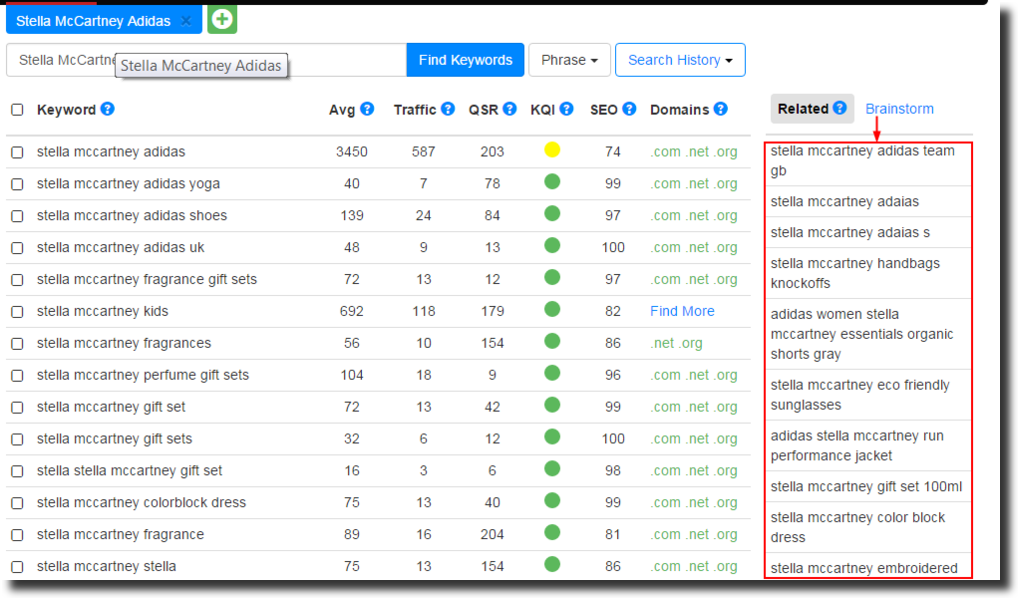
Keyword Research Before Writing
Publishing content without keyword research is one of the most consistent mistakes new bloggers make. Writing an excellent article about a topic that nobody searches for, or that is dominated by established sites on every keyword variation, produces content that earns no traffic and therefore no income, regardless of quality.
Effective keyword research identifies the specific phrases people type into search engines, the volume of searches for those phrases and the competition level for ranking on page one. Targeting keywords with 200-2,000 monthly searches and low to medium competition gives new blogs a realistic path to page one rankings within months rather than years.
Content Quality And Search Intent Matching
Ranking on Google requires content that genuinely and comprehensively satisfies what the searcher was looking for when they typed their query. Google has become extraordinarily good at assessing whether content actually helps readers or simply contains the right keywords without providing real value.
This means that articles must be written for the reader first and the search engine second. They must address the specific question the searcher has, answer it thoroughly and anticipate the follow-up questions that naturally arise. Content that does this reliably builds the topical authority that makes a blog progressively easier to rank over time.
Consistency Of Publishing
Google rewards blogs that demonstrate consistent, ongoing publishing activity. A blog that publishes regularly signals an active, well-maintained resource worth sending search traffic to. A blog that publishes in occasional bursts separated by months of silence does not accumulate domain authority at the same rate regardless of individual content quality.
The specific frequency matters less than the consistency. One article per week, published every week for twelve months, consistently outperforms three articles per week for three months followed by silence. A schedule you can maintain sustainably is always superior to an ambitious schedule that leads to burnout.
If you want to understand how to build a thriving full-time online business from day one, visit my Get Started Here page for a step-by-step approach
The Tools You Actually Need To Start
One of the practical concerns people have when exploring how it is possible to make money with blogging is what the technical and financial requirements actually look like. The answer is more accessible than most people expect.
A profitable blog requires a domain name costing approximately $10-$15 per year and web hosting costing $5-$15 per month. WordPress, the content management system used by the vast majority of professional bloggers, is free to install and use. An email marketing service provides free access for the first several hundred subscribers through platforms like MailerLite or ConvertKit.
The total startup cost for a professional blog setup is typically under $150 for the first year. Keyword research can be conducted effectively with free tools, including Google Search Console, Google’s own autocomplete suggestions and free tier access to tools like Ubersuggest. Paid keyword research tools like Ahrefs or SEMrush provide more detailed data and are worth investing in once the business is generating income, but they are not necessary at the start.
The most significant investment is time rather than money. Consistent content creation over a sustained period cannot be replaced by any tool or financial shortcut.

Common Mistakes That Prevent Blogs From Making Money
Understanding the failure patterns is as useful as understanding the success formula. Several mistakes consistently prevent blogs from reaching their income potential.
Writing for yourself rather than for search demand. A blog is not a diary, and it is not purely a creative outlet if income is the goal. Content must target topics people are actively searching for rather than topics the blogger finds personally interesting without verifiable demand.
Treating monetisation as something to add later. Bloggers who plan to “add affiliate links once they have traffic” consistently earn less than those who integrate monetisation naturally from the beginning. Monetisation does not create income in the absence of traffic, but it ensures that every visitor who does arrive encounters relevant opportunities.
Ignoring the email list for the first year. Building traffic without simultaneously building an email list means building a house without a foundation. When algorithm changes affect traffic, email subscribers provide a resilient, owned audience that continues to generate income regardless of external platform decisions.
Targeting keywords that are too competitive. New blogs cannot rank for the same keywords as established websites with thousands of articles and years of domain authority. Targeting lower-competition keywords with genuine commercial intent is not settling for second best. It is the strategic approach that actually produces rankings and traffic for new sites.
Expecting results too quickly. Bloggers who expect significant income within sixty days of starting are not wrong to want results quickly. They are wrong about what the realistic timeline looks like. Setting accurate expectations from the start prevents the discouragement that causes people to quit months before their compounding effort would have become clearly visible.
For in-depth analysis of how top bloggers structure their businesses and avoid these common pitfalls, Income School’s transparency reports and case studies provide honest insight into what real blogging journeys look like from start to profitability.
Taking The First Step
Understanding how is it possible to make money with blogging provides the intellectual foundation, but taking action on that understanding is what actually produces results. The journey begins with a small number of clear decisions: choosing a niche that balances your genuine interest with verifiable demand, setting up your technical infrastructure properly from the beginning, committing to a keyword research process before each article and establishing a publishing schedule you can maintain consistently for twelve to eighteen months.
None of these steps are complicated, but the combination of doing all of them consistently over a sufficient period is what produces the compound effect that makes blogging income both real and genuinely impressive once it reaches scale.

Conclusion
The question of how it is possible to make money with blogging has a clear and encouraging answer once you understand the actual mechanisms involved. Blogging generates income through several complementary streams, including affiliate commissions from recommended products, display advertising revenue from page views, digital product sales to an engaged audience and brand partnerships that value access to a trusted readership. None of these income streams depends on the blog being famous or the blogger being a published author. They depend on the blog consistently attracting the right people through search rankings and providing those people with genuinely useful information that builds trust over time.
The timeline is longer than most people expect and shorter than most people fear when they encounter their first few months of minimal traffic and zero income. The compound effect of consistent content creation rewards patience in a way that most other income-building activities simply cannot match. An article written today may still be generating affiliate commissions in five years without any additional input from you.
The question of how is it possible to make money with blogging is one that you will answer not through reading about it but through building it with consistency and patience.