Can You Make Money with a Travel Blog? What No One Tells You
The Question Everyone Is Asking
Can you make money with a travel blog? Yes. However, the way most websites answer that question is where things go wrong. Furthermore, they lead with screenshots of $10,000 months. They skip over the 2 years of unpaid work that came before.
So this article takes a different approach. It gives you the real numbers, the real timelines and the honest picture of what it actually takes to build a travel blog that pays.
Who This Guide Is Really For
This is for people who want honest information before they invest their time. Furthermore, it is for the reader who has already been burned by vague articles that offer no real substance beneath the enthusiasm.
Furthermore, it covers how travel bloggers actually earn, how long results take and what the most common mistakes look like. So by the end, you will have a clear and unvarnished picture of whether this path suits your goals.
A Note on Realistic Expectations
The travel blogging niche is competitive. In fact, that is not a reason to avoid it. However, it is a reason to go in with clear eyes rather than false optimism.
Indeed, most travel bloggers who reach meaningful income treat their blog as a long-term business rather than a short-term income fix. That mindset shift is the single most important factor in their eventual success.
What This Article Covers
This article covers how travel bloggers make money and what the income numbers actually look like. It also covers how long it realistically takes to see results and the tools that give beginners the best chance of building recurring revenue over time.
Display ads are the most common income stream for established travel blogs. Platforms like Mediavine and Raptive pay bloggers based on the number of monthly page views their content receives. So the rate is called RPM, which stands for revenue per thousand impressions.
In the travel niche, RPM rates typically range from $15 to $40, depending on your audience’s location and traffic quality. However, Mediavine requires 50,000 sessions per month before you can apply. Similarly, Raptive requires 100,000 monthly page views.
So, for most beginners, display ads are not a viable early income source. So they become relevant once your content is established and your traffic has grown to a meaningful level.
Affiliate Marketing
Affiliate marketing is the most accessible income stream for beginner travel bloggers. So you recommend a product or service. So when someone clicks your link and makes a purchase, you earn a commission.
In the travel niche, popular affiliate partners include booking platforms, travel insurance providers, tour companies and outdoor gear retailers. For example, Booking.com pays around 4% per booking. World Nomads pays commissions on travel insurance policies. Amazon Associates pays between 1% and 10% on physical products.
Furthermore, niche travel affiliate programmes through platforms like TravelPayouts give you access to dozens of travel brands in 1 place. According to TravelPayouts, bloggers who focus on affiliate marketing as their primary strategy can start earning real commissions within their first year of consistent publishing.
Sponsored Content and Brand Partnerships
Sponsored posts involve a brand paying you to create content that features their product or service. So rates vary enormously based on your traffic and niche authority. At 10,000 to 50,000 monthly page views, you might charge between $250 and $1,000 per post.
However, at 100,000 page views or more, rates of $2,500 to $5,000 become realistic. That said, sponsored content is rarely a primary income source in the early stages. Indeed, brands look for established, engaged audiences before they commit budget.
So whilst it is worth knowing about, it is not where most beginners should focus their energy in year 1 or even year 2.
Digital Products
Some travel bloggers create and sell their own digital products. These include destination itineraries, packing guides, e-books and online courses. Importantly, digital products carry excellent profit margins because you create them once and sell them repeatedly.
However, they require an existing audience to sell to. So they tend to work best for bloggers who have already built a loyal readership over time rather than those just starting out.
Freelance Travel Writing
A less-discussed income stream is writing for other publications. Travel magazines, tourism boards and online platforms regularly hire freelance writers to produce destination content. That said, this is not technically travel blogging income.
However, many travel bloggers supplement their early earnings this way whilst their own site builds traffic and domain authority. So it is a practical short-term bridge for those who need income sooner rather than later.
This is the section most articles skip or distort. So let us look at the real numbers without any polish.
In the First Year
Most travel bloggers earn very little in their first 12 months. Survey data from Productive Blogging shows bloggers with less than 1 year of experience typically report monthly earnings between $0 and $120. That is not a typo. Indeed, the majority earn less than $100 a month in year 1.
So this does not mean the work is wasted. Every post you publish in year 1 is a long-term asset. So Google takes time to index and rank content.
Furthermore, the posts you write in month 3 may not drive meaningful traffic until month 9 or 10. That delayed return is a core feature of how content marketing works.
After 2 to 3 Years
Things begin to shift meaningfully around the 2 to 3 year mark. Data from ZipRecruiter shows the average hourly rate for a travel blogger in the US sits at around $29.94 as of 2025.
Furthermore, survey data from Productive Blogging shows bloggers with 5 to 10 years of experience average around $2,621 a month. Those with over 10 years of consistent work average $5,625 a month. So the upward trajectory is real, even if it is slow.
What the High Earners Are Doing
The bloggers earning $5,000 to $10,000 a month or more are not simply posting beautiful photos. They have diversified income streams working simultaneously. 1 blogger documented earning $6,821 in a single month in late 2025.
Indeed, of that total, 54% came from display ads, 29% from affiliate marketing and the remaining 17% from a mix of other sources. That diversification is precisely what makes the income stable and resilient to algorithm changes.
Furthermore, Authority Hacker notes that affiliate marketers in the travel niche earn an average of $13,847 a month at the established level. However, that figure represents experienced bloggers with strong domain authority built over years. So treat it as a long-range indicator rather than a starting benchmark.
How Long Does It Take to Start Earning?
The Honest Timeline
Research consistently shows that most bloggers start earning meaningful income after around 24 months of consistent work. That does not mean you will wait 2 full years before seeing a single dollar. So it means reliable, scalable income typically takes that long to properly establish.
Here is a rough framework based on real blogger income data.
Months 1 to 6: Building content and zero to minimal income. Focus entirely on publishing and learning SEO basics. Do not obsess over your traffic numbers in this phase. They will be discouraging, and they do not reflect the value of the work you are doing.
Months 6 to 12: First small affiliate commissions may begin to appear. Total monthly income is likely between $0 and $200 for most bloggers. Some see their first commissions earlier. Many see nothing until month 8 or 9.
Months 12 to 24: Traffic starts to compound. Monthly income can reach $200 to $1,000 for bloggers who have been publishing consistently. This is also when your older posts begin to rank more strongly.
Months 24 to 48: The compounding effect becomes clearly visible. Bloggers who stayed the course through the difficult early months begin to see $1,000 to $5,000 a month as genuinely achievable. Some reach this level faster with the right niche and strong keyword targeting.
Why Most Bloggers Quit Too Early
Data from ProBlogger shows 63% of bloggers actively trying to monetise earn less than $3.50 a day. However, this figure does not separate bloggers who have been building for 3 months from those who have been building for 3 years.
Most people who quit do so in the first 6 to 12 months, right before the compound effect begins to work in their favour. That is the single most important insight in this entire article. Most people give up at the exact point where continuing matters most.
Many beginners try to set up display ads, affiliate programmes and sponsorship pitching all at the same time. So this spreads attention too thin and produces mediocre results across all 3.
So a far better approach is to focus exclusively on affiliate marketing in year 1. It requires no minimum traffic threshold. Furthermore, it can earn you money with a relatively small audience. So it gives you early wins that keep you motivated through the difficult initial months.
Targeting Keywords That Are Too Competitive
Many travel bloggers write about popular destinations because that is what they know best. However, “things to do in Paris” is a keyword dominated by sites with enormous authority and large budgets.
So a new site has almost zero chance of ranking for it in year 1. Instead, focus on lower-competition, long-tail keywords. These are more specific searches with fewer established competitors. So that is where beginners can actually rank, drive real traffic and begin earning early commissions.
Ignoring SEO from Day One
Content without an SEO strategy is a hobby rather than a business. Importantly, every post you publish should target a specific keyword. That keyword should appear in your title, your first paragraph and naturally throughout the article body.
Furthermore, your site needs to be clearly structured and fast-loading on mobile. Internal links connecting related posts also matter significantly. Indeed, these basics make a real difference to how quickly Google begins to trust your site.
Publishing Inconsistently
Many bloggers start with enthusiasm and publish 5 posts in week 1. Then life gets busy, and nothing goes out for 6 weeks. Then, 2 posts appear in a burst of motivation. This pattern is far less effective than steady, reliable publishing.
Indeed, Google rewards sites that publish consistently over time. So, 1 well-optimised post a week, published reliably, will outperform 10 posts in a burst followed by months of silence. Consistency is the non-negotiable ingredient for long-term SEO success.
Not Building an Email List Early Enough
Your email list is the 1 asset no algorithm change can take away from you. Several bloggers hit badly by Google updates in 2024 managed to maintain steady income, specifically because they had built substantial email lists beforehand.
So start collecting emails from day 1, even when your list is tiny. A small, engaged list of 200 subscribers is far more valuable than 2,000 passive readers who have no direct relationship with you at all.
Choosing Your Travel Blog Niche
Why Niche Selection Matters So Much
The travel niche is enormous. “Travel” alone is not a niche. “Budget travel in Southeast Asia” is a niche. “Adventure travel for over 50s” is a niche.
So the more specific you are, the easier it becomes to build authority. Furthermore, specificity makes it far easier to rank for keywords in the early months of your site when your domain authority is still low.
Which Niches Perform Well for Monetisation
Some travel sub-niches convert better than others for affiliate marketing. Luxury travel converts well because the products carry high price points, and commissions are correspondingly larger. Adventure travel converts well because gear, insurance and tours all have affiliate programmes attached.
Digital nomad travel overlaps strongly with software tools and online business products. Furthermore, these tend to carry higher affiliate commissions than traditional travel gear. So they can be a smart niche choice for beginners who want higher commission rates on lower traffic volumes.
Sticking to Your Niche in the Early Stages
1 of the biggest mistakes new bloggers make is drifting across too many topics too soon. If you start a blog about hiking in National Parks but write about city breaks in Europe the following month, you confuse both your audience and Google.
So consistency in your niche signals topical authority to search engines. So pick a lane and commit to it for at least the first 12 months before considering any expansion into related areas.
The Tools and Platforms That Give You the Best Chance
Your Blogging Platform
WordPress is the industry standard for serious bloggers. It gives you full control over your content, your design and your monetisation strategy. Free platforms like Blogger or Medium limit what you can do and restrict how you can earn.
So if you are serious about building a travel blog that generates real income, start with a self-hosted WordPress site from day 1. Furthermore, the initial setup cost is modest compared to the long-term value of owning your platform outright.
Your Email Marketing Platform
You need an email marketing platform from the very beginning. Systeme.io offers a generous free plan that includes email marketing, landing pages and sales funnels all in 1 place.
It is particularly well-suited to bloggers who want to build an email list without paying monthly fees in the early stages. So for beginners working on a tight budget, it is 1 of the most practical and cost-effective starting points available right now.
Your Content Creation Tools
Writing quality content consistently is the single most important skill you will develop as a travel blogger. AI writing tools can help you draft outlines, research topics, and overcome the blank-page problem that stops many bloggers from hitting their targets.
So Rytr is a highly affordable option that helps bloggers produce more content without sacrificing their own voice. It is particularly useful for generating article drafts that you then personalise with your own experiences, insights and travel knowledge.
Your Keyword Research Tool
Keyword research determines whether anyone will ever find your content. Without it, you are publishing into a void. Tools like Jaaxy make keyword research approachable for beginners.
They show you monthly search volumes, competition levels and the realistic chance of ranking for any given search term. So focus on keywords with search volumes of 50 or more per month and low competition scores. Indeed, these are the terms where a new site can actually compete and win.
Before you register a domain or install WordPress, spend time validating your niche. Search for your target keywords using a dedicated research tool. Look for search volumes of at least 50 per month and low competition scores.
So if every result is dominated by sites with enormous authority, narrow your focus further. So find gaps you can realistically fill with a new site rather than trying to compete directly with established players from day 1.
Step 2: Set Up Your Site Properly from the Start
Register a domain that reflects your niche and is easy to remember. Set up WordPress with a clean, fast-loading theme. Install an SEO plugin like Yoast SEO to help you optimise each post before publishing.
Furthermore, connect your site to Google Search Console from the start. This lets you monitor which keywords are sending you traffic over time. So these are not optional extras. They are the minimum infrastructure required to give your content a real chance of ranking.
Step 3: Publish Consistently Before Worrying About Monetisation
Your first priority is building a content library. Aim for at least 20 to 30 well-optimised posts before you start actively thinking about affiliate links or ad networks.
Each post should target a specific keyword. Furthermore, each post should also link to related posts on your site. Furthermore, this internal linking structure helps Google understand your site’s authority and topic relevance significantly more clearly over time.
Step 4: Join Affiliate Programmes Early
Once you have 10 to 15 posts published, start joining affiliate programmes relevant to your niche. For a travel blog, logical starting points include TravelPayouts for travel-specific commissions and Booking.com for accommodation referrals.
So add affiliate links naturally within relevant content. Never force a recommendation that does not fit the post or the reader’s likely needs. Indeed, forced recommendations damage trust and trust is your most valuable long-term asset as a travel blogger.
Step 5: Build Your Email List from Day 1
Add an email opt-in form to your site before you publish your first post. Offer a simple lead magnet, such as a free packing list, a destination guide or a budget travel template.
Even if you only collect 5 subscribers in your first month, those subscribers are the beginning of your most valuable long-term asset. An email list of 500 engaged subscribers can drive more reliable income than a site with 10,000 monthly visitors who have no direct relationship with you.
What a Realistic Year 1 Looks Like
Months 1 to 3
You are building and learning in these early months. So income is almost certainly zero. However, this is not a failure. It is the investment phase of a long-term business.
So every post you publish in this phase is an asset that will compound over the following 12 to 24 months. Focus on quality and consistency rather than speed or perfection at this stage.
Months 4 to 6
Your first posts are beginning to appear in Google’s index. You may start to see small amounts of search traffic arriving. Furthermore, affiliate clicks may also begin showing in your dashboard.
Your first commission, even if it is just $8, is a signal that the system is beginning to work. So that matters far more than the dollar amount itself at this stage.
Months 7 to 12
Traffic begins to grow if you have been publishing regularly. So income remains modest but should be trending upward. You may be earning between $50 and $300 a month by month 12 if you have maintained consistency.
Furthermore, your email list should be growing alongside your traffic. That means you are building an asset that will amplify future income regardless of what Google’s algorithm does next.
Yes. However, only if you approach it as a long-term business rather than a short-term income fix. In fact, the travel niche is competitive, and there is no point pretending otherwise.
However, it is also enormous. Millions of Americans research travel destinations, gear, insurance, and experiences online every single day.
Furthermore, there is a reader for every niche, every budget and every travel style. So the question is not whether the opportunity exists. It is whether you are willing to put in the consistent work required to capture a meaningful share of it.
What Separates the Bloggers Who Earn from Those Who Do Not
The bloggers who earn meaningful income from travel blogs share several specific traits. Consistency is the first. Indeed, publishing regularly over a long period is non-negotiable for SEO growth.
Niche focus is the second trait. Choosing a specific sub-topic and sticking to it signals authority to both readers and search engines.
SEO awareness from day 1 is the third. Income diversification across multiple streams is the fourth. Email list building is the fifth.
None of these traits requires exceptional writing talent or technical expertise. So they simply require consistent effort applied over a realistic timeframe.
The Compound Effect in Practice
The posts you write in month 1 may not earn a single cent for 9 months. However, those same posts may earn steadily for the next 5 years once they begin to rank well. That is the compound effect of content marketing at work.
So each piece of content is a long-term asset. Furthermore, the bloggers who push through the difficult early months are precisely the ones who eventually benefit from the compounding returns of their earlier effort.
Getting Started: Your Next Step
If the idea of building a travel blog as a genuine income stream appeals to you, the most important thing you can do is start now. Not after you have the perfect domain name. Not after you have written 5 posts in your head. Start with your first post, target a low-competition keyword and build from there.
It walks you through the exact starting point that suits beginners, building on a tight budget.
Conclusion
The Bottom Line
So, can you make money with a travel blog? Yes. However, the honest answer carries an important qualifier. It takes considerably longer than most websites admit.
The first 12 months are almost always a zero or near-zero income period. The first real, consistent results typically appear somewhere between months 12 and 24.
Why That Timeline Is Not a Reason to Walk Away
That timeline is not a reason to give up on the idea. It is a reason to start now rather than later. Every month you delay is a month of compounding content you will never recover.
The bloggers currently earning $3,000 to $10,000 a month did not start there. They started exactly where you are now. The only real difference is that they kept going when it would have been easy to stop.
The Opportunity Is Still Very Much Real
Travel is a permanent human interest. People will always want to know where to go, what to pack, how much it will cost and whether a destination is worth the journey. A well-built, consistently updated travel blog can serve those readers for years.
Furthermore, the affiliate income from a travel blog is largely recurring. Once a post ranks and converts, it can continue earning without requiring constant new content creation to maintain that income stream.
So the strategy is proven, and the opportunity is real. So, can you make money with a travel blog? Yes. The bloggers who simply refused to quit before the compound effect kicked in.
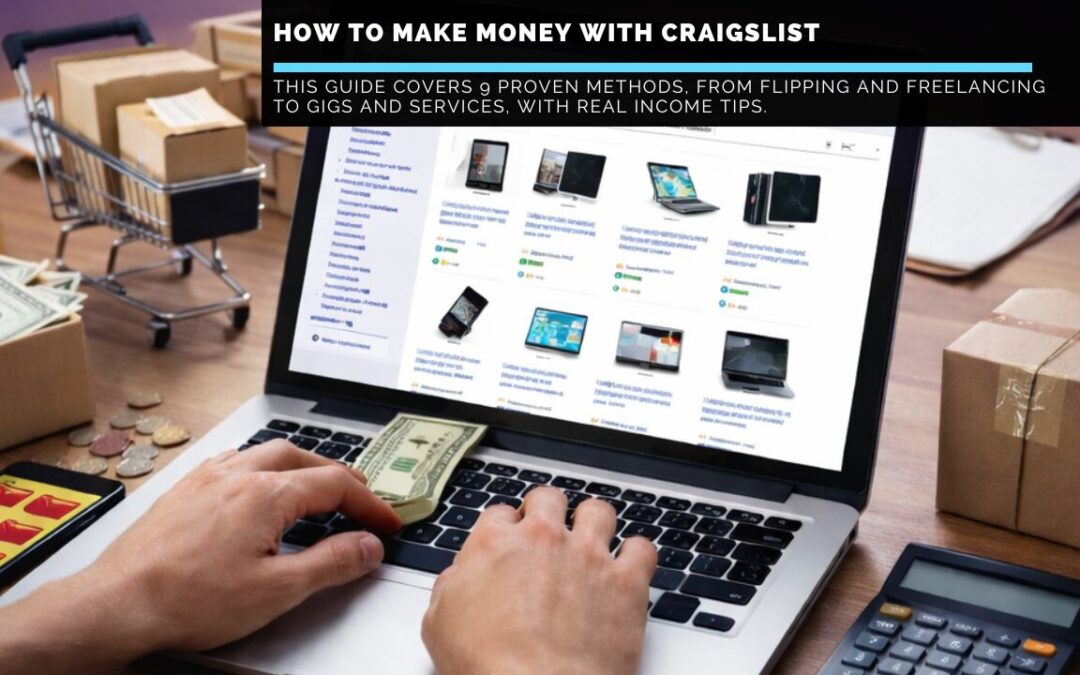
How to Make Money With Craigslist: 9 Methods That Still Work in 2026
Craigslist has been around since 1995 and pulls in around 200 million users every month. If you have ever dismissed it as a relic of the early internet, you are leaving money on the table. Learning how to make money with Craigslist is one of the most straightforward paths to local income available in 2026.
There are no algorithms to master, no following to build and no platform fees eating into your margins. You post an ad, buyers find you, and deals happen face-to-face.
That simplicity is exactly why it still works. It is also exactly why most people underestimate it. This guide walks through nine real methods for generating income through Craigslist, what each involves and how to get the best results.
Why Craigslist Still Works in 2026
Craigslist is the dominant platform for local classifieds in the United States. Despite rivals from Facebook Marketplace and OfferUp, it holds a unique position because of the sheer volume and variety of activity it contains. People use it to find jobs, sell furniture, post services, look for housing, search for free items and hire contractors for small jobs. That breadth means there are multiple ways to make money, not just one.
Unlike most online selling platforms, Craigslist charges no listing fees for most categories. You keep everything you earn.
For services, there is a $5 fee per ad in most US cities. That covers unlimited responses, and you can renew the ad. No monthly plan, no percentage of your sale price taken at checkout.
The platform’s anonymity works in your favour as a seller too. Craigslist provides a proxy email address so buyers can contact you without seeing your real address. You control when and where you meet. For people who want a low-risk way to test an income idea, Craigslist is hard to beat.
The easiest starting point is selling things you no longer use. Most people have hundreds of dollars worth of unwanted items sitting in storage, the garage or spare rooms. Furniture, electronics, sporting equipment, tools, clothing, kitchen appliances, musical instruments and children’s toys are all fast movers on Craigslist.
The advantage over a standard car boot sale or charity donation is that you reach a larger and more targeted audience. Someone searching Craigslist for a specific camera model or a specific size of bookshelf is already ready to buy. You are not trying to convince a casual passer-by. You are meeting a buyer who already wants what you have.
What separates sellers who earn well from those who struggle is presentation. Photos are the single most important element of any Craigslist listing. An item with four to eight clear photos in good lighting will steadily outsell an identical item with one blurry photo.
Take pictures from multiple angles. Show any wear or damage honestly. Buyers who know what they are getting before they show up cause fewer wasted trips and leave better feedback.
Titles matter too. Instead of writing “sofa for sale”, write “West Elm Grey Sectional Sofa, 3-Piece, Good Condition, No Pets.” Specific titles match what buyers are actually searching for and build confidence in the listing.
Price research is essential. Search Craigslist and eBay for sold listings of similar items before setting your price. Price too high, and your item sits indefinitely.
Price too low and you leave money behind. Most seasoned sellers price 10% to 15% below recent sold prices. This makes quick responses without sacrificing real value.
Method 2: Craigslist Arbitrage and Flipping
Once you are comfortable with the basics of buying and selling, Craigslist arbitrage is one of the most consistent ways to make ongoing income. The idea is simple. Buy undervalued items on Craigslist and resell them at a higher price on Craigslist, eBay, Facebook Marketplace or Poshmark.
One seller spending around three to four hours per week on this approach made roughly $90 to $100 per week. That works out to around $25 per hour. More dedicated flippers report earning $2,000 to $5,000 per month when they commit more time and develop deep expertise in specific categories.
The best categories for arbitrage are those where the condition matters to buyers but not to most sellers. Vintage furniture, power tools, gym equipment, audio equipment, camera gear, instruments and branded clothing all have strong resale markets. Someone selling a collection quickly after a house move will often price items well below what a careful buyer could resell them for.
Research is the core skill here. Before buying anything, check completed listings on eBay to see what similar items have actually sold for, not just what people are asking. That distinction is crucial.
A listing price means nothing. A completed sale price tells you what the market will pay.
The Work at Home Woman’s Craigslist income guide documents a real case where a seller earned $3,500 in 30 days using a mix of services and item sales, demonstrating the range of what is possible when you apply method and consistency.
Method 3: Picking Up Free Items and Reselling Them
Craigslist has a dedicated “Free” section under its “For Sale” category. People list items they want removed from their property at no charge. These might include furniture, appliances, building materials, exercise equipment and garden supplies. For a resourceful person with a vehicle, this is simply free stock.
The economics are compelling. An item you acquired for nothing and sold for $30 is a $30 profit. Multiply that across a steady stream of free pickups, and the income adds up quickly. People who work this method often report earning $100 to $300 per week from free items alone.
The catch is speed. Free items on Craigslist move fast. Setting up an alert or refreshing the free listings often gives you the best chance of being first to respond. Having a van or truck makes the process greatly smoother since many of the most valuable free items are large.
Be realistic about what is worth collecting. An old mattress may be free, but it has low resale value and is difficult to transport. A solid wood dresser, a working exercise bike or a set of garden tools in good condition can all resell for meaningful amounts.
Method 4: Advertise Your Services
Craigslist’s Services section is one of its most underused money-making tools. Placing an ad in the Services section puts you in front of local people actively looking for what you do. The fee is $5 per ad in most US cities, which is one of the cheapest ways to post a service to your local area.
Services that work well on Craigslist include landscaping, lawn care, cleaning, painting, moving help, handyperson work, pet sitting, tutoring, music lessons and IT support. These are services that people search for locally. The local trust that comes with a community platform works in your favour.
One photo seller who posted on Craigslist recorded earning $2,700 in her first month from a single $5 ad. She had no website, no company cards and no prior marketing. The key was a well-written ad with strong photos and a clear description.
A service listing on Craigslist should read like a brief, confident introduction. State what you do, how long you have been doing it, any relevant skills and what makes your approach different. A mobile number and a polished email address build trust. Photos of past work, where relevant, convert browsers into enquirers far more effectively than words alone.
Method 5: Freelancing Through the Gigs Section
The Gigs section of Craigslist connects people who need short-term help with people who can provide it. This is different from the Jobs section, which lists full-time and part-time employment. Gigs are one-off or short-term tasks that cover a huge range of activities.
Common gigs posted include web design, logo creation, content writing, data entry, event staff, moving assistance, photos, video editing, social media management and technical help. If you have a skill that can be deployed quickly, the Gigs section is worth checking daily.
The income from Gigs varies widely. A one-off writing project might pay $50 to $150. A web design gig might pay $300 to $1,000, depending on the scope.
Event staffing and labour gigs typically pay $15 to $25 per hour. The advantage over platforms like Upwork is that there is no service fee taken from your earnings, and the deals are direct.
Responding quickly and polishedly to Gigs listings is the key to winning work. Craigslist gigs often go to the first qualified person who responds. A brief template response that outlines your relevant experience gives you a clear advantage over people who take hours to reply.
Method 6: The Middleman Model
This method is less commonly discussed but genuinely effective for people who are comfortable with client relationships. You post a service on Craigslist, fulfil it by subcontracting the work to someone else and keep the difference as your margin.
For example, you could post an ad offering website design services. You price the work at $800. You then find a freelancer on Fiverr or Upwork who can complete the work for $300 to $400. Your margin is $400 to $500 for doing the client management and quality control.
This model works in any service type where you know the deliverable well enough to brief a freelancer and check the output. Graphic design, copywriting, bookkeeping, cleaning and moving are all viable. The critical rule is that you understand the service well enough to ensure the quality is right before it reaches your client.
It scales because you are not limited by your own working hours. You can run multiple clients at once as long as you manage the logistics well. The income ceiling is meaningfully higher than any single-skill service offering.
A recurring frustration for Craigslist buyers and sellers is the logistics of moving large items. Furniture, appliances, gym equipment and garden supplies are popular on the platform but can be difficult to transport. If you have a truck, van or large estate car, this is a genuine income chance.
Delivery drivers for Craigslist deals typically charge $30 to $100 per delivery, depending on the distance and the size of the item. Some seasoned local movers charge by the hour and handle multiple jobs per day. They earn $150 to $300 on busy days.
You do not need a company name or a fleet of vehicles. A single reliable truck and a willingness to help people move large items locally are enough to make a consistent income. Posting in the Services section and responding to listings where buyers mention needing transport help doubles your chances of finding work.
Safety is worth building into this from the start. Bring a second person for larger deliveries, charge for mileage on top of a flat rate and confirm payment method before any job begins. These habits make the work more reliable.
Method 8: Renting Property or Parking
If you have a spare room, parking space or storage unit, Craigslist is one of the most direct ways to find tenants. The Housing section draws a large local audience of people actively looking for rentals. Listing is free in most categories.
Room rentals in major US cities can make $600 to $2,000 per month, depending on location. Parking spaces in dense urban areas often rent for $100 to $300 per month. Storage space, if you have a garage or basement that is not in use, can be rented for $50 to $150 per month, depending on size and ease of use.
This method needs more care than selling an item. Screen tenants carefully, have a written agreement before anyone pays and confirm identity before meeting. The income is recurring rather than one-off, which makes property rentals one of the more valuable long-term uses of Craigslist.
Method 9: Finding Freelance and Part-Time Work
Beyond posting your own ads, Craigslist’s Jobs section is a legitimate source of local paid work across many categories. Construction, cleaning, childcare, tutoring, food service, office work, seasonal labour and skilled trades are all often posted.
The Jobs section is very useful for finding cash-in-hand local work quickly, without the formality of online job boards or the rivals of national platforms. Many small companies post local jobs exclusively on Craigslist because they want someone nearby who can start quickly.
For freelancers building a client base, Craigslist Jobs can complement platforms like Upwork or LinkedIn well. Many small companies post writing, design, marketing and technical projects on Craigslist that never appear elsewhere. A daily scan of relevant categories in your city takes five minutes and can surface real chances.
According to Craigslist’s own data, the platform handles over 50 billion page views per month. Real local buying, selling and hiring activity still flows through it every day. That level of activity means the chances described in this guide are not theoretical. They are working for people in your city right now.
Whether you are selling an item, offering a service or looking for gigs, the quality of your listing determines everything. Here is what works.
Your title should be specific, not clever. Include the brand, model and condition. Buyers search with keywords. A title containing the words they type will always outperform one that does not.
Photos are not optional. Four to eight clear photos in good light, shot from multiple angles, will greatly increase your response rate. Natural daylight works better than flash. Remove clutter from the background where possible.
Your description should answer the questions a buyer will have before they contact you. Cover what it is, what condition it is in, the price, how far you will deliver and what payment methods you accept. A clear, informative description reduces time-wasting responses and attracts ready buyers.
Renew your listing every 48 hours. Craigslist sorts by date, so fresh listings appear first. Renewing often keeps your ad visible without requiring you to repost from scratch.
Staying Safe on Craigslist
Craigslist has a name that makes some people cautious. That caution is healthy. The platform does have its share of scammers. Knowing how to protect yourself is part of operating on it sensibly.
For in-person deals, meet in a public place. Many cities now have designated safe exchange zones near police stations just for marketplace deals. Meet during daylight and bring someone with you for higher-value items.
Accept cash or peer-to-peer payment apps such as Venmo, Cash App or Zelle for all deals. Never accept a cashier’s cheque or money order under any circumstances. These are the most common payment scams. They can result in a bounced payment after you have already handed over the item.
Be sceptical of buyers who ask to ship items overseas or offer to pay more than your asking price. Vague or templated messages are also a warning sign. These are classic scam patterns. A genuine local buyer will want to see the item, confirm the condition and pay in person.
The FTC consumer alerts page provides updated advice on avoiding common scams across buying and selling platforms. Reading it before you start is worth five minutes of your time.
What You Can Earn in Practice
Earnings from Craigslist span a wide range depending on how much time you invest and which method you use.
Casual sellers clearing household items typically earn $200 to $500 per month from a few hours of work. People who work the free items and arbitrage methods more steadily often report $400 to $800 per month from a few hours of effort each week. A dedicated flipper who specialises in a specific category, such as gym equipment or vintage furniture, can reach $1,500 to $3,000 per month. Service providers with strong local names often earn $2,000 to $5,000 per month from Craigslist-sourced clients.
One recorded case involved a seller who made $3,500 in a single month through a mix of services and product sales. Another often earned $6,000 in annual gross profit working just a few hours per week on arbitrage alone.
None of these figures requires much upfront investment. The most capital-intensive approach, buying items for resale, requires some starting funds. You can often bootstrap it by selling your own items first to build initial buying power.
Building a Bigger Online Income Alongside Craigslist
Craigslist works well as a standalone income source for local, hands-on methods. If you want to build income that grows beyond your immediate location, combining Craigslist with content-driven online income is a natural next step.
Many people who start with Craigslist flipping or service work over time build a blog or affiliate site around their niche. A flipping specialist who blogs about their area can attract search traffic and recommend related products through affiliate links, making income without being physically active.
Craigslist is not glamorous, but it is genuinely useful. It connects local buyers and sellers, helps service providers find clients and gives resourceful people a fast path to income. No upfront costs and no algorithm are standing between you and the people who want what you have. Learning how to make money with Craigslist is a practical skill that pays back quickly and keeps paying as long as you apply it.
Start with what you have, build your understanding of what sells locally and expand into the methods that fit your skills and your schedule. The methods compound on each other as you gain experience and local knowledge over time. The platform has been generating real local income for over 30 years and shows no real signs of slowing down. It is doing so right now in cities across the US, waiting for you to take part.
Affiliate Disclosure: This page contains affiliate links. If you click through and make a purchase, I may earn a cut at no extra cost to you.
How to Make Money With an AI Powered Writing Tool in 2026
If you have ever wondered how to make money with an AI powered writing tool, this is exactly the right moment to act. Global spending on AI is projected to surpass $2 trillion in 2026 alone. The demand for written content across blogs, companies, social media and e-commerce has never been higher.
The gap between what companies need and what they can afford in-house has never been wider. AI writing tools fill that gap. The people who learn to use them well are carving out real income in a very short time. This guide covers every practical method for turning an AI writing tool into a genuine income stream and what to expect from each.
Why AI Writing Tools Create Real Income Chances
The core advantage of an AI writing tool is speed. A skilled writer producing content manually might complete one or 2 polished articles per day. The same writer, using an AI tool, can produce 5 to 8 pieces in the same amount of time.
That speed differential is where the money is. You can take on more clients than before, charge strong rates and still make better margins. Building content assets such as blogs and partner sites at a pace that would have taken years without AI is now achievable.
Every company with an online presence needs content. Blog posts, email updates, product details, landing pages, social media captions, ad copy and SEO articles are in constant demand. Most small companies cannot afford a full-time writer.
Many cannot even afford a part-time one. They hire freelancers, use agencies or try to produce content themselves. An AI-assisted writer can step into that gap, charge less than a standard agency and still deliver work faster than either.
Before covering the income methods, it is worth addressing the question most people ask first: which AI writing tool should I use?
If you are starting out, Rytr is the most affordable AI writing tool available and one of the best value options in 2026. At $9 per month for the Saver plan, it provides 100,000 characters of content generation. The Unlimited plan at $29 per month removes all limits fully.
For context, Jasper starts at $59 per month, and Writesonic starts at $39 per month. Rytr costs roughly one-fifth of what the major rivals charge.
Rytr stands out beyond its price for its ease of use. It offers over 40 writing templates covering everything from blog posts and SEO meta details to email copy, product details, Facebook ads and social media captions. It supports more than 30 languages and 20 writing tones, making it adaptable for different client needs. The built-in plagiarism checker comes with paid plans, saving you the cost of a separate tool.
Rytr has over 8 million registered users who have collectively saved more than 25 million hours of writing time. It works well for short-form content like ad copy, email sequences and social posts. For longer pieces, it works best as a drafting assistant: use it to make sections and outlines, then edit and connect the pieces yourself. The Chrome extension lets you use it inside Google Docs, WordPress or any browser-based text field.
Freelance writing with AI help is the fastest path to income for most people. You can have your first paying client within 2 to 4 weeks of starting.
The reason this works is straightforward. AI handles the first draft. You handle the research, the editing, the tone adjustments and the quality control.
The client receives a piece of content that reads easily and meets their brief. The entire process takes a fraction of the time it would take without AI help.
Writers using AI tools report completing 5 to 8 client articles per day rather than the one or 2 they managed manually. At $50 to $150 per article for standard blog content, that difference in output translates directly into income. Some expert niches, such as finance, legal and technology, command $200 to $500 per piece.
Platforms like Upwork and Fiverr are the most straightforward places to find freelance writing clients. A well-positioned Upwork profile that highlights your niche expertise and fast turnaround will attract clients looking for reliable content output. Fiverr suits packaged offers. A gig for 5 blog posts per week at a set price can make steady, recurring income from a single client.
When approaching clients, you do not need to mention that you use AI tools. What you sell is quality content on time at a strong rate. That is what clients want.
If asked, many seasoned AI writers describe using AI for initial drafts combined with their own research, editing and expertise. That framing is accurate.
Freelance writing with AI help typically earns $500 to $5,000 per month for beginners to intermediate writers. Seasoned operators with strong clients and niche expertise often exceed that range.
Method 2: Partner Selling Through Content
Partner selling is where AI writing tools create some of their most durable income. You build a blog around a niche topic, publish articles targeting specific search keywords and include partner links to relevant products. When a reader clicks your link and buys, you earn a cut.
AI tools matter here because of volume. Building topical authority on a blog fast enough to rank in search engines requires consistent, frequent publishing. Manually producing 3 or 4 quality articles per week is hard to sustain alongside other commitments. With AI help, that output is manageable.
The income model compounds over time. Articles you publish in month one keep earning in month 6 and month 12. Each new article adds to your site’s total traffic.
Partner cuts arrive each month without requiring active selling on your part. This is the kind of passive income that most people talk about, but few actually build, largely because the upfront content output rule is too heavy to tackle manually.
Niches that work well for partner content include personal finance, software, health and wellness, home and garden and online company. The Upwork guide to making money with AI notes that AI-assisted content is now one of the main ways freelancers build scalable income.
Cut rates vary. Physical products through Amazon Associates pay 1% to 10%. Software and SaaS tools commonly pay 20% to 60% in recurring cuts.
One customer subscribed to a $50 per month tool at a 40% cut, which earns you $20 each month they stay. Build enough of those referrals across several programmes, and each month, the income becomes truly significant.
AI tools make the creation of digital products greatly faster. An e-book that might have taken 6 weeks can be drafted in a week with AI help, edited and published as a finished product.
Digital products have strong margins. Once created, an e-book, template pack, writing guide or course workbook costs nothing to reproduce. You sell it once or a thousand times, and the output cost stays fixed. On platforms like Gumroad and Etsy, digital products routinely earn $500 to $5,000 per month for known sellers.
Digital products that sell well include how-to guides in specific niches, template packs for email sequences and short practical guides for immediate value.
The key to making digital products work is choosing a topic with proven demand rather than creating something you assume people want. Research what questions people ask in your niche, what problems they pay to solve and what products are already selling successfully. Use that research to inform what you create.
AI handles the drafting. You handle the placing, the quality and the presentation.
Method 4: Social Media Content Creation
Companies pay well for social media content because producing it in-house takes too much time. Most lack the staff to do it well. A social media content manager using AI tools can handle multiple clients simultaneously, producing weeks of content in a single working session.
Monthly retainer rates for social media content management range from $500 to $2,500 per client, depending on volume and platform. With 3 to 5 clients, this becomes a meaningful income each month.
Rytr’s templates include Facebook and Instagram ad copy, LinkedIn posts, Twitter content and YouTube details. A session with Rytr can produce a month’s worth of social captions in under 2 hours. That leaves time for approach and client contact.
This method suits people who enjoy the creative side of social media more than the technical demands of SEO or long-form writing. The skills required are good judgment about what resonates with audiences and the ability to edit AI output into something natural.
Method 5: Email Copywriting Services
Email selling makes one of the highest returns on investment of any digital channel, which is why companies pay well for good email copy. A well-written email sequence or sales campaign from a skilled copywriter can command $300 to $1,500 per project.
AI tools suit email copy well. Rytr has templates for email subject lines, body copy and full email sequences. The drafts need human editing to add brand voice. The AI handles the structural scaffolding and initial language, which is where most of the time used to go.
Email copywriters who use AI well can complete 2 to 3 projects per week rather than one. At $500 per project on average, that difference turns a modest freelance income into a full-time one fairly quickly.
Building a name in email copywriting takes time. Starting with a lower rate to gather testimonials, then raising rates as your portfolio grows, is the standard progression. Having a clear niche, whether that is e-commerce brands, online course creators or SaaS companies, makes it easier to find clients and charge premium rates.
Method 6: SEO Content for Companies
Search engine tuning content is one of the highest-paying categories in freelance writing. Companies invest heavily in SEO because a page that ranks well in Google makes traffic for months or years with no ongoing cost. A single well-tuned article that reaches page one of Google can deliver hundreds of new visitors per week indefinitely.
Writers who understand keyword research, content structure and how to create content that truly answers what readers are searching for are in high demand. AI tools speed up SEO content output without sacrificing the quality signals that Google rewards.
The Shopify guide on making money with AI describes AI-assisted SEO content as one of the clearest entry points for building income with AI in 2026.
Standard SEO articles earn $75 to $300 per piece. Agencies often pay per word, with rates of $0.10 to $0.25 per word being typical for well-written SEO content.
Building relationships with 2 or 3 content-selling agencies is one of the most reliable ways to make consistent SEO writing income.
Method 7: Course and Educational Content Creation
Online courses require a lot of written content: lesson scripts, workbooks, quizzes, email sequences and landing page copy. Course creators who do not write well or do not have time to produce all of this material themselves hire writers to do it.
AI tools make it possible to produce this type of content at a pace that would be impossible manually. A full course workbook that might take 3 weeks can be drafted in a few days with AI help and edited to fit the instructor’s voice.
Ghostwriting a full online course typically earns $2,000 to $8,000, depending on the scope. Individual lesson scripts run $50 to $200 per script. This is higher-value work than standard blog writing, which makes it worth targeting once you have a portfolio and some client testimonials behind you.
The most common obstacle is not a lack of tools. It is the tendency to try several methods at once and make slow progress on all of them rather than fast progress on one.
Pick one method. Start with freelance content writing or social media content if you want income quickly. Partner content suits anyone who wants passive income. People with specific copywriting skills should go straight there.
Set up Rytr and spend a few days learning how to prompt it well. Test the templates and make sample content in your chosen niche.
Edit it until it meets a quality standard you would show a client. Then find your first client or publish your first piece.
The income from AI writing does not materialise overnight. Freelancers usually win their first client within 2 to 4 weeks. Partner blogs begin making meaningful traffic after 4 to 6 months of consistent publishing.
Digital products need an audience to sell to, which takes time to build. The compound nature of all these methods means that the work you do now keeps paying long after you do it.
Staying Ahead as AI Tools Improve
AI writing tools are improving rapidly. The writers who earn the most in this space are not those who treat AI as a resort for thinking. They are those who use AI to handle the mechanical work while applying their own judgement, expertise and voice to produce something worth reading.
Google’s content quality signals increasingly favour depth, expertise and genuine value over volume. An article with real insight will outperform a generic AI-made piece.
How quickly it was made does not matter to the reader. The human element remains essential. Writers who deliver quality alongside speed have a lasting advantage.
The real product being sold is the mix of AI speed and human quality judgment. Clients pay for results, not for the method used to get them. As long as your output is good, delivers on the brief and arrives on time, the tools you use to produce it are your company’s.
Pricing Your AI-Assisted Writing Services
One question that holds many people back is how to price their services when using AI tools. The answer is simple: price based on the value you deliver, not the time you spend.
If a client pays $150 for a 1,000-word blog post and you deliver it in 2 hours instead of 6, you have not done anything wrong. You have done something well.
AI tools let you work faster. Faster work means higher effective hourly rates. That is the whole point.
Some writers worry that clients will object if they know AI is involved. In practice, most clients care about the quality of the end product, whether it is accurate, well-written and delivered on time. The tool used to produce it is not their concern.
Where you do owe your clients transparency is in the editing. Every piece of AI-assisted writing should be thoroughly reviewed, fact-checked and adjusted to fit the client’s voice before it leaves your hands. That editorial process is the service they are paying for.
What Makes AI Writing Income Different From Most Online Side Hustles
Most online income methods require either significant capital, technical skills or months of audience building before a single dollar arrives. AI writing is different on all 3 counts.
Starting with Rytr’s free plan costs nothing. No coding knowledge or social media following is needed. Paying work can arrive within weeks rather than months. That combination is genuinely unusual in the online income space and worth taking seriously.
The trade-off is that quality still matters more than most people assume before they start. AI tools that produce generic, thin content do not earn well. Clients and search engines both reject low-quality output fast, so human judgment is non-negotiable. The income comes from pairing AI speed with genuine skill, careful editing and real subject knowledge that adds depth to every piece.
Building Multiple Income Streams Over Time
The writers who earn the most from AI writing tools are rarely those who focus on a single method. They start with one approach, build it to a reliable monthly income and then add a second stream that complements the first.
A common progression looks like this. You start with freelance writing to build income quickly.
As you write for clients across your chosen niche, you develop a real depth of knowledge. You start a blog in that niche, using AI to publish content quickly. The blog begins to rank in search engines and attract traffic.
You add partner links to the blog. The partner cuts compound month by month. Over time, the blog earns as much as the freelance work, but without the active client management.
That kind of layered income takes 12 to 18 months to build well. Patience in the early months is the main thing that separates people who get there from those who do not.
The first few months feel slow. Later months feel disproportionate to the effort because earlier work keeps paying. That is the real power of AI writing tools used with a long-term plan. That is the real power of AI writing tools used with a long-term plan rather than a short-term hustle mindset.
Final Thoughts
Learning how to make money with an AI powered writing tool is one of the most practical income methods in 2026. The tools are affordable, the demand is enormous, and the skills are within reach of anyone willing to invest a few weeks. Whichever method you choose, the common thread is the same.
The tools are ready. The only question is when you start.
Pick a single method, set up Rytr’s free plan and write your first sample piece today. Everything else builds from that first step.
Writers who act in week one are often earning by week 4. Writers who plan indefinitely are still planning by month 6. Start small. Start now. The rest follows naturally.
Partner Disclosure: This page contains partner links. If you click through and make a purchase, I may earn a cut at no extra cost to you.
How to Make Money With Facebook: 9 Real Methods That Work in 2026
If you have ever scrolled through your Facebook feed and wondered whether other people are making money from it, the answer is yes. Many people are making money there in more ways than most people realise. Learning how to make money with Facebook no longer requires being a big brand or a full-time influencer.
With over 3 billion monthly active users and a growing set of creator tools, Facebook in 2026 offers genuine earning chances for ordinary people, small company owners and freelancers. This guide covers 9 practical methods, what each involves and how to get started without wasting time on approaches that do not work.
Is Facebook Still Worth Using to Make Money?
Before we get into the methods, it is fair to ask whether Facebook is still a relevant platform for earning in 2026. The short answer is yes, but it does require the right approach.
Facebook reaches more people than any other social network. As of early 2025, it has 3.065 billion monthly active users. The platform has expanded its commerce and creator tools and launched a unified content payment programme.
Hundreds of millions of shoppers use Facebook Marketplace every month.
Roughly 16% of all active Facebook users log in mainly to browse Marketplace. That tells you something about how commerce-driven the platform has become.
It is not the same Facebook as 2015. Organic reach for posts has dropped over the years, which means building an income purely on likes and shares is harder than it used to be. But the tools open to use for serious creators and sellers are better than ever. The readers are still there.
Facebook Marketplace is one of the easiest places to start earning on the platform. It has over 1 billion monthly active users and holds more than 51% of all social commerce activity in the US.
The core appeal is simple. There are no listing fees for local sales. You keep 100% of what you earn.
For shipped items, Facebook charges a 5% fee with a minimum of $0.40 per order. That is greatly cheaper than competing platforms like eBay or Amazon, where recommendation fees range from 8% to 15%.
What can you earn in practice? It depends on your approach. Casual sellers clearing out their homes often earn several hundred dollars in a weekend.
One seller on Medium made $1,640 in 50 days by listing household items, thrift store finds and locally sourced goods. Dedicated resellers who treat Marketplace as a company earn $2,000 to $5,000 per month.
Fast-moving categories include furniture, electronics, clothing, baby gear and tools. The second-hand furniture market alone is projected to reach $24.19 billion in 2026. A large portion of that activity flows through Marketplace.
To get started, you need a Facebook account. Go to the Marketplace tab, click Create new listing and follow the steps. Strong photos, clear descriptions and fast replies separate sellers who make steady sales from those who wonder why nothing shifts.
A few things worth knowing before you scale up. Facebook charges a 10% selling fee on shipped orders, calculated on the full amount, including shipping. For local sales, there is no fee.
If you earn more than $400 in profit across the year, the IRS requires you to report it as income. Keeping basic records from the start is a good habit.
Facebook launched its Content Earning programme in August 2025. Before that, earnings came from separate programmes: in-stream ads, Reels ads and performance bonuses. The new programme brings all of those together.
Through this programme, qualifying public videos, Reels, photos and text posts earn money based on their performance. Payouts depend on activity, views and plays. Facebook uses one dashboard so creators can see how much each piece of content earns.
To access the programme, go to your polished dashboard, click Earning and then Content Earning to fill out the interest form. As of 2026, the programme remains invite-only for individual creators, though Facebook has sent invitations to over one million creators already earning from the platform.
The earning range is wide. Reels creators earn between 5 and 11 cents per view. A creator with a strong following who posts steadily can make thousands of dollars per month.
The key is producing content that people watch all the way through rather than scroll past.
For creators who are not yet invited, the path forward is to build a consistent presence with original content, engage your readers genuinely and check your polished dashboard often for entry rules updates.
3. Facebook Stars and Fan Memberships
Facebook Stars is the platform’s built-in tipping system. Viewers buy Stars and send them during live streams or on Reels as a way of supporting creators they like. Each Star is worth $0.01 to the creator, so 1,000 Stars equals $10.
It adds up fast for creators with engaged and loyal readers.
It works best when you build a real connection with your viewers. Creators who respond to comments during live streams and host regular themed sessions earn far more from Stars than those who just broadcast without interacting. Facebook also runs bonus programmes where active creators earn extra for hitting activity targets.
Fan memberships take this further. Creators with at least 10,000 followers or 250 return viewers can offer paid memberships. Members pay a monthly fee for exclusive content, early access or members-only posts. Facebook takes a cut, but creators keep most of the money.
A creator with 1,000 paid members at $4.99 per month would make close to $4,000 per month from memberships alone. The challenge is building the trust needed to convert followers into paying supporters. That takes time.
The compounding effect is real, though.
4. Partner Marketing Through Facebook
Partner marketing is one of the strongest long-term income models you can build using Facebook as a traffic source. You share links to products or services you recommend and earn a cut when someone buys. The income continues as long as people keep clicking and buying, which means the work you do today can pay you months or years from now.
Facebook is a good fit for partner marketing because it allows you to reach specific readers through groups, pages and targeted posts. A well-run Facebook group on a niche topic gives you ready readers for partner recommendations that are genuinely relevant.
The key difference between partner marketing that works and the kind that gets people unfollowed is trust. Recommending products you have actually used builds steady credibility. Recommending products you have actually used, being honest about partner links and only sharing things that are genuinely useful builds the kind of trust that makes consistent clicks and cuts.
Some partner programmes that pair well with Facebook readers include tools for online companies, software, health products and training courses. Cut rates vary from 5% on physical products to 40% or 60% on software.
Facebook Groups are one of the most underused earning tools on the platform. A well-run group on a specific topic can become a genuine asset. Members trust your recommendations, attend your events and buy your products.
The income from a group does not come directly from Facebook. It comes from what you build around it, such as products, courses and brand deals. A group on home organisation, small company finances or healthy eating gives you readers who are ready for relevant products and courses. You earn from partner sales within the group, selling your own digital products, offering paid coaching or consultancy, or running sponsored posts for relevant brands.
Groups that earn well share a few common traits. They have a clear and specific focus. They are actively managed and free from spam.
The owner posts steadily and responds to members. Value always comes before selling.
Building a group to the point of meaningful income takes several months. It is not a quick win. A group with 5,000 engaged members in a specific niche is worth far more than a page with 50,000 passive followers.
6. Selling Digital Products Through Facebook
If you have skills or knowledge that others want to learn, Facebook gives you a way to sell digital products directly to readers. These might include e-books, templates, online courses, printables or design assets.
Digital products cost almost nothing to make after the initial effort and can be sold unlimited times. A well-made e-book on a topic like meal planning can sell for $9 to $29 and keep making income long after you write it.
Facebook Groups and Facebook Pages both work well for sharing digital products. You can also run paid Facebook ads to send traffic to a sales page once you know the product sells.
One effective approach is to give away a free short guide to build your email list. From there, you offer the paid product to people who have already seen what you provide. This is the classic lead magnet model. It works steadily across virtually every niche.
7. Facebook Ads for Your Own Company
If you already have a product or service to sell, Facebook Ads is one of the most powerful tools open to use for reaching buyers. Facebook’s ad platform gives you detailed targeting by age, location, interests, income level and much more.
This is not passive income. Running profitable Facebook Ads requires learning the platform, testing ads and tracking results carefully. But for companies with a proven product and a fair budget, the return on ad spend can be strong.
Around 62% of brands report that positive ROI from Facebook Ads is achievable. The platform continues to be one of the most cost-effective paid channels for reaching targeted readers.
Small company owners selling physical products, coaches sharing online programmes and e-commerce brands driving traffic to Shopify stores all use Facebook Ads as a core part of their growth approach. Many advertisers begin with $5 to $10 per day to test what works before scaling.
The learning curve is real. Mistakes in the early stages cost money. Starting with Meta’s own training resources before spending is a sensible move.
You can access Meta’s free Blueprint courses to build a solid foundation before putting money into your first campaign.
8. Brand Partnerships and Sponsored Content
If you build a following on Facebook, whether through a page, a group or a personal profile with public content, brands will, over time, approach you to promote their products. Sponsored posts, product reviews and brand partnerships are a real income stream for creators who have built genuine influence in a niche.
You do not need millions of followers. Micro-influencers with 5,000 to 50,000 engaged followers often earn $200 to $1,000 per sponsored post. Creators with larger or more targeted readers can earn several thousand dollars per post. The rates depend heavily on your niche, your activity rate and the size of the brand.
The most important thing here is selectivity. Sharing products that do not fit your readers or that you do not believe in damages the trust you have built. One poorly chosen sponsorship can cost you more in lost trust than it earns in fees. Choosing partnerships carefully and being upfront with your readers about sponsored content is the approach that works long-term.
To attract brand deals, make it easy for companies to contact you. Add a company email to your profile or page, create a short media kit that outlines your readers’ types and activity rates and reach out early on to brands that are a natural fit for what you cover.
This method is a little different from the others. The income does not come directly from Facebook. Instead, you use Facebook as a traffic source to send people to your own website.
A well-run website with partner links, display ads or digital products can make real income. Facebook can feed that site with consistent traffic through posts, group activity, Facebook Live sessions and Reels that link back to your content. This approach is more robust than relying purely on Facebook’s own earning tools. You own the asset that the traffic goes to.
According to the Shopify guide on making money on Facebook, Facebook is the most popular social commerce site in the US. That reach makes it a strong source of targeted traffic for websites in the same niche.
Niche blogs, partner sites and e-commerce stores all benefit from steady Facebook traffic. Building this mix takes longer than simply selling on Marketplace. But it creates a more durable income source that does not depend entirely on platform rules or system changes.
How to Choose the Right Method for You
Not every approach in this guide will suit every person. The right method depends on your skills, your time and your goals.
If you want to start earning fast with no readers and no upfront investment, Facebook Marketplace is the easiest starting point. You can list your first item today and get paid within days.
If you are building a long-term online company and want income that compounds over time, partner marketing or driving traffic to your own website will give you the most durable results. These take longer. The earning power is higher. You are not entirely dependent on Facebook’s policies.
If you enjoy making video content and want to earn from the platform directly, focus on Reels and live streams while working towards Content Earning entry rules.
Most people who earn steadily from Facebook use more than one of these methods at once. A Marketplace seller might also run a Facebook Group where they recommend relevant partner products. A content creator might combine Stars, memberships and brand deals. The more streams you have, the less any single one becoming disrupted matters.
Practical Tips for Earning More on Facebook
A few things steadily separate people who earn well on Facebook from those who see little return despite their effort.
Show up with consistency. Facebook’s system rewards accounts that post often. You do not need to post every day.
Once a week is not enough to build momentum, though. Three to five times per week is a fair target for most creators and company owners.
Focus on a specific niche. The more clearly defined your topic is, the more likely people are to follow you. A page about “making money online” is broad. A page about “side hustles for teachers” is specific, easy to follow and much easier to earn from.
Build your email list from day one. Facebook can change its rules, cut your reach or suspend your account without warning. An email list belongs to you regardless of what the platform does. Use Facebook to drive people to a sign-up page where they get something useful for free.
Be patient in the early months. Almost everyone who earns real money from Facebook went through slow growth, low activity and zero sales first. The people who push through that phase are the ones who, over time, build something worth having.
The Honest Picture
Facebook is a genuine place to build income in 2026. It is not a shortcut, though. The methods that work take time, effort and a real willingness to learn from what is not working. There are no secret hacks and no system tricks that replace consistent, useful content and genuine activity with your readers.
The creators and sellers who earn the most from Facebook treat it as a serious part of their company, not a casual activity. They track what works, they invest time in improving their skills, and they build systems that keep earning when they are not posting.
It covers the framework I use and the tools that make it work, without the hype or the unrealistic promises you see from most online content.
How Long Before You Start Earning?
This is the question most people ask before they commit to any of these methods. The honest answer is that it depends on which path you choose.
Facebook Marketplace is the fastest. Many people make their first sale within 48 hours of listing something. The income is immediate but limited by what you have to sell and how much time you want to put in.
Content-based methods take much longer. Building an audience that trusts you enough to buy from you or watch your content week after week takes months, not days. Most creators who earn consistently from Stars, memberships or Content Earning spent six to twelve months building their presence before things clicked.
Affiliate selling and website traffic sit in the middle. You can see your first cut within a few weeks if you target the right content. But the compounding effect, where old content keeps bringing in new readers and new cuts, usually takes six to nine months to become meaningful.
The pattern that holds across all of these is simple. The people who stick with one method long enough to learn what works are the ones who end up earning. Those who switch approaches after a few weeks of slow results never find out what could have happened if they had stayed the course.
Final Thoughts
So, how to make money with Facebook? The platform gives you more ways than ever to earn, from selling second-hand goods on Marketplace to building a content company that pays through ads and brand deals. The common thread is that the money follows value.
Provide something people want to see, buy or learn from and do it steadily. The income tends to follow.
Figuring out how to make money with Facebook is not complicated in principle. The challenge is choosing one or two methods that fit your situation and committing to them long enough to see results, rather than jumping from one approach to another before anything has time to work. Pick your method, take the first step today and build from there. The platform rewards those who stay the course.
Partner Disclosure: This page contains partner links. If you click through and make a purchase, I may earn a cut at no extra cost to you.
How to Make Money With Payoneer: 8 Proven Ways to Earn in 2026
If you have been searching for solid, practical advice on how to make money with Payoneer, you are in the right place. Payoneer is one of the most widely used cross-border payment sites in the world. Millions of freelance workers, online sellers and digital company owners in over 200 countries use it.
But here is something a lot of people get wrong: Payoneer itself is not a way to earn money. It is a tool that enables you to receive money.
The actual earning happens through the work you do, the sites you use and the income sources you build. This guide breaks down 8 practical methods for making real income that flows through Payoneer. Each section covers what works and how to get started without wasting time.
What Is Payoneer?
Before we get into the ways to earn, it helps to understand what Payoneer actually does, so you can make the most of it.
Payoneer is a money services site that lets you receive payments from buyers, companies and sites in multiple currencies. You get access to local getting accounts in major currencies such as USD, EUR and GBP.
Those accounts work like a local bank account in each region. A buyer in the US can pay you like a local transfer. This removes a lot of friction from global payments.
Once money is in your Payoneer account, you can send it to your local bank, pay other Payoneer users or spend via the Payoneer Mastercard. The site connects to over 2,000 sites and sites, including Fiverr, Upwork, Amazon, eBay and Airbnb.
Payoneer charges low fees. Transfers between Payoneer users are free. Getting payments from buyers who do not use Payoneer can incur a fee of up to 3%, depending on the payment method.
Paying out to a local bank account has a small fee, usually around $1.50 for USD transfers. Money type change carries a spread of around 0.5% above mid-market rates in most cases.
It is a solid, well-known site with real-world value.
Freelancing is the most direct and widely used method for making income through Payoneer. The site connects to all of the major freelance sites, making it easy to receive your earnings without working through complex global wire transfers.
Fiverr
Fiverr works on a gig model, where sellers create fixed-price service listings starting at $5 per gig. In practice, seasoned Fiverr sellers create premium packages worth $100 to $500 or more per order. Common services include logo design, copy work, social media running and SEO audits.
Payoneer links straight with Fiverr and offers a Fiverr Revenue Card. This lets you pay out earnings to a Payoneer-linked prepaid card. Linking your Payoneer account to Fiverr is a smart move from day one.
Upwork
Upwork is one of the largest freelance sites in the world, connecting skilled professionals with companies of all sizes. In-demand services include writing, web growth, graphic design, video editing, virtual assistance and marketing. Top earners on Upwork can make $5,000 to $20,000 per month. Beginners usually start at lower rates while building their profile.
Payoneer is a native payout option on Upwork. Link your account straight, and funds reach your Payoneer balance within 24 hours of a payment clearing. This makes it one of the smoothest ways to receive and manage your Upwork earnings, especially if you have buyers in multiple currencies.
Other Sites That Pay via Payoneer
Beyond Upwork and Fiverr, dozens of other sites support Payoneer as a payout method. Toptal, which is known for its rigorous vetting process, pays top-tier freelance workers via Payoneer. PeoplePerHour, 99designs, Envato and Freelance worker.com also connect to Payoneer.
Adobe Stock and Shutterstock both use Payoneer to pay photographers and artists for their image sales. If you have a skill that can be delivered remotely, there is almost certainly a site that supports Payoneer payouts.
2. Selling Products on E-Commerce Sites
Online selling is another strong income source that routes through Payoneer, very suitable for sellers who operate across multiple sites.
Amazon
Amazon uses Payoneer to disburse payments to sellers in many markets. If you run an Amazon FBA company or sell through Amazon Handmade, you can connect your Payoneer account to receive payments in the currency of each Amazon site.
This is useful for sellers on multiple Amazon storefronts. Payoneer lets you hold each currency in a separate balance and change when the rate is favourable. Building an Amazon FBA company takes time and capital.
Well-known sellers earn anywhere from a few hundred dollars per month to six or seven figures each year. It is a serious company model, not a quick win. The earning power is real.
eBay and Etsy
eBay is one of the oldest e-commerce sites and still makes a solid income for sellers who know how to source and sell products. Etsy is ideal for creators selling handmade goods, digital downloads, printables and vintage items. Both sites offer Payoneer as a payout option in many regions.
Etsy has grown steadily as a market for digital products. Selling printables, templates and planners requires little overhead once created. These products can make passive income over time. Many Etsy sellers focus on this as a low-cost and scalable product model.
Other Sites
Walmart Site and Rakuten also use Payoneer for seller payments. If you expand across multiple sites, Payoneer lets you combine earnings into one account regardless of which site the sale came from.
3. Affiliate Marketing
Affiliate marketing is one of the most scalable income models open to anyone with an online presence. You earn a fee every time someone signs up for a product or service through your unique tracking link. Your income compounds as your content library grows because older articles and posts continue driving traffic long after you publish them.
Payoneer does not restrict your affiliate income options. Many top affiliate programmes pay via bank transfer or PayPal. If you use your Payoneer local getting account details, you can route most of those payments through Payoneer.
Some affiliate programmes pay straight to Payoneer, including content sites and ad networks that have linked Payoneer into their payout systems.
Affiliate marketing is the income model I focus on through this site. Done well, it makes regular fees from high-quality products that people truly benefit from using. The earning power is real, but it takes patience.
Most affiliate marketers see their first meaningful income between months 4 and 9. The key is to build content steadily and focus on specific keyword clusters rather than broad topics.
If you create content such as videos, courses or guides, Payoneer gives you access to many sites that pay you for it.
Udemy
Udemy is one of the largest online course sites in the world. Instructors upload courses on topics from coding to cooking. Udemy pays royalties based on enrolments.
Payoneer is a supported payout method on the site. Common courses make tens of thousands of dollars over their lifetime. Results vary widely depending on topic, quality and promotion.
Creating a course takes real upfront effort. Once it is live, though, it can earn without effort for years. It is worth thinking about whether you have genuine expertise in a specific area.
Patreon
Patreon lets creators earn a regular income from a membership base. Fans pay a monthly fee in exchange for exclusive content, early access or group access. Payoneer is a supported payout method on Patreon.
The earning range on Patreon is enormous. Small creators with a few hundred loyal fans earn around $200 to $500 per month. Well-known creators with thousands of patrons can make $10,000 or more per month.
Building a Patreon audience takes time and requires an existing following. The model is powerful once you reach a critical mass of supporters.
Shutterstock and Adobe Stock
Stock photo sites offer a way to earn passive income from your creative work if you are a photographer, artist or digital artist. Shutterstock and Adobe Stock both pay sellers a royalty each time one of their images is licensed. Payoneer is a payout option on both sites.
Building a stock library takes time. A library of several hundred quality images can make steady passive income month after month. Some sellers earn $500 to $2,000 per month from stock images alone.
5. Remote Consulting and Coaching
If you have deep expertise in a specific field, consulting can be among the most lucrative ways to earn online. Hourly rates for seasoned consultants range from $75 to $500 or more, depending on the niche and buyer size.
Payoneer lets you bill global buyers straight. You can make a bill from within your account, send it anywhere in the world and receive payment straight to your balance. The buyer can pay by credit card or bank transfer. Payoneer handles the currency change on its own.
Common consulting niches include company approach, marketing, finance, IT and legal checks. Coaching niches cover career growth, fitness and personal finance. If you already have a polished track record in any of these areas, you have the foundation to start earning with minimal setup costs.
6. Content Writing and Copy work
Content writing is one of the easiest entry points into online income for people who are good with words. Companies of every size need regular content: blog posts, website copy, email newsletters, product descriptions and more.
Skilled writers earn 5 to 25 cents per word for general content and 10 to 50 cents per word or more for technical writing.
Sites like Contently, ClearVoice and Scripted connect writers with companies and pay through bank transfer or Payoneer, depending on the market. Direct buyer work, sourced through LinkedIn or your own website, usually pays more since there is no site taking a cut.
If you are just starting out, building a few sample pieces in a specific niche is the fastest way to land your first buyers. Niches that pay well include finance, technology, health and SaaS. A writer who focuses on one or two niches builds credibility faster than a generalist.
Virtual assistance is a broad category that covers a wide range of tasks companies outsource to remote workers. Common VA services include email running, calendar scheduling, customer service, data entry, research, social media running and bookkeeping.
Entry-level virtual assistants usually earn $12 to $20 per hour. Seasoned VAs with niche skills can charge $35 to $75 per hour. Many VA companies grow into small agencies, taking on multiple buyers over time.
Payoneer suits VA work well because buyers are often in the US or Europe while the VA is based elsewhere. The local getting account means your buyer can pay you as though paying a local contractor, with no global wire fees.
Sites like Belay and Time Etc connect companies with virtual assistants and use Payoneer in some markets. You can also source buyers straight through LinkedIn and bill them through Payoneer.
8. The Payoneer Refer Programme
The Payoneer refer programme is a way to earn bonus income on top of your main work. When you refer a new user and they receive $1,000 in payments within their first year, both of you earn a $25 bonus.
This is not a primary income approach. You will not replace your salary by referring people to Payoneer. However, if you mention Payoneer naturally in your content or conversations with other freelance workers, the referral bonuses add up over time without extra effort.
For those who want to go further, Payoneer also runs a formal affiliate programme that pays a fee per active referral. To qualify, you need at least 10 successful referrals through the standard scheme. It is designed for bloggers, YouTubers and social media influencers who reach freelance workers and online company owners.
How to Set Up Your Payoneer Account
Getting started with Payoneer is free, and the setup process takes less than 30 minutes.
Visit payoneer.com and click the sign-up button. You will choose your account type. For freelance workers and affiliate marketers, the relevant category is usually freelance worker or digital company owner. You will need to give your name, address, date of birth and a government-issued ID.
Once approved, you access your dashboard. From there, you can view account details, request payments, manage currency balances and link to sites. Account approval takes up to 72 hours, though many are approved within a few hours.
From your dashboard, connect to any supported site by selecting it and following the steps. Payoneer prompts you to log in to your site account and allow the link. After that, your site earnings route on its own to Payoneer.
Tips for Maximising Your Earnings Through Payoneer
Making Payoneer work hard for you goes beyond simply linking it to a site. Here are some habits that help you get more from your Payoneer account.
Hold currencies strategically. If you earn in USD but live where the local currency is weaker, hold your USD balance rather than changing right away. Payoneer lets you hold multiple currencies and change when the rate is more favourable.
Bill buyers straight. Consider taking on some buyers straight and billing them through Payoneer rather than routing work through a site. You keep more of the income since there is no site fee. Payoneer charges 3% on credit card payments and around 1% on bank transfers via the bill system.
Use the Payoneer card wisely. The Payoneer Mastercard lets you spend your balance without paying out to your bank first. This saves time and reduces fees if you often make company purchases in your earning currency.
Track your income from multiple sources. Payoneer’s power to combine income from many sites into one account is one of its strongest features. Use this by diversifying your income sources rather than relying on a single buyer or site.
Combine Payoneer with an online company model. Freelance workers and sellers who earn the most through Payoneer treat it as part of a broader company rather than a standalone solution. Building your own website, growing an email list and developing multiple income sources compound your earning power over time.
A few patterns come up often among new Payoneer users and are worth avoiding from the start.
Using Payoneer for personal transfers is against the rules. The site is designed for company use only. Sending money to friends or family violates the terms of service and can lead to account restriction.
Ignoring the fee structure is a common mistake. The fees are low but not zero. Factor them into your pricing from the start so you are not surprised when a payout costs more than expected.
Paying out too often when your balance is small increases the relative cost of fees. Letting your balance build before paying out is a more efficient approach.
Not verifying your account fully can delay payments and limit your payout options. Completing a full review early removes these restrictions.
Is Payoneer Worth Using in 2026?
For anyone earning online from global buyers or sites, the answer is a clear yes. Payoneer solves a genuine problem. It lets you get paid across borders without losing a large portion of your earnings to fees or exchange markups.
It suits freelance workers with US and European buyers, e-commerce sellers across multiple sites and content creators who earn from several sources at once. Consolidating all of those streams into one account is a real advantage.
It is not perfect. The customer support could be faster, and some users have reported delays in account review during busy periods. The currency change fee is also higher than some expert services for large amounts. But for day-to-day use as a payment hub for online income, it is hard to beat at this price point.
If you are serious about building an online income, setting up your Payoneer account early makes sense. It opens doors to sites and buyers that would otherwise require complex payment arrangements.
Building Income Beyond Individual Sites
One theme runs through every method in this guide. The most successful online earners do not rely on a single site or income source. Freelance workers who earn well on Upwork also have their own website that attracts direct buyers.
An Etsy seller with a strong shop also has an email list. A Fiverr seller with consistent orders also offers coaching and consultancy on the side.
Payoneer supports all of those income sources in one place. It is a payment tool, not a company approach. Building a real online income requires consistent effort, a clear niche and patience in the early months.
So, how to make money with Payoneer? The honest answer is that Payoneer itself does not make income for you. It is the payment infrastructure that supports the income you earn through freelancing, selling, creating and consulting.
Getting that distinction right matters. It shapes how you approach building your earning approach.
It connects to thousands of sites, handles multiple currencies and makes it easy to bill global buyers without the friction of standard banking. For anyone building an online income in 2026, having a Payoneer account is close to a necessity.
Pick one or two methods from this guide, set up your Payoneer account and start building. Slow and steady progress in a clear direction is far more valuable than trying to do everything at once. Those who figure out how to make money with Payoneer treat it as a serious tool for a serious company, not a shortcut to fast cash.
Affiliate Disclosure: This page contains affiliate links. If you click through and make a purchase, I may earn a fee at no extra cost to you.
How Much Money Can You Make With Uber? The Honest 2026 Breakdown
If you have ever sat in the back of an Uber and thought, “I wonder how much this driver actually makes,” you are not alone. The question of how much money can you make with Uber comes up constantly, on Reddit threads, in Facebook groups and in conversations between people looking for a flexible way to earn extra income. The answer is not quite as simple as the recruitment ads would have you believe, but it is a lot more nuanced than the doom and gloom critics suggest. In this guide, I am going to break down the real numbers, the hidden costs, the best strategies for earning more and whether driving for Uber is genuinely worth your time in 2026.
What Do Uber Drivers Actually Earn Per Hour?
Let us start with the numbers that matter most to most people, hourly pay.
Gridwise tracked nearly 67,000 Uber drivers in 2026 and published a detailed earnings breakdown. The median hourly rate sits at $21.18 per hour in total trip pay.
When you add surge pricing, bonuses and tips, that figure rises to $21.92 per hour.
That figure is the midpoint, meaning half of all drivers earn more and half earn less.
So what does that look like across the earnings spectrum?
The top 25% of drivers gross $51,000 or more per year before expenses. The top 10% of earners land longer rides and airport runs. They clear greatly higher per-trip amounts.
At the lower end, part-time drivers in slower markets or those who drive during off-peak hours may see closer to $15 per hour. This widespread simply reflects the fact that Uber driving rewards the strategic decisions you make. The more deliberately you approach it, the better your results tend to be.
The Rideshare Guy, one of the most respected separate resources for driver data, puts the typical range at $15 to $25 per hour. Top earners in busy markets pull $30 to $50 per hour during surge periods.
The key takeaway is that your market and your driving strategy matter enormously. A clear plan makes a bigger difference than raw hours behind the wheel. Most drivers who struggle do so not because the platform is broken but because they have no real strategy in place.
The key takeaway here is that $21 to $23 per hour gross is a reasonable baseline for a driver who puts some thought into when and where they work.
Translating hourly figures into weekly and annual projections helps you assess whether Uber fits your goals.
Here is a rough breakdown based on different levels of commitment:
Part-time (10 to 20 hours per week)
Part-time drivers who put in 10 to 20 hours per week can typically earn between $200 and $600 per week before expenses. Driving during peak periods pushes you towards the higher end. This makes Uber a solid side hustle for people who want extra income without a full-time commitment.
Full-time (35 to 40 hours per week)
At the median rate of $21.18 per hour, a full-time driver working 40 hours a week grosses roughly $847 per week. That works out to around $44,000 per year before expenses. Top 25% earners gross over $51,000 per year.
After expenses
This is where the picture changes. After fuel, maintenance, insurance, value loss and taxes, most full-time drivers take home between $35,000 and $45,000 per year. That is a meaningful reduction from the gross figures, which is why knowing your costs is just as important as knowing your earnings.
What Factors Affect How Much You Earn?
The range between the lowest and highest earners is enormous. A driver in rural Tennessee and a driver in Manhattan covering the same hours live in entirely different financial realities. Here are the key factors that determine where you fall on that spectrum.
Your Location
Location is the single biggest factor affecting your income. Drivers in dense urban markets steadily report higher hourly earnings. Frequent ride requests, shorter wait times and regular surge pricing all contribute to that advantage.
In high-demand cities, drivers often gross $25 to $40 per hour during optimal conditions. Smaller markets may see rates of $15 to $18 per hour. Wait times between rides are also longer, which lowers your effective hourly rate.
When You Drive
The time of day and week makes a significant difference. Early morning commutes, evening rush hours and Friday and Saturday nights are steadily the busiest periods across most markets. Big local events such as concerts, sports fixtures and festivals can create surge pricing that pushes your earnings well above average.
Weekend nights in particular tend to be the most lucrative sessions for drivers who can work those hours. Many seasoned drivers target these windows specifically rather than spreading hours across the full week.
Surge Pricing
Surge pricing is one of the most important tools in a driver’s earnings toolkit. When demand outpaces supply, Uber raises its rates. As a driver, you receive a share of that increase on top of your base fare.
Surge pricing can add anywhere from a few dollars to $40 or more on a single ride, depending on the market and conditions. Seasoned drivers learn to expect surges. They monitor the heatmap and position near venues where demand spikes are expected.
Surge pricing is not a guaranteed income stream. It is variable and unexpected. Treat it as a bonus rather than a core part of your plan.
Tips
Tips are a meaningful part of Uber driver income that many people overlook. One seasoned driver cited by Sidehustles.com, with over 14,000 rides across five years, noted that tips worked out to around 10% of total earnings.
Around 1 in 3 or 4 riders leaves a tip. Airport passengers and business travellers tend to be the most generous.
At the median, Uber drivers earn around $1.20 per trip in tips. Over the course of a busy week, that adds up. Some drivers boost tips by keeping their vehicle clean, offering phone chargers and staying friendly throughout every trip.
Your Vehicle Type
Not all Uber vehicles are equal. Drivers who qualify for Uber Comfort, UberXL or Uber Black can charge higher fares. Uber Black drivers report gross annual revenues from $60,000 to well over $100,000, depending on the market. However, operating costs for premium vehicles are also much higher.
If you drive a standard economy car, you are most likely under the UberX category. It offers the widest rider base but the lowest per-trip fares. Upgrading to a premium vehicle opens higher-paying categories and often leads to better tips.
This is the section that Uber recruitment content tends to gloss over. It is arguably the most important part.
Uber drivers are separate workers. You bear the cost of everything yourself.
Fuel
Fuel is the most significant ongoing expense for most drivers. With national fuel prices around $3.45 per gallon in early 2026, a full-time driver can expect to spend $100 to $200 per week on fuel.
Over a year, that is $5,200 to $10,400 out of your pocket before accounting for anything else.
Vehicle Maintenance and Value Loss
Driving for Uber puts serious miles on your vehicle. Oil changes, tyre rotations and brake replacements typically run $50 to $100 per month. Larger repairs can wipe out several weeks of earnings at once.
Most new drivers fail to account for value loss. Every mile you drive reduces the value of your car. The more you drive for Uber, the faster your vehicle depreciates. When you need to replace it, you will feel that cost.
Insurance
Personal auto insurance usually does not cover commercial driving. Driving without the right cover exposes you to real financial risk.
Uber provides some cover while you are on a trip. Gaps exist, though, when your app is on but you have not yet accepted a ride. Many drivers add a rideshare add-on to their personal policy to fill those gaps.
Self-Employment Taxes
As a separate worker, you pay self-employment tax covering both employer and employee portions of Social Security and Medicare. That rate is 15.3% of your net self-employment income. If you do not set aside money for taxes each week, April can be a shock.
The good news is that you can deduct many expenses. Mileage, phone bills, car washes and tolls all count. Keeping clear records throughout the year is essential.
Uber Driver Earnings by City: How Location Changes Everything
Here is a general look at how earnings differ across major markets.
New York City
New York is one of the highest-earning markets in the country. Demand is constant, and airport trips between JFK, LaGuardia and Newark provide a steady stream of high-value rides. However, operating a vehicle in New York costs much more, which eats into that advantage.
Los Angeles
LA drivers benefit from a spread-out city where longer trips are common. The volume of events and venues in the LA metro area means surge opportunities are frequent. Some Uber Black drivers in LA report $1,500 or more per week during strong periods.
Chicago
Chicago offers solid earning potential on weekend nights and around major events at venues like Wrigley Field. The city’s density means Uber is a popular choice for riders across the metro area.
Smaller Markets
In smaller cities, earnings per hour tend to be lower, and wait times are longer. Drivers in these markets often find part-time driving makes more sense. Demand is not consistent enough for full-time hours to pay well.
How to Earn More Driving for Uber
If you are going to drive for Uber, it makes sense to drive smart rather than just drive more.
Drive During Peak Hours
Morning commutes between 6 am and 9 am and evening rush hours between 4 pm and 7 pm are reliably busy across most markets. Friday and Saturday nights are the gold standard for earnings, especially in urban areas where nightlife drives demand after 10 pm.
Placing yourself before expected demand peaks separates strategic drivers from those who log in at random.
Use the Heatmap
The Uber driver app includes a heatmap showing where demand is high and where surge pricing is active. Learning to read this tool and placing yourself before a surge hits can make a real difference to your hourly earnings.
Target Events and Airports
Concerts, sporting events and festivals reliably generate surge pricing and high trip volumes. Many seasoned drivers keep a calendar of major events so they can plan ahead. Airports also provide higher-value trips, especially in early mornings and late evenings when long-haul travellers are moving.
Uber uses a rating system to rank drivers. High-rated drivers see more requests and are preferred by riders.
A rating above 4.8 is generally recommended. Small touches such as a clean car, a friendly greeting and a phone charger cable can make a noticeable difference to tips and ratings.
Track Every Expense
Failing to track expenses is one of the most common mistakes new drivers make. Every business mile is potentially deductible. The IRS standard mileage rate for 2026 is 70 cents per mile. For a driver covering 1,000 business miles per week, that deduction adds up to tens of thousands of dollars annually and directly reduces your tax bill.
Using a mileage tracking app from day one is essential.
Consider Multi-Apping
Many full-time drivers run Uber alongside Lyft or a delivery platform like DoorDash during slow periods. This strategy fills dead time between Uber rides with income from other sources. Gridwise data steadily shows that drivers across multiple platforms earn more per week than those on one app alone.
Never have two active requests at once. Toggle your second app off as soon as you accept an Uber trip.
Is Uber Driving Worth It in 2026?
The honest answer depends entirely on what you are comparing Uber driving to.
If you want a flexible way to earn $200 to $400 per week around an existing job, Uber is a genuinely open option to all. The barrier to entry is low. You need a qualifying vehicle, a clean driving record and a background check. You can start earning within days, and you work on your own schedule.
If you are considering Uber as a full-time career, the picture becomes more complicated. The gross potential at full-time hours is strong, with many jobs. However, expenses, vehicle wear and the absence of benefits such as paid leave, health insurance and pension payments mean the real value of the income is lower than the headline figures suggest.
For most people, the sweet spot is using Uber as a strategic side hustle. Drive during peak hours on evenings and weekends, be deliberate about which trips to accept and keep costs under control.
One driver cited by Sidehustles.com put it well. He now drives only on Fridays and Saturdays, earning $40 to $50 per hour during those peak windows without the wear of full-time hours. That is a smart way to approach it.
Uber is not just a rideshare platform. Uber Eats allows you to earn through food delivery. You do not need a spotless interior, and the pressure of passenger interaction is absent.
However, IRS guidance on gig economy tax obligations confirms that gig drivers face self-employment obligations no matter what platform. As a general rule, delivery driving tends to generate lower gross earnings than rideshare.
Uber Eats drivers typically earn $12 to $18 per hour before expenses. That is notably below the rideshare median. Many drivers use Uber Eats to fill gaps during slow rideshare periods rather than as a main income source.
What the Top Drivers Know That Most Drivers Do Not
If you read forums where drivers share their experiences, such as the Rideshare Guy blog or the r/UberDrivers subreddit, the highest earners share a few consistent habits.
Top earners treat driving like a business. They track income and expenses carefully, set money aside for taxes each week and plan schedules around data. Top earners know their market well. They know which venues, events and time windows produce the best results.
Top earners also know when to stop. Driving while fatigued reduces service quality and raises accident risk. Many set strict session limits and step away from the app well before reaching exhaustion. That discipline is part of what keeps them profitable long-term.
They do not rely on Uber alone. Building multiple income streams is the most reliable path to financial security as a self-employed person. Uber can be one strand of that. The drivers who thrive are usually thinking about what else they can build alongside driving.
Could Online Business Be a Better Long-Term Play?
This is a point worth considering honestly.
Uber driving offers genuine flexibility and is open to all income levels. However, it has a fundamental limitation. It is entirely time-for-money income.
When you stop driving, the money stops. There is no compounding and no passive element. You also have no control over platform commission rates or policy changes. These can affect your earnings greatly.
If you are driving for Uber to escape money pressure, it can help. It is worth thinking about what you are building in parallel.
Affiliate marketing lets you create content that generates recurring commissions long after the initial work is done. It takes longer to build than logging onto the Uber app. The income does not stop when you stop working, though.
It covers realistic timelines, early-month expectations and the tools that make it achievable without a large upfront investment.
Frequently Asked Questions
How much does the average Uber driver make per week?
Part-time drivers who work 10 to 20 strategic hours per week typically earn $200 to $600 before expenses. Full-time drivers averaging 40 hours per week gross around $847 per week. Take-home pay after expenses is considerably lower.
Does Uber take a cut of your earnings?
Yes. Uber’s service fee typically sits between 20% and 30% of the fare. This covers platform access, commercial insurance and other running costs. Knowing this split matters when calculating your realistic earnings.
What are the biggest expenses for Uber drivers?
Fuel, maintenance, value loss and self-employment taxes are the primary costs. Combined, they can reduce your gross hourly rate to closer to $15 to $18 per hour net.
Can you make $1,000 a week with Uber?
Yes, but it requires a deliberate strategy. Drivers who steadily earn $1,000 or more per week target peak periods, maintain excellent ratings and take advantage of promotions and bonuses in high-demand markets. It is achievable but far from typical.
Is Uber driving a good side hustle?
For people who want flexible extra income, Uber is one of the more practical options available. It works well for those who drive on Friday and Saturday evenings. These sessions steadily produce the highest earnings relative to time invested.
Do Uber drivers get benefits?
No. As separate workers, Uber drivers receive no employee benefits such as paid leave, health insurance or pension payments. This is one of the most significant trade-offs of gig work. Factor it into any honest assessment of the income.
Final Thoughts
So, how much money can you make with Uber? The real answer is that it depends. Armed with the right information, you can make a far more informed decision than most people who sign up without thinking it through.
The median driver earns around $21 per hour gross. Full-time hours translate to $35,000 to $45,000 take-home after expenses.
Driving during peak periods can push that higher. The costs are real, and they matter. For many people, the flexibility has genuine value beyond the hourly rate.
If you are thinking about Uber as a stepping stone towards a more flexible working life or financial recovery, it is worth exploring what you can build in parallel.
How Much Money Can You Make With MySurvey? The Honest Answer
If you have been searching for how much money can you make with MySurvey, there is one important fact to know right away. MySurvey no longer exists as a standalone platform.
In 2019, the survey panel merged fully into LifePoints, run by the same parent company with the same core experience. The MySurvey website is closed to new members. All accounts moved across to LifePoints.
If you sign up today thinking you are joining MySurvey, you are actually joining its successor. This article covers what MySurvey was, how much it paid and whether surveys are worth your time as an income strategy.
What Was MySurvey?
MySurvey has a long history. It traced its roots to 1946, when a company called National Family Opinion began collecting buyer research data in the United States. Over the following decades, that business changed hands and names several times, eventually becoming MySurvey under the Lightspeed banner. At its peak, MySurvey had rewarded its members with over $32 million USD worldwide.
The model was simple. Members signed up for free, completed surveys on health, travel, technology and lifestyle and earned points for each one. Points could be redeemed for PayPal payments, gift cards, retail vouchers and donations.
MySurvey was popular. It attracted hundreds of thousands of members across the United States, built a large following and featured on many recommended survey lists. It had a mobile app, a referral programme and a sweepstakes that gave members extra earning options.
In early 2019, Lightspeed began merging MySurvey with another panel, GlobalTestMarket. By June 2019, all MySurvey members had moved to the new LifePoints platform. From January 2020, the MySurvey website was closed.
This is the key question for most people searching for MySurvey reviews. What could a typical member actually earn?
The honest answer is: not very much.
According to SurveyPolice, which tracked member reviews of MySurvey over several years, typical survey payouts sat between $0.50 and $1.25 per survey.
The point system worked on a rate of 10 points per 5 minutes of survey time.
You needed 1,000 points to begin cashing in rewards. One thousand points equalled $10.
Individual surveys typically rewarded between 100 and 200 points. Each survey took around 15 to 30 minutes to complete.
On a good day, a member might complete three or four surveys and earn 400 to 600 points. At that rate, reaching the minimum cash-out threshold took roughly three to five days of regular survey taking. That works out to an effective hourly rate of somewhere between $1 and $3 per hour for most members.
Academic and longer product surveys tended to pay more per minute than short polls. Selective members improved their effective rate somewhat. Knowing which task types paid best made a real difference over time.
The referral programme added a small extra income layer. Each successful referral earns you 150 points, worth about $1.50. This helped members reach the cash-out threshold a little faster.
A monthly sweepstakes gave members a chance to win 10,000 points, worth $100. Most never won, but the sweepstakes kept engagement high.
Reviewing the Good Financial Cents analysis of MySurvey, the cash-out mechanics become clearer. To receive a $10 PayPal payment, members needed 1,200 points. To receive $15, they needed 1,800 points.
The processing time for PayPal cash-outs was between 4 and 8 weeks, which was on the slower side compared to competing platforms. Gift card payouts were processed more quickly.
The Downsides MySurvey Members Reported
Despite its long history, MySurvey attracted a fair share of criticism from its members. The most common complaints centred on a handful of recurring issues.
Being screened out of surveys was a significant frustration. Members would start a survey, answer screening questions and then be told they did not qualify, after 5 to 10 minutes. This was industry-wide rather than unique to MySurvey, but the platform was criticised for not compensating members adequately for the time spent on disqualifying questions.
Account closures were another major issue. In its later years, MySurvey developed a reputation for closing accounts without warning. Members who had built up $20 to $50 in points sometimes found their accounts shut down without recourse. This issue drove significant negative reviews across platforms like Trustpilot and the Better Business Bureau.
The slow payout timeline also drew consistent criticism. Waiting up to eight weeks for a $10 PayPal payment felt unfair to many members, especially when competing platforms could process payments in days.
MySurvey Is Now LifePoints
For anyone wanting to pick up where MySurvey left off, LifePoints is the direct continuation. It runs under the same parent company, Lightspeed Research. It works in much the same way. Members earn points for completing surveys and redeem them for PayPal payments, gift cards or charitable donations.
LifePoints has over 5 million members worldwide across 70 countries. The company has paid over $22 million USD to its members since the merger. New members get 10 bonus points on account verification.
Sign up directly at LifePoints to see current options.
The point-to-cash conversion rate on LifePoints works differently from the old MySurvey system. On LifePoints, 5,500 points are worth about $5. Surveys typically reward between 50 and 300 points depending on their length and complexity. The screening-out rate remains high, which is a common frustration across the paid survey industry.
Testing of LifePoints found results similar to the old MySurvey numbers. Reviewers found earnings of around $1 to $2 per hour when accounting for discriteria and screening time. Selective users who targeted higher-paying surveys could push that closer to $3 per hour.
How Much Can You Realistically Earn From Online Surveys?
Whether you are considering MySurvey’s successor, LifePoints or any other paid survey platform, the income ceiling on this type of work is low. Understanding that the ceiling is important before you invest time in any survey site.
Most active users of multiple survey platforms earn $30 to $60 per month. Members who qualify for many surveys and use several platforms at once might earn $100 to $150 per month. Earning more than that from surveys alone is very rare.
The fundamental constraint is the ratio of time to reward. A well-optimised hour of survey work might earn $3 to $6. That is far below the federal minimum wage.
The flexibility is genuine. You can work at any time, from anywhere, with no commitment. But the trade-off in hourly rate is significant.
If your goal is small amounts of pocket money to supplement your income, surveys can fill that role without requiring any skills or prior experience. If you want to replace real income or build something that grows, surveys are the wrong tool.
Is MySurvey a Scam?
This question comes up in search results regularly. MySurvey was not a scam. It was a legitimate market research platform backed by Lightspeed Research, one of the world’s largest market research companies. It paid real money to real members and built a genuine community over many years.
The negative reviews it received stemmed from real frustrations: slow payouts, account closures without warning and a modest earning rate. These are valid criticisms.
But there is a difference between a service that disappoints and a service that deceives. MySurvey delivered what it promised to most members most of the time. The problems were most acute for members who encountered the account closure issue, which was genuinely unfair.
LifePoints, its successor, continues to attract similar complaints about account closures. This pattern suggests the issue is systemic rather than accidental. Members who understand this risk and redeem their points early and often can largely avoid the problem.
What Can You Actually Earn in a Month?
To give you a concrete sense of what monthly earnings from MySurvey looked like for a typical active member, consider this breakdown.
An active member logging in five days per week and completing two or three surveys per session would accumulate approximately 1,000 to 1,500 points per week. At that rate, they would hit the $10 PayPal cash-out threshold every one to two weeks. Over a full month, that works out to $20 to $40 before the time spent on rejected surveys is accounted for.
Members who treated it casually, logging in a few times per week and doing whatever surveys were available, earned closer to $10 to $20 per month. This matches the experience of most survey panel members across the industry.
The History Behind MySurvey and Why It Matters
Understanding MySurvey’s history helps explain both its strengths and its limitations. The platform was not a fly-by-night survey website. It had roots going back nearly 80 years and was backed by one of the world’s leading market research firms.
National Family Opinion, the company that eventually became MySurvey, was among the first firms to conduct large-scale buyer opinion research in the United States. For decades, it collected data through mail surveys, phone calls and later through online panels.
By the time MySurvey launched online, it already had decades of links with major brands that needed buyer data. That is why MySurvey surveys felt more substantive than on many rivals. The questions were designed by trained research teams, the topics were specific, and the data collected was genuinely valuable to the brands paying for it.
This history is also why many long-term MySurvey members felt a genuine sense of loss when the platform closed and merged into LifePoints. They had built up years of completed surveys, a trusted relationship with the platform and a reliable, if modest, income from it. The transition was not smooth for all.
What Happened to Members’ Points When MySurvey Closed?
When Lightspeed merged MySurvey into LifePoints in 2019, existing members were told their point balances would transfer to the new platform. For most members, this worked as intended. Their existing points were migrated, and they could continue earning and cashing in on LifePoints without losing what they had built up.
However, some members experienced issues. Points went missing during the migration. Login details stopped working for some.
Customer service was slow to respond. For some members, the transition meant losing hard-earned points with no clear way to recover them.
The lesson from the MySurvey experience is clear: never let your point balance grow too large before redeeming. The risk of account closure is always present. Redeeming at the minimum threshold keeps the risk low.
How MySurvey Compared to Other Survey Sites
For its time, MySurvey sat in the middle of the paid survey market. It was not the highest paying platform available, but it was genuine, well-organised and offered a range of payout options that made it flexible.
Compared to Swagbucks, Survey Junkie and Pinecone Research, MySurvey offered a narrower set of earning options. Swagbucks allowed members to earn through video watching, cashback shopping, web search and games in addition to surveys. MySurvey was survey-only, which meant that on days when no matching surveys were available, there was nothing to earn.
Pinecone Research offered higher per-survey rates but invited new members by selection rather than open sign-up. MySurvey was open to anyone, which made it more accessible but also meant a larger and more active member base chasing the same survey spots.
Tips for Getting More From MySurvey and LifePoints
If you are going to use LifePoints or any similar survey platform, these habits will help you get more value from the time you invest.
Complete your profile fully. Survey matching is based on demographic data. A fully completed profile gets you more relevant surveys, which means fewer wasted screening attempts and more surveys you actually qualify for.
Check your dashboard daily. New surveys appear regularly. Higher-paying ones fill up quickly. Logging in daily gives you a better shot at the top-paying surveys before they close.
Target longer surveys first. Short polls often pay very little per minute. Longer surveys from research firms and academic institutions tend to pay a much better hourly rate. Prioritise those when they appear.
Join multiple platforms. The most effective way to improve monthly survey earnings is to spread your effort across three or four platforms rather than spending more time on just one. Each platform sends surveys to different demographics. Members who join Survey Junkie, LifePoints, Swagbucks and Branded Surveys all at once get a much larger pool of available surveys each day.
Redeem points regularly. Do not let a large balance build up. Account closures have happened to members with significant unpaid balances.
There is no guarantee of recovery. Cash out as soon as you reach the minimum threshold.
MySurvey vs Better Alternatives
MySurvey was a decent survey platform for its time. In the context of what the survey industry offered, it was comparable to its peers: modest pay, genuine but limited options and a straightforward experience for members with realistic expectations.
If you are looking for survey platforms with a better reputation and a slightly higher earning rate today, these are worth considering.
Survey Junkie pays $3 per hour on average and has a more transparent point-to-cash conversion. The disqualification rate is lower than LifePoints, and the payout process is faster.
Branded Surveys offers a stronger daily survey volume and a tiered loyalty system that rewards consistent members with higher point bonuses. The effective hourly rate for regular members is often cited as one of the better ones in the survey industry.
Swagbucks goes beyond surveys to include earning options from watching videos, searching the web, cashback shopping and completing tasks. The variety makes it easier to stay active and build up rewards without relying solely on survey availability.
Prolific is worth a mention for members who want academic research surveys. These tend to pay better per minute than commercial surveys. The disqualification rate is sharply lower. Access is more limited, but the quality of the earning experience is notably better.
This is the honest question behind the specific query about how much money can you make with MySurvey. People are not usually asking because they are passionate about surveys. They are asking because they want to earn money online, and surveys seem like an accessible starting point.
Survey sites are accessible. They require no skills, no investment and no prior experience. They pay real money. For someone who wants to earn $20 to $30 per month from genuinely spare time while watching television or commuting, surveys can deliver that.
But surveys scale very poorly. Every dollar you earn requires a fresh investment of your time. There is no compounding, no growth and no asset being built. The income does not grow unless you spend more time.
If you are genuinely trying to build an online income rather than earn small amounts of pocket money, the time you spend on surveys could be far better invested in building a content site, learning affiliate marketing or developing a digital product that earns while you sleep.
The difference is stark. One hour of survey work produces $2 to $3 that disappears the moment you stop. 1 hour of writing an article for a content site produces an asset that can earn commission clicks for years. The upfront income is slower from content and affiliate work, but the ceiling is far higher.
Frequently Asked Questions About MySurvey
Is MySurvey still active? No. MySurvey closed in 2020. All users were moved to LifePoints, which is run by the same company.
Can I still earn from MySurvey? Not on MySurvey itself.
LifePoints is the replacement. It works the same way. You earn points for surveys and redeem them for cash or gift cards.
How long did it take to earn $10 on MySurvey? For a typical member, around one to two weeks of regular use. That required completing several surveys per session, a few days per week.
Was MySurvey worth it? For small amounts of pocket money, yes. For building real income, no. The hourly rate was too low to make it a primary income source.
How does LifePoints compare to MySurvey? They are very similar. LifePoints has a more modern website.
The earning rate and survey volume are roughly the same. Some members report more surveys on LifePoints. Others find fewer.
What is the minimum payout on LifePoints? You can redeem from a low balance. Payouts arrive via PayPal or gift card. The timeline varies from a few days to a few weeks.
A Better Path to Online Income
If the question of how much money can you make with MySurvey led you here because you are looking for a real way to build online income, this is where I would point you. Surveys are fine as a temporary supplement while you are learning and building. They should not be your long-term strategy.
A blog in a niche you know, monetised with affiliate links, can earn $500 to $2,000 per month within 12 to 18 months. That income does not require you at your desk answering questions. It earns while you sleep or travel.
It is free to read and covers the practical first steps with no exaggerated income promises. It covers the tools, platforms and first steps for building an affiliate-based online income with honest timelines and no exaggerated claims.
Final Thoughts
So, how much money can you make with MySurvey? When the platform was active, most members earned the equivalent of $1 to $3 per hour. A few made more. Most made less than that.
A consistent and selective member might earn $20 to $40 per month. For most people, that was the realistic ceiling on MySurvey. The platform had a long history and a genuine community, but it was always a pocket-money solution rather than a path to meaningful income.
MySurvey no longer exists. Its successor, LifePoints, offers a similar experience with a more modern interface. The earning potential on LifePoints is roughly comparable to what MySurvey offered.
The frustrations around rejections and account closures remain. For a small extra income from genuinely spare time, it is a legitimate option. For building a real online income, it is the wrong starting point.
Affiliate Disclosure: This page contains affiliate links. If you click through and make a purchase, I may earn a commission at no extra cost to you.
Amazon Mechanical Turk: How Much Money Can You Really Make?
So you have been wondering how much money can you make with Amazon Mechanical Turk. It is one of the most searched questions about online side income. The honest answer is: more than you expect at first, but less than you need long-term.
Amazon Mechanical Turk, often called MTurk, is a real, legitimate platform run by Amazon. It pays real money. But the numbers tell a more complicated story than most guides admit. This article gives you the full picture, based on real data and real experiences from workers who have spent years on the platform.
What Is Amazon Mechanical Turk?
Amazon Mechanical Turk launched in 2005 as a crowdsourcing marketplace. Businesses post small tasks that computers cannot yet do as well as humans. Those tasks are called HITs, which stands for Human Intelligence Tasks. As a worker, you browse available HITs, choose the ones you want, complete them and get paid when the requester approves your work.
HITs cover a wide range of work. Common examples include tagging images, transcribing audio clips, completing surveys, moderating content, verifying business listings and categorising data. None of these tasks require specialist knowledge. Most take between 30 seconds and a few minutes each.
Requesters are the businesses or researchers who post HITs. They set the pay rate, the deadline and any qualification requirements. Workers, also called Turkers, choose which HITs to accept.
Once a HIT is completed, the requester has up to 30 days to review and approve it. Only after approval does the payment land in your account.
The name comes from an 18th-century chess automaton that appeared to be a thinking machine but was operated by a hidden human chess master. The platform works on a similar concept: tasks that look automated on the surface are powered by human intelligence behind the scenes.
This is the part most guides gloss over. How much money can you make with Amazon Mechanical Turk, really?
A 2018 academic study analysed 3.8 million tasks completed by 2,676 workers on the platform. The findings were stark. The median hourly wage was around $2 per hour.
Only 4% of all workers earned more than the federal minimum wage of $7.25 per hour. According to Wikipedia’s overview of Amazon Mechanical Turk, data from subsequent research places average hourly earnings in the $5 to $9 range for a substantial number of workers, while the most experienced and active workers may reach $20 per hour or more.
The range is wide because MTurk income depends on how selectively you choose HITs, how fast you work, whether you use the right tools and how long you have been building your reputation.
A useful way to think about realistic earnings is by experience level.
Beginners (First 1 to 3 Months)
New workers face two challenges at once. First, they lack the approved HIT history needed to qualify for better-paying tasks. Second, they have not yet learned which requesters and task types are worth their time.
In the first few weeks, most new Turkers earn $2 to $4 per hour. Low-paying image tagging and $0.01 receipt transcription tasks are everywhere. Beginners often accept them without checking the maths.
A HIT paying $0.10 that takes five minutes is a $1.20 hourly rate. That is not worth it.
The first milestone is reaching 100 approved HITs, which unlocks access to a wider pool of tasks. The next milestone is 500 HITs, followed by 1,000. Each threshold opens up better-quality work from requesters who require a proven track record.
Intermediate Workers (3 to 12 Months)
Once you have a few hundred approved HITs and have learned the community tools, earnings improve noticeably. Experienced Turkers on Side Hustle Nation report averaging $6 to $12 per hour on typical sessions, with some surveys hitting $12 to $22 per hour when they arrive at the right time.
The key shift at this stage is selectivity. Rather than accepting whatever is available, intermediate workers learn to filter by effective hourly rate, check requester ratings on Turkopticon and focus on task types where they are genuinely quick.
A realistic monthly target at this stage is $100 to $300 per month, working an hour or two each day. That is not a life-changing amount, but it is consistent beer money that requires no commute and no boss.
Experienced Workers (12 Months and Beyond)
Experienced workers who have put in the time to build strong qualifications, learn the community forums and use the right browser tools can earn $10 to $20 per hour on good days. One well-cited example is Michael Naab, a business consultant who has completed over 95,000 HITs since 2013. In a typical month, he completes around 4,000 HITs and earns roughly $1,000 part-time. That works out to around $200 per week from a side hustle he fits around his main job.
That $1,000 per month figure represents the practical ceiling for most dedicated part-time workers. It is achievable but requires consistent effort, smart tool use and the willingness to treat MTurk like a system rather than a casual pastime.
A very small group of Super Turkers, who work six to eight hours per day and use automation scripts to grab high-paying batch work, can earn more. Some report $50 to $100 on good days. But this is not a sustainable model for most people. The work required to reach it is not proportional to the return.
Not all HITs are equal. Knowing which task types pay best for the time invested changes everything about your MTurk experience.
Academic and Research Surveys
Surveys posted by university researchers are among the best HITs on the platform. They pay more than commercial surveys, they are clearly described, and the requesters tend to be reliable.
A well-designed academic survey might pay $3 to $5 for 15 to 20 minutes of work. That puts the effective rate at $9 to $20 per hour. These do not appear every day, but they are worth prioritising when they do.
Batch Work
Batch tasks are large collections of nearly identical HITs posted by a single requester. If the pay rate is good, you can complete them quickly because the learning curve is zero after the first one.
Finding a good batch at $0.15 to $0.25 per HIT that you can complete in 20 to 30 seconds each produces a strong hourly rate. Batch work is where experienced Turkers earn their best, consistent money.
Transcription
Transcribing short audio clips pays better than image tagging and data labelling. The key is to find transcription HITs that pay fairly for the length of audio involved.
Many low-quality transcription HITs pay $0.01 for work that takes two minutes.
Good ones pay $0.50 to $2.00 for clips under a minute. The difference is enormous.
Data Verification and Business Listings
Verifying business information, checking whether websites are live or confirming that product listings match their descriptions are all solid HIT types. They require no writing, they are quick to complete, and the rejection rate is low because the expected output is clear.
The Tools That Improve Your Earnings
Raw effort alone will not get you to a respectable hourly rate on MTurk. The Turkers who earn well use tools that non-users simply do not have access to.
Turkopticon is a browser extension that shows requester ratings compiled by the MTurk community. Before accepting any HIT, experienced workers check whether the requester has a history of approving work fairly and paying promptly. Some requesters systematically reject submissions to avoid paying. Turkopticon helps you avoid them.
MTurk Suite is a browser extension that adds features to the MTurk dashboard, including a projected earnings tracker, a HIT finder that alerts you when high-value tasks appear and a way to track your hourly rate in real time.
The MTurk Crowd and Reddit’s r/mturk community are forums where experienced workers share which HITs are worth doing, warn others about bad requesters and post tips on new batch work. Joining these communities early significantly shortens the learning curve.
Mmmturkeybacon is a script that tallies your projected earnings for the day so you can track progress without manually counting tasks.
These tools together can lift your effective hourly rate from $3 to $4 per hour up to $8 to $12 per hour or more, simply by helping you work smarter rather than harder.
To understand the reality of MTurk income, it helps to think about what a typical session involves. You log in, check the forums for any high-value HITs that have been posted, sort the dashboard by pay and filter out low-value tasks. Then you complete HITs for one to two hours, tracking your rate and adjusting your approach as you go.
On a good day, you find a solid batch that pays $0.20 per HIT and takes 25 seconds each. That is $28.80 per hour.
On a slow day, good HITs are scarce, and you end up completing surveys for $6 to $8 per hour. On a poor day, you log in, see nothing worth your time and log off.
Unpredictability is one of MTurk’s biggest drawbacks as an income source. The best work appears at specific times, often during US business hours on weekdays. Workers online only in the evenings or at weekends consistently miss the best opportunities.
The Honest Pros and Cons
A balanced look at MTurk means acknowledging both sides clearly.
What works well: The sign-up process is simple. There are no qualifications needed to start. The platform is legitimate and backed by Amazon.
You can work for 10 minutes or two hours, entirely on your own schedule. Earnings are transferred directly to your bank account with no minimum threshold. For people who want to earn small amounts of money consistently without any commitments, MTurk delivers on that.
What does not work so well: The pay is low, especially when you are starting out. There is no guaranteed income because HIT availability fluctuates.
Some requesters reject work unfairly. You have limited recourse when they do.
Reaching a meaningful hourly rate takes months of learning and consistent effort. The income is fully active, not passive. Every dollar requires your direct time and attention.
According to the overview at Career Karma, only a small fraction of MTurk workers ever earn above minimum wage. Most use it as supplemental income rather than a primary source of money.
Is MTurk Worth Your Time?
The honest answer is: it depends on what you are trying to achieve.
If you want a reliable way to earn $20 to $50 per week without any specific skills, commitment or schedule, MTurk can deliver that once you have learned the basics. It suits students, stay-at-home parents, retirees and anyone with blocks of free time at the computer who wants to convert those hours into modest cash.
If you are hoping MTurk will replace a real income or grow significantly over time, the data says otherwise. The ceiling on MTurk earnings is low. There is no compounding.
The more hours you put in, the more you earn, but there is no point at which the income begins to grow without more of your time. That is the fundamental limitation of micro-task work as an income model.
Every hour on MTurk is an hour that could be spent building something that compounds. A blog, a content site or an affiliate portfolio all require similar time upfront but offer far higher income potential over 12 to 24 months.
A Smarter Alternative Worth Considering
If the question of how much money can you make with Amazon Mechanical Turk has led you here because you are genuinely looking for a way to earn online, MTurk is a reasonable starting point for an immediate small income. But it should not be your long-term strategy.
Building a content site around a niche you know and monetising it with affiliate marketing takes longer than completing HITs. But once the income starts, it does not stop when you step away from your computer. An article you write today can earn commission clicks for the next five years. That is a fundamentally different model from trading minutes for cents.
It covers the first steps of building a content business around affiliate income, with honest timelines and no get-rich-quick promises.
How to Get Started on MTurk
Getting set up is straightforward. You need an existing Amazon account, or you can create one for free at mturk.com. Click “Get Started with Amazon Mechanical Turk” on the worker page and follow the sign-up steps.
You will need to provide your name, address and a Social Security number for tax purposes. MTurk requires an Amazon Payments account to process earnings. This takes one to three days to verify.
Once approved, you can start browsing HITs right away. There is a 10-day waiting period after your first HIT before you can transfer earnings. After that, you can set up transfers every 3, 7, 14 or 30 days.
Only workers in the US and India can withdraw earnings as cash. Workers in other countries receive their pay as Amazon gift cards instead.
MTurk vs Other Side Hustles: How Does It Compare?
It helps to put MTurk earnings in the context of other online income options available to someone starting from scratch.
Online surveys through platforms like Swagbucks or Prolific pay similarly to MTurk for comparable tasks. Prolific is generally considered to pay better per hour for its survey work.
Freelance writing on platforms like Upwork pays $15 to $50 per hour for someone with a basic writing portfolio. The earning ceiling is far higher than MTurk, and the rate improves with experience in a way that MTurk rates do not.
Transcription services like Rev and TranscribeMe pay $0.45 to $1.25 per audio minute. For someone who types quickly, this can outperform MTurk transcription HITs significantly.
Affiliate marketing through a content website is slower to start, but the income does not stop when you step away. An article ranking on Google today earns commissions every day without additional work.
The comparison matters because your time is finite. MTurk is not a bad option for earning small amounts quickly. But it competes poorly with alternatives that build income over time rather than resetting it every day.
How Workers Maximise Their MTurk Income
The workers who earn the most on MTurk share a few common habits that most beginners overlook.
They are patient in the early phase. Building up to 1,000 approved HITs takes time, especially at the start. But hitting that threshold opens access to a significantly better pool of tasks. Treating the early months as qualification-building rather than helpfully income-generating resets expectations.
They work during peak hours. Logging in between 9am and 3pm Eastern Time on weekdays consistently produces more good HITs than evening or weekend sessions. The platform’s most active requesters post during business hours.
They track their effective rate. Workers who monitor their hourly rate during sessions quickly learn which task types are worth their time. Some MTurk Suite features make this tracking automatic, so you can stop mid-session if a batch stops being worth it.
They build a niche. Some workers become fast at specific task types, such as audio transcription or sentiment tagging. Speed in a familiar task type lifts the effective hourly rate without any improvement in the base pay rate.
If you do want to use MTurk, these habits make a real difference.
Never accept a HIT without checking the effective hourly rate first. Divide the pay by the estimated time in hours. Anything below $6 per hour is generally not worth accepting unless there are very few better options.
Check requester ratings on Turkopticon before starting any new task type. A requester with a poor approval rating or a history of rejecting work for unclear reasons will waste your time.
Work during US business hours on weekdays when possible. The best HITs appear on a regular schedule and are snapped up within minutes. Early access requires being online at the right time.
Build your qualification count steadily. Reaching 1,000 approved HITs with a high approval rate opens significantly better tasks. Treat the early months as an investment in unlocking better work later.
Join the MTurk community on Reddit and bookmark the forums. The collective knowledge of experienced Turkers is one of the most valuable free resources available.
The Verdict on Amazon Mechanical Turk
MTurk occupies a specific and honest niche in the world of online income. MTurk is not a scam. It is not a path to financial freedom either. What it does offer is a real way to earn small, consistent amounts of money from a computer without any upfront investment or specialist skills.
For beginners curious about how to earn online for the first time, MTurk is a useful introduction. You learn how micro-task platforms work, you earn a small amount while learning, and you graduate to better options once you understand the landscape.
For anyone looking to replace a meaningful income or build something that grows, MTurk is the wrong starting point. The ceiling is too low. The work is too repetitive. Your hourly rate improves with effort, but never truly transforms.
Use it for what it is. Supplement your income for a few months while you build something with real long-term potential. Then make that the focus.
So, how much money can you make with Amazon Mechanical Turk? For most workers, the realistic range is $2 to $12 per hour depending on experience, tools and the quality of available work. A committed part-time worker who applies smart strategies for over 6 months or more can reach $100 to $300 per month. Exceptional cases like Michael Naab demonstrate that $1,000 per month is achievable for someone treating MTurk as a consistent part-time system, but this represents the top end of what most people can realistically sustain.
MTurk is legitimate, flexible and accessible. It earns real money. But it rewards your time rather than growing beyond it, which limits how far it can take you. If your goal is an income that builds over time rather than one that resets every time you close your laptop, the smarter path is to start building something now alongside whatever MTurk income you earn in the short term.
Affiliate Disclosure: This page contains affiliate links. If you click through and make a purchase, I may earn a commission at no extra cost to you.
How to Make Money by Making a Website: 9 Proven Ways That Work
If you have ever wondered how to make money by making a website, you are asking a great question. It is also one of the most searched topics in online business.
The good news is that you do not need a computer science degree, a large budget, or a big following to get started.
Thousands of ordinary people build websites every year that go on to earn real income. Some use it as a side hustle. Others grow it into a full business. This guide walks you through every proven method, what each one earns and what it takes to get started.
Why a Website Is One of the Best Income Assets You Can Build
A website is different from a job. When you stop working a job, the income stops. When you build a website properly, it keeps generating income while you sleep, travel or focus on other things.
The content you publish today can attract visitors and earn commissions or ad revenue for years. That is the power of building a digital asset rather than trading time for money.
The setup cost is genuinely low. A domain name costs around $12 per year. Hosting runs from $5 to $15 per month at the entry level.
A basic WordPress site can be live in an afternoon. From there, the investment is your time and your consistency.
This does not mean websites print money by themselves. You need to build traffic, earn trust and choose a method that suits your niche.
But the ceiling on what a well-built site can earn is high. Established content sites sell for 30 to 40 times their monthly revenue. A site earning $3,000 per month can sell for $90,000 to $120,000. That is a real financial asset, not just a side income.
Affiliate marketing is the most popular way to monetise a website. It is also the one I recommend most strongly for beginners. You write content that helps readers solve a problem, including tracking links to relevant products and earn a commission every time someone clicks through and buys.
You do not handle stock, customer service or refunds. Your job is to create helpful content and build an audience that trusts your recommendations. The commission comes from the seller, so there is no extra cost to the reader.
Commissions vary widely by niche. Physical product programmes like Amazon Associates pay 2% to 8%, depending on the category. Software and SaaS tools pay far more, often 20% to 60% recurring.
A single software referral that pays 40% on a $47 per month plan earns you $225.60 over 12 months from one click. Scale that across dozens of referrals, and the income compounds quickly.
The best niches are those where people search for recommendations before buying: software tools, online education, finance products, health supplements and home goods. If your content helps someone choose between two products or decide whether something is worth buying, you are in a strong position to earn.
Method 2: Display Advertising
Display advertising means placing ads on your site and earning money each time a visitor sees or clicks on one. Google AdSense is the most common starting point. It is beginner-friendly, easy to install and starts earning as soon as you have a reasonable amount of traffic.
The honest caveat is that display ads need volume to generate meaningful income. A site with 5,000 monthly visitors might earn $10 to $30 per month from AdSense. But a site with 100,000 monthly visitors with a premium ad network like Mediavine or Ezoic can earn $1,000 to $5,000 per month from ads alone.
Display advertising works best as a secondary income stream alongside affiliate marketing rather than the primary monetisation method from the start. As your traffic grows, your ad revenue grows with it passively. Many bloggers find that adding ads to a well-trafficked site doubles their income without any extra work.
Method 3: Selling Digital Products
Digital products are among the most profitable things you can sell from a website. You create them once and sell them repeatedly with no inventory cost, no shipping and no production overhead. A well-positioned digital product can generate income for years from a single piece of work.
The global digital goods market is valued at around $124 billion as of 2025 and is growing fast. Examples of strong digital products include e-books, templates, guides, workbooks, spreadsheets, Lightroom presets, website themes and prompt packs for AI tools. The key is to solve a specific problem for a specific audience at a price that feels like a no-brainer.
A helpful guide to digital product monetisation from Elegant Themes shows how combining digital products with other income streams is one of the fastest ways to grow website revenue.
For a personal finance site, a budgeting spreadsheet template sells well. For a fitness site, a 12-week workout plan PDF sells. Design-focused sites do well selling Canva template packs. Tools like Gumroad, Payhip and Shopify make it simple to list and deliver digital products with no technical setup.
Method 4: Online Courses
Online courses are an extension of the digital product model, but at a higher price point. Rather than selling a PDF for $27, you package your knowledge into a structured learning experience that can sell for $97, $297 or more. The e-learning market is projected to reach $491 billion by 2025. Demand for practical, well-taught courses continues to grow.
The advantage of hosting a course on your own website rather than Udemy or Skillshare is that you keep full control of pricing, your audience and your brand. You can build an email list from your students, launch follow-up products and earn recurring income through a membership tier.
Teachable and Thinkific connect directly with your site and handle course hosting, payment processing and student access. You focus on the content. They handle the technical side. A course that solves a genuine problem in your niche and is priced fairly will sell steadily once you have traffic and trust built up.
Method 5: Sponsored Content and Brand Partnerships
Once your site attracts a steady audience, brands in your niche will pay to get in front of that audience through sponsored posts, product reviews or banner placements. Sponsored content generates 59% more brand recognition than traditional display ads. That is why brands allocate real budget to it.
Rates vary significantly. A small niche blog with 10,000 monthly visitors might charge $200 to $500 for a sponsored post. A larger site with 100,000 monthly visitors in a premium niche can charge $2,000 to $5,000 or more per placement.
The key is to be selective. Taking money from brands whose products conflict with your audience’s interests destroys trust quickly. One poor-fit sponsorship can do more damage than ten good ones can undo.
The right approach is to only partner with brands you would genuinely recommend to a reader who trusts your advice. That standard keeps your site’s authority intact and makes your sponsorships feel like recommendations rather than advertisements.
Method 6: Membership Sites and Paid Newsletters
A membership model charges readers a recurring fee for access to premium content, a community, tools or exclusive resources. Even a modest number of paying members adds up fast. One hundred members paying $10 per month equals $1,000 in recurring monthly income. Five hundred members at the same rate equals $5,000 per month.
Membership works best when your free content is already strong. People pay for the upgrade because they trust you with what you give away. A fitness blogger might offer free weekly tips and charge members for a private group, personalised training plans and access to a recipe database. A marketing educator might offer free articles and charge members for templates, case studies and monthly Q&A calls.
WordPress has solid membership plugins like MemberPress and Restrict Content Pro. Both make setting up a gated section of your site easy. Patreon and Substack are good alternatives if you want minimal technical setup while still building a paid audience.
Method 7: Freelance Services
Your website can also serve as the front door to your own services business. A well-built site that demonstrates your expertise in writing, design, SEO, web development, photography or any other skill can attract inbound clients who are ready to pay.
This is not passive income, but it is often the fastest way to earn from a new site. You do not need high traffic to land clients. Just the right message, a strong portfolio and a contact form will do. Three or four regular clients paying $500 to $2,000 per month each can produce a full-time income from a site with very low traffic.
The smart long-term play is to use service income to fund your site’s growth and then gradually shift towards more scalable income streams like affiliate marketing or digital products as your traffic builds. Services give you the cash flow to stay in the game while the passive income catches up.
Method 8: Flipping Websites
Website flipping is the practice of building a site, growing its traffic and income and then selling it for a multiple of its monthly earnings. The standard multiple for content sites sits at 30 to 40 times monthly net revenue. A site earning $500 per month consistently can sell for $15,000 to $20,000. A site earning $3,000 per month can sell for $90,000 to $120,000.
Sites like Flippa and Empire Flippers make it easy to buy and sell websites. Buyers are usually investors who want to acquire an income-generating asset rather than build one from scratch. Sellers are often site builders who prefer to take a lump-sum payout and start the process again with a new project.
Flipping is a skill that takes time to develop. Your first site may not sell for a premium, but each one you build teaches you more about what makes a site valuable. Clean traffic data, steady affiliate income and a clear growth path make a site most attractive to buyers.
Lead generation websites capture contact information from visitors who are interested in a specific product or service and sell those leads to businesses that need customers. A site covering car insurance quotes, mortgage rates, or home renovation can earn $10 to $200 per lead, depending on the market.
You build a site that ranks for high-intent searches, collects enquiry forms and passes the leads to local businesses or national advertisers. The business pays you for every qualified lead, regardless of whether they close the deal. Your job is to get the right people to the right place.
This model can be highly profitable but does require more upfront research into which industries pay well for leads and what the legal requirements are in each vertical. Finance and insurance leads tend to pay the most but have stricter compliance requirements. Home services like plumbing, roofing and HVAC offer good rates with simpler compliance.
How Much Can You Realistically Earn?
The income range for website owners is enormous. A beginner site in its first six months might earn $0 to $100 per month. A site with consistent effort at 12 months typically earns $200 to $1,000 per month. At the 2-year mark, with strong content and a clear strategy, $2,000 to $5,000 per month is very achievable.
The Elementor guide to website monetisation makes the point clearly: passive income from a website requires real upfront work in content creation and traffic building. But once the foundation is in place, the income is far more stable and scalable than most people expect.
The key variable is not talent or budget. It is consistency. It is consistency and time horizon. The people who earn high incomes from websites are the ones who kept publishing and improving for 12 months or more before expecting results.
What Makes a Website Actually Earn
A website earns money when three things work together: traffic, trust and a method that matches what the audience needs. Removing any one of those three breaks the chain.
Traffic without trust produces clicks but no conversions. Trust without traffic produces no income at all. A strong monetisation method without the right audience earns nothing. Getting all three working together is the work of building a website properly.
Traffic comes from search engine optimisation, which means writing content that answers specific questions your audience is searching for. It also comes from Pinterest, email referrals and social sharing. SEO is the most reliable long-term traffic source. An article that ranks on Google’s first page for a relevant search brings visitors every day without ongoing effort.
Trust comes from being genuinely helpful over a long period. It builds slowly and compounds with every article, every honest recommendation and every email you send. It can be lost quickly with one misleading post or a poor-fit sponsorship. Protect it.
Alignment means choosing income methods that fit your audience’s buying habits. A reader looking for a free budgeting guide is unlikely to buy a $2,000 course as a first step. A reader who has followed your software reviews for six months is far more likely to click an affiliate link you recommend. Always match the offer to where your reader is in their journey.
Choosing Your Starting Point
If you are new to this and trying to work out where to begin, the answer is simpler than it might seem. Pick one niche, build a clean WordPress site, publish helpful content around the questions your audience is asking and add affiliate links as you go.
Do not try to launch five income streams at once. Start with affiliate marketing because it requires no product creation, no customer management and you can start earning from your first few articles.
Add display ads once your traffic grows. Consider a digital product or course once you have 500 or more subscribers on your email list. Layer the income streams gradually as your site grows.
The tools and platforms exist to help you build every part of this. What matters more than which tools you choose is that you start. Stay consistent and keep your readers’ interests ahead of your own short-term income goals.
It covers the exact starting steps I recommend, the tools worth using and the affiliate programmes that offer the best returns for content site owners.
How to Build Your Website the Right Way
Getting the foundation right makes everything that follows easier. A site built on the wrong platform, in the wrong niche or with no keyword strategy will struggle no matter how much content you publish.
Choose a Niche With Buyer Intent
The best niches for making money with a website are those where readers are trying to solve a specific problem or make a buying decision. How-to guides, product comparisons, reviews and tutorials all attract people who are close to taking action.
Avoid niches that are too broad. “Travel” is too broad. “Budget travel in Southeast Asia for solo women” is a niche. The more specific your focus, the less competition you face and the more your content stands out to the exact reader you want.
Set Up on WordPress
WordPress is the right platform for a site you want to monetise. It is flexible, well-supported and works with every affiliate programme, ad network and digital product platform available. A basic WordPress site on a reliable host like Bluehost or SiteGround can be up in under an hour.
Your site does not need to be beautiful to earn money. It needs to be fast, clean and easy to read. A simple theme with white space and clear headings is more effective than an elaborate design that slows your pages down.
Build for Search From Day One
Every article you write should target a specific keyword that your audience types into Google. Use a free tool like Google Keyword Planner or a paid tool like Jaaxy to find topics with real search volume and low competition.
Write articles that answer one question well rather than trying to cover everything in a single post. A 1,500-word article that fully answers one question will outperform a 5,000-word article that tries to cover ten questions poorly.
Consistency matters more than frequency. One well-researched article per week, published every week for a year, builds a content library of 52 articles. That is enough to generate real traffic, real affiliate clicks and real income if the topics are well-chosen.
The Mindset That Makes It Work
Many people start a website and abandon it after two or three months, when traffic is still low, and income is near zero. This is the most common point of failure. It is also the most avoidable.
A website is a long-term asset. The first three months are almost always the hardest. Traffic is slow. Revenue is small.
Progress feels invisible. But the work you do in those early months is what drives the results you see in months nine, twelve and beyond.
Keep your focus on producing one genuinely useful piece of content per week, building your email list from day one and choosing the right affiliate programmes for your niche. Everything else follows from those three habits.
Learning how to make money by making a website is less about secrets or shortcuts and more about understanding which methods work, matching them to your niche and putting in the consistent effort that most people give up on too early. All nine of the methods covered here work. The ones that work best for you will depend on your skills, your niche and how much time you are willing to invest upfront before the income starts to grow.
A website built with genuine care for its audience and consistent, useful content can become one of the best financial decisions you ever make. Starting costs are low. The income ceiling is high. The asset you build is yours.
That combination is hard to beat. Start today, stay consistent and revisit the question of how to make money by making a website in 12 months when your numbers tell the real story.
Affiliate Disclosure: This page contains affiliate links. If you click through and make a purchase, I may earn a commission at no extra cost to you.
Can You Get Paid to Write a Blog? Yes, But Here Is What Nobody Tells You
Can you get paid to write a blog? The short answer is yes. It happens more often than most sceptics would have you believe.
The longer answer is that blogging income rarely appears quickly. It does not look the same for everyone. The path to real money from writing a blog is quite different from what the shiny course adverts suggest. This article gives you an honest breakdown of every way bloggers get paid, what those income streams actually earn and what it takes to build something real.
What It Means to Get Paid to Write a Blog
When people ask can you get paid to write a blog, they are usually imagining one of two scenarios. Either they picture writing freely about topics they love and earning money from that, or they picture getting hired to write blog posts for someone else’s website.
Both are legitimate paths. Both are real. They just work very differently and attract different types of people.
Writing your own blog and monetising it is the more common starting point. You build a site, publish content regularly, attract an audience and introduce income streams once you have enough readers to make them worthwhile. This takes longer, but the income can become passive over time. It arrives even when you are not actively working.
Freelance blog writing for clients is a faster route to cash. You write posts for businesses, brands and publications that need content and do not want to create it in-house. You get paid per post or per hour, sometimes very well, without needing to build your own audience first.
Both paths have merit. Many bloggers do both at the same time. The key is understanding which one fits your goals and your timeline.
The income range in blogging is enormous. Some bloggers earn nothing. Others earn 6 figures per month. The useful question is what is realistic for someone starting now with consistent effort, not what is possible at the extreme ends.
According to a detailed annual survey published by Productive Blogging, which surveyed bloggers across experience levels in 2025, there is a strong correlation between the number of posts published and the income earned. Bloggers who publish more consistently over a longer period earn significantly more than those who publish sporadically.
A beginner blog in its first 6 to 12 months typically earns $0 to $500 per month. A blog with one to two years of consistent content earns $500 to $3,000 per month with a clear strategy. Established blogs with strong traffic and multiple income streams often earn $5,000 to $20,000 per month. A small group of authority bloggers earn well above that figure, but they represent the top tier rather than the norm.
For freelance blog writers, Indeed reports that the average base salary for a blogger in the United States sits at around $35,666 per year.
Freelance rates vary widely. A beginner might charge $50 to $100 per post. An experienced writer with a specialist niche can charge $200 to $500 or more per post. The very best command $1,000 and upward for complex, long-form content in high-demand niches.
The Main Ways to Get Paid to Write a Blog
There is no single method that works for everyone. The bloggers who earn the most use several income streams that reinforce each other. Here is a breakdown of the most reliable ones.
Affiliate Marketing
Affiliate marketing is the backbone of income for many bloggers. You write content that helps readers make decisions, including tracking links to products and earn a commission when someone clicks through and buys. You do not manage inventory, handle customer service or deal with refunds. Your job is to write content that genuinely helps.
Commissions vary by programme. Amazon Associates pays 2% to 8% on physical products. Software affiliate programmes pay far more, often 20% to 60% recurring. A single well-placed affiliate link in a ranked post can earn commissions for years without extra work.
The key is writing content that matches buyer intent. Someone searching for the best email marketing software for small teams is actively looking to buy. If your article ranks for that search and gives a thorough, honest answer, your click-through rate will be strong. That is how the income builds.
Display Advertising
Once a blog attracts steady traffic, display advertising becomes a passive income layer you can add with no new content required. You join an ad network, place a code snippet on your site and earn money each time a visitor sees or clicks an ad.
Google AdSense is the starting point for most bloggers. The pay per thousand views is modest, often $2 to $10, depending on the niche. At 25,000 to 50,000 monthly page views, premium networks like Mediavine or Ezoic become available. These networks pay significantly higher rates, often $15 to $50 per thousand views for lifestyle, food and finance content.
Display advertising alone will not make a blog rich until traffic is substantial. But combined with affiliate marketing, it adds a second income layer that grows with your audience.
Sponsored Posts and Brand Partnerships
Brands pay bloggers to write posts that feature their products or services. The rate depends on your audience size, engagement rate and niche. A blogger with 10,000 monthly readers might charge $200 to $500 per sponsored post. A blogger with 100,000 engaged readers in a premium niche can charge $2,000 to $5,000 or more.
The important distinction is between authentic partnerships and pure advertising. Readers can tell the difference. Sponsored content that fits naturally with the blog’s topics converts well for the brand and builds trust with readers. Forced or irrelevant sponsored content damages the relationship you have built with your audience.
As your blog grows, brands in your niche will begin to approach you. Before that happens, platforms like Clever, Blog Meets Brand, and Mediavine Connect help bloggers find relevant sponsorship opportunities.
Your blog serves as a live portfolio of your writing skills and your knowledge of a niche. Businesses searching for content writers often find bloggers through their sites and reach out directly. You can also actively pitch your services to companies whose content needs align with what you write about.
Freelance writing for clients runs separately from your own blog income but uses the same skills. The advantage is immediate cash flow. The disadvantage is that client work takes time away from your own blog.
According to data covered by Master Blogging, freelance writers in the United States earn an average of $68,767 per year when writing for brands. This figure reflects experienced writers in strong niches, but it demonstrates the ceiling available to writers who build a reputation.
Adding a hire me page with your best work and the types of content you offer gives potential clients a clear path to reach you. Many bloggers earn their first consistent income this way while their own traffic is still growing.
Digital Products
Digital products are one of the most scalable ways to earn from a blog. You create an e-book, template pack, mini-course or printable worksheet once and sell it repeatedly without ongoing effort. There is no inventory, no shipping and no production cost.
The blog builds the audience and the trust. The digital product converts that trust into income. A well-positioned product that solves a specific problem can sell steadily for years from a single optimised post.
Pricing varies by product type. E-books commonly sell for $10 to $50. Template packs sell for $20 to $100.
Mini-courses sell for $50 to $200. Full online courses sell for $100 to $2,000 or more, depending on depth and delivery method. The margins on digital products are extremely high compared to physical goods or services.
Online Courses and Memberships
An online course is an extended version of the digital product idea. Rather than packaging knowledge into a downloadable file, you structure it as a learning journey with lessons and exercises.
Bloggers who build genuine expertise over time often find that readers want to learn from them in a structured way. A blog that consistently helps people start successful side businesses, improve their finances, master a creative skill or grow plants from seed can build a course around that knowledge and charge a meaningful price for it.
Membership programmes work on the same principle but charge a recurring fee. Members pay a monthly or annual fee for premium content, a community forum or a resource library. Even 100 members paying $15 per month produce $1,500 in recurring monthly income that does not reset when you step away.
This is the question most new bloggers want answered. It is also where honest guidance is hardest to find. The truth is that the timeline varies depending on your niche, your consistency, your SEO knowledge and how well your monetisation strategy suits your audience.
A blogger who publishes two to three quality posts per week with a clear SEO strategy can expect $0 in months one to three, small commissions in months three to six and a meaningful income of $500 to $2,000 per month by the end of year one. Survey data from 2025 shows that around 30% of bloggers start earning within six months.
The bloggers who earn sooner tend to share a few traits. They chose a niche with strong buyer intent, meaning readers are looking to spend money rather than just looking for free information. Building an email list from day one enabled them to promote products to their audience directly. Search traffic was prioritised over social media, knowing that a well-ranked article keeps working indefinitely while a social post disappears in hours.
What Kind of Blog Gets Paid?
Not every blog topic earns equally. The niches that attract the most monetisation opportunity are those where readers are looking to solve expensive problems or make purchasing decisions.
Personal finance, online business, software reviews, health and wellness, food and parenting are all strong-performing niches. These topics attract advertisers willing to pay well, affiliate programmes with solid commissions and readers who buy products related to their interests.
Niche blogs that go deep on one specific topic often outperform broad blogs covering many subjects. A blog specifically about budget travel in Southeast Asia will find its audience faster and build more authority than a blog about travel in general. Specificity builds trust, and trust converts.
The blog topic should be something you can write about consistently. You do not need formal qualifications. You need to understand your audience’s problems better than they can describe them. That empathy produces content that ranks and converts.
The Tools You Need to Start
You do not need expensive tools to start a blog that pays. A domain name costs around $12 per year. Hosting costs $5 to $15 per month at the entry level. A basic WordPress installation is free.
What matters more than tools is content quality and how well each post is optimised for search. Every post should target a keyword that real people type into Google. It should answer that query better than the existing results. It should include internal links to related posts on your site and external links to authoritative sources.
An email sign-up form is not optional if you are serious about earning from your blog. Your email list is an asset you own entirely. Search rankings can shift overnight with an algorithm update. Your list stays yours regardless of what happens on any platform.
A Realistic Starting Plan
If you are serious about getting paid to write a blog, here is a grounded starting framework. Choose a niche with genuine buyer intent and enough topics to sustain a content library of 50 or more posts. Set up a clean WordPress site with a simple, fast theme. Commit to publishing at least two quality articles per week for six months before evaluating results.
Join one or two affiliate programmes relevant to your niche right from the start. Even with low initial traffic, including affiliate links from the start trains you to think about monetisation early. Add an email opt-in and start building your list from your first visitor.
Track your keyword rankings, your traffic, and your affiliate clicks monthly. The data shows what is working and where to focus. Blogging rewards people who learn from their results and adjust. It does not reward those who publish blindly and hope for the best.
Many people overlook a straightforward way to get paid to write a blog: writing for someone else. Businesses, publications and established bloggers regularly hire freelance writers to produce content for their sites. They need fresh material, they do not always have time to produce it, and they are willing to pay well for someone who can deliver it reliably.
Platforms like Upwork, ProBlogger Job Board and LinkedIn are full of content writing opportunities. You create a profile, submit writing samples and pitch for jobs in your niche.
A beginner can expect $50 to $150 per post at this stage. With experience and a strong portfolio, that figure rises to $300 to $700 per post. Specialist writers in technical, legal, finance or software niches often charge more.
The advantage of this route is speed. You start earning within days or weeks rather than months.
The disadvantage is that you are trading time for money without building your own asset. Every article you write for a client earns you a one-time payment. Every article you write for your own blog keeps earning in perpetuity.
The smart move is to do both. Use client writing work to fund your living expenses and invest the time you have left into your own blog. After 12 to 24 months, your blog starts to produce its own income, and the reliance on client work decreases.
Building Your Blog’s Email List From Day One
One of the most common mistakes new bloggers make is waiting until they have significant traffic before building an email list. The email list is not a reward for building traffic. It is the tool that helps you convert that traffic into income.
Every visitor to your blog is a potential subscriber. A person who joins your email list is signalling a genuine interest in what you write about. They have chosen to let you into their inbox, which is a significant act of trust. That trust converts at far higher rates than cold search traffic.
A simple lead magnet makes the opt-in compelling. Offer something specific and useful in exchange for an email address. A free template, a checklist, a short guide or a resource list relevant to your niche all work well. The more closely it relates to the problem your readers are trying to solve, the better the conversion rate.
Once you have a list, you can introduce products, announce affiliate deals and share new content directly with people who actually want to hear from you. A list of 500 engaged subscribers who trust your recommendations is worth far more for monetisation than 10,000 monthly visitors who land on your site from search and never return.
The Niche Decision: Getting It Right From the Start
Choosing the wrong niche is one of the most common reasons blogs fail to earn. This does not mean you need to be passionate about a commercially popular topic. It means you need to understand how your niche earns and whether the audience has money to spend.
A blog about luxury travel for budget travellers creates a contradiction. The audience is looking for free or cheap options. Monetising them is difficult.
A blog about affordable ways to travel to Southeast Asia as a digital nomad attracts an audience actively looking to spend money on experiences, tools and resources. The products and affiliate programmes in that niche align with what readers are already buying.
Before committing to a niche, spend an hour researching the affiliate programmes available, the types of sponsored content brands in that space pay for and the search volume around buying-intent keywords. This research takes very little time, but it can save months of effort in a niche that cannot be monetised effectively.
Common Questions About Getting Paid to Blog
How long before a blog earns $1,000 per month? For most bloggers, reaching $1,000 per month consistently takes 12 to 18 months of regular publishing with a sound monetisation strategy.
Some niches get there faster. Others take longer. The key is consistent output and a willingness to learn from your data along the way.
Do you need a huge audience to earn? No. A small, highly targeted audience converts at far higher rates than a large, general one. A blog with 2,000 monthly visitors in a specific niche can outperform one with 20,000 visitors in a broad, hard-to-monetise topic.
Is blogging worth starting in 2025? Yes. Search traffic continues to grow. Affiliate programmes are more generous than ever.
The tools available to bloggers have never been better. The competition exists, but it rewards quality over volume, which plays to the advantage of anyone willing to write genuinely helpful content for a specific audience.
Getting paid to write a blog is a genuine and achievable goal. It is not a get-rich-quick scheme. It is not a lottery. Blogging is a skill-based business that rewards consistent effort, strategic thinking and the patience to let content compound.
The bloggers who fail usually give up during the first 6 months before their traffic has time to grow. Those who succeed are not necessarily more talented. They simply kept publishing and improving long enough for the compounding to kick in.
Blogging suits people who enjoy writing, who are curious about their niche and who are comfortable with delayed results. If that describes you, the answer to can you get paid to write a blog is not just yes. It is yes. The potential is far larger than most beginners expect once they have put in the foundational work.
Affiliate Disclosure: This page contains affiliate links. If you click through and make a purchase, I may earn a commission at no extra cost to you.