
The Best Online Business For Beginners in 2026 (Honest Guide)
The best online business for beginners in 2026 is not the one with the highest income ceiling. It is the one you will stick with long enough to make it work. That might sound like an odd way to start a business guide, but it is the most honest thing anyone can tell you.
Most beginners fail online, not because they chose a bad model. They fail because they chose one that did not match their personality, their time or their skills. That is the real problem. This guide exists to help you avoid that mistake before you make it.
This guide covers 7 business models that work for beginners right now. For each one, you will get a clear sense of what it costs to start, how long results take and who it suits best. No inflated income claims, no models that need a big budget and no methods that require years of experience to even attempt.

What Makes an Online Business Beginner-Friendly?
Before looking at specific models, it helps to know what to look for. Not every online business is easy to start. Some need skills that take years to build. Some need money you may not have yet.
A good beginner online business tends to have four things. First, it has a low or zero startup cost. Second, it does not need specialist technical skills.
Third, it has a clear path to first income within a fair timeframe. Fourth, it can be run part-time alongside a day job while it grows. If a model fails on most of these four points, it is probably not the right starting point.
All 7 models below meet most or all of those conditions. Some suit people who enjoy writing. Others suit people who are creative, organised or comfortable in front of a camera. The best one for you depends on what you already do well and what you find genuinely interesting.
1. Affiliate Marketing
Affiliate marketing is one of the most popular answers to the question of what is the best online business for beginners in 2026. The model needs no product, no stock and no customer service. You create content that links to other people’s products and earn a commission when someone buys through your link.
The cost to start is close to zero. A simple WordPress blog runs for around $3 to $5 per month in hosting. Free tools like Canva handle basic graphics. That is all you need to begin.
The real draw is the recurring income some programmes offer. Systeme.io pays 60% recurring commission for the life of each referred customer. One sale can keep paying you month after month without any extra work on your part.
The best affiliate marketers in 2026 are not those with the biggest audiences. They are the ones whose content answers real questions for real buyers. A review post that helps someone decide between two tools is worth ten times more than a generic “best tools” roundup. Specificity and genuine usefulness are the two things that drive affiliate income over the long term.
According to Shopify’s guide to the best online business ideas, affiliate marketing works best when paired with helpful, specific content. A blog post that answers one clear question for one clear type of reader will always convert better than a broad, general article.
The honest timeline is 6 to 12 months before real income shows up. That is the part most guides leave out.
The people who succeed here treat it as a long-term asset, not a quick cash fix. They keep publishing, keep improving their content and stay in the game long enough for the compound effect to kick in.
If you want to build it the right way from the start, the Get Started Here page on this site walks through a clear, no-fluff foundation.

2. Blogging
Blogging works as a standalone business in its own right. A focused blog earns through several streams at once: affiliate links, display ads, sponsored posts and product sales.
The most common beginner mistake is choosing a topic that is too broad. A blog about “health and wellness” competes with millions of long-established sites. A blog about “affiliate marketing for side-hustlers” or “low-carb cooking for busy parents” has far less competition and draws a much clearer audience. Tight niches win in 2026.
New blogs typically take 6 to 12 months to build real traffic and 12 to 24 months to produce meaningful income. That surprises a lot of people. But it is also why blogging produces such durable returns. By the time your blog is earning, most of the people who started at the same time as you have already quit.
Display ad networks like Mediavine pay well once you hit 50,000 sessions per month. Many focused niche blogs reach that point within 18 months of steady publishing.
Blogging rewards people who show up often and consistently. Two well-written, genuinely helpful posts per week over 12 months will outperform 10 rushed posts per week for 6 weeks and then nothing. Quality and consistency beat volume every single time.
One often-overlooked advantage of blogging is how well it pairs with other income streams. Your blog can host affiliate links, promote digital products, support an email list and attract sponsor interest all at the same time. Over time, multiple income sources running through a single blog create a business that is far more stable than any single-stream approach.
Keyword research is essential from the start. Writing about topics with real search demand in a low-competition niche is the difference between content that ranks and content nobody ever finds. A free tool like Google Search Console shows you what people are already searching for so you can plan content around real demand.

3. Freelancing
Freelancing is the best option for beginners who want to earn money fast rather than wait months for an audience to grow. If you have a skill someone else needs, you can earn within days of setting up a profile.
In-demand freelance skills include writing, editing, graphic design, video editing, social media management, bookkeeping, virtual support and basic web work. You do not need expert-level skill to start. Many clients on Upwork and Fiverr look for beginners who charge fair rates while building their track record.
The growth path for freelancers is simple. You start at lower rates to collect reviews. Then you find a niche and build a portfolio.
From there, your rates go up, and you attract better clients. A freelance writer in a focused niche can earn $100 to $300 per article. A social media manager can charge $1,000 to $3,000 per client per month. Neither of those rates requires years of experience to reach.
The limit of freelancing is that it scales only through your time. You cannot earn from it while you sleep. That is why many freelancers eventually move into digital products or an agency model. But as a starting point, nothing else on this list brings income as fast.
Using an AI writing tool like Rytr speeds up your output without cutting quality. It is one of the most affordable options available. This matters for freelancers who want to take on more work at the same standard without burning out on long hours.
If you want to build it the right way from the start, the Get Started Here page on this site walks through a clear, no-fluff foundation.
4. Selling Digital Products
Digital products have one of the best cost structures of any online business. You build a product once and sell it as many times as you like with no extra production cost per unit.
Good digital products for beginners include ebooks, templates, Canva graphics, email swipe files, printable sheets and short guides. The ones that sell best solve one clear problem for one clear type of buyer.
A product called “The Pinterest Starter Kit for Bloggers” will outsell a generic “Social Media Guide” every time. The reason is simple. It speaks directly to who it is for and what problem it solves.
Platforms like Gumroad, Payhip and Etsy let you list digital products with no monthly fee. Etsy has a built-in audience of buyers who already search for digital downloads, which takes some of the traffic pressure off you.
The main challenge is getting seen. Without a way to reach your target buyer, products do not sell on their own.
Pairing a digital product with a blog, an email list or a social media account is what makes this model click. The content brings people in, and the products turn that attention into income. Many beginners start by creating one strong product, then use it as the anchor for a whole content strategy built around the problem it solves.

5. Print-on-Demand
Print-on-demand lets you sell physical products without holding any stock. You create designs, list them on products through a platform like Printful or Printify and only pay for production when a customer actually orders.
This model suits beginners who enjoy creating designs but do not want the hassle of managing stock or shipping. Canva is good enough to create many styles of print-on-demand design, so you do not need costly software to get going.
The range of products is wide. T-shirts, mugs, tote bags, phone cases, wall prints and notebooks are all popular. The key to doing well is niche focus.
A generic motivational quote on a t-shirt competes with thousands of similar items. A design that speaks directly to a specific hobby, job or community stands out clearly. Buyers scroll past the generic stuff. They stop when they see something that feels made for them.
Etsy is the most popular starting platform for print-on-demand beginners because it already has buyers looking for unique, personalised items. You still need to optimise your listings with good photos and keyword-rich titles, but the traffic problem is smaller than building your own store from scratch.
A practical starting point is to create 10 to 20 listings in one focused niche rather than spreading across many unrelated categories. This gives the Etsy algorithm a clear signal about what your shop is about. Shops that focus on one niche tend to get better search placement than shops that list random products across dozens of categories.
If you want to build it the right way from the start, the Get Started Here page on this site walks through a clear, no-fluff foundation.
6. YouTube and Podcasting
YouTube and podcasting are longer plays than the other models on this list. They take more time to build but produce some of the most reliable and varied incomes of any online business once they are going.
A YouTube channel can start earning through the Partner Programme once it hits 1,000 subscribers and 4,000 watch hours. Ad revenue alone pays between $1 and $5 per 1,000 views, depending on the niche. The real money comes from layering in affiliate links, sponsor deals and product sales on top of that.
Podcasting follows a similar path. Sponsorships become realistic once a show reaches around 5,000 listeners per episode. Before that point, affiliate links in your show notes are the most accessible income stream.
Both take 12 to 18 months of steady output before numbers start moving in a meaningful way. The creators who build real income here are the ones who treat the first 50 episodes or videos as a learning phase. They are still going when others have already stopped.
According to Hostinger’s guide to online business ideas for 2026, content creation in a clearly defined niche builds both authority and income over time. The key is picking a topic you can speak to with genuine interest for years. Not just for a few months until it starts to feel like a grind.
7. Virtual Assistant Services
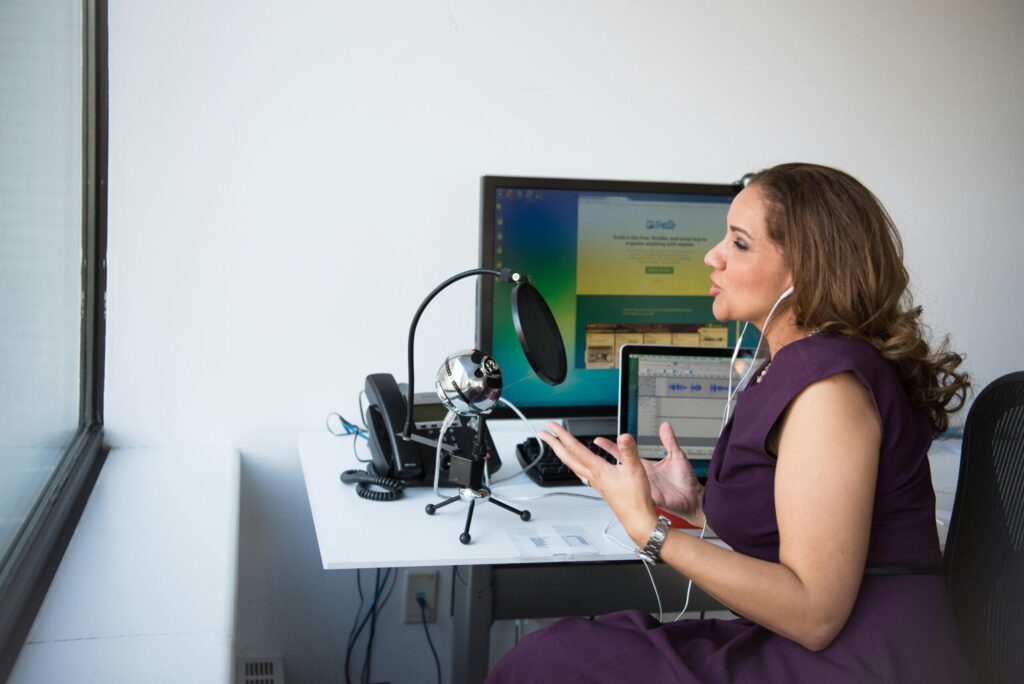
Virtual assistant work is one of the quickest routes to building your own online business. You help busy business owners with day-to-day tasks they do not have time for. Email, social media posting, calendar management, data entry, research and customer support are all common VA tasks.
The barrier to entry is low. If you are organised and easy to communicate with, you are already most of the way there. Basic comfort with Google Workspace and Zoom is enough for most entry-level clients.
VA rates start at around $15 to $25 per hour for general admin work. Specialist VAs who focus on social media, email marketing or online business support can charge $35 to $60 per hour. Many experienced VAs eventually build small agencies, bringing in other contractors and scaling beyond what one person can handle alone.
VA work is also a natural stepping stone into other online business models. Many bloggers, affiliate marketers and social media managers started as VAs. The client work teaches you systems and skills that later power something bigger.
One overlooked benefit of VA work is the access it gives you to how real online businesses operate. When you work closely with business owners, you see their funnels, their email sequences, their content strategies and their product launches from the inside. That knowledge is genuinely valuable, and most people who start as VAs carry it forward into whatever they build next.

Choosing the Right Tools
Whatever model you pick, a few tools make running an online business much easier.
An email list is one of the most valuable things you can build online. Unlike social media followers, your email subscribers are yours. No algorithm can take them away.
Tools like Systeme.io handle email marketing, landing pages, funnels and digital product delivery in one place. The free plan is genuinely useful, and paid plans start at $27 per month.
An AI writing tool speeds up content production across almost every business model on this list. Rytr is one of the most affordable options available. It is well-suited to beginners who want to produce more content without spending all their available time on it.
A keyword research tool is essential for bloggers and affiliate marketers. Finding topics with real search volume and low competition is often the gap between content that ranks and content that nobody ever finds.
If you want to build it the right way from the start, the Get Started Here page on this site walks through a clear, no-fluff foundation.
How to Pick the Right Model
According to GoDaddy’s guide to the best online business ideas, the most important factor in choosing a business model is fit, not just income potential. A model that clashes with your personality or schedule is one you will not stick with long enough to see real results.
Here is a simple way to narrow it down.
People who enjoy writing and can wait for results do best with affiliate marketing or blogging. These take time but produce something that keeps earning long after the work is done.
People who need income fast and have a skill to offer are better suited to freelancing or VA work. These pay within weeks but require active input rather than passive returns.

Creative people who enjoy making things tend to do well with print-on-demand or digital products. Low startup cost and no ceiling on how many units sell.
People who are comfortable talking, whether on camera or through audio, can build something real with YouTube or a podcast. The timeline is longer, but the audience loyalty that builds is unlike anything else on this list.
The honest truth is this. Most people who build real online income did not find a magic model. They picked one that suited them, stuck with it through the slow early months and kept adjusting until it worked.
One more thing worth saying. The early months of any online business feel slow. Traffic is low. Sales are few.
Most people give up during this phase, which is exactly why the ones who stay eventually face far less competition. The people who stick around past month six are the ones standing in a much less crowded space. That is not a coincidence. It is just the natural result of showing up when others stop.
Pick one model. Start small. Stay with it longer than feels comfortable.
Most of the people who earn real income online are not especially talented or lucky. They just picked something and kept going when it would have been easier to stop. That is the whole secret, and it is available to anyone who chooses to use it.
One Thing That Matters More Than the Model You Choose
There is a reason this guide started the way it did. The best online business for beginners in 2026 is not a universal answer. It changes depending on who you are. But one thing is true for every model on this list.
Showing up consistently over a long enough period of time is what separates the people who earn online from the people who try and give up. Not skill. Not budget. Consistency.
A beginner who publishes two blog posts per week for 18 months will outperform someone with better writing skills who publishes for 3 months and stops. A freelancer who pitches clients every week for 6 months will find more work than someone who sends 10 pitches in a burst and then waits.
The internet rewards volume and consistency over time. That is not exciting advice. It is the most useful advice there is. And it is freely available to anyone who chooses to act on it, regardless of their starting budget, their technical skill or their background.

The Bottom Line
The best online business for beginners in 2026 is not a single model that works for everyone. It is the one that fits who you are, what you enjoy and how much time you have each week.
All 7 models above can produce real, lasting income. None of them works overnight. All of them reward the people who treat their business like something worth building rather than a quick shortcut to cash.
If affiliate marketing or blogging is the right fit for you, the Get Started Here page on this site gives you a clear, honest starting point. No hype, no income promises and no unnecessary complexity.
Affiliate Disclosure: This page may contain affiliate links. If you click through and make a purchase, I may earn a commission at no extra cost to you. I only recommend tools and resources I genuinely believe offer real value.