
Is ClickFunnels A Scam? The Honest Truth Behind The Hype
If you have been researching online business tools and stumbled across ClickFunnels, you have probably noticed something interesting. The platform generates passionate reactions from both fierce advocates who credit it with transforming their businesses and equally vocal critics who dismiss it as overpriced or even fraudulent. This polarisation naturally leads to a critical question that deserves a straightforward answer: is ClickFunnels a scam, or is it a legitimate tool that simply attracts controversy because of aggressive marketing and premium pricing?
In this comprehensive investigation, I am going to cut through the marketing hype and heated opinions to give you the factual truth about ClickFunnels. We will examine what the platform actually delivers, where legitimate criticisms are justified, why some people feel deceived and whether ClickFunnels operates as an honest business or something more questionable. By the end of this article, you will have a clear, evidence-based understanding of exactly what ClickFunnels is and whether it deserves your trust and money.

Defining Terms: What Actually Qualifies As A Scam?
Before we can properly answer whether ClickFunnels is a scam, we need to establish what actually constitutes a scam in the business software world. This definition matters because people often use the word “scam” to describe things they simply do not like or find overpriced, which dilutes the term’s actual meaning.
A genuine scam involves deliberate deception where a company takes your money whilst knowingly providing nothing of value in return, or delivers something completely different from what was promised. Classic scams include fake products that never arrive, pyramid schemes disguised as legitimate businesses and services that charge your card repeatedly, whilst providing zero actual functionality.
An overpriced product, by contrast, is not a scam even if you believe it offers poor value for money. If a company charges $300 monthly for software that competitors offer for $30, that is expensive but not fraudulent, provided the software actually works as advertised. You might reasonably argue it is a bad deal, but a bad deal is fundamentally different from a scam.
This distinction is crucial for evaluating ClickFunnels fairly. If the platform charges premium prices but delivers the features it promises, that makes it expensive rather than fraudulent. If it systematically deceives customers about what they will receive, that crosses into scam territory. Our investigation will determine which category ClickFunnels actually falls into.
For a detailed examination of exactly what you get when you purchase ClickFunnels, you can read my comprehensive ClickFunnels review, which shows the platform without marketing spin
What ClickFunnels Actually Claims To Offer
To evaluate whether ClickFunnels is a scam, we first need to establish exactly what the company promises to deliver. ClickFunnels markets itself as an all-in-one sales funnel building platform that allows businesses to create complete sales processes without technical knowledge or hiring developers.
Specifically, ClickFunnels promises:
Drag-and-drop page builder: Create landing pages, sales pages and complete funnels without coding skills through a visual interface.
Pre-built funnel templates: Access dozens of templates designed for different business models, including product launches, webinar registration funnels and e-commerce sequences.
Payment processing integration: Connect with Stripe or PayPal to accept payments directly through your funnels.
Email marketing automation: Send automated email sequences triggered by customer actions within your funnels.
Analytics and tracking: Monitor how your funnels perform, including conversion rates, revenue generated and traffic sources.
Membership site functionality: Create protected content areas for courses or subscription products.
Affiliate management system: Recruit and manage affiliates who promote your products.
These are the core promises that ClickFunnels makes to potential customers. Whether the platform is a scam depends largely on whether it actually delivers these features in functional form or whether these promises are empty marketing claims.

Does ClickFunnels Deliver What It Promises?
Now we get to the heart of determining whether ClickFunnels is a scam. Let us examine whether the platform actually provides the functionality it advertises.
The Page Builder Functions But Has Limitations
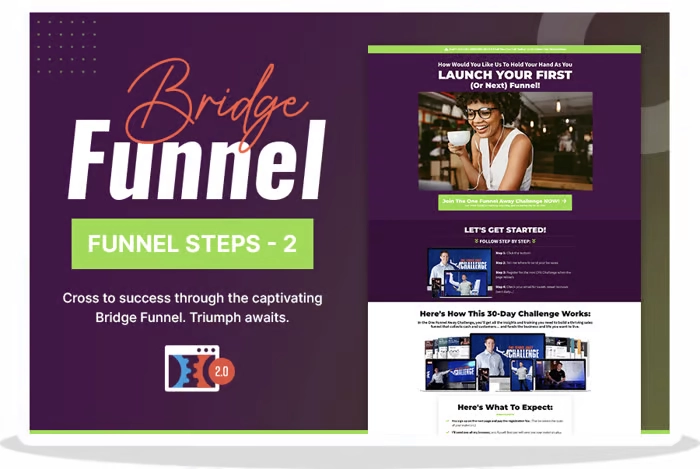
ClickFunnels does provide a working drag-and-drop page builder that allows users to create landing pages and sales funnels without coding. This core promise is fulfilled. Users can select elements (text boxes, images, buttons, forms) and place them on pages to build functional funnels.
However, the builder has significant limitations compared to modern website builders. The interface feels dated and clunky. Creating custom designs requires fighting against template constraints. Many users find the editor frustrating and less intuitive than alternatives like Elementor or Wix.
This is not evidence of a scam but rather evidence of software that works whilst being less polished than competitors. The functionality exists even if the user experience is suboptimal.
Templates Exist, But Quality Varies
ClickFunnels does provide access to pre-built funnel templates as promised. Users can select templates designed for various business models and customise them rather than building from scratch.
The quality of these templates varies considerably. Some are professionally designed and genuinely useful. Others feel generic and dated. The template library is smaller than what some competing platforms offer.
Again, this is not scam behaviour. Templates exist and function as advertised, even if users might wish for more options or better design quality.
Payment Processing Works As Described
ClickFunnels integrates with Stripe and PayPal, allowing users to accept payments through their funnels. This integration functions reliably for most users. You can set up products, process transactions, and receive payments as the platform promises.
Some users report occasional technical issues with payment integration, but these appear to be bugs rather than systematic deception. The feature works for the vast majority of users.
Email Functionality Is Basic But Present
ClickFunnels includes email automation capabilities. You can create email sequences triggered by funnel actions such as someone opting into your list or purchasing a product. This functionality exists and works.
The email features are quite basic compared to dedicated email marketing platforms. Advanced segmentation, sophisticated automation workflows and detailed deliverability management are limited. Many serious users end up integrating external email services anyway.
This limitation does not constitute a scam. ClickFunnels delivers email functionality as advertised, even if that functionality is not as robust as specialised alternatives.
Analytics Provide Meaningful Data
The platform includes analytics that track funnel performance, including conversion rates, revenue and traffic sources. Users can monitor how their funnels perform and identify where visitors drop off in the sales process.
These analytics work and provide genuinely useful data. They are not as comprehensive as dedicated analytics platforms, but they deliver what ClickFunnels promises.
Where The Scam Accusations Actually Come From
If ClickFunnels delivers the features it advertises, why do accusations of it being a scam persist? Understanding where these claims originate reveals important context about the platform’s reputation.
Aggressive Affiliate Marketing Creates Unrealistic Expectations
ClickFunnels operates a generous affiliate programme offering 40% recurring commissions. This incentivises affiliates to promote the platform aggressively, sometimes using exaggerated claims about the results users can expect.
Some affiliates imply that simply purchasing ClickFunnels will generate automatic income or that success is guaranteed with minimal effort. These misleading promotions create unrealistic expectations. When new users discover that ClickFunnels is just software requiring significant work to produce results, they feel deceived.
This is not ClickFunnels directly scamming customers, but rather overzealous affiliates creating false impressions. However, ClickFunnels benefits from this misleading marketing and does not adequately police affiliate claims, which contributes to the platform’s controversial reputation.
The Cult-Like Community Can Feel Manipulative
ClickFunnels cultivates an intensely enthusiastic community with events, challenges and a shared culture around founder Russell Brunson’s philosophy. For believers, this community is motivating and supportive. For sceptics, it feels like cult-like manipulation designed to keep people paying monthly fees regardless of actual results.
The emphasis on commitment, belief in the system and surrounding yourself with other ClickFunnels users creates an environment where questioning the platform feels like personal failure rather than legitimate criticism. This psychological pressure makes some users uncomfortable and contributes to scam accusations.
Premium Pricing Feels Exploitative To Budget-Conscious Users
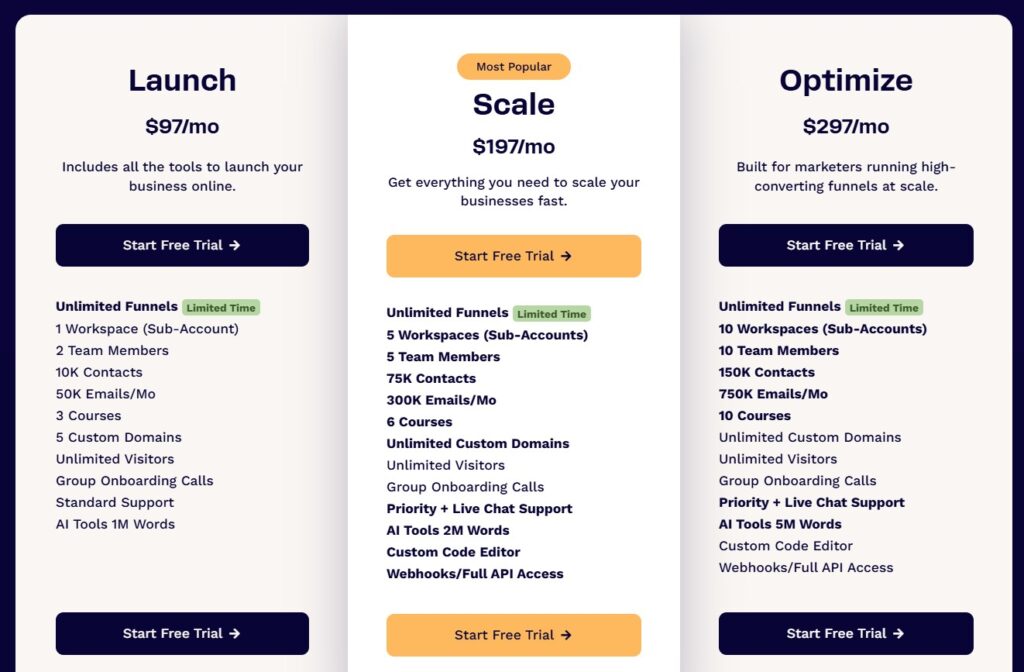
At $97-297 monthly, ClickFunnels costs substantially more than competing platforms offering similar functionality. Systeme.io provides comparable features for $27 monthly. WordPress with plugins can replicate most ClickFunnels capabilities for $20-50 monthly.
For budget-conscious entrepreneurs, this pricing feels exploitative, particularly when they discover alternatives offer similar value at a fraction of the cost. Paying $297 monthly only to find you could have achieved similar results for $30 monthly elsewhere naturally feels like you were scammed, even if the software technically worked.
Difficult Cancellation Process Frustrates Users
Multiple users report that cancelling ClickFunnels subscriptions is unnecessarily complicated. Some claim they were charged for additional months after attempting to cancel or that customer service made the cancellation process difficult.
Whilst ClickFunnels disputes these characterisations, the pattern of complaints suggests the company does not make cancellation as straightforward as it should be. This friction contributes to feelings that the company operates in bad faith.
Upsells And Additional Costs Add Up Quickly
Beyond the base subscription, ClickFunnels users often face additional costs, including premium templates, traffic training programmes, live events, and other products heavily promoted within the platform. New users can feel like they are constantly being sold additional products rather than being supported in succeeding with what they already purchased.
This aggressive upselling creates an impression that ClickFunnels is more interested in extracting maximum revenue than genuinely helping customers succeed. Even if the upsells offer real value, the constant promotion feels manipulative to many users.
For a detailed examination of exactly what you get when you purchase ClickFunnels, you can read my comprehensive ClickFunnels review, which shows the platform without marketing spin
Legitimate Criticisms Versus Actual Scam Behaviour
Having examined where scam accusations originate, we need to distinguish between legitimate criticisms of ClickFunnels and actual fraudulent behaviour.
Legitimate Criticisms That Do Not Equal Scam
Several criticisms of ClickFunnels are entirely valid but do not constitute scam behaviour:
The pricing is expensive: True, but high prices are not fraud if the product works as advertised.
The page builder is clunky: Accurate criticism, but software being suboptimal is not the same as being fraudulent.
Better alternatives exist: This may be true, but it does not make ClickFunnels a scam.
Marketing is aggressive and hype-focused: Valid concern, but marketing style alone does not equal fraud.
The learning curve is steeper than marketing suggests: Misleading marketing is problematic, but crosses into scam territory only if claims are completely false rather than exaggerated.

Where ClickFunnels Crosses Ethical Lines
Whilst ClickFunnels is not an outright scam, certain business practices are ethically questionable:
Insufficient affiliate oversight: Allowing affiliates to make exaggerated income claims without meaningful consequences damages customers and tarnishes the industry.
Psychological manipulation tactics: Creating cult-like community dynamics that discourage critical thinking raises ethical concerns.
Making cancellation difficult: Any business that makes it harder to leave than to join is engaging in bad faith practices, even if not outright fraud.
Constant upselling to existing customers: Whilst legal, aggressive promotion of additional products to customers who already paid premium prices feels exploitative.
These practices place ClickFunnels in an ethically grey area. The company is not committing fraud in the legal sense but operates with practices that prioritise profit extraction over customer well-being in ways that many find objectionable.
Real User Experiences: What Do Customers Actually Report?
To fairly evaluate whether ClickFunnels is a scam, we need to examine actual customer experiences rather than relying solely on marketing claims or critic complaints.
Successful Users Who Find Genuine Value
A substantial number of ClickFunnels users genuinely benefit from the platform and consider it worth the investment. These users typically share certain characteristics:
They run established businesses with proven products already generating revenue. They value convenience and time savings over minimising costs. They have budgets that can absorb $297 monthly without significant strain. They utilise the training resources and engage with the community rather than expecting the software alone to generate results.
For these users, ClickFunnels is not a scam but rather an expensive tool that delivers value proportional to their business needs.
Disappointed Users Who Feel Misled
Equally numerous are users who feel disappointed or deceived by their ClickFunnels experience. These users commonly share different characteristics:
They purchased ClickFunnels hoping it would solve fundamental business problems or generate automatic income. They operate on tight budgets where $97-297 monthly is significant financial pressure. They based purchase decisions on exaggerated affiliate marketing rather than a realistic assessment of what the platform offers. They lack the time or skills to properly utilise the features ClickFunnels provides.
For these users, ClickFunnels feels like a scam even though the technical definition of fraud may not apply. They paid substantial money for something that did not deliver the results they expected based on how the platform was marketed to them.

The Reality Between Extremes
The truth about ClickFunnels lies between these extremes. For the right user in the right circumstances, ClickFunnels is a legitimate tool that works as advertised, even if expensive. For users with unrealistic expectations or insufficient resources, ClickFunnels is a costly mistake that feels fraudulent even if it technically is not.
Whether ClickFunnels is a scam, therefore, depends partly on your definition of the term and partly on whether the platform matches your specific situation. This nuanced reality explains why such contradictory opinions about the platform coexist.
For a detailed examination of exactly what you get when you purchase ClickFunnels, you can read my comprehensive ClickFunnels review, which shows the platform without marketing spin
Comparing ClickFunnels To Actual Scams
To put the ClickFunnels controversy in proper context, let us compare it to actual scams in the online business space. This comparison clarifies where ClickFunnels sits on the spectrum from legitimate business to outright fraud.
Characteristics Of Actual Scams
Genuine scams in the business software space typically exhibit these characteristics:
No functional product exists: The company takes payment but provides nothing or something completely non-functional.
Impossible to contact support: No real people respond to customer service requests.
Deceptive billing practices: Charges appear without authorisation or continue indefinitely without any cancellation option.
Completely false advertising: Marketing claims bear no resemblance to what actually gets delivered.
No legitimate business entity: The company cannot be identified or located, with no real office or registered business.
Payment processors drop them: Legitimate payment companies refuse to work with them due to excessive chargebacks and fraud complaints.
How ClickFunnels Differs From Scams
ClickFunnels exhibits none of these red flags that characterise actual scams:
The product exists and functions for its intended purpose even if imperfectly. Customer support responds to queries even if satisfaction with that support varies. The company is a real entity with identifiable leadership, physical offices and legitimate business registration. Payment processors like Stripe and PayPal continue working with ClickFunnels, which they would not do if fraud levels were significant. Marketing is aggressive and sometimes misleading, but not completely false. The features advertised do exist, even if they might not work as smoothly as marketing implies.
This is not the profile of a scam operation. It is the profile of a legitimate but controversial business that charges premium prices and uses aggressive marketing tactics.
For context on how to identify actual online business scams, the Federal Trade Commission’s guide to avoiding online scams provides useful criteria that ClickFunnels does not meet.

The Bigger Picture: The Sales Funnel Industry
Understanding whether ClickFunnels is a scam requires examining the broader sales funnel industry context. ClickFunnels did not invent problematic marketing practices but rather exemplifies trends across the entire sector.
Industry-Wide Issues
The sales funnel and online marketing industry have significant systemic problems:
Affiliate programmes incentivise exaggerated income claims. Success stories are cherry-picked and presented as typical results when they are outliers. Complex pricing structures obscure total costs. Psychological manipulation techniques are standard practice. Platforms benefit from confusion that prevents customers from making truly informed decisions.
ClickFunnels participates in all these practices but did not create them. The entire industry operates with ethical standards considerably below what consumers deserve.
Why ClickFunnels Attracts More Scrutiny
ClickFunnels faces more scam accusations than some competitors, partly because of its prominence and visibility. As one of the best-known names in the space, it naturally attracts more attention and criticism than smaller platforms.
The aggressive marketing and cult-like community also make ClickFunnels an easier target. Platforms that maintain lower profiles and more subdued marketing avoid the controversy that ClickFunnels courts through its approach.
Where The Industry Needs Reform
The sales funnel platform industry would benefit from stricter regulation of affiliate marketing claims with real penalties for exaggeration, mandatory clear disclosure of typical results rather than cherry-picked success stories, standardised transparent cancellation processes, limits on psychological manipulation tactics in marketing and community building and better consumer education about realistic timelines and effort required for success. Resources like the Better Business Bureau’s guide to avoiding scams help consumers identify warning signs.
Until these reforms occur, platforms like ClickFunnels will continue operating in ethical grey areas whilst technically avoiding outright fraud.

Making An Informed Decision About ClickFunnels
Having examined whether ClickFunnels is a scam from multiple angles, how should you actually decide whether to use the platform?
Before making any purchase decision, I recommend reading my detailed ClickFunnels review
Questions To Ask Yourself
Question 1: Am I currently generating at least $2,000 monthly revenue in my business? If no, ClickFunnels’ premium pricing probably does not make financial sense, regardless of whether it is a scam.
Question 2: Have I investigated alternatives like Systeme.io, WordPress with funnel plugins or other lower-cost options? Ensure you understand what you are paying premium prices for.
Question 3: Can I distinguish between the platform’s actual features and exaggerated marketing claims? Be honest about what ClickFunnels is (software) versus what it is not (a guaranteed path to riches).
Question 4: Am I prepared to invest significant time learning the platform and building funnels? No software generates revenue without substantial effort, regardless of marketing claims.
Question 5: Can I afford to lose $97-297 monthly if ClickFunnels does not work for my business? Only invest money you can genuinely afford to lose.
Warning Signs You Should Avoid ClickFunnels
You should probably avoid ClickFunnels if:
You are purchasing based on income claims from affiliates rather than a realistic assessment of the platform’s actual features. You are hoping ClickFunnels will solve fundamental business problems like not having a viable product or knowing your target market. You are operating on a budget where $97-297 monthly creates financial stress. You have not validated that your business model can be profitable before investing in expensive tools. You are uncomfortable with aggressive upselling and high-pressure marketing tactics.
When ClickFunnels Might Make Sense Despite Concerns
ClickFunnels could be appropriate if:
You have an established business already generating healthy revenue, where the cost is proportionally reasonable. You value convenience and speed enough to pay premium prices for all-in-one functionality. You have realistic expectations that ClickFunnels is just software requiring your effort to produce results. You are comfortable navigating an environment with constant upselling and aggressive marketing. You have investigated alternatives and believe ClickFunnels’ specific features justify the higher price for your use case.

Alternatives Worth Considering
Whether or not ClickFunnels is a scam, many users will find better value with alternative platforms that offer similar functionality at lower prices without the controversial marketing tactics.
Systeme.io: The Budget-Friendly Alternative
Systeme.io provides funnel building, email marketing, course hosting and affiliate management for $27 monthly. The interface is less polished than ClickFunnels but functionality is comparable for most small businesses. This is the best alternative for entrepreneurs operating on tight budgets who want all-in-one functionality.
WordPress With Funnel Plugins
WordPress, combined with funnel-building plugins like Elementor Pro or Thrive Architect, offers maximum flexibility and customisation. Total cost runs $20-50 monthly, including hosting. The trade-off is increased technical complexity, but you gain complete control and ownership of your platform.
Kartra: The Middle Ground Option
Kartra offers comprehensive funnel building with robust email marketing, membership sites and advanced automation for $99-499 monthly, depending on features needed. Pricing is similar to ClickFunnels, but many users find Kartra more intuitive and feature-rich without the controversial marketing approach.
Kajabi For Course Creators
If you primarily sell online courses, Kajabi provides superior course delivery combined with marketing funnels for $149-399 monthly. For course creators specifically, Kajabi often delivers better value than ClickFunnels despite similar pricing.
For strategic guidance on building effective funnels regardless of platform, HubSpot’s guide to sales funnels provides excellent foundational knowledge that applies universally.
The Legal And Ethical Perspective
To complete our analysis of whether ClickFunnels is a scam, we should consider the legal and ethical dimensions of how the company operates.
Legal Standing
From a legal perspective, ClickFunnels operates as a legitimate business. The company is properly registered, pays taxes, maintains real offices and employs hundreds of people. No regulatory agencies have taken action against ClickFunnels for fraudulent business practices.
The platform delivers software that functions for its advertised purpose. Contracts and terms of service, whilst perhaps not as customer-friendly as they could be, do not contain provisions that would qualify as fraud.
Legally, ClickFunnels is not a scam. It is a real business selling a real product, even if aspects of its operation are ethically questionable.

Ethical Concerns
Ethically, ClickFunnels occupies murkier territory. The company profits from affiliate marketing that creates unrealistic expectations, even while technically disclaiming responsibility for affiliate claims. The aggressive upselling to customers who already paid premium prices prioritises revenue extraction over customer success. The difficulty some users report in cancelling subscriptions suggests the company creates more friction for leaving than joining.
These practices are legal but ethically dubious. A company can be legitimate while still operating with values and practices that many find objectionable.
The Responsibility Question
Where does responsibility lie when customers feel scammed by ClickFunnels? Partially with the company for allowing misleading affiliate marketing and using aggressive sales tactics. Partially with affiliates who make exaggerated claims to earn commissions. Partially with customers who make purchase decisions based on hype rather than a realistic assessment.
This shared responsibility explains why the question of whether ClickFunnels is a scam generates such heated debate. Different stakeholders assign blame differently based on their perspective and experience.
The Final Verdict: Is ClickFunnels A Scam?
After this comprehensive investigation examining ClickFunnels from every relevant angle, we can now provide a definitive answer to whether ClickFunnels is a scam.
No, ClickFunnels is not a scam in the technical sense. The platform is a legitimate business selling functional software that delivers the core features it advertises. Users can and do build working sales funnels using ClickFunnels. The company is real, properly registered and not engaged in outright fraud.
However, ClickFunnels operates with business practices that many find ethically problematic. The aggressive affiliate marketing creates unrealistic expectations. The premium pricing is difficult to justify compared to alternatives. The psychological tactics used to build community loyalty make some users uncomfortable. The difficulty of cancelling subscriptions frustrates customers.
Whether ClickFunnels is “worth it” depends entirely on your specific circumstances. For established businesses with healthy revenue, ClickFunnels can be a legitimate tool despite the premium cost. For beginners with limited budgets operating based on exaggerated marketing claims, ClickFunnels will almost certainly feel like a scam even if it technically is not.
The real issue is not whether ClickFunnels is fraudulent but whether it provides good value compared to alternatives. For most small businesses and solo entrepreneurs, the answer is no. Better value exists elsewhere at a fraction of the price without the controversial marketing approach.
Your best protection against feeling scammed is making informed decisions. Understand that ClickFunnels is expensive software requiring significant work to produce results. Investigate alternatives before committing. Base decisions on a realistic assessment of features rather than income claims from affiliates. Only invest what you can afford to lose.
ClickFunnels is not a scam, but it is also not the universal solution its marketing sometimes suggests. It is simply one option among many in the sales funnel space, and for most users, it is not the best option available.

Conclusion
So, is ClickFunnels a scam? The evidence-based answer is no. The platform is a legitimate business providing functional software that works for its intended purpose. ClickFunnels is not committing fraud or systematically deceiving customers in ways that would qualify as an actual scam.
However, ClickFunnels does operate with business practices that many find ethically questionable, including aggressive affiliate marketing that creates unrealistic expectations, premium pricing that is difficult to justify compared to alternatives, psychological manipulation tactics in building community loyalty and processes that make cancellation more difficult than it should be.
For the right user in the right circumstances (established businesses with healthy revenue and realistic expectations), ClickFunnels can be a valuable, if expensive, tool. For others (beginners with limited budgets operating on exaggerated marketing claims), ClickFunnels will feel like a waste of money even though it technically delivers what it promises.
Your best approach is to make informed decisions based on a realistic assessment rather than marketing hype. Investigate alternatives like Systeme.io or WordPress-based solutions that offer similar functionality at lower prices.
Read my hands-on ClickFunnels review that examines the platform beyond the marketing claims
Only invest in tools after confirming they match your actual business needs and budget constraints.
ClickFunnels is not a scam, but that does not mean it is the right choice for your situation. Make your decision based on facts, realistic expectations and honest assessment of alternatives rather than hoping any tool will magically solve your business challenges.