
Introduction: The Product Description Problem Every E-Commerce Seller Faces
If you’re trying to figure out how to write product descriptions with AI (Rytr Guide) style approaches, you’re probably tired of spending hours writing product copy that sounds generic and fails to convert. You’re not alone. Most e-commerce sellers, affiliate marketers and online store owners struggle with the same challenge: creating unique, compelling product descriptions for dozens or even hundreds of products without it taking over their entire week.
I’ve been there. Staring at a spreadsheet with 50 products that need descriptions. Each one requires research, creative thinking and persuasive copywriting. The task feels overwhelming. You either rush through it and create mediocre descriptions that blend into the noise, or you spend countless hours crafting perfect copy that delays your launch for weeks.
There’s a better way. AI writing tools have evolved dramatically in 2025, and Rytr stands out as one of the most practical, affordable and effective solutions for product description writing. Unlike generic AI tools that spit out robotic nonsense, Rytr has been specifically trained on e-commerce copy and understands the psychology of selling products online.
In this comprehensive guide, I’ll walk you through exactly how to use Rytr to create product descriptions that actually convert. Not theoretical advice but practical, step-by-step instructions you can implement immediately. We’ll cover everything from initial setup to advanced techniques that experienced copywriters use. By the end, you’ll be creating product descriptions in 5-10 minutes that would have taken you an hour to write manually.
Whether you’re launching your first product, managing a growing catalogue or scaling an established e-commerce business, this guide will transform how you approach product description writing.

Why AI-Generated Product Descriptions Matter in 2025
Before we dive into the Rytr specifics, let’s address why AI-generated product descriptions have become essential rather than optional for online businesses.
The Scale Problem
Research from BigCommerce shows that product descriptions directly impact conversion rates, with well-written descriptions increasing conversions by 30% or more. But here’s the challenge: if you’re selling 50 products and each description takes 30-45 minutes to write, you’re looking at 25-37 hours of work.
For a solopreneur or small team, that’s nearly a full work week dedicated solely to product descriptions. And that’s before you consider:
- Writing variations for different platforms (Amazon, Shopify, Etsy)
- Creating SEO-optimised versions with keywords
- A/B testing different copy approaches
- Updating descriptions based on customer feedback
- Translating descriptions for international markets
Without AI assistance, scaling your product catalogue becomes prohibitively time-consuming.
I highly recommend Rytr as the most affordable AI writing tool available in 2025
The Quality Consistency Challenge
Human writers have off days. Your 10th product description of the day will likely be less creative and engaging than your first. Fatigue leads to repetitive language, overlooked details and declining enthusiasm that customers can feel in the copy.
AI doesn’t have this problem. The 100th description generated maintains the same quality standards as the first. This consistency ensures every product in your catalogue receives equal attention and persuasive power.
The Competitive Advantage
Your competitors are already using AI. According to recent industry data, over 60% of e-commerce businesses are incorporating AI writing tools into their content creation processes. If you’re still writing every description manually, you’re operating at a significant speed disadvantage.
The businesses that combine AI efficiency with human creativity and strategic thinking are pulling ahead. They’re launching products faster, testing more variations and optimising based on data while their competitors are still stuck in the writing phase.
Why Rytr Specifically for Product Descriptions?
The AI writing tool market is crowded. ChatGPT, Jasper, Copy.ai, Writesonic and dozens of others all claim to write great product descriptions. So why Rytr?
Reason 1: Purpose-Built Templates
Rytr includes specific templates designed explicitly for e-commerce product descriptions. These templates have been trained on millions of high-converting product descriptions across industries. The AI understands the structure, tone and elements that make product copy effective.
You’re not trying to force a general-purpose writing tool to create product descriptions. You’re using a tool that was built specifically for this task.
Reason 2: Affordability Without Compromise
Rytr’s pricing structure is dramatically more accessible than competitors:
- Free Plan: 10,000 characters per month (roughly 15-20 product descriptions)
- Saver Plan: $9/month for 100,000 characters (150-200 descriptions)
- Unlimited Plan: $29/month for unlimited characters
Compare this to:
- Jasper: $49/month minimum
- Copy.ai: $49/month for unlimited
- Writesonic: $16-100+/month depending on usage
For small businesses and solopreneurs watching every pound, Rytr delivers professional results at a fraction of the cost.

Reason 3: Multiple Tone and Style Options
Rytr doesn’t force you into one voice. You can generate product descriptions in:
- Casual and friendly
- Professional and formal
- Luxury and sophisticated
- Urgent and persuasive
- Informative and educational
This flexibility matters because different products and audiences require different approaches. Your fitness supplement descriptions need different energy than your handmade jewellery descriptions.
Reason 4: Built-In SEO Optimisation
Rytr allows you to input target keywords and generates descriptions that naturally incorporate those keywords without sounding forced. For e-commerce businesses relying on organic search traffic, this SEO capability is invaluable.
Reason 5: Language Support
Rytr supports 30+ languages. If you’re selling internationally or planning to expand globally, you can generate descriptions in multiple languages without hiring translators or learning complex translation software.
I highly recommend Rytr as the most affordable AI writing tool available in 2025
Setting Up Rytr for Product Description Success
Before you start generating descriptions, a proper setup ensures better results. Here’s the step-by-step process:
Step 1: Create Your Rytr Account
- Visit Rytr’s website
- Click “Get Started for Free”
- Sign up with your email or Google account
- Confirm your email address
- Complete the brief onboarding questionnaire
The free plan gives you 10,000 characters to test the platform. This is enough for 15-20 product descriptions, depending on length.
Step 2: Understand the Dashboard
When you log in, you’ll see:
- Left sidebar: All your projects and documents
- Main area: The writing interface
- Top menu: Use cases and templates
- Right panel: Output and editing tools
Familiarise yourself with this layout. Unlike some AI tools with overwhelming interfaces, Rytr keeps things clean and intuitive.
Step 3: Choose Your Use Case
Click “Use Cases” in the top menu and scroll to find “Product Description.” Rytr has specific templates for:
- Product description
- Product description (bullet points)
- Amazon product description
- Facebook/Instagram ad copy for products
For most e-commerce purposes, start with “Product Description” as your primary use case.
Step 4: Set Your Default Preferences
Configure these settings to match your brand:
Language: Select English (UK) for British spelling or English (US) for American spelling
Tone of Voice: Choose the default tone that matches your brand personality. You can change this per product, but setting a default saves time.
Creativity Level: Rytr offers “Optimal” and “Creative” settings. For product descriptions, “Optimal” typically works better because it balances creativity with factual accuracy.
The Step-by-Step Process: Writing Your First Product Description with Rytr
Let’s walk through creating an actual product description from start to finish.
Example Product: Stainless Steel Water Bottle
We’ll use this as our demonstration product. The process is identical regardless of what you’re selling.
Step 1: Gather Product Information
Before touching Rytr, collect these details about your product:
- Product name: Insulated Stainless Steel Water Bottle
- Key features:
- 500ml capacity
- Keeps drinks cold for 24 hours
- Leak-proof lid
- BPA-free materials
- Fits standard cup holders
- Benefits:
- Stay hydrated throughout the day
- Reduce single-use plastic waste
- Save money on bottled water
- Perfect for the gym, office or travel
- Target customer: Active professionals and fitness enthusiasts aged 25-45
- Keywords: insulated water bottle, stainless steel bottle, eco-friendly water bottle
Having this information organised before you start dramatically improves AI output quality.
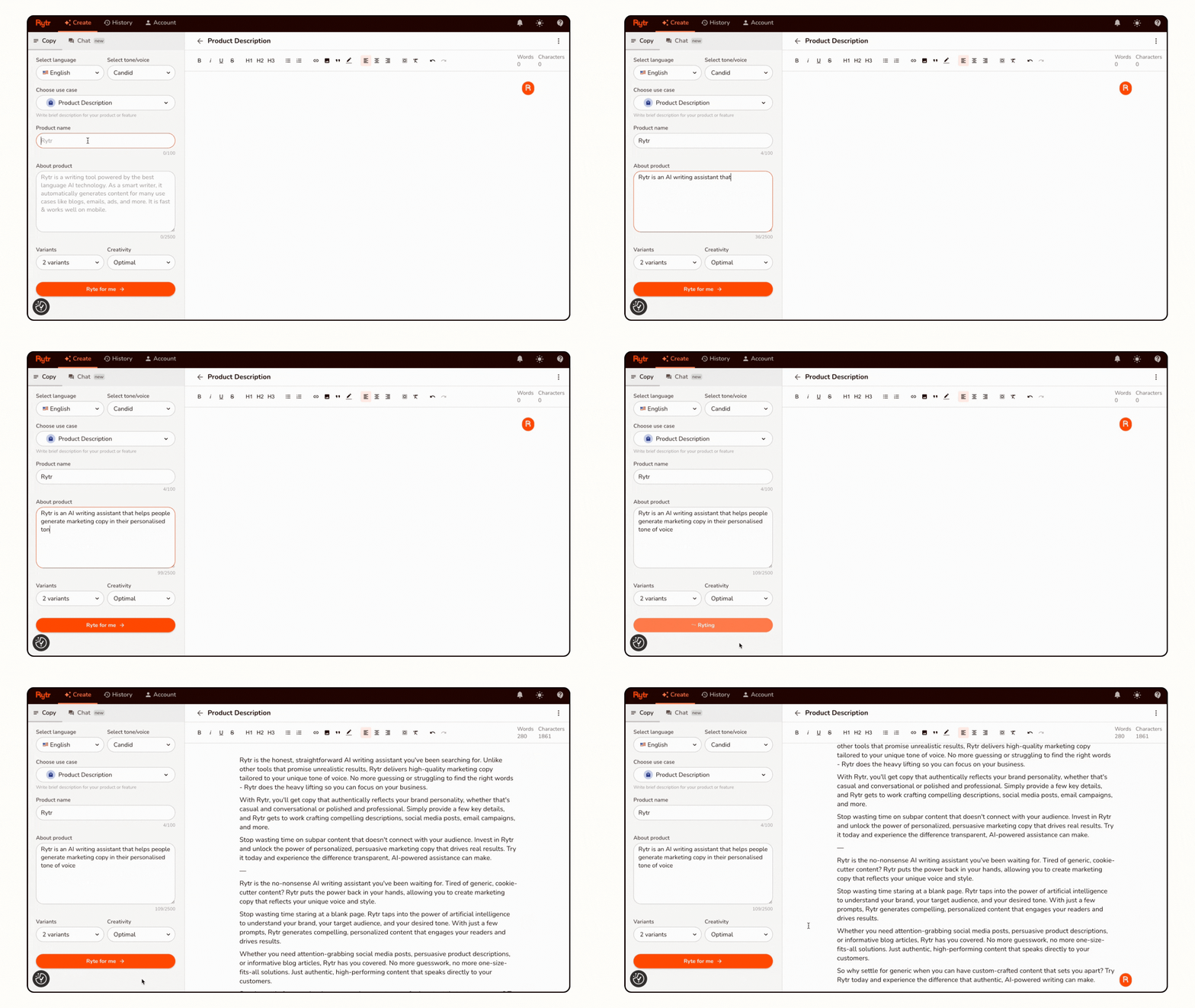
Step 2: Open Rytr and Select the Product Description Template
- Click “Create New” or the plus icon
- Select “Product Description” from use cases
- You’ll see input fields for:
- Product name
- Product description/features
- Target keywords (optional)
Step 3: Input Your Product Information
Product Name Field:
Insulated Stainless Steel Water Bottle (500ml)
Product Description/Features Field:
Premium 500ml insulated water bottle made from food-grade stainless steel. Keeps drinks cold for 24 hours or hot for 12 hours. Features leak-proof screw-top lid, BPA-free construction and compact design that fits standard cup holders. Perfect for gym, office, travel or everyday use. Eco-friendly alternative to disposable plastic bottles.
Keywords Field (optional but recommended):
insulated water bottle, stainless steel, eco-friendly, reusable
Step 4: Choose Tone and Length
Tone: Select from the dropdown. For our water bottle, “Casual” works well because it’s an everyday consumer product. For luxury items, choose “Luxury.” For technical products, choose “Professional.”
Variants: Select how many variations you want Rytr to generate. I recommend starting with 3 variants so you can compare options.
Creativity Level: Leave on “Optimal” for product descriptions.
Step 5: Generate and Review
Click “Ryte for me” and wait 5-10 seconds. Rytr will generate multiple product description options.
Example Output (Variant 1):
“Stay hydrated in style with our premium Insulated Stainless Steel Water Bottle. This 500ml powerhouse keeps your cold drinks refreshingly cool for up to 24 hours and hot beverages piping hot for 12 hours, making it your perfect companion from morning coffee to post-workout hydration.
Crafted from food-grade stainless steel with a completely BPA-free construction, this eco-friendly bottle helps you reduce plastic waste while enjoying your favourite drinks. The leak-proof screw-top lid means no spills in your bag, while the compact design fits perfectly in standard cup holders.
Whether you’re hitting the gym, heading to the office or embarking on your next adventure, this reusable water bottle combines functionality with sustainability. Make the switch from disposable plastic bottles and invest in a bottle that’s built to last.”
Step 6: Edit and Refine
The AI output is your starting point, not your finished product. Review the generated descriptions and:
- Check for accuracy: Ensure all features and specifications are correct
- Add personality: Insert brand-specific phrases or values
- Adjust length: Trim if too long or expand if too brief
- Verify tone: Make sure it matches your brand voice
- Include call to action: Add “Shop Now” or “Add to Cart” if appropriate
Rytr’s editor allows you to make changes directly. You can also regenerate specific sections if you’re not satisfied.
Step 7: Save and Export
Once satisfied:
- Click the save icon
- Name your document (e.g., “Water Bottle Description”)
- Export as text, Word doc, or copy directly to the clipboard
- Paste into your e-commerce platform
The entire process from gathering information to having a finished product description takes 10-15 minutes. Compare that to the 45-60 minutes it takes to write quality descriptions manually.
I highly recommend Rytr as the most affordable AI writing tool available in 2025
Advanced Techniques for Better Rytr Product Descriptions
Once you’re comfortable with the basic process, these advanced techniques will significantly improve your results.
Technique 1: The Two-Pass Method
Instead of generating one complete description, use Rytr twice:
First Pass: Generate the main product description focusing on features and benefits
Second Pass: Use the “Expand on a topic” use case to elaborate on specific aspects like materials, sustainability or use cases
This two-pass approach creates richer, more detailed descriptions without overwhelming the AI with too much input at once.

Technique 2: Incorporate Customer Language
Study your existing customer reviews and feedback. Note the specific words and phrases customers use when describing their experience. Input these phrases into Rytr’s description field.
For example, if customers frequently say your water bottle is “perfect for hot yoga classes” or “doesn’t sweat like my old bottle,” include these phrases. Rytr will incorporate this authentic customer language into generated descriptions.
Technique 3: Create Variation Templates
For product catalogues with similar items (like clothing in different colours or sizes), create a master template with bracketed variables:
Available in [COLOR], this [PRODUCT TYPE] features [KEY FEATURE 1], [KEY FEATURE 2] and [KEY FEATURE 3]. Perfect for [USE CASE], the [PRODUCT NAME] combines [BENEFIT 1] with [BENEFIT 2].
Use Rytr to generate compelling descriptions for the first product, then adapt the template for variations. This maintains consistency across your catalogue while reducing repetitive AI generation.
Technique 4: The Feature-Benefit Translation
List your product features in bullet points, then ask Rytr to “expand on these features and explain the benefits to the customer.” This approach ensures you’re not just listing specifications but actually explaining why those specifications matter.
Input:
Explain the customer benefits of these water bottle features:
- 500ml capacity
- Double-wall vacuum insulation
- Food-grade stainless steel
- Leak-proof lid
- Cup holder friendly
Rytr will generate benefit-focused descriptions rather than feature-heavy specifications.
Technique 5: Competitive Differentiation
Research your top 3-5 competitors’ product descriptions. Note what they emphasise and what they miss. Input this competitive intelligence into Rytr:
Write a product description that emphasizes these unique advantages over competitors: [LIST YOUR DIFFERENTIATORS]
This ensures your descriptions highlight what makes your product different rather than generic features every competitor mentions.
Optimising Rytr Descriptions for Different Platforms
Different selling platforms have different requirements and best practices. Here’s how to adapt Rytr output for major platforms:
Amazon Product Descriptions
Amazon Specifics:
- Title: 200 characters maximum
- Bullet points: 5 bullets, 255 characters each
- Product description: 2,000 characters
- Backend keywords: 250 bytes
Rytr Approach:
- Use the “Amazon product description” template
- Generate a punchy, keyword-rich title
- Create bullet points emphasising benefits over features
- Include search terms customers actually use (not technical jargon)
- Mention any certifications, awards or guarantees
Amazon customers scan quickly. According to Jungle Scout, 80% of purchase decisions are made based on bullet points alone. Use Rytr to generate compelling bullets that sell benefits.
Shopify Product Descriptions
Shopify Specifics:
- More creative freedom
- Can include storytelling
- SEO matters for organic traffic
- Can be longer and more detailed
Rytr Approach:
- Use the standard “Product Description” template
- Choose a more creative tone
- Generate longer descriptions (300-500 words)
- Include lifestyle descriptions and use cases
- Add brand story elements
Shopify gives you room to breathe. Use Rytr to create descriptions that paint pictures of how the product fits into customers’ lives.
Etsy Product Descriptions
Etsy Specifics:
- Handmade or vintage focus
- Customers expect a personal touch
- Sustainability and ethics matter
- Process and materials are important
Rytr Approach:
- Emphasise craftsmanship and quality
- Include information about materials and sourcing
- Share creation process details
- Highlight sustainability or ethical production
- Add personal touches about the maker
For Etsy, use Rytr to generate the foundation, then add personal anecdotes and maker stories that AI can’t replicate.

eBay Listings
eBay Specifics:
- Transaction-focused
- Shipping and returns are important
- Condition details critical
- Clear specifications essential
Rytr Approach:
- Lead with key specifications
- Be explicit about the condition
- Include measurements and dimensions
- Mention shipping and return policies
- Add trust signals (returns accepted, money-back guarantee)
eBay shoppers want facts fast. Use Rytr to create clear, specification-heavy descriptions.
I highly recommend Rytr as the most affordable AI writing tool available in 2025
Common Mistakes to Avoid When Using Rytr
Even with excellent AI tools, certain mistakes can undermine your results. Here’s what to avoid:
Mistake 1: Copying AI Output Without Editing
The biggest mistake is treating Rytr output as finished copy. AI generates solid foundations but requires human judgment for:
- Brand voice consistency
- Factual accuracy verification
- Platform-specific optimization
- Legal compliance (claims, guarantees)
- Emotional resonance
Always edit AI output. The goal is AI-assisted writing, not AI-only writing.
Mistake 2: Insufficient Input Information
Garbage in, garbage out. If you input minimal information, Rytr generates generic descriptions. Provide rich detail:
- Specific features and specifications
- Actual customer benefits
- Target audience information
- Brand personality traits
- Competitive differentiators
The more context you provide, the better the output.
Mistake 3: Ignoring SEO Completely
While Rytr has SEO capabilities, you must give it the right keywords. Research actual search terms customers use (not what you think they use). Tools like:
- Google Keyword Planner
- Amazon search suggestions
- Ubersuggest
Help identify high-value keywords to include in your Rytr inputs.
Mistake 4: Using Identical Descriptions Across Platforms
Each platform has different customer expectations and search algorithms. Don’t copy the same Rytr-generated description to Amazon, Shopify and Etsy. Generate platform-specific variations.
Mistake 5: Neglecting Product Photography
Great descriptions without great product photos won’t convert. AI can write compelling copy, but it can’t fix poor visual presentation. Invest in quality product photography to complement your Rytr descriptions.
Mistake 6: Forgetting About Mobile Readers
Over 70% of e-commerce traffic comes from mobile devices. Rytr generates descriptions that look great on desktop, but remember to:
- Keep paragraphs short (2-3 sentences maximum)
- Use bullet points for scannability
- Front-load important information
- Test descriptions on mobile devices
Mistake 7: Skipping A/B Testing
Rytr makes it easy to generate multiple description variations. Don’t pick one and call it done. Test different:
- Headline approaches
- Feature emphasis
- Tone and voice
- Call to action language
Let data determine which Rytr-generated description converts best.

Ready to Scale Your E-Commerce Business?
Creating compelling product descriptions is just one piece of building a successful online business. If you’re looking for comprehensive guidance on starting, growing and scaling your e-commerce venture, I’ve created a complete roadmap to getting started that covers everything from choosing your niche to driving your first sales to scaling to multiple revenue streams.
And if you’re ready to experience the power of AI-assisted product description writing for yourself, I highly recommend Rytr as the most affordable AI writing tool available in 2025. The combination of quality output and accessible pricing makes it the smart choice for small businesses and solopreneurs.
Real Use Cases: How Different Businesses Use Rytr for Product Descriptions
Theory is helpful, but real examples are better. Here’s how actual businesses are using Rytr:
Case Study 1: Dropshipping Store Owner
Challenge: Managing a 200+ product catalogue with descriptions needed for both the Shopify store and Facebook ads
Rytr Solution:
- Generated base descriptions using “Product Description” template
- Created Facebook ad variations using the “Facebook Ad Copy” template
- Maintained consistent brand voice across 200+ products
- Reduced description writing time from 40 hours to 8 hours
Result: Launched a complete store in one week instead of one month. Used saved time for customer acquisition.
Case Study 2: Handmade Jewellery Seller on Etsy
Challenge: Each piece is unique and requires individual descriptions highlighting materials, craftsmanship and inspiration
Rytr Solution:
- Used Rytr to generate a descriptive foundation emphasising materials and quality
- Added personal creative process details manually
- Created consistent formatting and structure across all listings
- Generated SEO-optimised titles using keyword research
Result: Improved search visibility on Etsy. More detailed descriptions led to fewer customer questions and higher conversion rates.
Case Study 3: Supplement Brand on Amazon
Challenge: Highly regulated industry requiring factual accuracy, benefit-focused copy without health claims and keyword optimisation
Rytr Solution:
- Generated benefit-focused bullet points, avoiding prohibited health claims
- Created keyword-rich titles staying within Amazon’s character limits
- Produced A+ content descriptions for brand-registered products
- Maintained compliance while maximising persuasiveness
Result: Improved Amazon search rankings for target keywords. Increased conversion rate by 18% compared to the original descriptions.
Case Study 4: Print-on-Demand T-Shirt Business
Challenge: 50+ designs needing unique descriptions despite similar base products
Rytr Solution:
- Created master template for product specifications (material, sizing, care)
- Used Rytr to generate unique design-specific descriptions highlighting theme, message and style
- Maintained consistent brand personality across all designs
- Generated platform-specific versions for Redbubble, Teespring and an independent Shopify store
Result: Consistent product catalogue with unique descriptions for each design. Able to launch new designs in 15 minutes instead of 1 hour.
Beyond Basic Descriptions: Advanced Rytr Applications for E-Commerce
Once you’ve mastered product descriptions, Rytr offers additional capabilities for e-commerce businesses:
Email Marketing Campaigns
Use Rytr’s email templates to create:
- New product announcement emails
- Abandoned cart recovery sequences
- Post-purchase follow-up emails
- Re-engagement campaigns for inactive customers
Social Media Content
Generate:
- Instagram captions highlighting products
- Facebook posts announcing sales or promotions
- Pinterest pin descriptions are driving traffic to products
- Twitter threads explaining product use cases
Blog Content for SEO
Create:
- “How to choose…” buying guides
- Product comparison articles
- “Best [product] for [use case]” roundups
- Tutorial content featuring your products
Customer Service Responses
Generate:
- FAQ answers about products
- Shipping and return policy explanations
- Product care instructions
- Troubleshooting guides
All these use Rytr’s various templates beyond just product descriptions, creating a comprehensive content creation system for your entire business.

Measuring the Impact of AI-Generated Descriptions
How do you know if Rytr-generated descriptions are actually improving your business? Track these metrics:
Conversion Rate
What to measure: Percentage of visitors who view the product page and make a purchase
Before/After comparison: Track conversion rates for products with old descriptions vs. new Rytr-generated descriptions
Target improvement: A 10-30% increase in conversion rate is realistic with better descriptions
Time Spent on Page
What to measure: Average time visitors spend reading product descriptions
Interpretation: Longer time often indicates engaging, valuable content that helps customers make decisions
Tool: Google Analytics provides this data
Bounce Rate
What to measure: Percentage of visitors who leave the product page without any interaction
Interpretation: High bounce rates suggest descriptions don’t match visitor expectations or fail to engage
Target: Aim for bounce rates below 50% on product pages
Search Rankings
What to measure: Your product pages’ positions in Google search results for target keywords
Interpretation: SEO-optimised Rytr descriptions should improve organic search visibility over time
Tool: Google Search Console tracks your search performance
Customer Questions
What to measure: Number of pre-purchase questions customers ask about products
Interpretation: Comprehensive descriptions reduce questions because customers find the needed information
Target: Reduction in repetitive questions about specifications, sizing or use cases
Return Rates
What to measure: Percentage of products returned after purchase
Interpretation: Accurate, detailed descriptions set proper expectations and reduce returns
Target: Returns due to “not as described” should approach zero with quality descriptions
Track these metrics monthly to validate that Rytr is actually improving your business outcomes.
Troubleshooting Common Rytr Challenges
Even with great tools, you’ll occasionally encounter challenges. Here’s how to solve them:
Challenge 1: Generic or Robotic Sounding Output
Solution:
- Provide more specific product information in your input
- Use the creativity slider to increase originality
- Add brand voice guidelines to your input
- Edit output to inject personality and specific examples
Challenge 2: Factually Incorrect Details
Solution:
- Always verify AI-generated claims against product specifications
- Be more explicit in your input about the exact features
- Edit output to correct any inaccuracies
- Never publish AI output without human review
Challenge 3: Repetitive Language Across Products
Solution:
- Vary your input phrasing for different products
- Use different tone settings for product variations
- Generate multiple variants and mix elements from different outputs
- Manually rewrite repeated phrases
Challenge 4: Too Short or Too Long
Solution:
- Adjust the “output length” setting in Rytr
- Use the “expand” function for short outputs
- Manually trim longer outputs to focus on the most important points
- Generate multiple versions at different lengths and choose the best
Challenge 5: Missing Key Selling Points
Solution:
- List all important selling points explicitly in your input
- Use bullet points in your input to emphasise critical features
- Generate description, review for missing elements, then regenerate with added information
- Manually insert critical selling points AI missed
Challenge 6: Doesn’t Match Platform Requirements
Solution:
- Use platform-specific templates (Amazon, Facebook etc.) when available
- Clearly specify character limits in your input
- Format output to match platform standards (bullets vs. paragraphs)
- Create platform-specific versions rather than using identical copy everywhere

The Future of AI Product Description Writing
Understanding where AI writing is heading helps you stay ahead:
Trend 1: Visual Integration
Emerging AI tools are beginning to analyse product images and generate descriptions based on what they “see” in photos. This reduces the information you need to input manually.
Trend 2: Voice and Brand Training
Advanced AI tools are developing capabilities to learn your specific brand voice by analysing your existing content. Future Rytr updates may include this brand training functionality.
Trend 3: Real-Time Optimisation
AI systems that automatically test description variations and optimise based on conversion data are emerging. Imagine Rytr automatically generating and testing variations to find the highest-converting descriptions.
Trend 4: Multi-Language Simultaneity
Rather than translating descriptions, AI will generate native-quality descriptions in multiple languages simultaneously, each optimised for local markets and search behaviours.
Trend 5: Regulatory Compliance Checking
AI systems that automatically flag potential compliance issues (health claims, safety warnings, regulatory requirements) before publication will become standard.
Staying current with Rytr updates ensures you benefit from these advancements as they become available.
Alternatives to Rytr and When to Consider Them
While this guide focuses on Rytr, understanding alternatives helps you make informed decisions:
ChatGPT for Product Descriptions
Pros:
- Extremely flexible and conversational
- Can handle complex instructions
- Free tier available
Cons:
- No specialised e-commerce templates
- Requires more prompt engineering
- Can be verbose and requires heavy editing
- No built-in SEO optimisation
When to choose ChatGPT: If you need highly customised descriptions and you’re comfortable crafting detailed prompts.
Jasper AI
Pros:
- Powerful and feature-rich
- Excellent long-form content capabilities
- Strong brand voice features
Cons:
- Expensive ($49+/month)
- Overkill for simple product descriptions
- Steeper learning curve
When to choose Jasper: If you’re generating large volumes of content beyond product descriptions, and budget isn’t a constraint.
Copy.ai
Pros:
- User-friendly interface
- Good template variety
- Unlimited plan at a reasonable price
Cons:
- Less specialised for e-commerce than Rytr
- Output can be hit or miss
- Requires more editing
When to choose Copy.ai: If you need variety beyond product descriptions and want unlimited usage.
Why Rytr Still Wins for Most Small Businesses
For focused product description work, Rytr offers the best balance of:
- Specialised e-commerce templates
- Affordable pricing (especially the free tier)
- Consistent quality output
- Ease of use
- Sufficient features without overwhelming complexity
Unless you have specific needs that Rytr doesn’t address, it remains the most practical choice for product description writing.
Legal and Ethical Considerations
Using AI for commercial content raises important questions. Here’s what you need to know:
Copyright and Ownership
AI-generated content falls into a legal grey area. Current consensus:
- You own the AI-generated content you create with Rytr
- You’re responsible for ensuring content doesn’t infringe on others’ copyrights
- You should edit the AI output to add human creativity and originality
Always review Rytr output to ensure it’s not accidentally copying from existing product descriptions.

Disclosure Requirements
Current regulations don’t require disclosing that descriptions are AI-generated. However:
- You’re still responsible for accuracy and compliance
- False or misleading claims are illegal regardless of who/what wrote them
- Platform terms of service may evolve regarding AI content
Plagiarism Prevention
Rytr generates original content, but you should:
- Run suspicious-sounding passages through plagiarism checkers
- Never copy other companies’ descriptions into Rytr and regenerate them
- Add sufficient human editing to ensure uniqueness
Accuracy and Liability
You remain legally responsible for product description accuracy:
- Verify all AI-generated claims against actual product specifications
- Ensure compliance with industry regulations (supplements, electronics, cosmetics etc.)
- Don’t make claims you can’t substantiate
- Include required warnings and disclosures
AI is a tool that assists you. Legal responsibility for published content remains yours.
Creating a Sustainable Product Description Workflow
Efficiency comes from systems, not just tools. Here’s a sustainable workflow incorporating Rytr:
Phase 1: Information Gathering (10 minutes per product)
- Collect product specifications from the supplier/manufacturer
- List key features and benefits
- Research target keywords
- Note competitive differentiators
- Identify target customer profile
Phase 2: Initial Generation (5 minutes per product)
- Input information into Rytr
- Generate 3 description variants
- Review outputs and select the best foundation
- Note any missing elements
Phase 3: Human Enhancement (10-15 minutes per product)
- Edit for brand voice consistency
- Verify all factual claims
- Add specific examples or use cases
- Optimise for the target platform
- Include calls to action
Phase 4: Quality Control (5 minutes per product)
- Proofread for errors
- Check SEO keyword integration
- Verify compliance requirements
- Test formatting on the target platform
- Save to content library
Phase 5: Performance Monitoring (Ongoing)
- Track conversion rates
- Monitor customer questions
- Review customer feedback
- Update descriptions based on learnings
- A/B test variations
Total time per product: 30-45 minutes vs. 60-90 minutes writing manually
Quality improvement: More consistent, SEO-optimised and tested descriptions
Conclusion: Transform Your Product Description Process Today
Throughout this comprehensive guide, we’ve explored every aspect of How to Write Product Descriptions with AI (Rytr Guide) methodology. From initial setup to advanced techniques, from platform-specific optimisation to troubleshooting common challenges, you now have everything you need to transform your product description writing process.
The fundamental truth is this: AI tools like Rytr don’t replace human creativity and strategic thinking. They amplify it. They handle the mechanical aspects of writing, freeing you to focus on strategy, positioning and the human touches that make your products stand out.
Small businesses and solopreneurs face a choice. You can continue writing every product description manually, spending hours on tasks that AI can handle in minutes. Or you can embrace AI assistance, reclaim your time and redirect that energy toward growing your business, acquiring customers and improving your products.
Rytr makes this choice easy. With a free tier that’s genuinely useful and paid plans that cost less than a single hour of professional copywriting, the return on investment is immediate and obvious. The question isn’t whether you can afford to use AI for product descriptions. The question is whether you can afford not to.
Start small. Use Rytr’s free plan to generate descriptions for your next 10-20 products. Compare the time investment to your previous manual process. Evaluate the quality and conversion rates. The data will speak for itself.

Your competitors are already using AI. The businesses that will dominate e-commerce in the coming years are those that effectively combine AI efficiency with human creativity and strategic insight. The tools are available. The techniques are proven. The only thing standing between your current workflow and dramatically improved efficiency is the decision to start.
Stop spending hours on product descriptions that could be generated in minutes. Stop delaying product launches because writing copy takes too long. Stop accepting generic descriptions because you don’t have time to make them great.
Start using Rytr today and transform how you write product descriptions forever.