
How to Make Money With MLM Companies- The Unfiltered Truth
If you have been asked to join an MLM and want to know whether you can make money, you are asking the right question. Learning how to make money with MLM companies is something millions of Americans explore every year.
The honest answer is more complex than the recruiters who invited you will ever admit to. This guide covers the real data on MLM earnings. It covers what the people who do make money do differently and whether better paths exist alongside or instead of MLM.
What MLM In fact Is and How the Money Works
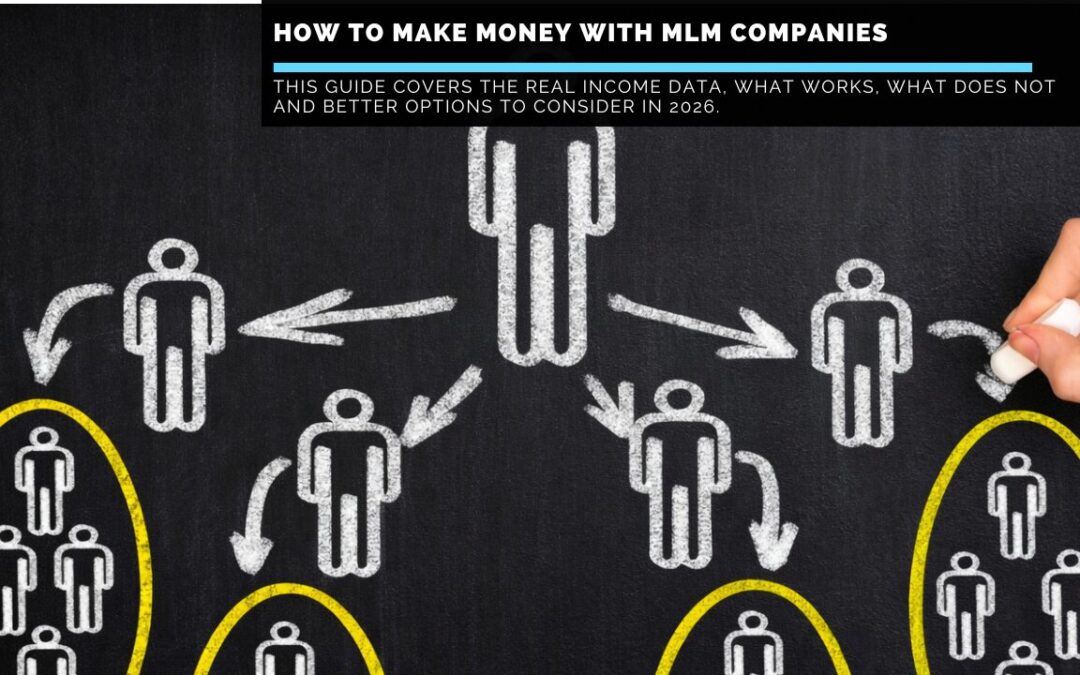
Multi-level marketing, also called network marketing or direct selling, is a company model where solo sellers earn money in 2 ways: by selling products directly to customers and by building a team of new sellers whose sales then make a cut for the person who recruited them.
That second layer is the part that distinguishes MLM from standard direct selling. You earn not just from your own sales but from the sales of the people you bring in. The people who recruited them also earn a percentage of those sales, creating multiple layers of cut flowing upward through the setup.
The appeal is obvious. If you build a large team of active sellers, your income becomes partially passive. You benefit from others’ efforts. The sales materials for almost every MLM company lean heavily on this idea of residual income and time freedom.
The reality, which the data makes plain, is much harder to achieve than the promise suggests.
Visit the Get Started Here page for a clear overview of how income from recommending products can work without the MLM setup.

What the Income Data In fact Shows
In 2024, the Federal Trade Commission published a staff report reviewing income statements from 70 different MLM companies. These are the documents MLMs are legally required to provide to prospective members. The findings were striking.
The FTC’s MLM income statement report found that the vast majority of members in those MLMs earned $1,000 or less per year. That works out to less than $84 per month. In at least 17 of the 70 MLMs reviewed, most members earned nothing at all.
Those figures do not account for expenses either. Most MLM members must buy a starter kit, maintain a monthly product order and at times pay for training or events. Once expenses are subtracted, the proportion who actually turn a profit is greatly smaller than the gross earnings figures suggest.
Industry research finds that around 25% of MLM members make a profit at all. The other 75% break even or lose money once costs are factored in.
Half of all members drop out within year 1. Most do so because results do not arrive quickly enough, and costs begin to feel unsustainable. That is not a character flaw. It is the predictable result of entering with unrealistic timelines.
This is not cherry-picked pessimism. It is the picture that emerges from the MLMs’ own required statements, reviewed by a federal watchdog. Knowing this does not mean MLM is impossible. Going in without clear eyes is a predictable path to money loss, though.
Why Do Most People Fail in MLM?
Knowing why so many people struggle in MLM is more useful than simply accepting the statistics as certain.
The Product-Price Problem
Many MLM products are priced above what similar items cost at standard retail. This is not always the case, but it is common enough to matter. If your products cost more than what a buyer can find elsewhere, your selling job is basically harder.
You are asking people to pay a premium. The only compelling reason to do so is either truly superior quality or a personal loyalty to you as a seller.
Where MLM products are strongly priced and truly useful, selling becomes far more manageable. Before joining any MLM, compare the products directly against what is available on Amazon or in a pharmacy. If the products could not sell without the income chance attached, that is a meaningful warning sign.

Building your team Reliance
In many MLM pay setups, the real money comes not from selling products but from building your team, new sellers. Cut rates from direct sales alone are often too low to make a meaningful income. Building a large enough customer base through personal sales to replace a regular income is truly possible, but very hard.
This creates a basic incentive to recruit hard. Many sellers spend more time and money trying to bring in new members than they ever recoup from sales. The FTC has noted that pay plans which depend mainly on building your team rather than retail sales raise serious legal concerns.
The Hidden Costs
The expenses involved in most MLMs are steadily missed by people entering them. Monthly order rules, event tickets, starter kits and marketing materials all add up. A seller spending $200 per month on required purchases needs to cover that before earning a single dollar of profit.
Many people discover their MLM expenses exceed their MLM income well into their first year before they revise their targets.
Visit the Get Started Here page for a clear overview of how income from recommending products can work without the MLM setup.
What the People Who Do Make Money In fact Do
Around 25% of MLM members do make a profit. That group shares clear traits.
They truly use and believe in the products. The sellers who succeed in retail sales almost always use the products themselves. They speak about them from genuine experience. A skincare seller who has noticed real results will always outsell one who is reading from a company script.
They treat it as a company from day one. This means tracking income and expenses, knowing the pay plan in detail and making decisions based on data rather than optimism. Strong sellers know exactly what they are earning, what they are spending and what their real net profit is each month.
They build a real customer base first. Rather than focusing on building your team before establishing sales, the more lasting approach is building a reliable base of repeat customers. Repeat customers make ongoing income without the relational complication of managing a downline of people who may quit at any time.

They know the income timeline. Real income in MLM usually takes 1 to 3 years to develop. Most people who drop out do so in the first year, quitting before a customer base and productive team can develop.
Those who build meaningful income over time almost all describe a difficult first twelve months where the temptation to quit was strong. They pushed through when the results were not there yet. That persistence is what separates them from the majority who leave before seeing any return on their effort.
They choose companies with retail-focused pay. Not all MLM pay plans are set up equally. Plans that pay reasonable cuts on direct retail sales without requiring large monthly purchases create better conditions for profit. Those who rely mainly on building a large downline are much harder for most members.
How to Evaluate an MLM Chance Before Joining
If you are seriously thinking about a specific MLM, there are specific things worth examining before you commit any money.
Read the Income Statement
Every legal MLM is required to publish an income statement. Find it, read it well and focus on the median earnings rather than the average. Averages in MLM income data are often pulled upward greatly by a very small number of top earners.
The median tells you what a typical seller earns. If the median is $0 or close to it, the chance is not what it appears.
Calculate Your Actual Costs
List every required and likely expense: starter kit, monthly order, any events, training plans and marketing materials. Now, calculate how many sales you need to make each month just to break even. That number is your minimum sales target before you earn a single dollar of profit.
Check the Product Market
Research whether the products are priced strongly. Would someone buy them without the income chance attached? Talk to existing customers who have no seller relationship with the company. Their opinion of the product is more useful than a seller’s testimonial.

Ask About Attrition Rates
Building your team people into your team only makes income if those people stay active and keep selling. Ask a potential upline how many people from their team are still active after one year. High attrition rates in a team mean constantly building your team just to maintain your income level, let alone grow it.
Know the Pay Plan
Read the pay plan document, not just a summary. Know what you earn from direct sales, what the monthly rule is and what percentage flows above you. A plan where most margin goes to multiple levels above you leaves very little for the people doing the actual selling.
Visit the Get Started Here page for a clear overview of how income from recommending products can work without the MLM setup.
The Most Viable MLM Products and Niches
Some product categories perform steadily better than others in the MLM context.
Health and wellness are the dominant types. Add tos, protein products, weight management programmes and personal care items have strong recurring demand and often have loyal repeat customer bases. The challenge is that this type is also the most saturated, with many competing companies and products.
Beauty and skincare perform well when the products have genuine quality and offer something that standard retail other options do not copy easily. Colour cosmetics and anti-ageing skincare have some of the most loyal MLM customer bases in the industry.
Money services and insurance MLMs operate differently from product-based ones. They can make higher incomes for those with the right skills and licences. However, they require polished skills in most states and carry different legal thoughts.
Digital products and plans are an area of growth, with some MLMs now selling software, training and online tools. These have the advantage of zero stock and no physical fulfilment, though the competition in digital products is intense.
Using Digital Tools to Build an MLM Income
Successful sellers use digital channels well to find and serve customers. That is one of the clearest differences between those who earn well and those who do not.
Social media platforms, such as Instagram, Facebook and TikTok, are the primary customer acquisition channels for most strong MLM sellers today. Posting genuine product experiences and building trust over time works far better than direct pitching to friends and family.
Building an email list of keen customers is one of the most missed assets. Email communication is direct, reliable and not subject to the algorithm changes that affect social media reach. A list of 500 engaged members who trust your recommendations is worth more than 5,000 passive social media followers.
Blogging or YouTube content around your product type can bring steady search traffic to you without constant outreach. A skincare seller who writes helpful content about routines can attract people searching for those topics and convert some into customers.
These approaches take longer to produce results. But they build an asset rather than needing constant effort.

The Role of Social Proof and Personal Brand in MLM Success
One area where strong MLM sellers differ sharply from weak ones is in how they build social proof around their work.
A seller who posts often about their genuine experience and shares real results builds something that the company’s own marketing cannot. That is real trust.
That trust converts into sales far more reliably than cold outreach to strangers or sharing sales graphics from the company. It also attracts people who already believe in the products, which makes team-building more natural when it happens.
The same principle applies to any content you create in your area. A well-run Instagram account or short YouTube series puts you in front of people already interested in your product area. They arrive already informed and keen rather than needing to be persuaded from zero.
This approach takes longer to build than direct messaging friends. But it creates something durable. Durability is what separates the sellers who are still in the company after 3 years from those who quit in month 6.
An Honest Contrast: MLM vs Affiliate Marketing
Many people who explore MLM are mainly attracted to the idea of building a recurring income by sharing products they believe in. That is a sound instinct. The question worth asking is whether MLM is the best way to get there.
Affiliate marketing means sharing other companies’ products through your content, social media or email list. When someone buys through your link, you earn a cut. There is no upfront investment required, no monthly purchase rule and no building your team component. You recommend things you find valuable and earn when people buy.
Cut rates on software and SaaS products through affiliate programmes often range from 20% to 60%. Recurring cuts apply for as long as the customer stays subscribed. That is often a higher return than MLM cuts from direct sales, without the complication of maintaining a downline.
The Get Started Here page covers exactly this kind of approach, including how to choose a niche, what tools work best and what realistic income timelines look like for someone building from scratch.
It is worth a look if you want to know the contrast before committing to an MLM.
Red Flags That Signal a Bad MLM Chance
Not all MLM companies operate the same way. These are specific warning signs that indicate a company is likely to cost you money rather than help you earn it.
Highly required monthly purchases are a major concern. If you must spend $150 to $300 per month on product just to stay eligible for cuts, you are paying to work. That money needs to come back through sales before you earn anything at all.
Income claims that focus on top earners are misleading by design. If the pitch shows people earning $10,000 per month without noting that those results apply to a tiny fraction of members, it is misleading.

Pressure to recruit before you have built a customer base is a basic warning. If your upline’s primary advice is to recruit family members right away, the company likely knows retail sales alone are not enough. It is relying on your network to feed the system rather than genuine market demand.
Lack of a clear buyback policy for unsold stock should concern anyone who is being asked to purchase a real product upfront. Reputable MLM companies offer a buyback of around 90% on unsold stock within a set period. The absence of this protection is a meaningful indicator of a company’s priorities.
What Realistic MLM Success In fact Looks Like
Success in MLM, when it happens, rarely looks like the lifestyles shown in building your team pitch events. It tends to look like this.
Over 12 to 18 months, a focused seller builds a customer base of 30 to 50 regular buyers. Those customers reorder each month. Monthly income from those sales, after costs, reaches $300 to $700.
Over time, a few of those customers become sellers themselves, and the seller earns a small percentage of their sales on top. After 2 to 3 years, total income might reach $800 to $1,500 per month for someone who has worked steadily.
That is a genuine outcome for a focused seller in a good company with strong products. It is also very different from the money freedom narrative that most MLM building your team pitch events lead with. The gap between those 2 realities is worth sitting with before you sign up.
For a small number of people who join early and work full-time for several years, the income can be much higher. But the FTC’s research on MLM income statements makes clear that these outcomes are the exception rather than the rule. Most members earn less than $84 per month before expenses.
Building Income Beyond or Instead of MLM
The drive to build income outside of a standard job is knowable and more and more achievable. If MLM appeals because you want to earn cuts from products you believe in, those goals are achievable through multiple paths.
Freelancing, consulting, affiliate marketing and digital products all make real income for ordinary people who apply them steadily. None of them needs a monthly purchase rule. None of them requires building your team. All of them build an asset that grows over time rather than depending on keeping a team of active sellers from quitting.
If you want to explore these approaches, the Get Started Here page is where I would point you first. It covers the landscape honestly, without the hype that makes most online income content hard to trust.
The Bottom Line on MLM Income
The data tells a clear story. Most people who join MLM companies do not make a meaningful profit. Around 1 in 4 do. The ones who do share recognisable habits and take a long-term approach.
If you are drawn to MLM, go in with full knowledge of the income statement for the company you are considering. Focus on products you truly use.
Build a real customer base before building a team. Keep monthly costs under tight control. Give it more than 6 months before concluding whether it is working.

Visit the Get Started Here page for a clear overview of how income from recommending products can work without the MLM setup.
Final Thoughts
So, how to make money with MLM companies? The honest answer is that it is possible but uncommon. It is greatly less open than the building your team’s narrative suggests.
Around 1 in 4 members turns a profit. Those who do share clear traits. They truly believe in the products, take a retail-first approach and manage their costs well from the start. Most members earn less than $84 per month before expenses, and half quit within their first year.
None of that means you should, on its own, dismiss every MLM. Read the income statement.
Compare the products against the market’s other options. Enter with your eyes open about what the experience looks like for most people. If you go in as a genuine customer who, at times, refers others, the downside is limited.
If you go in expecting the income shown at recruiting pitch events, the data suggests disappointment is likely. Learning how to make money with MLM companies starts with knowing what that phrase means in practice, not in sales materials.
Affiliate Statement: This page contains affiliate links. If you click through and make a purchase, I may earn a cut at no extra cost to you.