
The Course Creator Revolution
If you’ve been wondering how to create online courses with Systeme.io, you’re tapping into one of the most lucrative and scalable online business models available today. The global online learning market is projected to exceed £230 billion by 2025 and individual course creators are capturing meaningful shares of this enormous market. But here’s where most aspiring course creators get stuck: the technical complexity and cost of traditional course platforms.
Teachable charges £29-99+ monthly. Thinkific starts at £39. Kajabi demands £149 minimum. These platforms were built for established creators with existing audiences and revenue. If you’re just starting out, these price tags create enormous financial pressure before you’ve validated your course idea or made your first sale.
Systeme.io changes this equation completely. It’s an all-in-one platform that includes everything you need to create, host, market and sell online courses without the prohibitive costs of traditional course platforms. You get course hosting, email marketing, sales funnels, payment processing and student management in a single platform starting at precisely £0.
In this comprehensive guide, I’ll walk you through the complete process of creating an online course with Systeme.io from initial concept through to launch and scaling. We’ll cover course planning, content creation, technical setup, pricing strategies, marketing tactics and the specific systems that turn courses into consistent revenue streams.
By the end of this guide, you’ll have a clear roadmap for creating your first online course and the confidence to actually execute it. No technical skills required. No massive budget needed. Just a systematic approach and a commitment to helping your students transform their lives or businesses.
Check out my detailed review explaining why Systeme.io is the all-in-one platform that actually delivers
Why Online Courses Are the Perfect Business Model
Before diving into the technical how-to, let’s understand why online courses represent such a compelling opportunity.

The Scalability Advantage
Unlike services where you trade time for money, courses decouple your income from your hours. Create the course once and sell it infinitely. Your 100th sale requires no more effort than your first sale.
This scalability means your income potential isn’t capped by available hours. Service providers hit income ceilings when they run out of time. Course creators face no such limits.
The Asset Building Advantage
Every course you create is a digital asset that generates revenue for years. Unlike freelancing, where yesterday’s work generates no income today, courses continue producing revenue long after creation.
According to research from Thinkific, successful courses generate revenue for an average of 3-5 years with minimal ongoing maintenance. You’re building assets, not just earning income.
The Impact Advantage
Courses allow you to help more people than one-to-one services ever could. Instead of coaching 10 clients monthly, you can teach 1,000 students simultaneously. Your knowledge reaches dramatically more people whilst generating higher total revenue.
This impact matters both financially and personally. Many course creators describe the fulfilment of receiving messages from students worldwide, sharing how the course transformed their businesses or lives.
The Freedom Advantage
Courses create genuine passive income. Students enrol, consume content and complete courses whilst you sleep, travel or work on other projects. Unlike podcasts requiring weekly episodes or YouTube demanding constant uploads, courses can generate revenue with minimal ongoing time investment.
This freedom is why so many burnt-out service providers transition to course creation. They reclaim their time whilst often earning more money.
Why Systeme.io Is Ideal for Course Creators
Multiple platforms can host courses. Why choose Systeme.io specifically?
Reason 1: Complete All-in-One Solution
Traditional course creation requires piecing together:
- Course hosting platform (Teachable, Thinkific)
- Email marketing platform (ConvertKit, MailChimp)
- Sales funnel builder (ClickFunnels, Leadpages)
- Payment processor (Stripe, PayPal)
- Affiliate management (if recruiting promoters)
Total Cost: £80-200+ monthly before selling anything
Systeme.io includes everything:
- Course hosting with unlimited videos
- Email marketing with automation
- Sales funnel builder
- Payment processing integration
- Affiliate programme management
- Student management dashboard
Cost: £0 to start (free plan includes 1 course) or £27/month for unlimited courses
You’re saving £50-170 monthly whilst getting better integration and simpler management.
Reason 2: No Technical Complexity
Platforms like WordPress with LearnDash require:
- Understanding WordPress administration
- Installing and configuring plugins
- Managing hosting and security
- Troubleshooting technical issues
- Coordinating multiple tools
Systeme.io requires:
- Logging in
- Uploading your content
- Following the setup wizard
If you can send an email and upload a video, you can create a Systeme.io course.
Reason 3: Built-In Marketing Tools
Creating courses is only half the challenge. Selling them is the other half. Systeme.io includes:
- Landing page builder for course promotion
- Email sequences for nurturing prospects
- Sales funnel templates
- Abandoned cart recovery
- Upsell and cross-sell capabilities
Traditional course platforms focus on hosting but leave marketing to you. Systeme.io handles both.
Reason 4: Student Experience
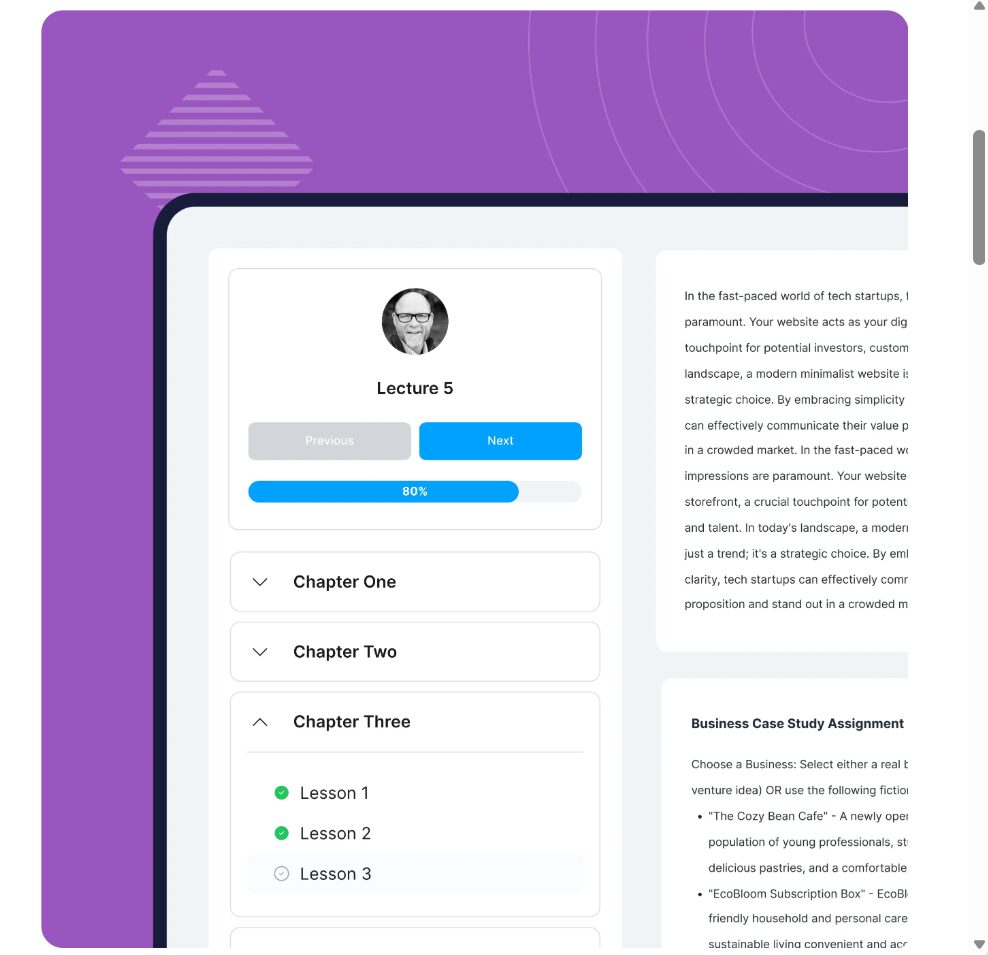
From a student perspective, Systeme.io courses are clean, professional and easy to navigate. Students get:
- Mobile-responsive interface
- Progress tracking
- Downloadable resources
- Certificate of completion (optional)
- Clean, distraction-free learning environment
The student experience rivals premium platforms costing 5-10 times more.
Reason 5: Scalability from Free to Enterprise
Start with the free plan to validate your course concept. Upgrade to paid plans only when revenue justifies it. The unlimited plan supports unlimited courses and unlimited students, meaning you never outgrow the platform.
This scalability reduces risk dramatically. You can test course ideas without financial commitment.
Check out my detailed review explaining why Systeme.io is the all-in-one platform that actually delivers
Planning Your Course: The Foundation of Success
Technical implementation is straightforward. Strategic planning is challenging. Let’s plan your course properly before touching Systeme.io.
Step 1: Choose Your Course Topic Strategically
Not every topic makes a good course. Evaluate potential topics against these criteria:
Can you teach a specific, measurable outcome?
Vague: “Be a better writer” Specific: “Write your first 50,000-word novel in 90 days”
Specific outcomes attract students and set clear success criteria.
Do people already pay for this knowledge?
Validate demand before creating:
- Search for existing courses on Udemy or Teachable
- Check if books sell on this topic on Amazon
- Look for coaches or consultants serving this market
Existing commercial activity proves demand.
Do you have credibility in this topic?
Students need confidence in your ability to teach. Credibility comes from:
- Personal results (you’ve achieved what you’re teaching)
- Professional experience (you’ve worked in this field)
- Teaching experience (you’ve helped others succeed)
- Research and study (you’ve deeply studied this topic)
You don’t need to be the world’s leading expert, but you need legitimate knowledge and experience beyond beginners.
Can you create at least 2 hours of content?
Courses under 2 hours feel thin. Aim for 2-6 hours of core content for most topics. More isn’t always better; focus on transformation rather than duration.

Step 2: Define Your Ideal Student
Who specifically will benefit most from your course? Get detailed:
Demographics:
- Age range
- Career stage
- Income level
- Technical ability
- Available time
Psychographics:
- Current frustration or pain point
- Desired outcome or transformation
- Fears or objections
- Values and priorities
Example Ideal Student Profile:
“Sarah is a 35-year-old marketing manager earning £45,000 annually. She wants to transition from employee to freelance consultant within 6 months. She has relevant skills but doesn’t know how to find clients or price services. She fears the financial instability of leaving her job and worries she’ll fail. She values freedom and creativity over corporate security.”
This clarity guides every subsequent decision from content creation to pricing to marketing.
Step 3: Map Your Course Curriculum
Outline your course structure before creating any content:
Identify the Transformation Path:
Starting Point → Milestones → End Result
Example:
- Starting Point: Employed marketing manager
- Milestone 1: Identified freelance niche and services
- Milestone 2: Created portfolio and positioning
- Milestone 3: Landed first 3 clients
- End Result: Consistent £5,000+ monthly freelance income
Break Into Modules:
Each module represents a major step in the transformation:
Module 1: Foundation (Starting Point → Milestone 1)
- Lesson 1: Choosing your freelance niche
- Lesson 2: Defining your services
- Lesson 3: Understanding your ideal client
- Lesson 4: Competitive research
Module 2: Positioning (Milestone 1 → Milestone 2)
- Lesson 1: Creating your portfolio
- Lesson 2: Crafting your positioning statement
- Lesson 3: Setting up your online presence
- Lesson 4: Preparing case studies
Module 3: Client Acquisition (Milestone 2 → Milestone 3)
- Lesson 1: Outreach strategies that work
- Lesson 2: Networking effectively
- Lesson 3: Converting prospects to clients
- Lesson 4: Negotiating and closing deals
Module 4: Scaling (Milestone 3 → End Result)
- Lesson 1: Client retention strategies
- Lesson 2: Raising your rates
- Lesson 3: Creating recurring revenue
- Lesson 4: Building systems for consistency
Map your entire curriculum before filming a single video. This structure ensures logical progression and prevents gaps.
Step 4: Determine Your Pricing Strategy
Course pricing is part psychology, part market positioning:
Value-Based Pricing
What’s the economic value of your course outcome? If your course helps someone generate an additional £10,000 annually, charging £200-500 is easily justified. The course pays for itself many times over.

Competitive Analysis
Research similar courses:
- What do Udemy courses on this topic cost? (£10-50)
- What do Teachable courses charge? (£50-300)
- What do premium programmes cost? (£500-2,000+)
Position slightly below competitors if you’re new, at market rate if you have authority or above market if you offer premium positioning.
Tiered Pricing
Offer multiple price points:
- Basic: £97 (course only)
- Standard: £197 (course + bonus training + templates)
- Premium: £497 (everything + group coaching calls + direct support)
Tiers increase total revenue and allow students to choose their investment level.
Payment Plans
Reduce purchase resistance with payment plans:
- One-time: £297
- 3 payments: 3 × £109 (£327 total, slight premium for flexibility)
Payment plans increase conversion rates significantly, particularly for courses over £200.
Check out my detailed review explaining why Systeme.io is the all-in-one platform that actually delivers
Creating Your Course Content: The Production Process
Now for the practical content creation. Let’s make this manageable.
Equipment You Actually Need
Don’t let equipment paralysis stop you. You need:
Video Recording:
- Webcam (built-in laptop webcam works fine) or smartphone
- Screen recording software (Loom free plan, OBS Studio free or ScreenFlow)
- Basic lighting (natural window light or £20 ring light)
Audio Recording:
- Decent microphone (£30-50 USB microphone like Blue Snowball)
- Quiet room (reduces need for audio editing)
Editing:
- Basic editing software (iMovie free on Mac, DaVinci Resolve free on Windows or Camtasia)
Total investment: £0-100. Don’t buy thousands of pounds of equipment before validating your course idea.
Content Format Options
Mix formats for engagement:
Video Lessons (Primary Format)
Most students prefer video. Use:
- Talking head (you on camera teaching)
- Screen recording (showing software or processes)
- Slides with voiceover (for concept-heavy content)
- Mixed format (start with you, transition to screen share)
Keep individual lessons 5-15 minutes. Shorter lessons feel less overwhelming and allow students to consume content in available time slots.
Text Lessons (Supplementary)
Use text for:
- Lesson summaries and key takeaways
- Step-by-step instructions students can reference
- Resources and links
- Transcripts for accessibility
Audio Lessons (Optional)
Some students prefer audio for commutes or exercise. Consider offering audio versions of video lessons.
Downloadable Resources
Enhance learning with:
- Worksheets and templates
- Checklists and action plans
- Swipe files and examples
- Additional reading lists
Resources increase perceived value and improve student outcomes.

The Content Creation System
Don’t create everything before launching. Use this system:
Phase 1: Core Module Creation (Weeks 1-4)
Create 2-3 complete modules (approximately 50% of the total course). This represents enough content to deliver immediate value whilst proving you can complete the course.
Phase 2: Beta Launch (Week 5)
Launch to a small group (10-30 students) at a discounted “founding member” rate. They get the course cheaper; you get feedback and testimonials.
Phase 3: Complete Remaining Content (Weeks 6-10)
Create the remaining modules whilst early students consume initial content. Their questions and feedback inform remaining lessons.
Phase 4: Polish and Refine (Weeks 11-12)
Update early modules based on student feedback. Add supplementary content addressing common questions.
This approach gets your course launched in 5 weeks rather than 5 months, whilst building something students actually want rather than what you assume they need.
Step-by-Step: Building Your Course in Systeme.io
Now for the technical implementation.
Step 1: Create Your Systeme.io Account
- Visit Systeme.io
- Click “Start Free”
- Enter your email and create a password
- Verify your email
- Complete basic profile setup
Start with the free plan. You can create one complete course without paying anything.
Step 2: Navigate to Course Creation
- Log in to your Systeme.io dashboard
- Look at the left sidebar navigation
- Click “Courses”
- Click the “Create” button
You’ll see the course creation interface.
Step 3: Set Up Basic Course Information
Course Name: Choose a clear, benefit-focused name:
- “The Freelance Freedom Formula: £5K to £10K Monthly in 90 Days”
- “Complete Novel Writing Blueprint”
- “WordPress Website Builder Bootcamp”
Course Description: Write a compelling description focusing on transformation:
“The Freelance Freedom Formula is a comprehensive 12-week programme that takes employed professionals with marketable skills and transforms them into thriving freelance consultants earning £10,000+ monthly. Through step-by-step training, proven systems and real-world templates, you’ll build the freelance business you’ve always dreamed about without the trial and error that stops most people.”
Course Image: Upload a professional banner image (recommended: 1200×628 pixels). This appears on your sales page and student dashboard.
Course Type:
- Select “Course” for one-time purchase courses
- Select “Membership” for ongoing subscription courses
Access Settings:
- “Lifetime access” (student has permanent access)
- “Limited time access” (access expires after X days)
Most courses offer lifetime access, as it’s expected by students and simplifies management.
Step 4: Create Your Course Curriculum
Click “Add Module” to create your first content module.
Module Setup:
Module Name: “Module 1: Foundation”
Module Description: Brief overview of what this module covers
Drip Settings:
- Immediate release (all content available instantly)
- Daily drip (one lesson per day)
- Weekly drip (one module per week)
- Custom schedule (set specific dates)
Most courses use immediate release or weekly drip to prevent overwhelm.
Add Lessons to Modules:
Click “Add Lesson” within your module:
Lesson Types:
Video Lesson:
- Click “Add Video Lesson”
- Upload video file (supports MP4, MOV, AVI)
- Or embed from YouTube/Vimeo (paste URL)
- Add lesson title and description
Text Lesson:
- Click “Add Text Lesson”
- Use a rich text editor to format content
- Add images, links and formatting
- Include action steps or key takeaways
Audio Lesson:
- Click “Add Audio Lesson”
- Upload MP3 or other audio file
- Add title and description
File Download:
- Click “Add Download”
- Upload PDF, worksheet, template or other file
- Students can download directly
Example Course Structure:
Module 1: Foundation ├─ Lesson 1: Welcome & Course Overview (Video, 8 min) ├─ Lesson 2: Choosing Your Niche (Video, 15 min) ├─ Lesson 3: Niche Selection Worksheet (Download, PDF) ├─ Lesson 4: Defining Your Services (Video, 12 min) ├─ Lesson 5: Service Pricing Guide (Text + Download) └─ Lesson 6: Module 1 Recap (Video, 5 min)
Repeat this process for each module.

Step 5: Configure Course Settings
Student Resources:
Create a dedicated module called “Resources” or “Bonus Materials” containing:
- All worksheets and templates in one place
- Recommended tools and software
- Additional reading lists
- Community links (if applicable)
Progress Tracking:
Systeme.io automatically tracks:
- Which lessons did students complete
- Overall course completion percentage
- Time spent in the course
Students see their progress, which encourages completion.
Certificates:
Enable completion certificates if desired:
- Go to course settings
- Enable “Certificate”
- Customise certificate design
- Set completion requirements (typically 100% of lessons)
Certificates increase perceived value and provide students with professional credentials.
Step 6: Set Up Course Pricing
- In course settings, click “Pricing”
- Click “Add Price”
Configure Pricing Options:
Price Name: “Full Course Access” Amount: £297 Currency: GBP Billing Type: One-time payment
Optional Settings:
- Free trial period
- Payment plan (3 payments of £109)
- Subscription (£49/month for ongoing access)
Add Multiple Pricing Tiers:
Basic Tier:
- Amount: £97
- Includes: Core course only
Standard Tier:
- Amount: £197
- Includes: Core course + bonus trainings
Premium Tier:
- Amount: £497
- Includes: Everything + coaching calls
Students choose their tier at purchase.
Connect Payment Processor:
- Go to Settings > Payment Gateways
- Connect Stripe and/or PayPal
- Enter account credentials
- Test connection
Systeme.io handles all payment processing, invoicing and student access automatically.
Step 7: Create Your Sales Page
Your sales page sells the course. Make it compelling:
- Go to “Funnels” in the main navigation
- Create a new funnel
- Choose “Sales Page” template
- Customise the page
Essential Sales Page Elements:
Headline: Clear promise of transformation “Transform from Employed to £10K/Month Freelancer in 90 Days”
Subheadline: Expand on promise and address audience “The step-by-step system for marketing professionals ready to escape corporate life and build thriving freelance consultancies”
Video or Hero Image: Show yourself or represent the transformation visually
The Problem Section: Articulate your ideal student’s frustration “You have marketable skills and experience, but you have no idea how to find your first freelance clients. You’re stuck in a corporate job that drains your soul whilst watching others build the freedom you crave.”
The Solution Section: Introduce your course as the bridge from problem to solution
Curriculum Overview: List modules and key lessons so students understand what they’re getting
Instructor Bio: Build credibility by sharing your relevant experience and results
Student Testimonials: Social proof from previous students (add after beta launch)
Pricing Options: Clear presentation of available tiers
Guarantee: Reduce risk with a money-back guarantee “If you complete the course and don’t see results, I’ll refund 100% within 30 days”
FAQ Section: Address common objections and questions
Final Call to Action: Clear enrollment button “Enrol in The Freelance Freedom Formula”
Link this page to your course so purchases automatically grant access.
Check out my detailed review explaining why Systeme.io is the all-in-one platform that actually delivers

Step 8: Build Your Email Marketing Sequence
Email marketing turns prospects into students. Create automated sequences:
- Go to “Campaigns”
- Create “Email Campaign”
- Choose “Automation”
Pre-Launch Sequence (Before Course Opens):
Email 1: Value Delivery Share free valuable content related to the course topic
Email 2: Problem Agitation Deepen understanding of their frustration
Email 3: Success Story Share case study or testimonial
Email 4: Course Announcement Introduce your course as a solution
Email 5: Objection Handling Address common concerns
Email 6: Final Invitation Create urgency (enrollment closing soon)
Post-Purchase Sequence (After Enrollment):
Email 1 (Immediate): Welcome
- Thank them for enrolling
- Explain how to access the course
- Set expectations for best results
Email 2 (Day 2): Quick Start
- Direct to the first module
- Encourage immediate action
- Remind of support resources
Email 3 (Day 7): Check-In
- Ask about progress
- Offer help with any confusion
- Share a success tip
Email 4 (Day 14): Milestone Celebration
- Celebrate early progress
- Encourage continued momentum
- Remind of community (if applicable)
Email 5 (Day 30): Completion Push
- Encourage finishing the course
- Share transformation stories
- Remind of certificate
# Ready to Launch Your Online Business?
Creating an online course is a powerful way to share your expertise and generate income, but it’s just one piece of building a complete online business. If you’re looking for comprehensive guidance on starting and growing a profitable online business with multiple revenue streams, I’ve created a step-by-step getting started guide that covers everything from choosing your niche to creating your first offers to scaling your income.
And if you’re ready to experience why Systeme.io has become the go-to platform for course creators who want simplicity without sacrificing capability, check out my detailed review explaining why Systeme.io is the all-in-one platform that actually delivers for educators and entrepreneurs alike.
Marketing Your Course: From Zero to First 100 Students
Building the course is half the challenge. Filling it with students is the other half.
Strategy 1: The Content Marketing Approach
Create valuable free content attracting your ideal students:
Blog Posts:
- “How to [Achieve Outcome Related to Course]”
- “10 Mistakes [Target Audience] Make When [Course Topic]”
- “[Course Topic] Guide for Complete Beginners”
Include clear calls to action pointing to your course or email list.
YouTube Videos:
- Tutorial content demonstrating your teaching ability
- Behind-the-scenes course creation content
- Student success story interviews
According to research from Wyzowl, 84% of people say they’ve been convinced to buy a product or service by watching a brand’s video. For courses specifically, video is particularly powerful as it demonstrates your teaching style.

Strategy 2: The Lead Magnet Funnel
Create a valuable free resource leading to course enrollment:
Lead Magnet Ideas:
- PDF guide or ebook
- Mini email course (5-7 day training)
- Template pack or swipe files
- Video training or masterclass
Funnel Flow:
- Traffic → Landing page offering lead magnet
- Subscribe → Deliver lead magnet via email
- Nurture → 5-7 email sequence sharing value
- Pitch → Present course as natural next step
- Close → Time-limited enrollment or bonuses
Strategy 3: The Webinar Launch
Host free webinars teaching valuable content whilst selling your course:
Webinar Structure:
Opening (5 minutes):
- Welcome attendees
- Share agenda
- Set expectations
Teaching (40 minutes):
- Deliver genuine value (not just fluff)
- Share 3-5 key concepts or strategies
- Include actionable takeaways
Transition (5 minutes):
- Acknowledge what you’ve taught works
- Explain that most people need support implementing
- Introduce your course as an implementation vehicle
Pitch (10 minutes):
- Present the course curriculum
- Share pricing and bonuses
- Address objections
- Create urgency (webinar-only discount)
Q&A (10 minutes):
- Answer questions
- Reinforce key points
- Final call to action
Systeme.io includes webinar functionality, allowing you to host live or automated webinars directly in the platform.
Strategy 4: The Partnership and Affiliate Strategy
Leverage others’ audiences through partnerships:
Set up Systeme.io Affiliate Programme:
- Go to “Affiliate Programme” in navigation
- Enable for your course
- Set commission rate (typically 30-50% for courses)
- Create promotional materials for affiliates
- Recruit affiliates from your network
Potential Partners:
- Complementary service providers
- Bloggers in your niche
- Podcast hosts
- YouTubers with relevant audiences
Partners earn commissions promoting your course whilst you acquire students without upfront advertising costs.
Strategy 5: The Beta Launch Strategy
Launch to a small group first:
Benefits:
- Validate the course concept before full launch
- Gather testimonials and case studies
- Refine content based on feedback
- Create social proof
- Generate early revenue
Implementation:
- Offer beta pricing (50% discount)
- Limit to 20-50 students
- Request honest feedback
- Use their success stories in future marketing
- Transition to full-price launch after beta
Check out my detailed review explaining why Systeme.io is the all-in-one platform that actually delivers
Student Success: Ensuring Course Completion and Transformation
Creating courses is about student transformation, not just content delivery. These strategies increase completion rates:

Strategy 1: The First Week Critical Period
Most course abandonment happens in the first 7 days. Focus intensely on this period:
Day 1: Immediate Welcome
- Personal welcome video
- Clear “start here” guidance
- First action step
Day 2: Quick Win Email
- Direct to the easiest, fastest result lesson
- Encourage immediate implementation
- Celebrate action
Day 3: Community Introduction
- Invite to student community (if applicable)
- Connect with other new students
- Share resources
Day 7: Progress Check
- Email checking on progress
- Offer help with any confusion
- Reinforce commitment
Strategy 2: The Engagement Tracking System
Monitor student activity:
- Login frequency
- Lesson completion rates
- Video watch time
- Download engagement
Students showing declining engagement receive personalised outreach:
“Hi [Name], I noticed you haven’t accessed the course recently. How can I help? I’m here to ensure you get results.”
This personal touch significantly improves completion rates.
Strategy 3: The Milestone Celebration System
Acknowledge progress at key points:
25% Complete: “Congratulations! You’re a quarter of the way through. You’re building momentum!”
50% Complete: “You’re halfway there! Most students who reach this point finish the course. Keep going!”
75% Complete: “You’re in the home stretch! The transformation you’re working towards is within reach.”
100% Complete: “You did it! Here’s your certificate of completion. Now implement what you’ve learned!”
Recognition encourages continued effort.
Strategy 4: The Implementation Focus
Emphasise doing, not just consuming:
- Include action steps at the end of every lesson
- Assign homework or implementation tasks
- Request students to share their work
- Celebrate implementation in the community
Students who implement learn more deeply and get better results, leading to testimonials and referrals.
Common Course Creation Mistakes to Avoid
Learning what not to do accelerates success.
Mistake 1: Waiting for Perfect Before Launching
Many people spend 6-12 months creating comprehensive courses before launching. Then they discover students want different content or their market positioning was wrong. Months wasted.
Better Approach: Launch with core content (50-60% complete). Get paying students. Let their feedback guide remaining content creation.
Mistake 2: Teaching What You Want Rather Than What Students Need
Creating content you find interesting rather than content solving students’ actual problems leads to courses nobody buys.
Better Approach: Survey potential students before creating. Ask what they struggle with. Build your curriculum around their needs.
Mistake 3: Underpricing Your Course
£10-20 courses rarely work. Students don’t value cheap courses and you can’t afford customer support at those prices.
Better Approach: Price based on transformation value. If your course helps someone earn £10,000 more annually, £200-500 is justified.
Mistake 4: Overwhelming Students with Content
Creating 100 hours of content doesn’t help students; it paralyses them. They feel overwhelmed and consume nothing.
Better Approach: Focus on transformation, not duration. 3-6 hours of focused, actionable content beats 100 hours of theory.
Mistake 5: No Community or Support
Content-only courses have lower completion rates. Students get stuck, have questions and quit without support.
Better Approach: Include some level of support:
- Private Facebook group
- Email support
- Office hours or Q&A calls
- Student community forum
Support dramatically improves results and satisfaction.
Mistake 6: Neglecting Marketing
“Build it and they will come” doesn’t work. Great courses fail because nobody knows they exist.
Better Approach: Spend as much time marketing as creating. The best course nobody finds generates zero revenue.

Scaling Your Course Business
Once your first course is profitable, these strategies help you scale.
Strategy 1: Create a Course Ladder
Offer multiple courses at different price points:
Starter Course: £97 Entry-level course solving one specific problem
Core Course: £297 Your flagship course delivering complete transformation
Advanced Course: £597 For students who have completed the core course and want the next level
Coaching Programme: £2,000+ Premium offering with direct access to you
Students can ascend your ladder, increasing lifetime value.
Strategy 2: Build a Certification Programme
Offer professional certification for students completing your course:
“Certified [Your Topic] Professional”
Certification creates concrete goals, increases completion rates and provides professional credentials students can leverage in their careers.
Strategy 3: Create a Membership Site
Transform one-time course sales into recurring revenue:
Monthly Membership: £20-50/month
- Access to the course library
- New training added monthly
- Community membership
- Live monthly Q&A calls
Memberships create predictable income and allow you to serve students long-term.
Strategy 4: License Your Course to Corporations
Sell course access to companies for their employees:
Individual: £297 Team (10 licences): £2,000 (£200/seat) Company (50 licences): £7,500 (£150/seat)
B2B sales increase average transaction size and improve stability.
Strategy 5: Create a Course Creation Course
Once you’ve successfully created and sold courses, teach others how to do it. Course creation itself is a valuable, marketable skill.
Measuring Success: Key Metrics to Track
You can’t improve what you don’t measure.
Metric 1: Enrollment Rate
What it is: Percentage of landing page visitors who purchase
Calculation: (Purchases ÷ Landing page visitors) × 100
Target: 2-5% for cold traffic, 10-20% for warm email list
Improvement: Better sales copy, stronger guarantee, clearer value proposition
Metric 2: Course Completion Rate
What it is: Percentage of students who complete your course
Calculation: (Students finishing ÷ Total enrolled) × 100
Target: Above 30% (industry average is 15-20%)
Improvement: Better onboarding, engagement emails, accountability systems
Metric 3: Student Satisfaction
What it is: How happy students are with your course
Measurement: Post-course survey asking for rating (1-10 scale)
Target: Average rating above 8.5
Improvement: Better support, clearer instruction, more actionable content
Metric 4: Revenue Per Student
What it is: Average revenue generated per enrolled student
Calculation: Total revenue ÷ Total students
Target: Increasing over time as you add upsells and additional offers
Improvement: Create a course ladder, offer coaching and add bonuses
Metric 5: Referral Rate
What it is: Percentage of students who refer others
Calculation: (Referrals ÷ Total students) × 100
Target: Above 10%
Improvement: Create a referral incentive, make the results so good that students can’t help but share
Track these monthly using a simple spreadsheet. Systeme.io provides some analytics, but maintaining your own comprehensive tracking ensures complete visibility.
Check out my detailed review explaining why Systeme.io is the all-in-one platform that actually delivers
Conclusion: Your Course Creation Journey Starts Now
We’ve covered everything you need to know about how to create online courses with Systeme.io, from strategic planning through to technical implementation to marketing and scaling. You now understand why online courses create such powerful business opportunities, why Systeme.io is the ideal platform for course creators and exactly how to build, launch and grow a profitable course business.
The technical creation process is straightforward. The strategic thinking requires more effort, but you now have the frameworks to plan effectively. The marketing strategies give you proven tactics for acquiring students and the success systems ensure your students actually transform their lives or businesses.
The question isn’t whether you have the knowledge needed to succeed. You do. The question is whether you’ll take action and create something real.
Here’s my challenge: commit to launching your first course within 90 days. Not perfectly. Not with every piece of content filmed and edited to perfection. But launched with solid core content and the commitment to improve based on real student feedback.

Week 1-2: Plan your course (topic, curriculum, ideal student) Week 3-6: Create your first 50% of content Week 7-8: Build course in Systeme.io and create sales page Week 9-10: Beta launch to small group Week 11-12: Gather feedback and create remaining content
Ninety days from now, you could have a functioning online course generating your first revenue. Or you could still be researching, planning and overthinking. The only thing separating those outcomes is your decision to start and your commitment to finish.
Systeme.io removes every technical excuse. The platform is accessible, affordable and capable. Your knowledge is valuable. Your ideal students need what you can teach them. All that’s missing is your course.
Stop waiting for perfect circumstances. Stop overthinking every detail. Start creating today. Your future students are waiting for the transformation only you can provide.