
The List Building Problem Everyone Faces
If you’re wondering how to create lead magnets that convert, you’re asking one of the most important questions in digital marketing. Your email list is the single most valuable asset in your online business. It’s the audience you actually own, the people who’ve permitted you to communicate with them and the group most likely to become paying customers. Yet most businesses struggle to build their lists because their lead magnets simply don’t convert.
You’ve seen the statistics. Email marketing generates £42 for every £1 spent. Subscribers are three times more likely to share your content than social media followers. Email converts better than any other marketing channel. But none of this matters if you can’t get people to join your list in the first place.
The problem isn’t that people don’t want valuable content. The problem is that most lead magnets are either too generic to feel valuable, too time-consuming to justify the perceived value, or so poorly marketed that no one understands why they should care. Your potential subscribers see “Download my free guide” and think “Another generic PDF I’ll never read.”
I’ve spent considerable time researching high-converting lead magnets across industries, analysing what makes people actually opt in and testing different approaches with real audiences. This comprehensive guide will show you exactly how to create lead magnets that people genuinely want, how to position them so they feel irresistible and how to deliver them in ways that begin meaningful relationships rather than just collecting email addresses.
By the end of this guide, you’ll understand the psychology behind effective lead magnets, the specific formats that convert best and the exact steps to create yours from scratch.
Check out my complete ClickFunnels review to see how it simplifies the technical side of list building
Why Most Lead Magnets Fail to Convert
Before we learn what works, let’s understand what doesn’t work and why.
Failure Pattern 1: The Generic Guide
What It Looks Like: “Download my free guide to social media marketing”
Why It Fails: This guide could contain anything. It’s not specific enough to create desire. Potential subscribers have no idea what they’ll actually learn or whether it applies to their situation.
Failure Pattern 2: The Overwhelming Resource
What It Looks Like: “My complete 200-page masterclass on everything you need to know about starting an online business”
Why It Fails: This sounds like homework, not a quick win. People want fast value, not massive time commitments. The perceived effort required exceeds the perceived benefit received.
Failure Pattern 3: The Irrelevant Offer
What It Looks Like: A fitness coach offering “10 easy dinner recipes” when their audience wants workout routines.
Why It Fails: The lead magnet doesn’t directly connect to the coach’s paid offerings or solve the audience’s primary problem.
Failure Pattern 4: The Value-Free Bait
What It Looks Like: “Sign up for my newsletter to get weekly tips”
Why It Fails: There’s no specific benefit or immediate gratification. “Weekly tips” is vague and promises future value rather than instant value.
Failure Pattern 5: The Difficult Opt-In
What It Looks Like: Lead magnet requiring five form fields, email verification and navigating confusing delivery processes.
Why It Fails: Friction kills conversions. Every additional field reduces opt-in rates by 10-25% according to industry data.
The Psychology of High-Converting Lead Magnets
Understanding why people opt in transforms your lead magnet creation process.
Psychological Trigger 1: Instant Gratification
Humans are wired to prefer immediate rewards over delayed gratification. Lead magnets that promise “get this now” outperform those promising “learn this eventually.”
Application: Position your lead magnet as immediately accessible and consumable:
- “Download in 60 seconds”
- “Get instant access”
- “Start using today”
Psychological Trigger 2: Specific Problem Solving
According to research from ConversionXL, the most effective lead magnets solve one specific problem rather than addressing broad topics.
Application: Rather than “Guide to Online Business,” create “How to Choose Your Profitable Niche in 20 Minutes.”
Psychological Trigger 3: Progress and Achievement
People are motivated by the feeling of progress. Lead magnets that offer completion create satisfaction.
Application: Format lead magnets with:
- Checklists (checkboxes create completion satisfaction)
- Step-by-step guides (clear progress through steps)
- Challenges (daily actions building to achievement)
Psychological Trigger 4: Social Proof and Scarcity
We value things more when others want them and when availability is limited.
Application: Add social proof to lead magnet offers:
- “Join 10,000+ subscribers”
- “Downloaded by 5,000+ entrepreneurs”
- “Limited: Only available this month”

Psychological Trigger 5: Perceived Value Exchange
People unconsciously calculate whether the value received justifies the “cost” (in this case, providing their email address).
Application: Increase perceived value through:
- Professional design and presentation
- Specific outcomes and benefits
- Testimonials from previous recipients
- Comparison to what you could charge for this
Check out my complete ClickFunnels review to see how it simplifies the technical side of list building
The Seven Most Effective Lead Magnet Formats
Different formats work for different businesses. Let’s examine the highest-converting options.
Format 1: The Checklist
Why It Works: Checklists are quick to consume, easy to implement and create the satisfying feeling of completion. They feel actionable rather than theoretical.
Ideal For:
- Process-based expertise
- Technical implementations
- Compliance and requirements
- Quality assurance
Example: “The 47-Point Website Launch Checklist (Miss Nothing Critical)”
Creation Process:
- Identify a specific process your audience struggles with
- Break it into sequential steps
- Add checkbox formatting
- Include brief explanations for complex steps
- Design as a printable PDF or an interactive checklist
Conversion Benchmark: Well-crafted checklists convert 30-50% of targeted traffic.
Format 2: The Cheat Sheet
Why It Works: Cheat sheets condense complex information into quick reference guides. They save time and reduce overwhelm.
Ideal For:
- Technical specifications
- Comparison information
- Quick reference data
- Formulas and calculations
Example: “The Instagram Hashtag Cheat Sheet: 100 High-Performing Hashtags by Category”
Creation Process:
- Identify information your audience constantly references
- Organise into logical categories
- Present in scannable format (tables, categories, visual)
- Make it printer-friendly or mobile-accessible
- Update regularly to maintain relevance
Conversion Benchmark: Cheat sheets convert 25-40% depending on specificity.
Format 3: The Template or Swipe File
Why It Works: Templates eliminate the “blank page problem.” People can immediately use them rather than starting from scratch.
Ideal For:
- Content creators
- Copywriters and marketers
- Designers and developers
- Business owners needing documents
Example: “10 Email Subject Lines That Generated 60%+ Open Rates (Copy and Customise)”
Creation Process:
- Identify repetitive tasks your audience faces
- Create templates that can be customised
- Include instructions for adaptation
- Provide multiple options for different scenarios
- Format for easy copying
Conversion Benchmark: Templates convert 35-55% because they offer immediate practical value.
Format 4: The Resource List or Toolkit
Why It Works: Curated resources save research time. People value the curation and vetting you’ve done.
Ideal For:
- Tool recommendations
- Service providers
- Learning resources
- Community recommendations
Example: “The 27 Tools Every Online Business Needs (With Honest Reviews)”
Creation Process:
- Compile resources you actually use and recommend
- Categorise logically (by function, price, skill level)
- Add brief descriptions and why you recommend each
- Include pricing and alternatives
- Update regularly as tools change
Conversion Benchmark: Resource lists convert 30-45% especially in competitive niches.
Format 5: The Mini-Course or Email Series
Why It Works: Mini-courses demonstrate expertise while building relationships through multiple touchpoints. They allow gradual value delivery.
Ideal For:
- Complex topics requiring sequential learning
- Relationship building before high-ticket offers
- Positioning as authority
- Long sales cycles
Example: “7-Day Email Course: Build Your First Sales Funnel”
Creation Process:
- Choose a focused topic achievable in 5-7 lessons
- Structure lessons progressively (each builds on the previous)
- Make each lesson consumable in 5-10 minutes
- Include one action step per lesson
- Automate delivery via email sequence
Conversion Benchmark: Mini-courses convert 20-35% but generate highly engaged subscribers.

Format 6: The Assessment or Quiz
Why It Works: Assessments are interactive and personalised. People are naturally curious about themselves and their situations.
Ideal For:
- Diagnostic services
- Personality or style-based businesses
- Multi-solution offerings
- Consultative sales
Example: “What’s Your Business Growth Blocker? Take the 2-Minute Assessment”
Creation Process:
- Develop 5-10 questions to diagnose different situations
- Create 3-5 result categories with explanations
- Provide specific recommendations for each result
- Use quiz software or simple forms
- Deliver results immediately with a follow-up email
Conversion Benchmark: Quizzes convert 40-60% because of curiosity and interactivity.
Format 7: The Video Training
Why It Works: Video builds rapport faster than text. People can consume while multitasking. According to research from Wistia, video increases information retention by 95%.
Ideal For:
- Demonstrations and tutorials
- Personal brand businesses
- Visual learning audiences
- Complex explanations
Example: “Watch: How I Generate 100 Leads Per Day (17-Minute Training)”
Creation Process:
- Script concise training (10-20 minutes maximum)
- Record screen share with voiceover or talking head
- Edit for clarity and pacing
- Host on a private video platform
- Deliver via email with additional resources
Conversion Benchmark: Video trainings convert 25-40% and create stronger relationships.
Check out my complete ClickFunnels review to see how it simplifies the technical side of list building
Step-by-Step: Creating Your First High-Converting Lead Magnet
Let’s walk through the complete creation process.
Step 1: Identify Your Audience’s Specific Problem
Don’t guess what your audience wants. Research it.
Research Methods:
Survey Existing Audience: If you have any email list or social media following, ask directly:
- “What’s your biggest challenge with [topic]?”
- “What would help you most right now?”
Review Comments and Questions: Look at:
- Blog post comments
- Social media questions
- Customer support enquiries
- Forum discussions in your niche
Analyse Competitor Lead Magnets: What are competitors offering? What gaps can you fill?
Use Keyword Research: Tools like Answer the Public or Google’s “People Also Ask” reveal common questions.
The Outcome: A specific problem statement: “Freelance writers struggle to set pricing that attracts clients without undervaluing their work.”
Step 2: Choose the Format That Fits
Match format to problem and audience preference.
Quick Reference Problem → Cheat Sheet “Need Instagram hashtags quickly” → Hashtag cheat sheet
Process Confusion → Checklist “Don’t know complete launch steps” → Launch checklist
Starting from Scratch → Template “Struggling to write emails” → Email template pack
Self-Understanding → Assessment “Which business model fits me?” → Business model quiz
Complex Topic → Mini-Course “Want to understand funnel building” → 5-day funnel course
Step 3: Create a Compelling Title
Your title determines whether people want your lead magnet.
Weak Title: “Social Media Guide”
Strong Title: “The 30-Day Instagram Growth Plan: Gain Your First 1,000 Engaged Followers”
Title Formula: [Specific Outcome] + [Timeframe or Ease] + [Target Audience (Optional)]
Examples:
- “The 15-Minute Website Audit Checklist (Find and Fix Conversion Killers)”
- “37 Email Subject Lines That Generated 50%+ Open Rates”
- “From Zero to £5K/Month: The Freelance Writer’s Pricing Calculator”
Step 4: Create the Content
Quality matters. Your lead magnet represents your expertise.
For PDF Lead Magnets:
Tool Options:
- Canva (easiest, templates available)
- Google Docs/Slides (free, simple)
- Adobe InDesign (professional, learning curve)
- Microsoft Word/PowerPoint (familiar, adequate)
Design Principles:
- Use consistent branding (colours, fonts, logo)
- Make it scannable (headers, bullet points, white space)
- Include your website and contact information
- Add page numbers for longer documents
- Export as optimised PDF for fast loading
For Email Courses:
Content Structure:
- Email 1: Welcome and overview
- Email 2-6: Core lessons (one concept each)
- Email 7: Summary and next steps
Delivery Timing:
- Daily delivery for short courses (5-7 days)
- Every other day for longer content
- Weekly for less time-sensitive material
For Video Training:
Recording Setup:
- Use a decent microphone (even phone earbuds are better than a laptop mic)
- Record in a quiet space with good lighting (if showing face)
- Use screen recording for tutorials (OBS, Loom, or ScreenFlow)
- Keep videos 10-20 minutes maximum
- Edit out long pauses and mistakes
Step 5: Create an Irresistible Landing Page
Your lead magnet needs a dedicated opt-in page.
Essential Elements:
Benefit-Focused Headline: Not: “Download My Free Guide” But: “Discover How to Build Your Email List from 0 to 1,000 in 90 Days”
Subheadline Expanding on Promise: “The exact strategies I used to grow my email list without spending a penny on ads”
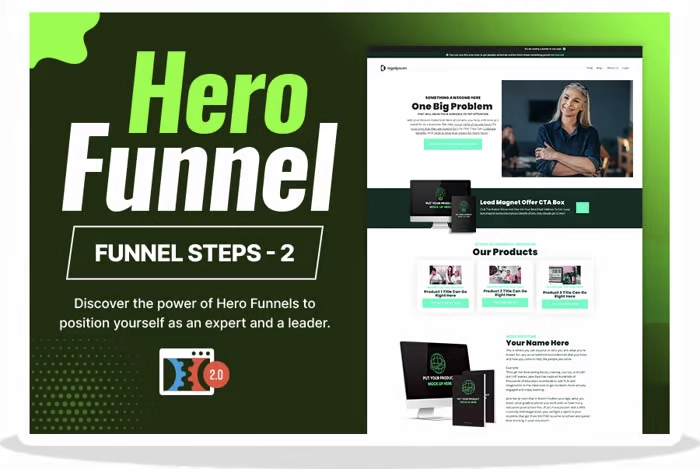
Visual of Lead Magnet: Show a mockup of your PDF, screenshot of a video or visual representation of the deliverable.
Bullet Points of What’s Inside:
- Learn the 3 lead magnet formats that convert at 40%+
- Discover where to promote your opt-in page for free traffic
- Get the email sequence template that converts subscribers to buyers
Social Proof: “Join 10,000+ entrepreneurs building profitable email lists”
Simple Opt-In Form: Name and email only. Remove unnecessary friction.
Clear Call-to-Action: “Send Me the Free Training” (specific) beats “Submit” (generic)
Privacy Assurance: “Your email is safe. Unsubscribe any time.”
Check out my complete ClickFunnels review to see how it simplifies the technical side of list building
Step 6: Set Up Automated Delivery
Deliver lead magnets immediately and reliably.
For PDF/File Delivery:
Option A: Email Attachment: Simplest, but risks spam filters and file size limits.
Option B: Download Link: Upload to Google Drive, Dropbox or your website. Send the download link via email.
Option C: Thank You Page: After opt-in, redirect to a page with a download link and preview.
Recommended: A Combination of “thank you” page download plus email backup.
For Email Courses:
Setup Requirements:
- Email service provider with automation (MailChimp, ConvertKit, GetResponse)
- Create a welcome email sequence
- Set up drip schedule (day 0, day 1, day 2, etc.)
- Test the complete sequence before launching
For Video Training:
Hosting Options:
- YouTube (unlisted)
- Vimeo (privacy settings)
- Wistia (professional, email required to watch)
- Your website (self-hosted or via course platform)
Delivery Method: Email with video link or embed video on “thank you” page.
# Ready to Build Your Complete Business System?
Creating lead magnets is just one component of building a successful online business. If you’re looking for comprehensive guidance on constructing a complete business from strategy through to profitable execution, I’ve created a step-by-step getting started guide covering everything you need.
And if you want to create high-converting landing pages for your lead magnets with professional templates and easy customisation, check out my complete ClickFunnels review to see how it simplifies the technical side of list building.
Promoting Your Lead Magnet Effectively
Creating your lead magnet is half the battle. Getting it in front of your ideal audience is the other half.
Promotion Strategy 1: Website Integration
Header Bar: Add a persistent banner at the top of the website promoting your lead magnet.
Sidebar Opt-In: Include opt-in form in sidebar of blog posts (if using sidebar layout).
Content Upgrades: Offer topic-specific lead magnets related to specific blog posts. Example: Blog post about email marketing includes lead magnet “Email subject line templates.”
Exit-Intent Popup: Trigger a pop-up when a visitor is about to leave, offering a lead magnet.
Embedded Forms: Place opt-in forms within relevant blog content.
Promotion Strategy 2: Social Media
Instagram/Facebook:
- Bio link to lead magnet landing page
- Posts highlighting specific benefits
- Stories with swipe-up (if available) or link sticker
- Reels/videos demonstrating value
LinkedIn:
- Featured section with lead magnet
- Articles mentioning and linking to the resource
- Comments offering resources when relevant to discussions
Twitter:
- Pinned tweet promoting lead magnet
- Regular tweets highlighting different benefits
- Link in bio
YouTube:
- End screen promoting lead magnet
- Description links
- Pinned comment with an offer
- Verbal mentions in videos
Promotion Strategy 3: Content Marketing
Blog Posts: Write related content that naturally leads to your lead magnet.
Example: If the lead magnet is “Email subject line templates,” write blog post “Why your emails aren’t getting opened” and promote templates within the post.
Guest Posting: Contribute valuable content to other sites in your niche. Include a lead magnet in the author bio or subtly within the content.
Medium/LinkedIn Articles: Publish abbreviated versions of your expertise with a lead magnet as a “complete resource.”
Promotion Strategy 4: Paid Advertising
Facebook/Instagram Ads:
- Target cold audiences with lead generation ads
- Retarget website visitors who didn’t opt in
- Create lookalike audiences from existing subscribers
Google Ads:
- Target searches related to your lead magnet topic
- Use search ads to drive to the landing page
- Display retargeting for website visitors
Budget Recommendations: Start with £5-10/day, testing different audiences and ad creative. Scale what works.
Promotion Strategy 5: Partnerships and Collaborations
Guest Appearances: Appear on podcasts, YouTube channels or webinars in your niche. Offer a lead magnet to their audience.
Bundle Deals: Partner with complementary businesses to cross-promote lead magnets.
Affiliate Recruitment: Recruit affiliates to promote your lead magnet. Pay commission on subsequent paid product sales.
Optimising Lead Magnet Conversion Rates
Once your lead magnet is live, optimisation increases conversions significantly.
Optimisation 1: A/B Test Headlines
Headlines impact conversion rates more than any other element. Test variations:
Version A: “Download My Free Guide to Email Marketing” Version B: “Get 47 Email Subject Lines That Averaged 52% Open Rates”
Test one change at a time. Let each test run until statistical significance (typically 100+ conversions per variation).
Optimisation 2: Test Lead Magnet Formats
Create multiple versions and test which converts better:
- PDF guide vs. video training
- Checklist vs. template pack
- Mini-course vs. resource list
Different audiences prefer different formats.
Optimisation 3: Reduce Form Friction
Test form fields:
- Name + Email vs. Email only
- First name vs. Full name
- Optional fields vs. Required fields
Optimisation 4: Test Social Proof Elements
Try different social proof approaches:
- “Join 10,000+ subscribers”
- “Downloaded by 5,000+ entrepreneurs”
- Testimonials from recipients
- Trust badges
Optimisation 5: Mobile Optimisation
Over 60% of traffic comes from mobile. Ensure:
- Landing page loads quickly on mobile data
- Forms are easy to complete on small screens
- Text is readable without zooming
- Buttons are large enough to tap easily
Test the actual mobile experience on various devices and connection speeds.
Optimisation 6: Thank You Page Enhancement
Your “thank you” page is valuable real estate:
- Confirm delivery and explain next steps
- Provide immediate access to the lead magnet
- Set expectations for follow-up emails
- Offer next step (join community, follow social media, watch video)
- Consider a tripwire offer (low-priced product $7-37)
Check out my complete ClickFunnels review to see how it simplifies the technical side of list building
Common Lead Magnet Mistakes and How to Avoid Them
Learn from common failures to accelerate your success.
Mistake 1: Creating Lead Magnet Before Validating Demand
Many people spend weeks creating elaborate lead magnets only to discover no one wants them.
Solution: Validate before creating:
- Survey your audience
- Create a simple landing page with “coming soon” and gauge interest
- Look at competitor lead magnet performance
- Start with a minimum viable version and improve based on feedback
Mistake 2: Overdelivering to the Point of Overwhelm
A 100-page ebook sounds valuable but often goes unread. Overwhelmed subscribers don’t become engaged subscribers.
Solution: Quality over quantity. A 5-page actionable checklist outperforms a 50-page theoretical guide. Respect your subscribers’ time.

Mistake 3: No Clear Connection to Paid Offerings
Your lead magnet should naturally lead to your paid products or services. Disconnected lead magnets build lists of people who’ll never buy.
Solution: Create “bridge” lead magnets that solve one part of a larger problem your paid offering solves completely.
Example: If you sell a £200 course on building sales funnels, your lead magnet might be “The 20-minute website audit checklist.” Subscribers learn they need funnels (which your course teaches).
Mistake 4: Terrible Delivery Experience
Broken download links, confusing delivery instructions or delayed delivery damage the relationship immediately.
Solution:
- Test the complete opt-in and delivery process yourself
- Provide multiple delivery methods (thank you page + email)
- Set up automated follow-up for download issues
- Monitor delivery regularly
Mistake 5: Neglecting Follow-Up
Many businesses collect emails but never send valuable follow-up content. The list becomes stagnant.
Solution: Create a welcome email sequence:
- Email 1: Deliver lead magnet, welcome subscriber
- Email 2-3: Share related valuable content
- Email 4: Soft introduction to paid offerings
- Email 5+: Regular valuable emails building a relationship
Mistake 6: Identical Lead Magnet for All Traffic Sources
Cold traffic from Facebook ads needs different lead magnets than warm traffic from your email list or hot traffic from webinar attendees.
Solution: Create segmented lead magnets:
- Cold traffic: Lower-commitment, broader appeal
- Warm traffic: More specific, deeper value
- Hot traffic: Directly related to purchase consideration
Measuring Lead Magnet Success
Track these metrics to understand performance and guide improvements.
Metric 1: Opt-In Conversion Rate
What It Is: Percentage of landing page visitors who opt in
Calculation: (Opt-ins ÷ Landing page visitors) × 100
Benchmarks:
- Cold traffic: 20-30%
- Warm traffic: 30-50%
- Hot traffic: 50-70%
If Below Benchmark: Test headline, simplify form, increase perceived value or reduce friction.
Metric 2: Thank You Page Engagement
What It Is: Percentage who actually download/access the lead magnet
Calculation: (Downloads ÷ Opt-ins) × 100
Target: 80-95%
If Below Target: Improve delivery clarity, ensure download links work, and test “thank you” page design.
Metric 3: Email Open Rates
What It Is: Percentage of subscribers opening your follow-up emails
Calculation: (Opens ÷ Emails delivered) × 100
Benchmarks:
- Welcome email: 50-70%
- Follow-up emails: 20-40%
If Below Benchmark: Improve subject lines, send more valuable content and clean inactive subscribers.

Metric 4: Lead Quality Score
What It Is: Subjective assessment of whether subscribers match your ideal customer profile
Measurement: Survey new subscribers or track which lead magnets produce paying customers.
Target: High alignment with the ideal customer profile
If Misaligned: Revisit lead magnet positioning, adjust targeting or change promotion channels.
Metric 5: Lead Magnet to Customer Conversion
What It Is: Percentage of lead magnet subscribers who eventually purchase
Calculation: (Customers ÷ Subscribers from lead magnet) × 100
Benchmarks: 2-10% depending on pricing and sales cycle length
If Below Benchmark: Improve the follow-up sequence, better align the lead magnet with the paid offer, or enhance the paid offer’s value proposition.
Check out my complete ClickFunnels review to see how it simplifies the technical side of list building
Advanced Lead Magnet Strategies
Once you’ve mastered the basics, these advanced strategies increase effectiveness.
Strategy 1: The Content Upgrade Approach
Rather than one universal lead magnet, create specific upgrades for each blog post.
Example:
- Blog post: “How to write compelling headlines”
- Content upgrade: “100 headline templates organised by goal”
This hyper-relevance dramatically increases conversion rates, often reaching 40-60% among engaged readers.
Strategy 2: The Segmentation Quiz
Create quiz-style lead magnets that segment subscribers based on their answers.
Example: “What’s your ideal online business model? Take the 2-minute quiz”
Based on results, subscribers receive different follow-up sequences matched to their situation. This personalisation improves engagement and conversion rates.
Strategy 3: The Scarcity-Based Lead Magnet
Offer lead magnets for a limited time or limited quantity.
Example: “Get my £200 training free this week only (Normally available only to paying customers)”
Scarcity creates urgency. However, it must be genuine. False scarcity damages trust.
Strategy 4: The Multi-Part Lead Magnet
Deliver lead magnets in multiple instalments to create ongoing engagement.
Example: “The 30-day Instagram growth challenge: Get daily action steps delivered to your inbox”
Multiple touches build stronger relationships and keep your brand top of mind.
Strategy 5: The Interactive Lead Magnet
Create tools or calculators rather than static documents.
Examples:
- Pricing calculator
- ROI estimator
- Business model selector
- Interactive checklist
Interactive lead magnets often convert 50-70% because of novelty and personalised value.
Conclusion: Building Your Lead Magnet Starting Today
We’ve covered everything you need to know about How to Create Lead Magnets That Convert. The key insights are these: specificity beats generality every time, immediate value outperforms promised future value and your lead magnet must naturally connect to your paid offerings while respecting your audience’s time and intelligence.
The most effective lead magnets solve one specific problem quickly and completely. They don’t try to teach everything about a broad topic. They don’t overwhelm with unnecessary information. They deliver exactly what they promise in a format that’s easy to consume and implement immediately. Whether you choose checklists, templates, mini-courses or assessments, the format matters less than the clarity of your promise and the quality of your delivery.
Your lead magnet creation process should follow the framework outlined in this guide: identify your audience’s specific problem through research rather than assumptions, choose the format that best delivers the solution, create a compelling title that makes the value obvious, develop high-quality content that demonstrates your expertise, build an optimised landing page that reduces friction and set up reliable automated delivery that begins the relationship positively.
Remember that your lead magnet isn’t the end goal. It’s the beginning of a relationship. The subscribers you attract with your lead magnet should naturally progress toward your paid offerings because your lead magnet solved part one of their problem and your paid products solve the complete problem. This alignment between free and paid is what transforms email subscribers into paying customers.
Stop overthinking and start creating. Choose one lead magnet format from this guide. Spend this week creating it. Launch it next week, even if it’s not perfect. Test it with real traffic. Gather feedback from actual subscribers. Improve it based on data rather than assumptions. Your business needs email subscribers today, not a perfect lead magnet six months from now.
The list you build starting today becomes your most valuable business asset. Every subscriber represents a potential customer, a future testimonial and someone you can serve. Your lead magnet is the gateway. Make it valuable, make it specific and most importantly, make it real by actually creating and launching it.