
When you are building an online business and researching all-in-one marketing platforms, two names frequently appear in comparisons: ClickFunnels and Builderall. Both platforms promise comprehensive solutions that eliminate the need for multiple separate tools, but they approach this goal with dramatically different philosophies, pricing structures and target audiences. This naturally raises crucial questions: in the ClickFunnels vs Builderall debate, which platform actually delivers better value for your specific business needs and which one helps you achieve results faster?
In this exhaustive comparison, I am going to examine ClickFunnels vs Builderall across every dimension that affects your buying decision. We will compare pricing models, evaluate feature breadth versus depth, assess learning curves, examine template quality, analyse support systems, test actual usability and determine which types of businesses benefit most from each platform. By the end of this article, you will have absolute clarity about whether ClickFunnels or Builderall is the right investment for your particular situation.
Understanding The Core Philosophy Difference
Before diving into detailed comparisons, we must understand the fundamental philosophical difference between ClickFunnels and Builderall because this shapes everything about how these platforms work and who they serve.

ClickFunnels: Focused Excellence
ClickFunnels follows a “focused excellence” philosophy. The platform does specific things (funnel building, email automation, membership sites, affiliate management) and aims to do those things well. ClickFunnels deliberately limits its scope to maintain quality and usability within its chosen domain.
The platform positions itself as the premium solution for sales funnel creation. Everything about ClickFunnels focuses on this core purpose. Features are designed specifically for moving visitors through conversion-optimised sequences rather than general website building or comprehensive digital marketing.
This focused approach means ClickFunnels does not try to be everything to everyone. You will not find video hosting, webinar platforms, chatbots or many other tools on ClickFunnels because the company chooses depth over breadth within its funnel-building niche.
Builderall: Comprehensive Breadth
Builderall takes the opposite approach with a “comprehensive breadth” philosophy. The platform includes dozens of different tools covering nearly every aspect of digital marketing and online business. Builderall aims to be the only platform you need by providing everything from website building to email marketing to video hosting to webinar platforms to chatbots.
The platform positions itself as the affordable all-in-one solution that replaces 20+ separate tools. Builderall emphasises the value of having everything integrated in one place at a single monthly price, dramatically lower than ClickFunnels.
This comprehensive approach means Builderall tries to serve everyone. The platform includes tools for affiliate marketers, course creators, e-commerce businesses, agencies, bloggers and virtually every other online business model imaginable.
Why This Difference Matters
The ClickFunnels vs Builderall comparison is fundamentally about focused excellence versus comprehensive breadth. ClickFunnels does fewer things with greater polish and simplicity. Builderall does more things, but with less polish and greater complexity.
Your preference between these philosophies largely determines which platform suits you better. Understanding this distinction helps you evaluate all the detailed comparisons that follow.
Pricing Comparison: The Cost Structure Reality
One of the most striking differences in the ClickFunnels vs Builderall comparison is pricing structure and value proposition.
ClickFunnels Pricing Model
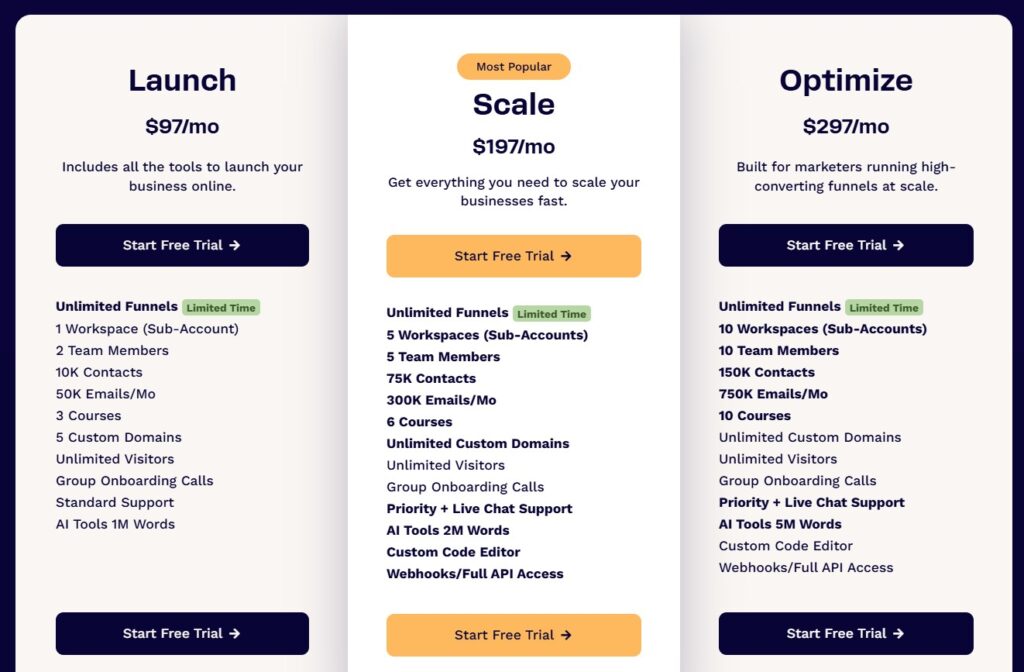
ClickFunnels uses a straightforward two-tier subscription model. The Basic plan costs $97 per month (or $81 monthly when billed annually). The Pro plan costs $297 per month (or $248 monthly with annual billing).
The Basic plan includes core funnel-building features with limitations on funnel count (20 funnels) and contacts. The Pro plan removes most restrictions and adds advanced features, including follow-up funnels (email automation), affiliate management and priority support.
ClickFunnels First-Year Cost:
- Basic: $1,164 annually
- Pro: $2,976 annually
The pricing is transparent and simple. You know exactly what you will pay. However, the cost is substantial, particularly for beginners or small businesses operating on tight budgets.
Builderall Pricing Model
Builderall uses a multi-tier pricing structure with four main plans. The Cheetah plan costs $16.90 per month. The Marketer plan costs $76.90 per month. The Premium plan costs $87.90 per month. The Funnel Club plan costs $199 per month.
Each tier unlocks additional features and removes usage limitations. The Cheetah plan provides basic access to most tools, but with significant restrictions. Higher tiers remove restrictions and add advanced capabilities.
Builderall First-Year Cost:
- Cheetah: $202.80 annually
- Marketer: $922.80 annually
- Premium: $1,054.80 annually
- Funnel Club: $2,388 annually
Even the most expensive Builderall tier costs less than ClickFunnels Pro. The entry-level Cheetah plan costs approximately one-sixth ofthe ClickFunnels Basic plan annually.
The Pricing Difference Reality
Builderall is dramatically cheaper than ClickFunnels across comparable tiers. The Builderall Marketer plan ($76.90 monthly) provides more tools than ClickFunnels Basic ($97 monthly), whilst costing less. Even Builderall’s premium tier undercuts ClickFunnels Pro significantly.
Over five years, these differences accumulate substantially:
- ClickFunnels Basic: $5,820
- ClickFunnels Pro: $14,880
- Builderall Marketer: $4,614
- Builderall Premium: $5,274
However, price tells only part of the story. The question is whether Builderall’s lower pricing reflects proportional feature differences or whether it genuinely offers better value by providing more tools at a lower cost.
Feature Breadth Comparison: What Each Platform Includes
The most dramatic difference in the ClickFunnels vs Builderall comparison is the sheer number of tools each platform provides.
ClickFunnels Core Features
ClickFunnels focuses on essential funnel-building features:
Funnel Builder: Drag-and-drop page builder specifically designed for conversion-optimised funnels. Create landing pages, sales pages, order forms, upsell sequences and complete funnel flows.
Email Automation: Follow-up Funnels (Pro plan only) provides email sequence automation triggered by funnel actions. Basic segmentation and broadcast capabilities included.
Membership Sites: Create protected content areas for online courses or subscription products. Control access, structure content and drip-release materials.
Affiliate Management: Built-in affiliate tracking and management system (Pro plan only). Recruit affiliates, track conversions and manage commissions.
Analytics: Funnel performance tracking including conversion rates, revenue, traffic sources and visitor behaviour.
Payment Processing: Direct integration with Stripe and PayPal for accepting payments through funnels.
A/B Split Testing: Test different page variations to optimise conversion rates.
That is essentially the complete feature list. ClickFunnels deliberately limits scope to these core capabilities rather than expanding into adjacent tools.

Builderall Comprehensive Tool Suite
Builderall includes dozens of different tools and platforms:
Website Builder: Drag-and-drop builder for creating complete websites beyond just funnels. Multiple builder options, including a pixel-perfect designer and responsive builder.
Funnel Builder: Dedicated funnel creation tools comparable to ClickFunnels’ core offering.
E-commerce Platform: Complete online store functionality with product catalogues, shopping carts and inventory management.
Email Marketing: Comprehensive email platform with automation, segmentation and deliverability management.
Webinar Platform: Host live and automated webinars directly within Builderall.
Video Hosting: Upload and host videos with streaming capabilities.
Chatbot Builder: Create automated chatbots for Facebook Messenger and website chat.
App Builder: Build mobile applications without coding.
Learning Platform: Create and sell online courses with a complete learning management system.
Script Generator: AI-powered tool for generating sales copy and marketing content.
SEO Tools: A suite of search engine optimisation utilities for keyword research and site optimisation.
Heat Map Tool: Track visitor behaviour with visual heat mapping.
Presentation Builder: Create sales presentations and pitch decks.
Photo Editor: Basic image editing capabilities within the platform.
And many additional utilities, including mockup creators, Instagram automation, browser notifications and more. The complete list exceeds 30 separate tools.
Feature Breadth Winner
Builderall absolutely dominates in feature breadth. The platform includes literally 10x more tools than ClickFunnels. For users who value having everything in one place, Builderall’s comprehensive suite is impressive.
However, feature quantity does not automatically equal better value. The critical questions are whether all these tools work well and whether you actually need most of them. Having 30 mediocre tools might provide less value than having 7 excellent tools.
For a deep dive into what ClickFunnels actually delivers with hands-on testing of every feature, read my comprehensive ClickFunnels review
Feature Quality And Polish: Depth vs Breadth
Having established that Builderall includes far more features, we now examine whether those features match ClickFunnels’ quality and polish.

ClickFunnels Feature Quality
ClickFunnels’ features are generally polished and well-designed within their domain. The funnel builder, whilst not cutting-edge, functions reliably. Templates are professionally designed for conversion optimisation. The platform feels cohesive because everything is built by the same team with a consistent interface design.
Strengths: Features work reliably without major bugs. The interface is consistent throughout. Documentation and training cover features thoroughly. Integration between different capabilities (funnels, email, and payments) works seamlessly.
Weaknesses: The page builder feels dated compared to modern website builders. Customisation beyond templates is more difficult than it should be. Email automation is basic compared to dedicated email platforms.
Overall Quality: ClickFunnels delivers solid, professional-grade features within its scope. Nothing feels amateurish or broken. The platform works reliably for its intended purposes.
Builderall Feature Quality
Builderall’s features vary dramatically in quality. Some tools are reasonably well-developed, whilst others feel unfinished or amateurish. The breadth of features creates inconsistency because different tools have received different levels of development attention.
Strengths: Having so many tools in one platform creates genuine convenience for specific workflows. Some features (website builder, email platform) are genuinely competitive with standalone alternatives. The comprehensive nature eliminates many integration challenges.
Weaknesses: Many tools feel half-finished or poorly designed. Interface consistency is lacking because tools feel like separate products cobbled together. Learning curves are steep because each tool has different approaches and interfaces. Quality varies so dramatically that you cannot trust that a feature will be good just because it exists.
Overall Quality: Builderall sacrifices quality for quantity. Individual features rarely match the polish of focused alternatives. The platform feels like a collection of separate tools rather than a cohesive system.
Quality Verdict
ClickFunnels wins decisively on feature quality and polish. Everything works reliably, even if not cutting-edge. Builderall’s approach of including everything means many features are mediocre implementations that frustrate users who want professional-grade tools.
For users who value quality over quantity, ClickFunnels’ focused approach delivers better actual usability despite fewer features.
Learning Curve And Usability
The ClickFunnels vs Builderall comparison becomes interesting when evaluating ease of use because each platform creates different types of complexity.
ClickFunnels Learning Curve
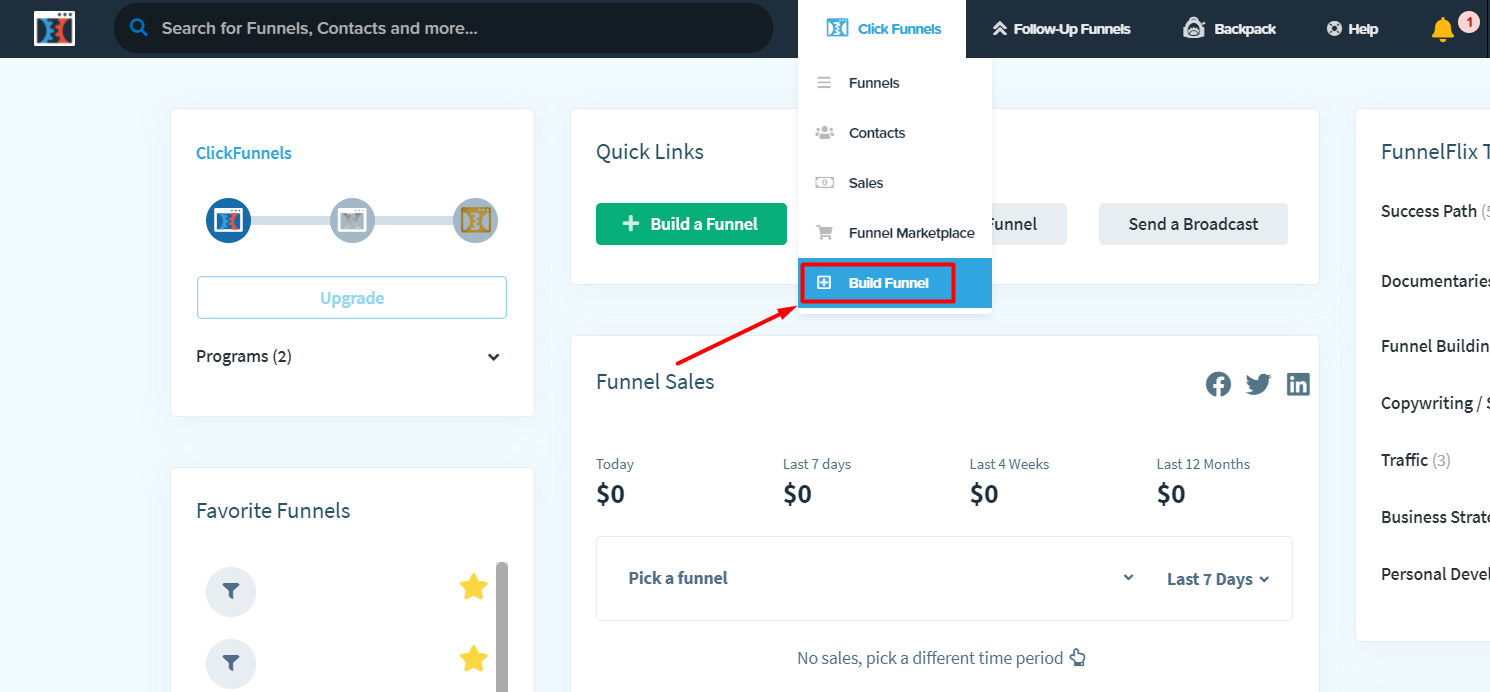
ClickFunnels has a moderate learning curve focused on understanding funnel strategy and mastering the page builder. New users must invest time learning the platform, but the scope is limited enough to feel manageable.
Initial Learning: Understanding funnel concepts, navigating the dashboard, choosing templates and building first funnels requires several hours of focused attention. However, the learning path is clear.
Ongoing Complexity: Once you understand the basics, creating additional funnels becomes progressively faster. The learning curve is front-loaded.
Training Resources: ClickFunnels University provides extensive training, including courses, certifications and tutorials. The community is large and active with abundant user-generated guides.
Overall Usability: ClickFunnels is reasonably beginner-friendly within its domain. The focused scope means less to learn compared to platforms trying to do everything.
Builderall Learning Curve
Builderall has a steep and sustained learning curve because the sheer number of tools creates ongoing complexity. Users must learn not just one platform but effectively 30+ separate tools.
Initial Learning: New users face an overwhelming choice. Which website builder should you use? Which email platform? The multiplicity of options creates decision paralysis before even starting.
Ongoing Complexity: Each new feature requires learning a different interface and approach. The inconsistency between tools means skills do not transfer. You essentially restart the learning process for each new Builderall tool you attempt to use.
Training Resources: Builderall provides training materials, but the quality varies significantly. Some tools have good documentation, whilst others are poorly explained. The community is smaller and less active than ClickFunnels.
Overall Usability: Builderall is genuinely difficult to master. Even technically comfortable users struggle with the complexity created by having so many tools with inconsistent interfaces. The platform overwhelms beginners.

Learning Curve Winner
ClickFunnels is significantly easier to learn and use. The focused scope creates manageable complexity. Builderall’s comprehensive breadth creates overwhelming complexity that frustrates users regardless of their technical skill level.
For users who value being able to actually use the platform they purchase, ClickFunnels’ usability advantage is substantial.
Template Quality And Design
Template quality affects how professional your finished funnels and websites look without hiring designers.
Builderall Templates
Builderall provides templates for various tools, including website templates, funnel templates, presentation templates and more. The quantity is substantial, but the quality varies dramatically.
Quality Assessment: Template quality ranges from reasonably professional to amateurish. Many templates look dated or poorly designed. Finding genuinely good templates requires sorting through many mediocre options.
Customisation: Customisation capabilities vary depending on which builder you are using. Some Builderall builders offer extensive customisation, whilst others are more restrictive.
Template Additions: Builderall regularly adds new templates, but maintaining quality control across so many different template categories is challenging.
ClickFunnels Templates
ClickFunnels includes dozens of pre-built funnel templates designed for specific business scenarios, including webinar registration, product launches, lead generation and e-commerce sequences.
Quality Assessment: Template quality is generally good with professional designs optimised for conversions. Some templates feel dated, but most are usable without major modifications. The ClickFunnels aesthetic is distinctive enough that experienced marketers recognise the templates.
Customisation: Templates can be customised, but the builder’s limitations make extensive modifications challenging. Most users work within template constraints rather than creating completely custom designs.
Template Additions: The ClickFunnels marketplace offers additional templates, but the selection is limited compared to broader design marketplaces.

Template Quality Winner
ClickFunnels provides more consistently professional templates. Builderall offers more templates in total, but the average quality is lower. For users who want templates that look good without extensive modification, ClickFunnels delivers better out-of-the-box designs.
Integration Capabilities
How well each platform integrates with external tools affects your ability to build complete marketing systems.
ClickFunnels Integrations
ClickFunnels offers direct integrations with major platforms, including email services (ActiveCampaign, ConvertKit, AWeber, Mailchimp), payment processors (Stripe, PayPal), webinar platforms (WebinarJam, EverWebinar) and various CRM systems.
The integration library is extensive for a funnel-focused platform. Most mainstream marketing tools have ClickFunnels connectors. Integration setup is generally straightforward with documented processes.
When direct integrations do not exist, Zapier provides workarounds for connecting ClickFunnels with other services. However, this adds complexity and potential points of failure.
Builderall Integrations
Builderall’s integration approach differs because the platform includes so many native tools. The philosophy is that you should use Builderall’s built-in email platform, webinar tool and other capabilities rather than integrating external services.
For tools Builderall does not include, integration options are more limited than those of ClickFunnels. The platform supports essential integrations with payment processors and some email services, but the library is smaller.
Zapier integration exists, but Builderall’s emphasis is on using native tools rather than connecting external services.

Integration Strategy Difference
ClickFunnels assumes you will integrate external best-in-class tools and makes this relatively easy. Builderall assumes you will use its built-in tools and makes external integration less of a priority.
If you want to use specific external tools, ClickFunnels accommodates this better. If you are willing to use Builderall’s native alternatives, integration becomes less relevant because everything is already included.
For strategic guidance on marketing technology integration, Gartner’s marketing technology insights provide excellent frameworks.
Support And Community Resources
The quality of support and community affects your success with either platform significantly.
ClickFunnels Support System
ClickFunnels provides email support with response times varying by plan tier (faster for Pro subscribers). The company maintains extensive documentation, video tutorials and active community forums.
Support Quality: Support responses are generally helpful and professional. Basic plan users face slower response times, which can be frustrating during urgent issues. Pro plan users receive priority treatment with faster, more comprehensive assistance.
Community Resources: The ClickFunnels community is large, active and engaged. Facebook groups are busy with users sharing strategies, templates and solutions. Community events, challenges and training programmes create ongoing engagement.
Training Quality: ClickFunnels University provides substantial education, including structured courses, certification programmes and ongoing content. Training quality is generally high with professional production values.
Overall Assessment: Support and community are comprehensive and well-developed. ClickFunnels has invested heavily in these areas, and it shows through resource quality and community engagement.
Builderall Support System
Builderall provides email support and maintains documentation for its various tools. As a smaller company with fewer resources, support capabilities are more limited than those of ClickFunnels.
Support Quality: Support exists, but response times can be slow. The breadth of features means support team members may not have deep expertise across all 30+ tools. The quality of assistance varies depending on which feature requires help.
Community Resources: The Builderall community is smaller and less active than ClickFunnels. User engagement in forums and groups is modest. Finding solutions through community resources is harder because fewer users are actively sharing knowledge.
Training Quality: Training materials exist, but quality and comprehensiveness vary dramatically across different tools. Some features have good training, whilst others are poorly documented. The sheer breadth makes maintaining consistent training quality challenging.
Overall Assessment: Support and community are functional but limited. The smaller company cannot match ClickFunnels’ investment in these areas. Users need greater self-sufficiency because help resources are less comprehensive.
Support Winner
ClickFunnels wins decisively on support and community. The larger company provides more responsive support, better training and more active community engagement. For users who value having help available when needed, ClickFunnels’ advantage is substantial.

Performance And Reliability
Technical performance, page load speeds and platform uptime affect whether your funnels actually work when customers try to use them.
ClickFunnels Performance
ClickFunnels hosts all pages on its own infrastructure. The company has invested in server capacity, content delivery networks and redundancy.
Page Speed: Load speeds are acceptable but not exceptional. ClickFunnels pages load adequately for most purposes, but are not notably fast. Users focused on maximum speed sometimes cite this as a weakness.
Uptime: Platform uptime is generally reliable. Occasional outages occur but are relatively rare. When issues arise, ClickFunnels typically resolves them promptly and communicates status clearly.
Scalability: The infrastructure handles typical small business traffic without issues. High-traffic situations work adequately, though very large campaigns might benefit from coordination with support.
Builderall Performance
Builderall also provides hosting for pages and funnels created on the platform. Infrastructure investment is more limited than that of ClickFunnels.
Page Speed: Performance varies depending on which Builderall tools you use and how you build pages. Some pages load reasonably well, whilst others are noticeably slow. Optimisation is more user-dependent.
Uptime: Reliability is generally adequate, but users report occasional technical issues and downtime. The platform is less stable than ClickFunnels based on user feedback.
Scalability: The platform handles normal small business traffic. High-traffic scenarios may encounter performance issues more readily than on ClickFunnels’ more robust infrastructure.
Performance Winner
ClickFunnels provides more reliable, consistent performance. Builderall’s performance is adequate for basic needs but less dependable. For businesses where downtime or slow loading directly impacts revenue, ClickFunnels’ infrastructure advantage matters.

Who Should Choose ClickFunnels?
Based on a comprehensive comparison of ClickFunnels vs Builderall, certain user types benefit most from choosing ClickFunnels despite the higher pricing.
Ideal ClickFunnels Users
Funnel-focused businesses: If your primary need is sales funnel creation rather than comprehensive website building or diverse marketing tools, ClickFunnels’ focused excellence matches your requirements.
Users who value quality over quantity: If you prefer having fewer tools that work excellently rather than many tools that work adequately, ClickFunnels’ approach aligns with your priorities.
Entrepreneurs needing robust support: If you want responsive customer support, extensive training and active community resources, ClickFunnels’ investment in these areas provides genuine value.
Businesses with established revenue: If your business generates healthy revenue where $97-297 monthly is proportionally reasonable, ClickFunnels’ premium pricing becomes justified.
Users wanting proven templates: If you value conversion-optimised templates designed specifically for funnel purposes, ClickFunnels provides better out-of-the-box designs.
When ClickFunnels Makes Sense
ClickFunnels makes strategic sense when you need focused funnel building excellence, can afford premium pricing, value quality and usability over feature quantity and want comprehensive support resources.
For a detailed perspective on exactly what ClickFunnels delivers, check my hands-on ClickFunnels review before making your final decision
Who Should Choose Builderall?
On the opposite side of the ClickFunnels vs Builderall comparison, different user types benefit from choosing the comprehensive alternative.
Ideal Builderall Users
Budget-constrained entrepreneurs: If you are operating on extremely tight budgets where ClickFunnels’ pricing is prohibitive, Builderall’s dramatically lower cost makes it accessible.
Users needing diverse tools: If you genuinely need website building, webinar hosting, video streaming, chatbots and many other tools beyond just funnels, Builderall’s breadth provides value.
Technically proficient users: If you are comfortable with technology and can navigate complex systems without extensive support, Builderall’s learning curve becomes manageable.
Agencies serving multiple clients: If you run an agency building assets for many clients across different industries, Builderall’s comprehensive toolkit serves diverse client needs.
Entrepreneurs willing to sacrifice polish: If you can accept mediocre feature quality in exchange for having everything in one affordable platform, Builderall’s value proposition works.
When Builderall Makes Sense
Builderall makes strategic sense when budget is the primary constraint, when you genuinely need the breadth of tools included, when you are technically capable of managing complexity and when you prioritise cost savings over feature quality.

The Real-World Usage Reality
Beyond feature comparisons, examining how each platform works in actual daily use reveals practical differences.
Daily ClickFunnels Experience
Using ClickFunnels day-to-day involves working within a focused, consistent environment. You access a single dashboard, work with familiar interfaces and execute tasks using established workflows.
The experience is relatively smooth because the limited scope means less navigation between different tools. Building funnels, sending emails and managing affiliates all happen within a cohesive system.
Frustrations arise when you need capabilities that ClickFunnels does not include, requiring external tools and integration management. The page builder’s limitations create friction when you want custom designs beyond template structures.
Daily Builderall Experience
Using Builderall day-to-day involves navigating between many different tools with inconsistent interfaces. You constantly switch between various builders, platforms and utilities trying to accomplish different tasks.
The experience can be chaotic because the breadth creates confusion about which tool to use for specific purposes. The platform includes multiple options for similar tasks (different website builders, for example) and choosing between them requires understanding subtle differences.
Frustrations arise from the inconsistent quality and interface designs. Each time you use a different Builderall tool, you essentially start fresh, learning how that particular feature works. For insights on software usability principles, Nielsen Norman Group’s usability guidelines provide excellent frameworks.
Real-World Winner
ClickFunnels provides a smoother, more consistent daily experience. Builderall’s comprehensive breadth creates ongoing complexity that slows execution regardless of technical skill. For actually getting work done efficiently, ClickFunnels’ focused simplicity wins.
The Migration And Lock-In Question
Understanding how difficult it is to switch away from each platform helps evaluate commitment level and long-term risk.
Leaving ClickFunnels
Migrating away from ClickFunnels requires rebuilding funnels because the platform uses proprietary formats. You cannot easily export funnels and import them into other systems. This migration difficulty creates platform lock-in.
However, because ClickFunnels is focused, the migration scope is limited to funnels. You are not locked into dozens of different tools that must all be replaced simultaneously.
Leaving Builderall
Migrating away from Builderall is potentially more complicated because you might be using many different tools that all need replacement. However, because Builderall’s tools are generally mediocre, many users find they want to migrate to better alternatives anyway.
The breadth that makes Builderall initially attractive becomes a migration challenge when you have assets spread across 10+ different Builderall tools that all need migration simultaneously.
Lock-In Reality
Both platforms create migration friction. ClickFunnels creates a focused lock-in around funnels. Builderall creates broad but shallow lock-in across many mediocre tools. Neither makes leaving easy.

The Final Verdict: ClickFunnels vs Builderall
After exhaustive comparison of ClickFunnels vs Builderall across pricing, features, quality, usability and every other relevant dimension, we can now provide definitive guidance.
For focused funnel building: ClickFunnels wins decisively. The platform’s specialisation in funnel creation delivers superior templates, better optimised workflows and more reliable conversion tools.
For extreme budget constraints: Builderall wins on affordability. The dramatically lower pricing ($16.90-87.90 monthly versus $97-297 monthly) makes online business tools accessible to users who cannot afford ClickFunnels.
For feature quality and polish: ClickFunnels wins substantially. Every ClickFunnels feature works reliably and professionally. Builderall’s features vary from adequate to poor across its 30+ tools.
For comprehensive tool breadth: Builderall wins by including 10x more tools. If you genuinely need webinar hosting, video streaming, chatbots and dozens of other capabilities, Builderall provides remarkable breadth.
For ease of use: ClickFunnels wins clearly. The focused scope creates manageable learning curves. Builderall’s complexity overwhelms users regardless of technical skill.
For support and community: ClickFunnels wins decisively. The larger company provides superior support responsiveness, better training resources and more active community engagement.
For daily usability: ClickFunnels provides smoother workflows and a more consistent experience. Builderall’s breadth creates ongoing friction that slows execution.
Overall recommendation: For most users focused on sales funnel creation, ClickFunnels delivers dramatically better value despite higher pricing. The quality, usability and support advantages justify the premium cost for businesses that can afford it.
Builderall makes sense primarily for extremely budget-constrained users who genuinely need the breadth of tools included and are technically capable enough to navigate the complexity without extensive support.

Conclusion
The ClickFunnels vs Builderall comparison reveals two platforms serving distinctly different priorities. ClickFunnels operates as the premium, focused solution for sales funnel creation, emphasising quality and usability within a limited scope. Builderall positions itself as the affordable, comprehensive alternative providing breadth over depth across dozens of marketing tools.
For most entrepreneurs focused on building effective sales funnels, ClickFunnels provides superior value through better feature quality, easier usability, more professional templates and comprehensive support. The premium pricing is justified by the polished experience and reliable functionality.
Builderall makes sense for users in specific circumstances: extremely tight budgets where ClickFunnels is financially impossible, a genuine need for the breadth of tools Builderall includes or agencies requiring diverse capabilities for multiple clients. However, even in these scenarios, users should understand they are accepting mediocre feature quality in exchange for affordability and breadth.
Before making your final decision in the ClickFunnels vs Builderall debate, honestly assess whether you need focused excellence or comprehensive breadth, whether you can afford ClickFunnels’ premium pricing and whether you have the technical capability to navigate Builderall’s complexity without extensive support.
Read my detailed ClickFunnels review for hands-on testing of exactly what the platform delivers
The right choice between ClickFunnels vs Builderall depends on your specific circumstances. For focused funnel building with professional quality, choose ClickFunnels. For affordable access to comprehensive marketing tools despite mediocre quality, choose Builderall. Choose based on your priorities rather than which platform sounds more appealing in marketing materials.