
Can You Make Money With a Free Website? Yes, But Here’s the Truth
Can you make money with a free website? In short, yes. The longer answer is that your platform choice will either support your income goals or quietly work against them.
Free websites come with real limits. Some of those limits matter a great deal. Others are manageable. This article walks you through exactly what is possible, what holds you back and how to get the best outcome.

What Does “Free Website” Actually Mean?
Before we get into the money side of things, it is worth being clear about what we are talking about.
A free website typically means one of two things. First, it could be a hosted platform like WordPress.com, Wix or Blogger that gives you a site at no cost in exchange for a branded subdomain and some limitations on what you can do. Second, it could be a writing platform like Medium or Substack that publishes your content within their ecosystem.
Indeed, both paths can generate income. However, they are very different in how they work and how much control you have over your earning potential.
For most people reading this, a free hosted platform such as WordPress.com or Blogger is what comes to mind. So, that is the main focus here.
If you are ready to take that first step, visit my Get Started Here page and find out exactly how to build a content-based online business that grows over time
The Honest Answer About Free Websites and Money
However, here is the thing. Making money with a free website is genuinely possible. Many people have done it. However, free platforms come with trade-offs that most beginners do not fully understand until they hit them head-on.
In fact, the biggest issues are these. Most free plans give you a subdomain rather than a custom domain. Instead of yoursite.com, you get yoursite.wordpress.com or yoursite.wix.com.
Notably, that subdomain signals to visitors that you are just starting out. It can reduce trust and make it harder to build authority in a niche.
Furthermore, many free plans restrict or completely block certain monetisation methods. WordPress.com’s free plan, for example, does not allow third-party ads. Wix’s free plan puts Wix-branded ads on your site that you cannot remove. These are not small issues if earning money is the goal.
The SEO picture is also more complicated on free platforms. You have less control over technical SEO. Your site sits on someone else’s domain. Google tends to give less authority to subdomains than to self-hosted sites with custom domains.
However, none of this means you cannot earn. It means you need to understand the rules of the platform you are using.

Free Platforms Compared: What You Can and Cannot Do
Let us look at the main options and what each one allows when it comes to earning money.
WordPress.com
WordPress.com is the hosted version of WordPress. It is free to start, but the free plan is fairly restrictive.
Specifically, on the free plan, you cannot install custom plugins. You also cannot run third-party ads from networks like Google AdSense. You get a WordPress.com subdomain. WordPress.com does have its own ad-sharing programme called WordAds, but this is only available on paid plans.
However, you can still use affiliate links on the free plan. This is significant. Affiliate marketing does not require running ads. It simply requires linking to products with your tracking code. That means income is possible from day one, even on the free tier.
If you upgrade to even the cheapest paid plan, the options expand. A custom domain costs around $4 to $7 per month, depending on which plan you choose. In fact, that small investment makes a meaningful difference to how your site is perceived and how it ranks.
Blogger
Blogger is Google’s free blogging platform. It has been around since 1999 and remains one of the few truly free platforms that allows you to connectto Google AdSense. That makes it genuinely useful for ad-based income.
You get a blogspot.com subdomain on the free plan. You can, however, connect a custom domain for the cost of the domain itself, which is typically around $10 to $15 per year. Furthermore, Blogger does not charge hosting fees. So, a fully custom-domain Blogger site costs under $15 per year to run.
The trade-offs are limited design flexibility and fewer built-in tools compared to WordPress. Overall, for a beginner who wants to test ad revenue with minimal investment, Blogger is a solid starting point.
Wix
Wix is a popular drag-and-drop builder with a generous free plan. Unfortunately, the free plan puts Wix branding and ads on your site. You also get a wix.com subdomain.
The key limitation for money-making is that many of Wix’s monetisation features require a paid plan. You can add affiliate links on the free plan. However, e-commerce, removing ads and a custom domain all require an upgrade. Paid plans start at around $17 per month.
Medium
Medium is a different kind of free platform. It has its own built-in audience and a Partner Programme that pays writers based on reading time from paying Medium members. If your content resonates, you can earn from Medium directly without needing to build a separate audience from scratch.
However, the limitation is that you do not own your audience. You are publishing within someone else’s ecosystem. Medium can change its algorithm, its payment rates or its terms at any time. In fact, many writers use Medium as a supplement to their main site rather than as the primary platform.
If you are ready to take that first step, visit my Get Started Here page and find out exactly how to build a content-based online business that grows over time
The Best Ways to Make Money With a Free Website
Now, let us look at what actually works when it comes to turning a free website into an income source.
Affiliate Marketing
Affiliate marketing is the most practical way to earn from a free website. You join an affiliate programme, get a unique link and include that link naturally in your content. When someone clicks your link and buys, you earn a commission.
Indeed, the beauty of affiliate marketing is that it does not require you to create your own products. It does not require a lot of traffic to start generating some income. Also, it does not depend on ad network approvals. Furthermore, it works on almost every free platform since you are simply placing a link in your content.
Specifically, commission rates vary widely. Amazon Associates pays between 1% and 10%, depending on the product category. Software and SaaS affiliate programmes often pay between 20% and 60%. Furthermore, some pay recurring commissions every month for the life of the customer’s subscription.
For a complete breakdown of how the affiliate model works and how to approach it strategically, Backlinko’s guide to affiliate marketing covers the core concepts clearly and in depth.

Display Advertising
Display ads are the passive option. You add a script to your site, and ads appear automatically. Each time a visitor clicks an ad, you earn money.
Specifically, Google AdSense is the most accessible network for beginners. The earning rates are low, typically between $1 and $3 per 1,000 pageviews on most niches. However, it is passive and scales with traffic. As your site grows, the income grows with it without requiring much additional effort.
Premium ad networks like Mediavine and Raptive pay significantly more, typically between $15 and $30 per 1,000 pageviews. However, both require a traffic threshold to join.
Mediavine requires 50,000 sessions per month. Raptive requires 100,000 monthly pageviews. These are not starting-point options. They are targets to work toward.
However, the important caveat here is that on most free platforms, you cannot run your own ads. Blogger is the main exception through its AdSense integration. On WordPress.com, ad income only becomes available once you move to a paid plan.
Sponsored Content
As your site grows, brands may pay you to write content that features their products or services. Rates vary enormously based on your niche, traffic and audience quality. Some bloggers charge $500 per sponsored post. Others with established audiences in high-value niches charge $2,000 to $5,000.
However, this income stream takes time to develop. It requires an audience that brands find valuable. However, it is one of the higher-earning methods once you get there.
You can pursue sponsored content on a free platform. Furthermore, having a professional-looking site with a custom domain makes you far more credible when approaching brands.
Digital Products
Selling ebooks, guides, templates, or courses is another strong income source. Indeed, the margin is excellent since there is no cost of goods. You create the product once and sell it indefinitely.
On free platforms, selling digital products directly is limited. You would typically need to use a third-party platform like Gumroad or Payhip to host and sell the product. You link from your site to the product page. In practice, this works reasonably well and means you are not entirely blocked by the platform’s limitations.
The Real Problem With Free Websites for Long-Term Income
However, here is the honest challenge. Free platforms are great for getting started. They lower the barrier to entry to almost zero. That is genuinely valuable.
However, the limitations start to matter as soon as you take earning money seriously.
You cannot customise your site the way you can on a self-hosted platform. You have less control over SEO. Your site sits on someone else’s domain.
The platform can change its rules at any time. In the worst case, it could shut down your account or even the entire service.
Everything you build on a free platform exists at someone else’s discretion. In fact, that is a meaningful risk when you are trying to build a real income.
Typically, the most common path is this. Start on a free platform to learn the basics and test your niche. Then move to a self-hosted platform once you have a clearer sense of what you are building and what your audience responds to.
For example, self-hosted WordPress with a shared hosting plan costs as little as $3 to $5 per month. Add a domain name for around $12 per year. For under $75 per year, you have a professional, fully-owned website with complete control over how you monetise it.
That is not a huge investment. However, for many people just starting out, even that small cost feels like a risk. Free platforms give those people a place to begin.
If you are ready to take that first step, visit my Get Started Here page and find out exactly how to build a content-based online business that grows over time
How to Maximise Your Earnings on a Free Website
If you are committed to starting free, here is how to give yourself the best possible chance of earning.
Choose the Right Platform for Your Goal
If ad revenue is your main goal, use Blogger. It is the most accessible free platform for Google AdSense integration.
If affiliate marketing is your focus, WordPress.com or Blogger both work well. You can add affiliate links to either. WordPress.com has a cleaner editing interface and more themes.
If you want to test writing and get paid based on reads, Medium’s Partner Programme is worth exploring. It will not replace a full affiliate marketing business. However, it can generate some early income while you build your main site.
Focus on a Specific Niche
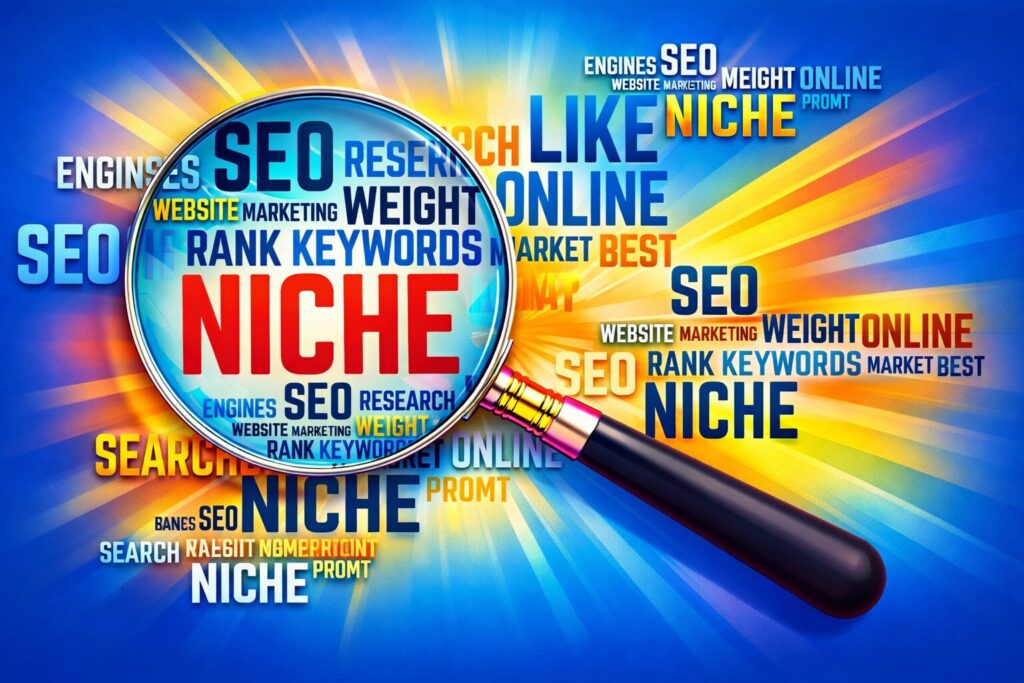
In fact, a niche site outperforms a general site almost every time. When your content is tightly focused on a specific topic, you attract an audience that is more likely to act on your recommendations.
Typically, the most profitable niches for affiliate marketing and ad revenue tend to be personal finance, online business, health and fitness, technology and home improvement. These are not the only options. Ultimately, the best niche is one where you have genuine knowledge and interest alongside reasonable commercial potential.
Build Content Around Search Intent
Ultimately, the content that earns the most is content that people are actively searching for. So, before writing any post, research your target keyword. Understand what the person searching for that term actually wants. Then write something that answers their question better than what is already ranking.
In fact, this matters even more on a free platform where your domain authority is lower. For example, long-tail keywords with less competition give you a realistic chance of ranking. Over time, those rankings build traffic, and that income follows.
For a detailed look at how to build a content strategy that drives consistent organic traffic, Shopify’s guide to making money blogging is one of the most thorough and practical resources available.
Add Affiliate Links Strategically
In short, do not add affiliate links to every post or every paragraph. Add them where they are genuinely relevant and helpful to the reader. In fact, a recommendation that fits naturally within useful content converts far better than a link that feels forced.
Specifically, the most effective formats for affiliate content are product reviews, comparison articles and best-of lists. These formats attract readers who are already close to making a buying decision. So, that intent makes them far more likely to click and convert.
Build an Email List From Day One
Indeed, this is the piece most beginners miss. Your email list is the one asset you fully own, regardless of which platform you build on. If your site gets penalised or a platform changes its rules, your list stays with you.
For example, use a free email marketing tool such as Mailchimp or the free tier of a similar service to start collecting emails from day one. Specifically, offer something valuable in exchange for a sign-up. A free checklist, a short guide or a useful resource all work well.
Furthermore, your list lets you promote new content, share affiliate recommendations and maintain a direct line to your audience that does not depend on Google or any platform algorithm.

A Realistic Income Timeline for a Free Website
It is worth being honest about the timeline here. Most free websites do not generate meaningful income in the first 1 to 3 months.
The content needs time to rank. Your audience needs time to grow. Trust also takes time to build.
For example, between months 3 and 6, you might start to see your first affiliate clicks and perhaps your first small commissions. Think $10 to $50 per month in a good month at this stage.
Indeed, between months 6 and 12, consistent effort starts to compound. Sites in good niches with well-researched content and consistent publishing schedules can reach $200 to $500 per month.
Beyond 12 months, the range becomes much wider. Some sites plateau at a few hundred dollars per month. Others grow into full-time incomes. Typically, the difference is the quality and volume of content, the niche and whether the creator has built an email list alongside the site.
According to WPBeginner’s research on online business and monetisation, there are more than 30 proven ways to make money from a website, ranging from display ads and affiliate marketing to selling services and creating digital products. Indeed, the platform you start on does not limit the eventual ceiling. It only affects how quickly you can access each option.
When to Upgrade From a Free Website
Here are the clearest signals that it is time to move to a paid, self-hosted platform.
For instance, you are consistently publishing content and seeing early traffic, but you feel limited by what you can customise or test. You want to run ads, but your free platform does not allow the ad network you need. A custom domain makes your site look more professional and builds more trust. You are starting to earn small amounts, and the income could fund the modest cost of hosting.
Indeed, that last point is worth sitting with. Once a free website is generating even $20 to $30 per month, it is effectively paying for its own upgrade. At that point, moving to a self-hosted setup makes complete commercial sense.
Ready to Start Building Something Real?
Whether you begin with a free website or go straight to a self-hosted setup, the fundamentals are the same. Choose a niche, build an audience, create helpful content and recommend products that solve real problems.
Visit my Get Started Here page for a practical roadmap covering exactly how to build an online income through affiliate marketing, including the tools I use and the steps I follow
Common Questions About Making Money With a Free Website
Can you really make money from a free website without upgrading?
Yes, but your options are narrower. Affiliate marketing is the most practical method since it only requires that you add links to your content. Ad revenue is harder because most free platforms restrict which ad networks you can use. Display ads from Google AdSense are only available on Blogger among the main free platforms.
How much traffic do you need to make money?
It depends on the monetisation method. Affiliate marketing can produce income with relatively low traffic if the content is focused on high-intent keywords. A site with 500 monthly visitors in the right niche can earn meaningful commissions if the content is well-matched to buyer intent.
Display ads require much more traffic to generate meaningful income. Under 10,000 monthly pageviews, ad revenue from most networks will be modest at best.
Is it better to start free or pay from the beginning?
Starting free makes sense if you are still figuring out your niche, testing different content approaches or have a very limited budget. Notably, it removes the financial pressure and lets you focus on learning.
However, if you are serious about building an income from the start, a self-hosted setup with a custom domain gives you more control, more credibility and more monetisation options from day one. The annual cost is low enough that most people can justify it.

What is the biggest mistake people make on free websites?
Choosing a platform that blocks the income method they actually want to use. Many beginners sign up for a free platform without checking whether it allows affiliate links, ads or the specific tools they need. So, checking the monetisation rules of any platform before you invest time in building on it is always the right first step.
Final Thoughts
So, can you make money with a free website? Absolutely. The tools available to beginners in 2026 are genuinely impressive. You can start building an online income without spending a penny on hosting or a domain. That accessibility is real and valuable.
In fact, the honest truth is that free websites are a starting point rather than an end destination. In practice, the limitations on design, SEO and monetisation mean you will eventually outgrow the free tier if you are serious about building a real income. Furthermore, the good news is that the upgrade is affordable. Furthermore, by the time you need it, your site should be generating enough to cover the cost.
Start where you can. Indeed, learn as you go. Build your content and grow your audience.
In short, that is the real answer to can you make money with a free website. Yes, you can. Furthermore, with the right approach, it can be the beginning of something much bigger.
If you are ready to take that first step, visit my Get Started Here page and find out exactly how to build a content-based online business that grows over time
Affiliate Disclosure: This post contains affiliate links. I may earn a commission if you sign up through my links, at no additional cost to you. I only recommend tools and platforms I genuinely believe offer value to my readers.