
Online Jobs for People with Social Anxiety: 10 Low-Stress Roles That Pay Well
You Are Not Alone in Feeling This Way
Online jobs for people with social anxiety are not a niche concept. Social anxiety disorder affects around 15 million US adults, making it the most common anxiety disorder in the country. Furthermore, the Anxiety and Depression Association of America reports that social anxiety typically begins around age 13. So millions of working-age adults are dealing with this condition every day, whilst also trying to build a career and pay the bills.
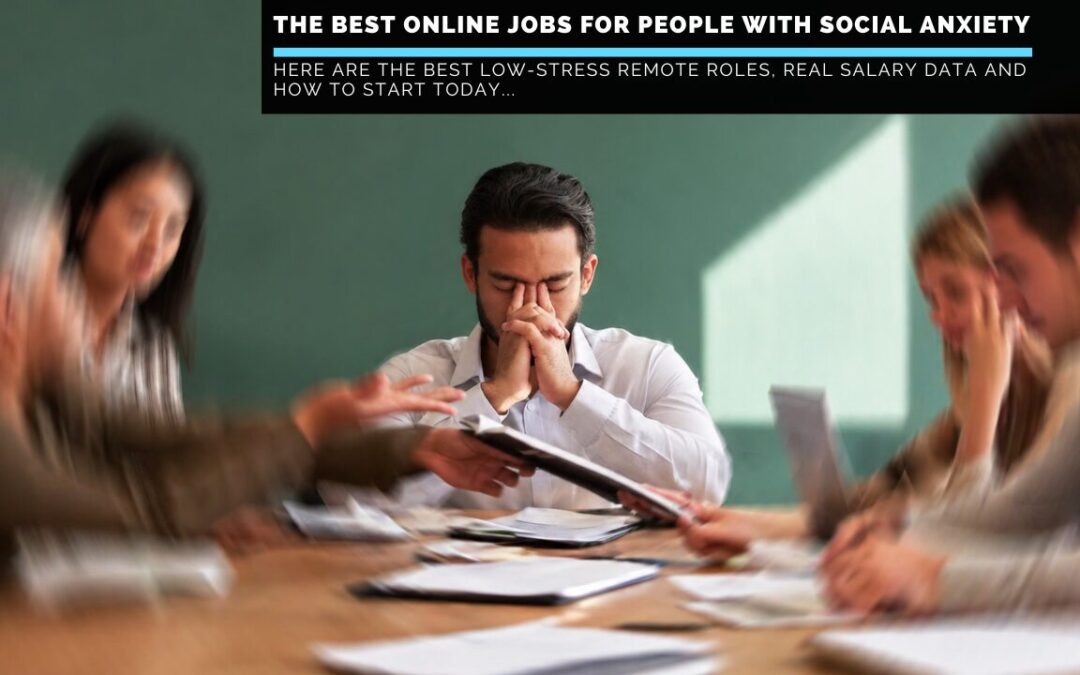
The standard workplace is a difficult setting for people with social anxiety. Open-plan offices, group meetings, impromptu conversations at the coffee machine and review sessions in front of colleagues are all challenging. So it is not weakness or avoidance to want a work setup that reduces that pressure. It is a practical response to a real situation.

Why Online Work Changes Things
Remote and online work removes the social triggers that make the office difficult for many people. You control when you respond to messages. Working in your own space at your own pace is fully possible.
Furthermore, async communication, which means writing instead of speaking in real time, is a genuine advantage. So people who think more clearly when they are not put on the spot benefit directly from that format.
So this article is not about hiding from the world. It is about finding a working model that plays to your strengths rather than forcing you to perform the way extroverts do.
What This Article Covers
This article covers 10 online roles that work well for people with social anxiety. Furthermore, it covers what each role realistically pays and the first steps to get started. By the end, you will have a clear and practical picture of which options suit your particular strengths.
For a clear framework on tools and first steps to create a full-time income from home, the Get Started Here page is the best starting point for beginners.
Why Online Work Suits People with Social Anxiety
The Research Behind It
A 2024 American Psychiatric Association poll found that 43% of US adults felt more anxious than the previous year. Furthermore, 58% of employees reported experiencing stress and anxiety at work in a separate study. So the workplace itself is a real anxiety trigger for a large portion of the workforce, not just people with diagnosed social anxiety.
Online work reduces several of the most common anxiety triggers at once. There is no commuting through crowded spaces. Furthermore, there is no open-plan office noise.
Furthermore, the nature of most online roles favours written communication, which gives you time to think before you respond. So the format itself is more comfortable for people who process information better outside of high-pressure social situations.
The Difference Between Avoidance and Strategy
It is worth saying clearly that choosing online work because it reduces your anxiety is a strategy, not avoidance. Avoidance means refusing to engage with what matters. Strategy means choosing the setting where you can do your best work.
Furthermore, many of the most effective people in business work remotely by design. So they do this not because they cannot handle an office, but because they produce better results away from one.
So building an online career is not a workaround or a compromise. For many people with social anxiety, it is simply the right choice.

The 10 Best Online Jobs for People with Social Anxiety
1. Freelance Writing
Freelance writing is 1 of the best online roles for people with social anxiety because the work is almost fully solitary. You research, you write, you submit. Most client communication happens over email. So you have complete control over when you respond and how much you say.
Entry-level freelance writers typically earn between $15 and $35 per article for short pieces on content platforms. Furthermore, as you build a niche and a portfolio, rates can reach $0.10 to $0.25 per word. So a 1,000-word article can earn $100 to $250. So the income trajectory is real if you specialise.
The practical starting point is to pick a topic you know well and write 3 sample articles. Publish them on a free platform like Medium. Then use those as your portfolio when you pitch clients or apply on platforms like Upwork.
2. Blogging and Affiliate Marketing
Blogging is 1 of the most anxiety-friendly income models. So you work fully at your own pace with no direct client pressure. You write posts, publish them and earn money through affiliate links, display ads or digital products. So there are no video calls, no open-plan office settings and no social situations to navigate.
The truth about blogging is that it takes time to build. Most bloggers earn little in their first 6 to 12 months. However, the income that builds after that is largely recurring. So a post you publish today can earn affiliate commissions for years without any further input.
Affiliate marketing is a natural partner for blogging. You recommend products and earn a commission when readers buy through your link. Furthermore, the niches that work best for social people with anxiety are often niche-specific topics they already know well, such as mental health, productivity, home working or introvert-friendly hobbies.
For a clear framework on getting started, the Get Started Here page walks you through the exact tools and first steps for complete beginners.

3. Proofreading and Editing
Proofreading is a role built for people who prefer accuracy over socialising. You read content produced by others and correct errors in spelling, grammar and punctuation. So it is quiet, focused work.
Entry-level proofreaders typically earn $15 to $25 an hour. Furthermore, as you specialise in legal or academic content, rates can reach $35 to $50 an hour. So the income ceiling is higher than most people expect for a beginner role.
The best starting point is a free or low-cost proofreading course. Then offer your services on Upwork or Fiverr, or reach out directly to publishers and marketing agencies who need editing support.
4. Data Entry and Virtual Administration
Data entry is 1 of the most direct entry points into online work. The role involves moving information from 1 source to another accurately and reliably. So it requires focus and precision rather than social confidence or phone calls.
Average yearly earnings for data entry roles in the US sit at around $38,867 a year. However, the real appeal for people with social anxiety is not the pay. It is the text-based, async nature of the work. So you complete tasks on your own schedule and communicate with employers over email rather than in real time.
Virtual administration is a step up from basic data entry. So it might include managing calendars, responding to emails, organising files and researching information for clients. According to ZipRecruiter, virtual assistants earn an average of around $60,000 a year at the experienced level in the US. So it is a role with genuine income potential once you build your skills.

5. Graphic Design
Graphic design is a strong fit for people with social anxiety who have a creative eye. The work is largely independent. You receive a brief, produce the design and submit it for feedback via email. So the day-to-day reality of freelance design involves very little of the kind of in-person social pressure that makes office life difficult.
Beginner graphic designers on platforms like Fiverr and Upwork typically charge $15 to $40 an hour. Furthermore, designers who build a strong portfolio in a specific niche can charge $50 to $100 an hour. So logo design, social media graphics and book covers are all strong areas to specialise in. So specialism pays considerably more than generalism.
Furthermore, tools like Canva let beginners produce polished-looking work without an expensive software subscription. So the barrier to entry is lower than it used to be.
6. Web Development and Coding
Web development is 1 of the highest-earning online roles available to people with no standard office background. Furthermore, it is a field where your portfolio matters far more than your ability to perform in social situations. So introverts and people with social anxiety regularly build strong careers in this space.
Entry-level junior web developers in the US earn a median of around $50,000 a year. Furthermore, experienced full-stack developers can earn $90,000 to $130,000 or more from home.
You do not need a computer science degree to start coding. Free courses on platforms like freeCodeCamp teach coding from scratch. Furthermore, most employers focus on what you can build rather than where you studied.
7. Transcription
Transcription involves listening to audio recordings and typing out the content accurately. So it is a role where typing speed and precision matter far more than social confidence. The work is solo, quiet and flexible in terms of hours.
Entry-level transcribers earn $15 to $25 per audio hour of content. Furthermore, experienced transcribers who work accurately and quickly can earn more, especially in specialised legal or medical transcription. So the income improves considerably as you build speed and accuracy.
Platforms like Rev and TranscribeMe hire beginners. So a short accuracy test is all that stands between you and your first paid job. Furthermore, general transcription can lead to more specialist work that pays a higher rate over time.
For a clear framework on tools and first steps to create a full-time income from home, the Get Started Here page is the best starting point for beginners.
8. Social Media Management
Social media management might seem like an odd choice for someone with anxiety. However, managing accounts for businesses is very different from personal social situations. So the role involves creating content and scheduling posts. Almost all of it happens behind a screen rather than in person.
Beginner social media managers typically charge $300 to $700 per month per client. So with 3 clients at that rate, you could earn $900 to $2,100 a month part-time. Furthermore, rates scale upward as you specialise in a platform or industry.
The practical first step is to pick 1 platform and study it thoroughly. Then build 3 to 5 sample posts or a mock content calendar. That gives you something concrete to show potential clients without prior paid experience.
9. Online Tutoring
Online tutoring works well for people with social anxiety who have knowledge in a subject area. So whilst it does involve one-to-one interaction, that happens over video with a single student. That is a very different situation from a meeting room full of colleagues.
Beginner tutors on platforms like Preply and Wyzant typically charge $15 to $25 per hour. Furthermore, tutors who specialise in popular subjects like maths or exam prep can charge $40 to $80 an hour as they build positive reviews.
Furthermore, English language tutoring for non-native speakers is very much in demand across the world. So if English is your first language, you have a practical starting point that requires no formal teaching qualification to begin.

10. Selling Digital Products
Selling digital products is 1 of the most anxiety-friendly income models. So the selling happens passively. You create a product once, list it on a platform and earn income when someone buys it. So there are no sales calls, no client meetings and no social pressure at the point of purchase.
Common digital products for beginners include templates, e-books, printable planners, spreadsheet tools and online mini-courses. So if you have skills in any area, whether it is budgeting, design or a hobby, you can package that knowledge into a product and sell it repeatedly.
Platforms like Etsy, Gumroad and Teachable make it simple to list and sell digital products. No technical expertise is required. Furthermore, a well-designed Canva template or useful planner can generate regular sales once it is listed.
What These Roles Have in Common
Asynchronous Communication
The best online jobs for people with social anxiety share 1 core feature. They are built around async communication. So you write an email and the other person responds in their own time.
You are not put on the spot. You are not expected to think and speak at the same time in a meeting room.
That format alone removes many of the most common anxiety triggers from the working day. Furthermore, written communication gives you time to compose your thoughts. So you can present your best self in every message rather than being judged under social pressure.
Flexible Hours and Autonomy
Most of the roles on this list offer real flexibility over your hours. So you can work during the times when your anxiety is lower. You can take breaks when you need them. Furthermore, you are not expected to be socially available throughout the working day.
That autonomy over your schedule is a genuine life quality improvement for many people with social anxiety. So it is not a trivial benefit. It changes the entire texture of a working day.

The Ability to Build on Your Strengths
People with social anxiety often have qualities that make them very effective in these roles. Attention to detail, clear written communication and thorough research habits are all traits that serve these roles very well. So a preference for doing things well rather than quickly is a genuine asset in online work.
So the goal is not to overcome your personality to fit a standard career mould. It is to find work that already suits who you are.
For a clear framework on tools and first steps to create a full-time income from home, the Get Started Here page is the best starting point for beginners.
How to Get Started Without Feeling Overwhelmed
Pick 1 Role and Focus on It
The biggest mistake beginners make is trying to do too many things at once. So pick 1 role that suits your natural strengths. Commit to it for at least 3 months before you think about pivoting. Furthermore, 3 months is the minimum time needed to build any real traction, whether in blogging, freelancing or transcription.
Build a Minimal Portfolio Before Applying
You do not need prior paid experience to build a portfolio. So, create 3 to 5 samples of the work you want to do.
For writing, publish short articles on a free platform. In design, create sample graphics using Canva. Also, for social media management, build a mock content calendar for a fictitious brand.
Furthermore, this process of creating samples is itself a form of skill-building. So you arrive at your first client interaction with a concrete example of your work rather than an apology for your experience level.
Start on Low-Pressure Platforms
For people with social anxiety, the thought of pitching clients can feel daunting. So start on platforms that structure the process for you. Upwork and Fiverr allow you to list your services and let clients come to you. Rev and TranscribeMe accept applications through a simple online form.
Furthermore, platforms like Etsy and Gumroad remove the pitching process fully for digital product sellers. So you list your product and wait for organic sales to build over time.

Use the Right Tools to Make the Work Easier
The right tools reduce friction and make the daily work of building an online income more manageable. For blogging and affiliate marketing, platforms like Systeme.io offer free plans that include email marketing and landing pages in 1 place. So you can build an email list from your blog without paying for multiple separate tools.
Rytr is an affordable AI writing tool that helps bloggers produce more content. So it is useful for people whose anxiety sometimes makes starting a piece of writing harder. So it is a practical support tool for people whose anxiety sometimes affects their ability to start.
For a clear framework on tools and first steps to create a full-time income from home, the Get Started Here page is the best starting point for beginners.
A Realistic Income Timeline
The First 3 Months
The first 3 months of building any online income from scratch are almost always the hardest. Income is typically zero or very close to it. So this is the period where most people give up. However, it is also the period where the core work happens.
Every article you write and every skill you develop in the first 3 months is an asset. Furthermore, it compounds in value as your portfolio grows and your visibility increases.
Months 4 to 12
This is where the first reliable income typically begins. Freelance writers start landing regular clients. Bloggers see their first affiliate commissions.
Transcribers build speed and accuracy. Social media managers secure their first ongoing retainer.
Furthermore, income in this phase ranges widely. So expect anywhere from $100 to $1,500 a month, depending on your role and effort level.
Beyond Month 12
The bloggers and freelancers who push through the first year begin to see the compound effect work in their favour. Furthermore, online income scales much faster once you have a track record. So the effort in the first 12 months pays increasing returns in years 2 and 3.
According to FlexJobs, work-from-home roles are among the most sought-after by people managing mental health conditions. So the demand for these roles is growing steadily.

Managing Anxiety While Building an Online Career
Set a Simple Daily Routine
One challenge of online work is the lack of external structure. So, for people with social anxiety, this can make anxiety worse rather than better.
So set a simple daily routine with clear start times and end times. That structure gives your working day a clear shape. So it reduces the background anxiety of not knowing what comes next.
Furthermore, working in clear time blocks helps separate your working self from your non-working self. So you are not always half-working and half-anxious about whether you should be working.
Protect Your Energy
Social anxiety is tiring even when you are working alone. So be honest with yourself about when your energy is lowest and plan your most demanding work for your best times. Furthermore, limit the number of client calls or video meetings you take each week to a number that feels manageable.
Many online clients are perfectly comfortable with email-only communication. So it is fine to state your preferred communication method early in a working relationship.
Celebrate Small Wins
The progress of building an online income is slow and often invisible from the outside. Furthermore, it is easy to compare your month 2 to someone else’s month 24 and feel like you are failing. So set small, concrete goals for each week. Publishing 1 article, landing 1 new client or completing 1 transcription job are all real milestones in the early months.
Furthermore, the act of noticing progress, however small, is a genuine tool for managing the anxiety that builds when you cannot see where you are heading.

Getting Started: Your Next Step
If any of the roles in this article resonated with you, the most important step is to pick 1 and begin. So do not wait until your anxiety feels better. Do not wait until you feel ready.
Furthermore, anxiety rarely disappears before action. It usually reduces after you have taken the first step and survived it.
For a clear framework on tools and first steps to create a full-time income from home, the Get Started Here page is the best starting point for beginners.
Conclusion
The Real Point of This Article
Online jobs for people with social anxiety are not a niche workaround or a lesser path. They are a smart, practical choice for people who know that they do their best work away from the social pressures of a standard office. So choosing remote, async work is not a sign of limitation. It is a sign of self-knowledge.
The Income Is Real
The roles in this article range from entry-level data work paying around $38,000 a year to web development roles paying over $100,000. So the income available through online work is real and real. Furthermore, it does not require you to sacrifice your mental well-being in order to earn it.
Start Where You Are
The online income journey almost always starts slowly. However, it builds reliably for people who stay consistent. So if you have been putting off starting because the anxiety of the process feels too big, let that go. Furthermore, the first step is always the smallest one.
Pick 1 role. Build 3 samples. Apply to 5 opportunities this week.
That is enough to begin. Online jobs for people with social anxiety exist in real numbers and pay real money. The only question left is when you are ready to go after them.