
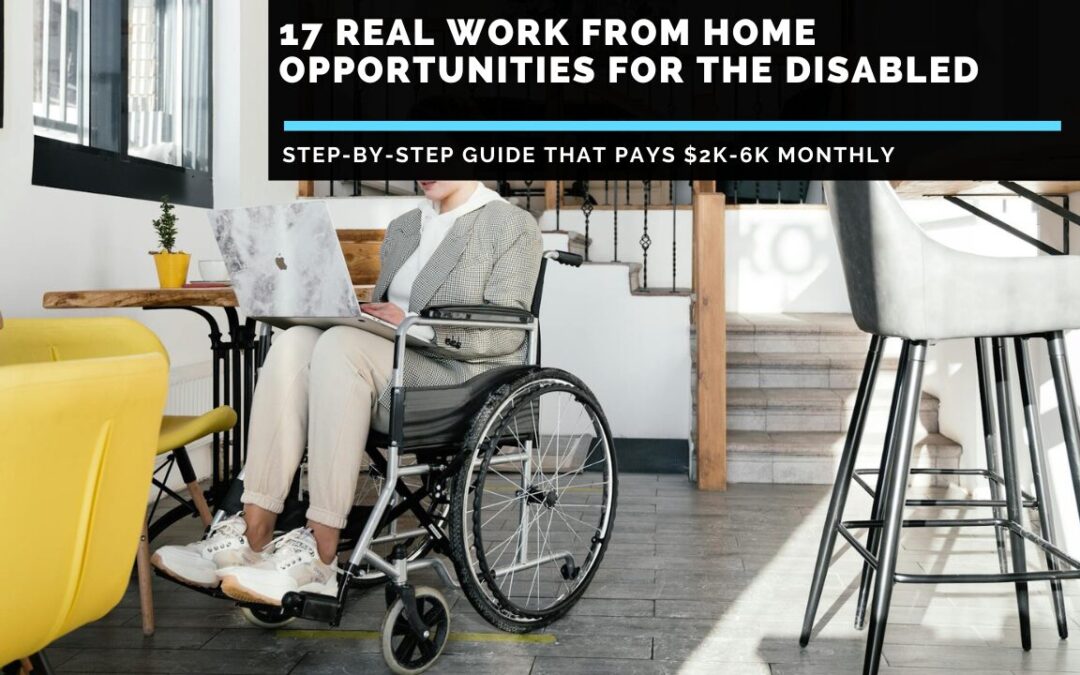
The traditional workplace was never designed with everyone in mind. Physical barriers, rigid schedules, sensory overload and inaccessible transportation create unnecessary obstacles that have nothing to do with your actual ability to do excellent work. If you’re searching for work from home opportunities for the disabled, you’re not looking for charity or special treatment. You’re looking for what should be standard: work that judges you on results rather than your ability to navigate an inaccessible building or maintain arbitrary schedules that don’t account for chronic pain or medical appointments. The remote work revolution of 2026 has finally created genuine opportunities where your skills, dedication and output matter more than whether you can sit in an office for eight consecutive hours.
This guide focuses exclusively on legitimate remote opportunities that offer flexibility, accessibility and real income potential. These aren’t token “jobs for disabled people” that pay minimum wage. These are professional opportunities where disabled workers are thriving, earning competitive incomes and building sustainable careers. Whether you have mobility limitations, chronic illness, sensory disabilities, neurodivergence or any condition that makes traditional employment difficult, there are paths forward that work with your needs rather than against them.

Understanding the Remote Work Advantage
Before exploring specific opportunities, let’s address why remote work fundamentally changes the employment landscape for disabled individuals.
Eliminates Physical Barriers: No stairs to navigate, no inaccessible toilets, no parking nightmares, no exhausting commute that drains your energy before work even begins. Your home is already adapted to your needs.
Flexible Scheduling: Chronic conditions don’t respect 9-to-5 schedules. Remote work often allows you to work during your high-energy periods, rest when needed and attend medical appointments without requesting permission or making excuses.
Reduced Sensory Overwhelm: For those with sensory processing differences, autism spectrum conditions or conditions triggered by environmental factors, working from your controlled home environment eliminates fluorescent lights, background noise, strong scents and unwanted social interactions.
Energy Conservation: The energy saved by eliminating commutes, office politics and physical navigation of spaces can be redirected into actual productive work. Many disabled remote workers report being more productive at home precisely because they’re not exhausted from simply getting to and existing in a workplace.
Accessible Technology: Your home setup can include whatever assistive technology you need: screen readers, voice recognition software, ergonomic equipment, specialised keyboards or any accommodations that would be “too difficult” for traditional employers to provide.
Performance-Based Evaluation: When your output is the focus rather than your physical presence, disabilities become far less relevant to employment success. A well-written article is a well-written article regardless of whether it took you two hours or six hours, accounting for rest breaks.
The U.S. Department of Labour’s Office of Disability Employment Policy provides comprehensive resources on rights, accommodations and employment support for disabled workers.
Legal Protections and Disclosure Considerations
You have rights, but navigating disclosure and accommodations requires strategy.
The Americans with Disabilities Act (ADA): Protects qualified individuals with disabilities from employment discrimination. This includes remote positions. Employers with 15+ employees must provide reasonable accommodations unless it creates “undue hardship.”
When to Disclose: This is deeply personal. For remote work, you may not need to disclose at all if your disability doesn’t impact your ability to perform essential job functions. If you need accommodations (flexible scheduling, specific software, modified deadlines), disclose what’s necessary without oversharing medical details.
Requesting Accommodations: Be specific about what you need and how it enables you to perform the job. “I need flexible start times to manage a medical condition” is sufficient. You don’t owe anyone your diagnosis or medical history.
Independent Contracting: If you work as a freelancer or contractor rather than an employee, ADA doesn’t apply the same way. However, you have complete control over your schedule, workload and working conditions. Many disabled workers prefer this path for the autonomy it provides.
Social Security Considerations: If you receive SSDI or SSI, understand how earned income affects benefits. The Social Security Administration’s Ticket to Work program provides support for transitioning to employment while protecting benefits during the process.
Visit my get started page for a comprehensive guide to building an affiliate business with flexibility for health challenges.
17 Accessible Work From Home Opportunities
Let’s explore specific opportunities organised by the type of work, realistic income potential and accessibility considerations.
1. Freelance Writing and Content Creation ($1,500-$6,000/month)
Create articles, blog posts, website copy, newsletters or social media content for clients. This is one of the most flexible remote opportunities available.
Why It’s Accessible:
- Work entirely at your own pace
- Complete flexibility in scheduling
- Minimal physical demands
- Accommodates cognitive differences (extended deadlines, working in short bursts)
- Compatible with speech-to-text software for those with mobility limitations
- Can work from bed during difficult days
Getting Started: Learn basic writing skills through free resources. Create 3-5 writing samples on topics you understand. Join platforms like Upwork, Contently or build your own client base through cold outreach.
Accommodations Available:
- Voice recognition software (Dragon NaturallySpeaking)
- Screen readers for visually impaired writers
- Ergonomic keyboards and mice
- Dictation apps (Google Docs voice typing, Apple dictation)
- Grammar tools to support cognitive processing (Grammarly, Hemingway Editor)
Realistic Income: Beginners: $0.05-$0.15 per word ($50-$150 per 1,000-word article) Intermediate: $0.20-$0.50 per word ($200-$500 per article) Advanced: $0.50-$2.00+ per word ($500-$2,000+ per article)
Working 15-20 hours weekly, writing 8-15 articles monthly, generates $1,500-$6,000 depending on rates and volume.

2. Virtual Assistant Services ($1,200-$4,500/month)
Provide administrative support to businesses or entrepreneurs: email management, calendar scheduling, customer service, data entry or social media management.
Why It’s Accessible:
- Task-based work allows for breaks
- Flexible hours accommodate medical appointments
- Low physical demands
- Can specialise in areas matching your strengths
- Asynchronous communication reduces social pressure
Getting Started: Identify your existing administrative skills. Create a profile on platforms like Belay, Time Etc or Fancy Hands. Start with general VA work, then specialise as you discover what you enjoy and excel at.
Accommodations Available:
- Screen magnification for low vision
- Keyboard shortcuts to reduce repetitive strain
- Text-to-speech for processing written information
- Noise-cancelling headphones for sensory sensitivities
- Flexible deadline negotiations with clients
Realistic Income: General VA: $15-$25 per hour Specialised VA (bookkeeping, tech support, industry-specific): $25-$50 per hour
Working 20-30 hours weekly generates $1,200-$4,500 monthly. Many VAs work with multiple clients for schedule flexibility.
3. Online Tutoring and Teaching ($1,000-$4,000/month)
Teach academic subjects, languages, music, test preparation or specialised skills through video calls or pre-recorded lessons.
Why It’s Accessible:
- Schedule lessons during your best hours
- Work from a comfortable, controlled environment
- Pre-recorded lessons eliminate real-time performance pressure
- Short sessions (30-60 minutes) are manageable with chronic fatigue
- Can limit student numbers based on energy levels
Getting Started: Identify what you can teach (doesn’t require formal teaching credentials for many platforms). Join platforms like VIPKid, Wyzant, Tutor.com or Chegg. Create a profile highlighting your expertise and set your availability.
Accommodations Available:
- Closed captioning for deaf/hard-of-hearing tutors and students
- Screen sharing to reduce speaking demands
- Recorded lessons for those who struggle with live interaction
- Flexible scheduling around medical needs
- Choice of age groups and subjects based on energy demands
Realistic Income: Elementary subjects: $15-$30 per hour, High school/Test prep: $25-$50 per hour Specialised skills (programming, music): $40-$100 per hour
Teaching 10-20 hours weekly generates $1,000-$4,000 monthly, depending on subjects and rates.
4. Transcription Services ($800-$2,500/month)
Convert audio or video content into accurate written text. Legal, medical and general transcription all offer opportunities.
Why It’s Accessible:
- Complete schedule flexibility
- Work at your own pace
- Can pause and resume freely
- Minimal social interaction
- Clear, measurable output
Getting Started: Test your typing speed and accuracy (60+ words per minute ideal). Practice with free transcription exercises. Join platforms like Rev, TranscribeMe or GoTranscript to start.
Accommodations Available:
- Foot pedals for hands-free audio control (helpful for mobility limitations)
- High-quality headphones with volume control
- Ergonomic keyboards and wrist supports
- Speech-to-text software as a starting point (though accuracy requires editing)
- Adjustable playback speeds
Realistic Income: General transcription: $15-$25 per audio hour Legal transcription: $25-$45 per audio hour Medical transcription: $30-$50 per audio hour
Working 20-30 hours weekly produces $800-$2,500 monthly. Specialised transcription pays significantly more but requires training.
5. Data Entry and Database Management ($1,000-$3,000/month)
Input, organise and maintain digital information for businesses. This includes everything from basic data entry to specialised database administration.
Why It’s Accessible:
- Repetitive, predictable tasks
- Clear instructions and expectations
- Flexible deadlines for most projects
- Minimal decision-making stress
- Can work in short sessions with breaks
Getting Started: Develop accuracy and speed with typing. Learn basic Excel or Google Sheets. Create profiles on Upwork, FlexJobs or apply directly to companies hiring remote data entry workers.
Accommodations Available:
- Voice recognition for hands-free data entry
- Screen magnification and high-contrast displays
- Ergonomic equipment to prevent repetitive strain
- Keyboard macros to reduce typing volume
- Flexible break schedules
Realistic Income: Basic data entry: $12-$18 per hour, Specialised data management: $20-$35 per hour
Working 20-30 hours weekly generates $1,000-$3,000 monthly.

6. Customer Service Representative ($1,500-$3,500/month)
Provide support via phone, email or chat for companies selling products or services. Many companies now hire remote customer service teams.
Why It’s Accessible:
- Scheduled shifts provide structure
- Training provided by the employer
- Script-based conversations reduce social unpredictability
- Email/chat options avoid phone calls if that’s challenging
- An ergonomic home setup is possible
Getting Started: Search for remote customer service positions on FlexJobs, Indeed or Remote.co. Companies like Amazon, Apple, Hilton and many others regularly hire remote customer service representatives.
Accommodations Available:
- Text-based support for those who struggle with verbal communication
- Screen readers and accessibility software are provided by many employers
- Flexible shift selection
- Quiet home environment control
- Closed captioning on calls for hearing impairments
Realistic Income: Entry-level: $12-$16 per hour, Experienced/Technical support: $18-$25 per hour
Full-time (30-40 hours weekly) generates $1,500-$3,500 monthly, depending on employer and experience.
Visit my get started page for a comprehensive guide to building an affiliate business with flexibility for health challenges.
7. Graphic Design and Digital Art ($1,500-$5,000/month)
Create visual content for businesses: logos, social media graphics, website designs, marketing materials or illustrations.
Why It’s Accessible:
- Highly flexible schedule
- Project-based work allows rest between assignments
- Visual communication reduces verbal demands
- Can work in short, focused bursts
- Home environment supports creativity
Getting Started: Learn design tools (Canva, Adobe Illustrator, Photoshop) through YouTube tutorials and free courses. Create portfolio samples. Join platforms like 99designs, Fiverr or build direct client relationships.
Accommodations Available:
- Graphic tablets with pen input (less strain than a mouse)
- Large monitors to reduce eye strain
- Voice-controlled design software
- Adjustable desks for position changes
- Colour-blind accessible design tools
Realistic Income: Logo design: $100-$500 per project, Social media graphics: $50-$200 per set, Complete brand packages: $800-$3,000
Completing 2-4 projects weekly generates $1,500-$5,000 monthly, depending on project size and rates.
8. Bookkeeping and Financial Services ($1,500-$4,500/month)
Manage financial records, reconcile accounts, prepare reports and handle payroll for small businesses.
Why It’s Accessible:
- Detail-oriented work suits many cognitive styles
- Predictable monthly cycles
- Asynchronous work (no real-time pressure)
- Clear rules and procedures
- Professional work is valued highly
Getting Started: Learn QuickBooks or Xero through free training. Consider certification through AIPB or NACPB ($300-$500). Start with small businesses needing basic bookkeeping.
Accommodations Available:
- Screen readers compatible with accounting software
- Keyboard navigation for motor limitations
- Flexible monthly deadlines
- Work in a quiet environment to support concentration
- Software automation reduces repetitive tasks
Realistic Income: Basic bookkeeping: $200-$400 per client monthly, Full-service bookkeeping: $400-$800 per client monthly
Managing 4-8 clients generates $1,500-$4,500 monthly, working 20-30 hours weekly.
9. Social Media Management ($1,500-$5,000/month)
Create, schedule and manage social media content for businesses. This includes strategy, content creation, posting and engagement monitoring.
Why It’s Accessible:
- Batch content creation during good days
- Scheduling tools automate posting
- Written communication primary
- Creative outlet
- Location independent
Getting Started: Build your own social media presence first to understand platform algorithms. Learn scheduling tools (Buffer, Hootsuite, Later). Offer services to small local businesses initially.
Accommodations Available:
- Pre-scheduling eliminates real-time posting pressure
- Visual content tools (Canva) are accessible with assistive technology
- Flexible working hours
- Can work from any comfortable position
- Analytics tools provide clear performance metrics
Realistic Income: Basic management (1-2 platforms): $300-$600 per client monthly. Comprehensive management (3+ platforms, content creation): $600-$1,500 per client monthly
Managing 3-5 clients generates $1,500-$5,000 monthly, working 15-25 hours weekly.

10. Web Development and Programming ($2,500-$8,000/month)
Build websites, applications or software solutions for clients. This ranges from basic WordPress sites to complex custom development.
Why It’s Accessible:
- Highly valued skills command good rates
- Project-based work with flexible timelines
- Minimal physical demands
- Problem-solving work suits many neurodivergent individuals
- Remote work is standard in the tech industry
Getting Started: Learn coding through free resources (freeCodeCamp, Codecademy, YouTube). Start with HTML/CSS/JavaScript basics. Build portfolio projects. Join freelance platforms or apply to remote positions.
Accommodations Available:
- Voice-controlled coding software
- Accessibility features in development environments
- Flexible project deadlines
- Remote collaboration tools standard
- Ergonomic equipment is essential and tax-deductible
Realistic Income: Basic WordPress sites: $500-$2,000 per project. Custom web applications: $2,000-$10,000+ per project. Hourly rates: $40-$150+ depending on specialisation
Completing 2-4 projects monthly or working part-time hourly generates $2,500-$8,000 monthly.
11. Online Course Creation and Teaching ($800-$4,000/month)
Create and sell educational courses on platforms like Teachable, Udemy or your own website. Teach anything you know.
Why It’s Accessible:
- Create once, sell repeatedly (passive income)
- Work entirely at your pace
- No real-time interaction required
- Can record when you feel well
- Complete control over format and accessibility
Getting Started: Identify expertise others want to learn. Outline comprehensive course content. Record video lessons or create text-based courses. Upload to course platforms and market to your audience.
Accommodations Available:
- Pre-recorded content eliminates live teaching stress
- Can include transcripts for accessibility
- Flexible recording schedule
- No physical appearance requirements
- Automated sales and delivery
Realistic Income: Course priced $49-$299 Selling 10-40 courses monthly generates $500-$4,000+ in relatively passive income
Initial creation requires significant time investment, but ongoing income is passive.
12. Email Marketing and Copywriting ($2,000-$6,000/month)
Write compelling email sequences, sales pages and marketing copy that converts readers into customers.
Why It’s Accessible:
- Project-based deliverables
- Flexible deadlines
- Work in focused sessions
- High value per piece of work
- Minimal social interaction
Getting Started: Study successful marketing emails and sales pages. Learn copywriting fundamentals through free resources. Create sample campaigns. Reach out to e-commerce businesses, coaches and online businesses.
Accommodations Available:
- Speech-to-text for drafting
- Flexible research and writing schedules
- Email communication with clients
- Clear project scopes and deadlines
- Can work from comfortable positions
Realistic Income: Email sequences: $500-$2,000 per sequence Sales pages: $1,000-$5,000 per page Monthly retainers: $1,000-$3,000 for ongoing work
2-4 projects monthly generates $2,000-$6,000 working 15-25 hours weekly.

13. Affiliate Marketing ($500-$5,000/month)
Promote products through content creation (blogging, videos, social media) and earn commissions on sales through your unique affiliate links.
Why It’s Accessible:
- Work entirely on your schedule
- Build passive income over time
- No client management or deadlines
- Scale at your own pace
- Accommodates fluctuating energy levels
Getting Started: Choose a niche you understand and care about. Create a website or social media presence. Join affiliate programs. Create helpful content that naturally includes product recommendations.
Accommodations Available:
- Complete schedule autonomy
- Batch content creation during good periods
- Passive income continues during difficult health periods
- No verbal communication required
- Work from any location or position
Realistic Income: Months 1-3: $0-$200 (building foundation) Months 4-6: $200-$800 (traffic growing) Months 7-12: $500-$2,000 (compound effect) Year 2+: $2,000-$5,000+ (established presence)
Visit my get started page for a comprehensive guide to building an affiliate business with flexibility for health challenges.
14. Voice Acting and Narration ($1,000-$4,000/month)
Provide voice work for audiobooks, commercials, video games, podcasts or e-learning courses.
Why It’s Accessible:
- Work from home studio (can be a basic setup)
- Schedule recording sessions when you feel well
- Project-based work
- Can work in short sessions
- No physical appearance requirements
Getting Started: Invest in basic recording equipment ($200-$500). Create demo reels. Join platforms like Voices.com, ACX (Audiobooks) or Voice123. Build a portfolio of diverse voice samples.
Accommodations Available:
- Flexible recording schedules
- Can re-record if needed
- Work seated or in a comfortable position
- Control the studio environment completely
- No commute to recording studios
Realistic Income: Audiobook narration: $50-$400 per finished hour, Commercial work: $100-$500 per project, E-learning narration: $100-$300 per finished hour
Completing 10-20 hours of finished audio monthly generates $1,000-$4,000 depending on rates and project types.
15. Online Research and Analysis ($1,200-$3,500/month)
Conduct research, compile data and create reports for businesses, academics or legal professionals.
Why It’s Accessible:
- Intellectual work with minimal physical demands
- Flexible deadlines common
- Independent work
- Clear deliverables
- Suits detail-oriented individuals
Getting Started: Develop research skills through practice. Learn to use research databases. Join platforms like Wonder, FlexJobs or apply directly to companies needing research support.
Accommodations Available:
- Screen reading technology
- Flexible work hours
- Adjustable workload
- Digital-only work (no physical handling)
- Can take breaks as needed
Realistic Income: Research projects: $15-$35 per hour. Specialised analysis: $30-$60 per hour
Working 20-30 hours weekly generates $1,200-$3,500 monthly.

16. Proofreading and Editing ($1,000-$3,500/month)
Review and correct written content for grammar, spelling, clarity and style. This includes books, articles, academic papers and business documents.
Why It’s Accessible:
- Work at your own pace
- Flexible project acceptance
- Detail-oriented work suits many cognitive styles
- No social interaction required
- Clear project boundaries
Getting Started: Develop strong grammar and style knowledge. Learn editing software and techniques. Join platforms like Scribendi, Reedsy or network directly with authors and businesses.
Accommodations Available:
- Flexible deadlines
- Work in short, focused sessions
- Digital-only workflow
- Ergonomic setup customisation
- Assistive reading technology
Realistic Income: Proofreading: $20-$40 per hour or $0.01-$0.03 per word. Developmental editing: $30-$60 per hour or $0.03-$0.10 per word
Working 20-30 hours weekly generates $1,000-$3,500 monthly, depending on specialisation.
17. Podcast Editing and Production ($1,200-$4,000/month)
Edit audio for podcasters: remove filler words, add music, balance levels and prepare final episodes for publication.
Why It’s Accessible:
- Headphone work is possible from any position
- Flexible completion deadlines
- Systematic, repetitive process
- Minimal client communication after initial setup
- High demand, limited supply
Getting Started: Learn audio editing software (Audacity is free, Adobe Audition is professional). Practice on podcast episodes. Offer services in podcasting Facebook groups. Build a portfolio of before/after samples.
Accommodations Available:
- Flexible editing schedules
- Can work in short sessions
- Ergonomic audio equipment options
- Visual editing interfaces
- A quiet home environment is beneficial
Realistic Income: Per episode editing: $50-$150, depending on length and complexity Monthly retainers: $300-$600 per podcast (weekly shows)
Managing 4-6 podcast clients generates $1,200-$4,000 monthly, working 15-25 hours weekly.
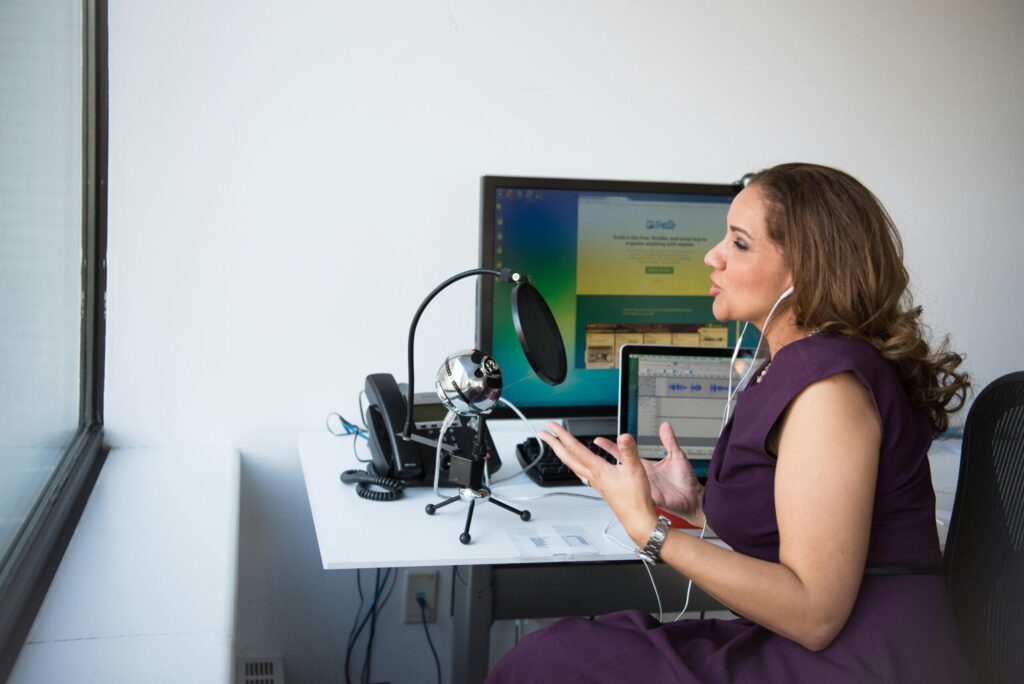
Setting Up an Accessible Home Office
Your workspace directly impacts your productivity and health. Here’s how to create an environment that supports your specific needs.
Ergonomic Essentials:
- Adjustable desk (sit/stand options or fully adjustable height)
- Supportive chair with proper lumbar support (or alternative seating for wheelchair users)
- Monitor at eye level to reduce neck strain
- Keyboard and mouse positioned to minimise repetitive strain
- Adequate lighting (adjustable for photosensitivity)
- Temperature control (crucial for many conditions)
Assistive Technology:
- Screen readers (JAWS, NVDA) for visual impairments
- Voice recognition software (Dragon NaturallySpeaking, Apple Dictation)
- Screen magnification software
- Alternative input devices (trackballs, vertical mice, foot pedals)
- Noise-cancelling headphones for sensory sensitivities
- Task lighting for low vision
- Closed captioning tools for hearing impairments
Environmental Controls:
- Quiet space away from household noise
- Temperature control (heating/cooling)
- Air purifiers for respiratory or chemical sensitivities
- Blackout curtains for migraine management
- White noise machines to mask distracting sounds
- Plants and natural light, where possible
Tax Deductions: Most home office expenses and assistive technology are tax-deductible for self-employed individuals. Keep receipts and consult with a tax professional familiar with disability-related deductions.
Managing Energy and Building Sustainable Schedules
One of the biggest advantages of remote work is schedule flexibility, but that flexibility requires strategy.
The Spoon Theory Approach: Plan your work around available energy. High-priority or creative tasks during peak energy times. Administrative or routine tasks during lower energy periods.
Time Blocking With Flexibility: Block time for work, but remain flexible about which specific tasks you complete. Having several possible tasks at different energy requirements gives you options.
Batch Similar Tasks: Group similar work together to reduce context-switching fatigue. Record multiple videos in one session. Write several articles consecutively. Handle all emails at once rather than throughout the day.
Build in Buffer Time: If you commit to delivering work on Friday, aim to finish on Wednesday. This buffer accommodates flare-ups, bad days or medical appointments without missing deadlines.
Communicate Proactively: When working with clients, set expectations early about your working style. Most clients care about quality and deadline adherence, not your specific working hours.
Track Your Patterns: Notice when you work most effectively. Are mornings better? Evenings? Do you have good weeks followed by difficult weeks? Structure your commitments around these patterns.
Financial Considerations and Benefits
Understanding how work affects benefits and financial planning is crucial.
Social Security Benefits: SSDI and SSI have complex rules about earned income. The SSA Red Book explains work incentives and trial work periods. You may be able to earn more than you think whilst maintaining benefits.
Trial Work Period: SSDI recipients can test their ability to work for at least nine months without affecting benefits. This provides safety whilst building a business or starting employment.
Work Incentives: Various programs help disabled individuals transition to employment:
- Ticket to Work (free employment support)
- PASS (Plan to Achieve Self-Support) saves money toward work goals
- Continued Medicare/Medicaid coverage during employment
- Expedited reinstatement if you need to stop working
Healthcare Considerations: Losing Medicaid/Medicare through employment is a major barrier. Research your state’s Medicaid Buy-In program, which extends coverage for working disabled individuals. Understand COBRA and ACA marketplace options.
Self-Employment Advantages: As a self-employed individual, you control your income timing and amount. This allows strategic earning that maximises work incentives and minimises benefit disruption.
Tax Benefits: Self-employed disabled individuals can deduct:
- Home office expenses
- Assistive technology and equipment
- Medical expenses exceeding 7.5% of AGI
- Health insurance premiums
- Professional development and education

Overcoming Common Obstacles
Let’s address the real challenges disabled remote workers face and the practical solutions.
Challenge: Inconsistent Energy or Health Fluctuations
Solution: Build multiple income streams with varying demands. Combine active income (client work with deadlines) with passive income (affiliate marketing, courses). During difficult periods, passive income continues whilst you reduce active commitments.
Challenge: Lack of Traditional Credentials or Resume Gaps
Solution: Remote work increasingly values skills and results over credentials. Build a portfolio demonstrating competence. Use project-based platforms where your work speaks for itself. Frame resume gaps positively: “Managed personal health whilst developing skills in [area].”
Challenge: Social Isolation
Solution: Join online communities of remote workers or disabled professionals. Schedule virtual coffee chats with colleagues. Set boundaries between work and personal time. Consider coworking spaces with accessibility if isolation becomes difficult.
Challenge: Imposter Syndrome and Self-Worth
Solution: Your value isn’t diminished by your disability. You’re not asking for charity. You’re offering skills, expertise and results. Many disabled workers outperform non-disabled colleagues precisely because they’ve developed resilience, problem-solving skills and efficiency that others lack.
Challenge: Technology Barriers
Solution: Most barriers have solutions. Contact assistive technology organisations for training. Many software companies provide free accessibility consultations. YouTube has tutorials for nearly every assistive technology. Start with free solutions before investing in expensive tools.
Challenge: Unreliable Income
Solution: Build gradually whilst maintaining benefits. Start part-time. Save an emergency fund for 3-6 months’ expenses. Diversify income sources. Consider keeping some stable hourly work alongside variable project work.
Resources and Support Systems
You don’t have to navigate this alone. These organisations provide practical support.
Job Search and Placement:
- AbilityJobs (disability-focused job board)
- GettingHired (accessible job search platform)
- FlexJobs (verified remote opportunities)
- EARN (Employer Assistance and Resource Network on Disability Inclusion)
Training and Skills Development:
- Ticket to Work (free employment services)
- State Vocational Rehabilitation agencies
- Job Accommodation Network (JAN) provides free consultation
- Microsoft Disability Answer Desk (tech support for accessibility)
Financial and Benefits Guidance:
- Benefits Planning, Assistance and Outreach programs
- Local Centre for Independent Living
- Disability Rights organisations in your state
- ABLE accounts (tax-advantaged savings for disabled individuals)
Community and Networking:
- National Disability Institute
- American Association of People with Disabilities
- Disability-focused professional groups on LinkedIn
- Remote work communities with an accessibility focus
Success Stories: Real People Building Real Careers
Rather than inspirational narratives, here are practical examples of disabled individuals succeeding in remote work:
Sarah, Chronic Illness (ME/CFS): Built a freelance editing business working 10-15 hours weekly during morning high-energy periods. Earns $2,000-$3,000 monthly with schedule flexibility for medical appointments and rest. Took 18 months to build a stable client base, but now it has consistent work.
Marcus, Paralysed (Quadriplegic): Uses voice recognition software to write code. Works as a remote developer for a tech company, earning $75,000 annually. The company provided assistive technology and flexible deadlines. Proved through contract work that his output matched or exceeded colleagues.
Jennifer, Deaf: Provides captioning and transcription services. Built a business specifically serving the deaf and hard-of-hearing community. Earns $3,500-$4,500 monthly. Turned her lived experience into professional expertise.
David, Autism Spectrum: Works as a data analyst with minimal social interaction requirements. Employer provides written communication with primary and clear, structured expectations. His attention to detail and pattern recognition are assets in his role. Earns $4,500 monthly part-time.
Lisa, Chronic Pain (Fibromyalgia): Created online courses teaching art techniques. Works intensively for 2-3 weeks creating content, then has 6-8 weeks of passive income whilst managing symptoms. Earns $2,000-$5,000 monthly, depending on launch cycles.
These aren’t exceptional stories. They’re becoming normal as remote work expands and employers recognise that results matter more than presenteeism.

Getting Started: Your 30-Day Action Plan
Information is overwhelming without a clear starting point. Here’s your first month’s roadmap.
Week 1: Assessment and Research
- List your skills, interests and limitations honestly
- Research which opportunities match your abilities and energy levels
- Read salary information and identify realistic income goals
- Join 2-3 online communities of disabled remote workers
Week 2: Skill Development and Setup
- Choose one opportunity to focus on
- Complete free training or tutorials
- Set up a basic home office with necessary accommodations
- Research assistive technology options if needed
Week 3: Portfolio and Presence
- Create 2-3 portfolio samples of your work
- Set up basic online presence (LinkedIn profile, simple website or platform profile)
- Write a clear description of services/skills
- Prepare a disclosure strategy if requesting accommodations
Week 4: Application and Outreach
- Apply to 10-20 opportunities (jobs or freelance)
- Reach out to 10 potential clients or employers
- Follow up on previous applications
- Join relevant job boards and freelance platforms
Many of the opportunities in this article can be started with guidance and structure.
If you’re ready to build an online business that accommodates your specific needs and energy levels, visit my get started page for a detailed roadmap designed for flexible, sustainable income building.
Final Thoughts: Your Work Has Value
The narrative around disabled workers is often patronising inspiration or a tragedy. Neither is accurate. You’re not inspirational for working. You’re not a tragedy for facing barriers. You’re simply a person with skills, knowledge and abilities who deserves accessible opportunities to contribute and earn a living.
The explosion of work from home opportunities for the disabled in 2026 isn’t charity or special accommodation. It’s the employment market finally catching up to what should have always been obvious: physical presence in an office is irrelevant for most knowledge work. Performance, results and contribution matter. Everything else is an artificial barrier.
Remote work removes many of those barriers. Not all of them (economic barriers, technology access and education gaps still exist), but enough that genuine opportunities now exist for disabled individuals willing to advocate for themselves, develop marketable skills and persist through the initial learning curve.
You don’t need to overcome your disability to succeed. You need to find work that plays to your strengths, accommodates your limitations and values your output. Those opportunities exist. They’re growing. They’re accessible.
Whether you choose freelance writing, virtual assistance, web development or any other opportunity discussed here, remember this: slow progress is still progress. Building a sustainable remote career takes time for everyone. It might take you longer. That’s fine. Focus on consistent forward movement, not arbitrary timelines.
The work from home opportunities for the disabled in 2026 are real, accessible and genuinely capable of providing living wages or better. Choose one, start small and build from there. Your contribution matters. Your work has value. And you deserve opportunities that recognise both.